Persona Non Grata

Persona Non Grata

As a young man, the Earl of Richmond claimed that “from the time he was five years old he had been always a fugitive or a prisoner (Commynes 396-397). When Henry was just over four years old, Pembroke Castle, where he had lived with his mother and paternal uncle, Jasper Tudor, was overridden by William Herbert during a stage of the War of the Roses.  Henry’s ward-ship was given to Herbert and he was raised along with the Herbert children at Raglan Castle.  In fact, Anne Devereux , Herbert’s wife, held Henry’s affection throughout her life.

When William Herbert died in battle in 1469, following another stage of the War of the Roses and the return of the Lancastrians, Henry and Pembroke Castle were returned to Jasper Tudor. This time of stability was short-lived. By 1470 the Yorkist king, Edward IV, returned to power.  It is not the purpose here to explain the minutiae of this civil war; let it suffice to say that it was expedient for Jasper and Henry to leave the country.

Intended for France, contrary winds blew them to Brittany (Often referred to as Bretagne) where Henry was to begin his 14-year exile as an enforced guest at the court of Francis II, Duke of Brittany  (Griffiths, Hutchinson, Norton, Penn, Roberts, Vergil).

vannes
City of Vannes with the St.Peter Cathedral where Henry VII sent gifts in acknowledgement of his time there.  He also depicted the city’s patron Saint, St. Vincent in his chapel in Westminster Abbey.

Because of the threats on his life and kidnapping plots, and the logistics of maintaining basically a refugee household, Henry was transferred from place to place.  He was never truly settled.  “Dependent on the whims of others, he learned to think like the fugitive he now was:  to watch and assess loyalties, to sift information from rumour and, caught in the wash of European power politics, to understand how they affected his own fortunes” (Penn 4-5).

Tour dd Elven
Chateau Lagoet’s Tour de Elven where Henry was kept between 1474-1476.

chateau of nantes
Chateau Vannes built by Francis II and visited several times by Henry.

His experiences certainly affected him.  “He developed an exile’s patience, inured to a life in which stretches of empty time were punctuated by sudden alerts, moments of danger in which logical clear-headedness meant the difference between life and death” (Penn 5).  He became resourceful, determined and “unabashed and unafraid when faced with adversity.  He was capable of swift and decisive reactions, and yet he also learned the value of careful and detailed planning in order to avoid needless risks” (Griffiths168), all seemingly positive traits learned while under house arrest and exile.  Some historians believe exile also created in Henry “an almost pathological suspicion” (Jones 61).

Regardless, Henry certainly impressed the French diplomat, Philippe Commynes who met him while he was in Brittany and France.  Commynes marveled that Henry “without power, without money, without right … and without any reputation but what his person and deportment excited; for he had suffered much, been in distress all the days of his life, and particularly a prisoner in Bretagne to Duke Francis from the eighteenth year of his age who treated him as kindly as the necessity of his imprisonment would permit…” would emerge strong and noble (Commynes 560).

Vannes h7 excile
In the fifteenth century this gate in Vannes, Brittany was where Henry VII, as Earl of Richmond, passed into the city which protected other English expats.

In 1483 circumstances galvanized Henry to attempt an invasion of England; a pro-Lancastrian conspiracy, headed by the Duke of Buckingham, gained support in England; and Margaret Beaufort, Henry’s mother, began negotiations with the ex-Queen Elizabeth Woodville to marry their children (Henry to Elizabeth of York) to unite the Houses of York and Lancaster.  After extensive preparations, several ships set sail toward Wales where Henry knew support would be the strongest and he could gain an entry point.  After accompanying ships went astray, Henry “learnt the virtue of caution that day” (Griffiths102).  Wisely, Henry returned to Brittany disappointed but not defeated.

About 10 months later, Henry was informed of a different sort of conspiracy which would have Brittany (under the leadership of Pierre Landais, chief advisor to an incapacitated Francis II) hand him over to Richard III.  Henry organized his flight from the town of Vannes to France dressed as a groom with a small group of expats, he escaped across the border.  Later when a recovering Francis II learned what had happened, he gave safe-conduct passage to the remaining retainers of Henry’s who were still in Brittany. This was a relief to Henry, who had a strong sense of obligation to those who shared his exile.  Once in France, Henry obtained men and equipment from Charles VIII to launch an invasion of England in August of 1485 at the age of 28 (Griffiths, Hutchinson, Norton, Penn, Vergil, Roberts).  The rest they say is history.

The impressions made on him from his years of exile affected more than just his personality.  Henry VII was known for his preference for speaking French, his understanding of European politics and his unfamiliarity with English ways.  Nevertheless, he was able to establish one of the most infamous ruling dynasties in England culminating in the rule of his granddaughter, Elizabeth Regina.

Unlike her grandfather, who had his mother and paternal uncle to direct him, Elizabeth had no such guidance and her apprenticeship to the throne was as severe as his had been.  She too spent many years in a form of exile.  She had to learn the art of statecraft and how to assimilate various players’ actions all while in seclusion at country houses with little or no contact with politicians both domestic or foreign.    

She was able to create a strategy and with determination she maintained her course. This is not to say that she was inflexible.  Elizabeth knew when to shift her course of action as her survival demanded it.

A religious book, The Epistles of St. Paul, owned by Elizabeth during the time that she was imprisoned by Queen Mary, has been preserved in the Bodleian Library.  Amongst the passages she had designed was Vincit omnia pertinax virtus.  E. C. In translation, Tenacious virtue conquers all* Elizabeth the Captive (Marshall 158, Nichols 11).  Beyond her perseverance, her courage, cool headedness, self-reliance and self-possession were cemented during her removal from Court. Also forged during this time were several of her least attractive characteristics: her lack of candor, her ability to conceal her true intentions, her inability to trust, her extreme caution and her vacillation. 
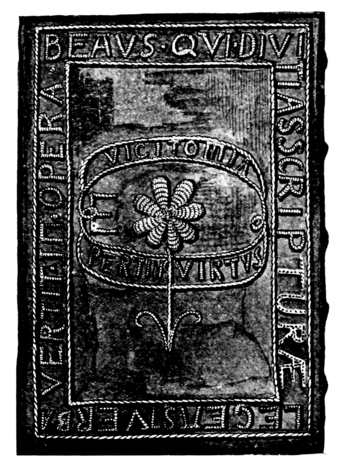
Epistles of st paul
The Epistles of St. Paul preserved by the Bodleian Library showing the above mentioned phrase done in needlework by Elizabeth.

While Henry VII as Earl of Richmond spent 14 years in exile, Elizabeth experienced removal from Court several times.  First was her self-imposed banishment to Hatfield after the Seymour troubles.  She was barely 15 and she had the wisdom to rehabilitate her reputation by concentrating on running the estate, biding her time and minding her behavior.  She led an exemplary life of scholarly pursuits in a decorous manner.  She remained there when the Duke of Northumberland, using Lady Jane Grey as his figurehead, and Mary struggled for the throne.  Once Mary was victorious, Elizabeth journeyed from Hatfield to offer congratulations and support (Erickson, Hibbert, MacCaffrey, Neale, Ridley).

Hatfield_House_Old_Palace Hatfield Old Palace

As mentioned above, Elizabeth was detained by Queen Mary at Woodstock after the Wyatt Rebellion.  This captivity, when Elizabeth was 21, was conducted differently from her grandfather’s escape to Brittany.

A letter preserved in the Talbot Papers from Robert Swift, steward to the Earl of Shrewsbury, reported on May 20, 1554,“Of Saterdaye, at one of the cloke at afternone, my Lady Elisabethe was delyv’ed out of Towre by the Lord Tresorer and my Lord Chamb’leyn, and went to Richemonde (on her way to the old Palace of Woodstock, where she remained in confinement till the end of April in the next year,) by water furthewy’er she landyd; wher she shal be attended upon by sundreye of garde, and some officers of ev’y office in the Quen’s howse, but how long she shall co’tinewe there I know not”  (Nichols 8).
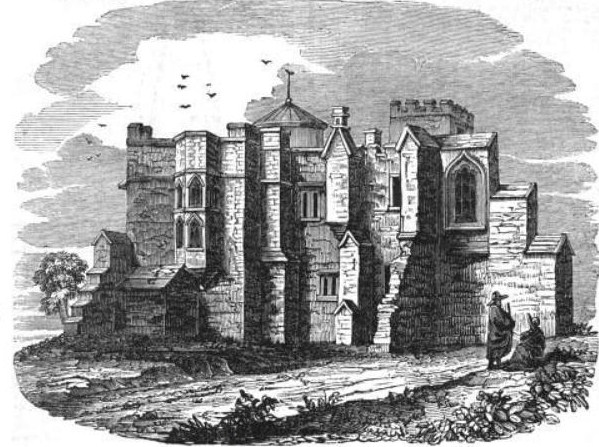
woodstock ruins cropped Woodstock Palace drawn in 1714 

Although her custodian, Sir Henry Bedingfield, a Privy Council member under Queen Mary, attempted to spirit her away it was not the case.  People gathered to watch her pass, shouted support, offered her cakes and treats and rang the bells of their churches.  The entire journey saw demonstrations favorable to Elizabeth to such an extent that at one point Bedingfield reminded their hosts along the route that Elizabeth was “a prisoner who had offended against the Queen” (Ridley 62).  Once ensconced in Woodstock, Elizabeth knew her status as in the above reference to herself as ‘captive’ and also in the famous couplet she etched onto a window pane while at Woodstock when she signed herself as prisoner. 

“Much suspected by me,
Nothing proved can be,
Quoth Elizabeth prisoner” (Nichols 9).

After almost a year’s confinement, Elizabeth was summoned to Hampton Court by orders directed to Sir Henry Bedingfeld by Queen Mary: 

Hampton Court, April 17, 1555.

Trusty and well beloved, we greet you well. And forasmuch as we have resolved to have the Lady Elizabeth to repair nearer unto us, we do therefore pray and require you do declare unto her that our pleasure is she shall come to us to Hampton Court in your company with as much speed as you can have things in order for that purpose; wherein you shall not need to make any delay for calling of any other numbers than these, which are yourself and [those that] be now there attendant upon her, And of the time of your setting forward from thence, and by what day you shall think you may be there, we require you to advertise us by your letters with speed. Mary, the Queen (Mumby 187).
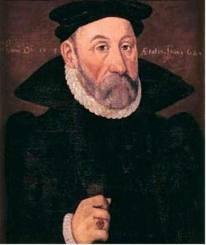
bedingfield

Sir Henry Bedingfield

Elizabeth spent time at Hampton Court and other houses from April 1555 until October when she returned to Hatfield.  At Hatfield with her trusted servants, Elizabeth could still not feel safe as Mary had her under continual surveillance (Erickson 153).  Eventually Mary’s suspicions eased, “there was something like a tacit truce between the two sisters.  Elizabeth, withdrawn to country retirement at Hatfield…remained carefully aloof from all political activity. On both sides civility and decorum served to mask underlying unease” (MacCaffrey 25). It was here at Hatfield where Elizabeth learned of her ascension to the throne in November of 1558.

Works Cited

Commynes, Philippe de.  The memoirs of Philip de Commines, Lord of Argenton: containing the histories of Louis XI and Charles VIII. Kings of France and of Charles the Bold, Duke of Burgundy. To which is added, The scandalous chronicle, or Secret history of Louis XI  London:  H. G. Bohn, 1855.  Internet Archive, Web. 10 Feb. 2013. http://archive.org/details/historicalmemoi00comigoog

Erickson, Carolly. The First Elizabeth. New York: Summit Books. 1983. Print.

Griffiths, Ralph A. and Roger S. Thomas.  The Making of the Tudor Dynasty.  New
York: St. Martin’s Press, 1985. Print.

Hibbert, Christopher.  The Virgin Queen: Elizabeth I, Genius of the Golden Age.  New York: Addison-Wesley Publishing Company, Inc., 1991.  Print.

Hutchinson, Robert. Young Henry: The Rise of Henry VIII. London: Weidenfeld &
Nicolson, 2011. Google Books. Web. 02 Dec. 2012.

Jones, Michael K. and Malcolm G. Underwood.  The King’s Mother: Lady Margaret
Beaufort, Countess of Richmond and Derby. New York: Cambridge University Press, 1992. Print.

Marshall, Edward. The Early History of Woodstock Manor and Its Environs, in Bladon, Hensington, New Woodstock, Blenheim; with Later Notices:. Oxford: J. Parker and, 1873. Internet Archive. Web. 18 Feb. 2013.

MacCaffrey, Wallace. Elizabeth I. London: E. Arnold. 1993. Print.

Mumby, Frank  Arthur, and Elizabeth. The Girlhood of Queen Elizabeth, a Narrative in Contemporary Letters, London: Constable, 1909. Internet  Archive. Web. 19 Feb. 2013.

Neale, J. E. Queen Elizabeth I. Garden City, NY: Doubleday, 1957. Print.

Nichols, John. The Progresses and Public Processions of Queen Elizabeth. Among Which Are Interspersed Other Solemnities, Public Expenditures, and Remarkable Events during the Reign of That Illustrious Princess. Collected from Original MSS., Scarce Pamphlets, Corporation Records, Parochial Registers, &c., &c.: Illustrated with Historical Notes. New York: B. Franklin, 1823. Google Books. Web. 19 Jan. 2013.

Norton, Elizabeth.  Margaret Beaufort: Mother of the Tudor Dynasty.  Stroud: Amberley, 2010. Print.

Penn, Thomas.  Winter King; the Dawn of Tudor England.  New York: Penguin Books, 2012. Print.

“Queen Elizabeth, Her Progresses and Processions: Confinement of the Princess Elizabeth in the Tower–Her Removal to Woodstock.” The Saturday Magazine 21 Apr. 1838: 146-47. Google Books. Web. 18 Feb. 2013. <http://books.google.com/books?id=i1YFAAAAQAAJ&pg=PA145&dq=saturday+magazine+372&hl=en&sa=X&ei=yKEiUb_1LfGLyAHc1YCwBA&ved=0CDAQ6AEwAA#v=onepage&q=saturday%20magazine%20372&f=false&gt;.

Ridley, Jasper. Elizabeth I: The Shrewdness of Virtue.  New York: Fromm International Publishing Corporation, 1989.  Print.

Roberts, Peter.  “The Welshness of the Tudors.” History Today. History Today.com, n.d. Web. 11 Feb. 2013.

Vergil, Polydore. Polydore Vergil, Anglica Historia (1555 Version). Ed. Dana F. Sutton. Irvine: University of California, 2005. Polydore Vergil, Anglica Historia (1555 Version). The Philological Museum, 04 Aug. 2005. Web. 02 Jan. 2013.

For a reproduction of Queen Mary’s orders to Sir Henry Bedingfeld on his duties and responsibilities as keeper of the then Lady Elizabeth consult the digitized volume of The Girlhood of Queen Elizabeth: A Narrative in Contemporary Letters pages 135 & 135 at the following address: http://books.google.com/books?id=bpkQAAAAYAAJ&pg=PA134&dq=A+Memorial+given+by+the+Queen’s+Highness++unto+her+trusty+and+right+councillor&hl=en&sa=X&ei=p9ooUYOoC8XHrQGnyIGgDw&ved=0CDAQ6AEwAA#v=onepage&q=A%20Memorial%20given%20by%20the%20Queen’s%20Highness%20%20unto%20her%20trusty%20and%20right%20councillor&f=false

*Special thanks to Jamie, a Latin instructor, for her help with the translation of the quote by Elizabeth I.

Why Do Today…?

Why Do Today…?

Both Henry VII and Elizabeth I have had the word temporise used to describe their behavior.  Will historians ever know positively if their irresolute actions were procrastination due to personal reasons or reluctance due to political reasons; oscillation or genius?  As usual, it depends on who is writing the history. 

“As a new man, Henry had to secure his place.  He did this by a compromising approach:  by marrying Elizabeth, but only belatedly…” (Bacon and Weinberger 238).  In December 1483 he had pledged to marry Elizabeth of York and had obtained the papal dispensation needed.  It was left to Parliament to encourage the marriage on December 10, 1485, by proclamation to the King “that he would please take the noble Lady Elizabeth, daughter of King Edward the IV, as his wife and consort” (Bacon and Lumby 239).

parl to use
Parliamentary Directive for King Henry to marry Elizabeth of York, in Latin

On January 18, 1486, the greatly anticipated marriage took place to great joy on the part of the peoples of England.  Henry had to realize that the ceremony “was thought by some to have been too long delayed, and historians have declaimed against Henry on this account” (Bacon and Lumby 239).

According to Jerry Weinberger, many of Henry’s early troubles stemmed from the fact that he slighted Elizabeth and the House of York. He postponed their marriage and delayed her coronation.  The coronation occurred most likely, as with other things, because events forced his hand.  Henry learned that by not crowning Elizabeth and “vouchsafing her the honour of a matrimonial crown” (Bacon and Lumby 22) it “did rankle and fester the affections of his people” and therefore, “he resolved at last to proceed” (Bacon and Lumby 39).

eyork
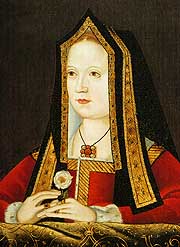
Elizabeth of York

When he returned to London after traveling north, “the Queen was with great solemnity crowned at Westminster, the twenty-fifth of November, in the third year of his reign, which was about two years after the marriage…” (Bacon and Vickers 37).  His “strange and unusual distance of time made it subject to every man’s note, that it was an act against his stomach, and put upon him by necessity and reason of state” (Bacon and Lumby 40).

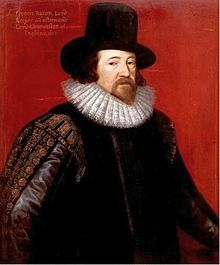
francis bacon
Francis Bacon

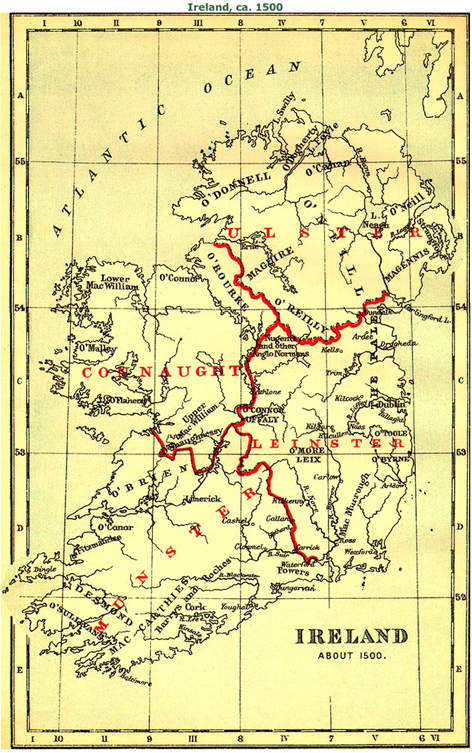
Although it is not the purpose here to relay the history of the country of Ireland, suffice to say that the issues were complicated and Henry was “obliged to temporize.  After long hesitation …” the king instituted his policy in Ireland (Morris 24).

Irelandca1500
Map of Ireland in 1500

Other international situations, such as in France, “precipitated the kind of decision which Henry had striven to avoid since his accession…” (Griffiths 172).  When dealing with Ferdinand of Aragon, the Hapsburg Empire and Burgundy “Henry hesitated, drew back…” (Mattingly 77).  Likewise, it appears to be déjà vu all over again with his actions concerning events in Flanders where the “the King was obliged to temporise” (Fletcher 61). At least he was consistent as Raimondo di Soncino, the Milanese envoy to Ludirio Sforza, Duke of Milan, reported of Henry VII that “he well knows how to temproise…” (Pollard 160).

Was it personality?  Was it policy?

Ten years into his reign, it was thought that policies and events that unfolded positively we accredited to his foresight and skill.  The King would “cunningly put off…” decisions and revelations of his plans until favorable conditions arose (Bacon and Vickers 37).  Amazingly, while Henry VII appears skillful in his vacillating, Elizabeth Regina was scoffed at as displaying womanly indecision.  Historians, I believe, have not been able to remove the sexism of her time period in their interpretations.  Understandably, the evidence which is left is the letters between her advisors or dispatches between diplomats and their home countries–written by men in that traditional time period.  Can Elizabeth not be credited for having the wisdom to allow events to unfold, to await natural solutions and to weigh possible options?

In general Elizabeth had her secretaries “fuming by her time-wasting ploys” (Somerset 279).  Once she had ordered letters to be written, she often would not sign them or allow the letters to be sent until she had thought things over some more.  Sir Thomas Smith writing to Lord Burghley said, “I had somewhat ado to get to the Queene, and more to get anything signed” (Wright 448) and “the letter already signed, which your Lordship knoweth, permitted to be sent away, but day by day, and hour by hour, deferred till anoe, sone, and to-morrow” (Cecil 1).

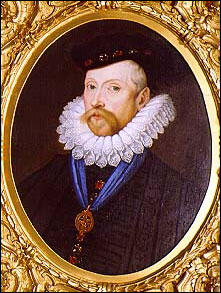
thomas smith                      cecil william
Sir Thomas Smith                                            William Cecil, Lord Burghley

The letters between these two men displayed “her peculiarities, her caution, her love of procrastination…her fondness for reiterated considerations of matters which every one thought to have been determined upon…” (Sylvanus 346).  Elizabeth did temporize and she was notorious for ignoring decisions.  Often these courses of action (or inaction) worked in her favor, as it did for her grandfather, because events would unfold and either resolve themselves or reveal a clearer path.  Nevertheless, while Henry VII is touted as exuding cunning, she is condemned as exuding “weakness” (Carruthers).

“Her hesitation, indecision, petulance, emotionalism and petty-mindedness are vices which men throughout the ages have been pleased to regard as typically feminine” (Ridley 335).  Yet, in 1569 the failure of the northern Earls’ rebellion was “due to the cautious and temporising policy for which Elizabeth has been so severely blamed by heated partisans” (Beesly).

Mary, Queen of Scots, had been a troubling issue for Elizabeth from the moment Mary returned to Scotland.  After many years as a political prisoner in England, Elizabeth was still unsure of how to handle the situation.  Once “proof” (many would interpret the evidence-gathering by Walsingham and his operatives as entrapment) had been collected to prove Mary was plotting with Catholics for the overthrow of Elizabeth, her conviction was a foregone conclusion.

mary scots
Mary, Queen of Scots

Judgment was handed down in October of 1586 yet Elizabeth wavered until February of 1587 before signing the death warrant.  The story is well-known of how William Davison, a privy councilor, bore the brunt of Elizabeth’s wrath once the execution was carried out.  Elizabeth had given him the signed warrant with the intention, so she later said, that it would not be delivered.  The seasoned Davison recognized the dangerous position he was in and “fearing she should lay the Fault upon me…” he had eventually taken the signed warrant to Cecil (The Life and Reign … 243).  Burghley called a meeting of the Privy Council and all agreed to send the warrant off without delay (Froude, Hibbert, MacCaffrey, Neale, Ridley, Somerset).

Her vacillation and unclear directives can be interpreted as genuine indecision of putting a fellow monarch to death or as brilliant political maneuverings to avoid the blame and placate the French and Spanish. If one acknowledges the emotions Elizabeth was experiencing concerning the death of a fellow monarch and family member plus the pressures of domestic and international politics, it is easier to recognize her indecision.

As an interesting aside at his trial for disobeying his sovereign, William Davison testified that “I perceived that she wavered in her Resolution, I asked her whether she had changed her Mind?  She answered, No: but another Course, said she, might have been devised…” (The Life and Reign …244). Like her grandfather, she held out waiting for another means; in this case it was her hope that Mary could be quietly done away with by some other method besides execution.  This came to light when Mary’s custodian at the time, Sir Amyas Paulet, asserted in a letter to Walshingham that he would do much for his Queen but would not “make so foul a shipwreck of my conscience, or leave so great a blot to my poor posterity, to shed blood without law or warrant” (Paulet 362).

amyaspaulet         walsingham
Sir Amyas Paulet                                        Francis Walsingham 

Determining the path to take concerning the Netherlands proved another area of discontent between Elizabeth and her advisors. Sir Thomas Smith wrote to Burghley that “…nothing resolved, and therefor, such number of things unanswered, whereupon her Majestie’s ministers lie still in suspense” (Cecil 1). Many of her councilors sided with Leicester very early to support William of Orange’s rebellion against the Spanish.  Her view was different from her councilors as she did not relish supporting ‘rebels’ against their sovereign; even if in this case the sovereign was her adversary Philip II.  “After long oscillation Elizabeth’s policy finally gravitated towards Philip and peace” (Froude 409).

This was not the policy that was eventually carried out.  As the political situation changed, military intervention on behalf of the Prince of Orange would become the official policy.  Secretary of State Sir Thomas Wilson stated “Temporising hath been thought heretofore good policy.  There was never so dangerous a time as this is, and temporising will no longer serve” (Archer 136).
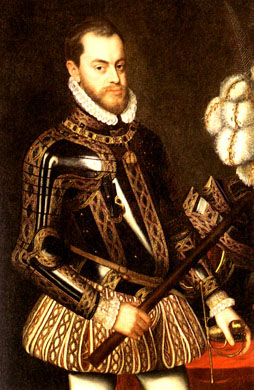
WilliamOfOrange     philip-ii
William of Orange                                      Philip II

England’s neighbor, Scotland, proved another trouble spot for policy.  Support for rebels against the state was never an easy path for Elizabeth.  She would not give aid even though there were French troops landing on Scottish shores then agreed to do so because of the intervention of Spain.   Was she irresolute or facing realpolitik?

Walsingham boldly wrote in January 1575 to the Queen concerning her procrastination over policy in Scotland, “For the love of God, madam, let not the cure of your diseased state hang any longer on deliberation.  Diseased states are no more cured by consultation, when nothing resolved on is put into execution…” (Halser).  Would he have done this if his sovereign had been Henry VII?  Obviously, that is one of those unanswerable questions.

Elizabeth’s oscillating about marriage is so well-known there is no need to go into great detail.  She changed her mind not only per candidate, but even to marry, many times based on the international situation of the balance of power in Europe and perhaps her thoughts of having a chance at romantic happiness.  “The Queen skittishly shifted her ground, consistent only in her unwillingness to commit herself” (MacCaffrey 208).

Elizabeth came closest to marrying the Duke of Anjou (also referred to as the Duke of Alençon), even becoming ill at one point over her indecision.  The lengthy negotiations could be interpreted solely to “gain time and to keep the peace” (Hibbert 202).  Her purpose was served as she kept England out of the troubled Netherlands for longer, she lead Philip II to believe there was a chance for an Anglo-French alliance, and she dispensed Anjou out of the country on good terms.

dukeanjou

Duke of Anjou

Perhaps diplomatic and romantic reasons were not enough and James Melville, the Scottish diplomat, found the most precise reason for Elizabeth never marrying when he declared “Ye think gene ye wer married, ye wald be bot Quen of England, and now ye ar King and Quen baith; ye may not suffer a commander” (Melville 122).

The hesitations and changes of policy were genuine, and often due to the change in political climates both domestic and international rather than due to a character flaw.  Elizabeth herself wrote to William Cecil, Lord Burghley, on April 11, 1572,  “Methinks that I am more beholding to the hinder part of my head than well dare trust the forwards side of the same …” (Marcus 131).

Throughout her reign, Elizabeth’s goals were consistent –to keep England at peace and prosperous.  One can understand how hard it would be to make these decisions as there would be no way to see all eventualities.

Maybe in modern day parlance it would be that she had a fear of failure.  Elizabeth wanted so much to make the right decisions that she was often incapable of making one.  The issues discussed above were complex even if one did not include the factors of a monarch with obligations to her state and a woman with personal preferences.

Works Cited

Archer, Jayne Elizabeth et. al., ed.  The Progresses, Pageants, & Entertainments of Queen Elizabeth I.  Oxford: Oxford University Press, 2007. Print.

Bacon, Francis, and J. Rawson Lumby. Bacon’s History of the Reign of King Henry VII,. Cambridge: University, 1902. Internet Archive. Web. 22 Jan. 2013.

Bacon, Francis.  The Major Works.  Ed. Brian Vickers. Oxford: Oxford University Press, 2002.  Google Books. Web. 9 Mar. 2013.

Bacon, Francis. The History of the Reign of King Henry the Seventh a New Ed. with Introduction, Annotation and Interpretative Essay. Ed. Jerry Weinberger. Ithaca (N.Y): Cornell UP, 1996. Google Books. Web. 8 Mar. 2013.

Beesly, Edward Spencer. “Chapter V.” Queen Elizabeth. London: Macmillan and Co, 1892. EnglishHistory.net. Web. 3 Mar. 2013.

Campbell, William, ed. Materials for a History of the Reign of Henry VII. From Original Documents Preserved in the Public Record Office. Vol. I. London: Longman &: etc., 1873. Google Books. Web. 6 Mar. 2013.

Cecil, Lord Burghley, William, Sir. Queen Elizabeth and Her Times: A Series of Original Letters Selected from the Inedited Private Correspondence of the Lord Treasurer Burghley, the Earl of Leicester, the Secretaries Walsingham and Smith, Sir Christopher Hatton and Most of the Distinguished Persons of the Period : In Two Volumes. Ed. Thomas Wright. London: Colburn, 1838. Google Books. Web. 10 Mar. 2013.

Carruthers, Robert. “Queen Elizabeth I of England.” Encyclopedia Britannica. 10th ed. Edinburgh: Scotland. Encyclopedia Britannica, 1902. 1902 Encyclopedia Britannica Online. Encyclopedia Britannica, 2005. Web. 17 Mar. 2013.

Fletcher, C. R. L. An Introductory History of England from Henry VII to the Restoration. With Maps. Vol. II. New York: Dutton, 1908. Google Books. Web. 9 Mar. 2013.

Froude, James Anthony. History of England from the Fall of Wolsey to the Defeat of the Spanish Armada. London: Longman, Green, 1908. Google Books. Web. 10 Mar. 2013.

Hasler, P. W. “WALSINGHAM, Francis (c.1532-90), of Scadbury and Foots Cray, Kent; Barn Elms, Surr. and Seething Lane, London.” The History of Parliament: British Political, Social and Local History. The History of Parliament Trust 1964-2013, Web. 10 Mar. 2013. .

Hall, Edward, Henry Ellis, and Richard Grafton. Hall’s Chronicle; Containing the History of England, during the Reign of Henry the Fourth, and the Succeeding Monarchs, to the End of the Reign of Henry the Eighth, in Which Are Particularly Described the Manners and Customs of Those Periods. London: Printed for J. Johnson and J. Rivington; T. Payne; Wilkie and Robinson; Longman, Hurst, Rees and Orme; Cadell and Davies; and J. Mawman, 1809. Archive.org. Web. 2 Jan. 2013. 

Hibbert, Christopher.  The Virgin Queen: Elizabeth I, Genius of the Golden Age.  New York: Addison-Wesley Publishing Company, Inc., 1991.  Print.

The History of the Life and Reign of That Excellent Princess Queen Elizabeth from Her Birth to Her Death: As Also the Trial, Sufferings, and Death of Mary Queen of Scots. With the Whole Proceedings of the Divorce of King Henry VIII. from Queen Catherine; His Marriage with the Lady Anne Bullen, and the Cause of Her Unfortunate Death on the Scaffold. London: Printed, and Sold by the sellers in Town and Country, 1739. Google Books. Web. 9 Mar. 2013.

MacCaffrey, Wallace. Elizabeth I. London: E. Arnold. 1993. Print.

Marcus, Leah S. et al., eds. Elizabeth I: The Collected Works. Chicago: University of Chicago Press, 2002. Print.

Melville, James. Memoirs of His Own Life: M.D.XLIX.-M.D.XCII : From the Original Manuscript. Ed. Thomas Thomson. Glasgow: G. Brookman, 1833. Google Books. Web. 17 Mar. 2013.

Morris, William O’Connor. Ireland, 1494-1868, with Two Introductory Chapters.. Cambridge: University, 1898. Google Books. Web. 9 Mar. 2013.

Neale, J. E. Queen Elizabeth I. Garden City, NY: Doubleday, 1957. Print.

Paulet, Amias Sir.  The Letter Books of Sir Amias Paulet, Keeper of Mary, Queen of Scots. Ed John Morris.  London:  Burns and Gates, 1874.  Internet Archive.  Web 9 March 2013.

Pollard, Albert Frederick. “Full Text of “The Reign of Henry VII from Contemporary Sources”” Full Text of “The Reign of Henry VII from Contemporary Sources “Google Books, 1914. Internet Archive.  Web. 9 Mar. 2013.

Ridley, Jasper. Elizabeth I: The Shrewdness of Virtue.  New York: Fromm International Publishing Corporation, 1989.  Print.

Somerset, Anne. Elizabeth I.  New York: Alfred A. Knopf, 1991. Print.

Sylvanus, Urban, Gent. Gentleman’s Magazine … Vol. IX. London: William Pickering; John Bowyer Nichols and Son, January to June Inclusive 1838. Google Books. Web. 2013.