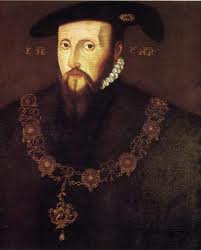
Words to the Wise

Words to the Wise

What is wisdom?  If we followed Aristotle’s idea of the practicality of wisdom not only would a person choose the best means to the ends or goals they may have, but also the ‘correct’ ends.  Now the discussion takes on another dimension involving ethical choices.  And where do we insert experiences, knowledge, perceptions, logic?  Regardless of the definition of wisdom, is it applied differently depending on the person and their role in life, such as a ruler?  If a head of state is expected to make decisions wisely, how do we judge the wisdom of the decisions?  Is it simply because we agree with her or his choices?

We have much evidence that Henry VII and Elizabeth Regina were wise given the profuse use of the word to describe them both.  With Henry we are assured that this “King, to speak of him in terms equal to his deserving, was one of the best sort of wonders, a wonder for wise men” (Bacon and Lumby 211).  Praise indeed.

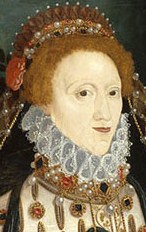
henry 7          elizagheer2

Henry VII                                      Elizabeth Regina

Both Polydore Vergil, an Italian priest who arrived in Britain in the year 1502 and was commissioned by King Henry VII to write a history of Britain, and Edward Hall, a Henrican contemporary, commented on Henry’s wisdom, shrewdness, prudence and resoluteness especially in moments of danger.  “Kyng Henry being made wyse and expert with troubles and myschiefes before” in the time of his exile (Hall 435).  Vergil and Hall also observed how the people respected his abilities and “no one dared to get the better of him through deceit or guile” (Vergil 144).

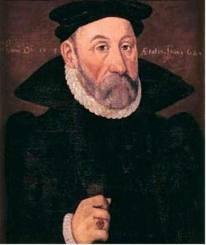
polydore vergil  Edward Hall

Polydore Vergil                                                  Edward Hall

John Fisher, the Bishop of Rochester spoke glowingly of Henry.  Below are the text and the modern script of his oratory about Henry:

Fisher sermon   john fisher


John Fisher

All be it he had as much of them                                             
as was possible in manner for any king to have, his
politic wisdom in governance it was singular, his
wit always quick and ready, his reason pithy and
substantial, his memory fresh and holding, his
experience notable, his counsels fortunate and taken
by wise deliberation, his speech gracious in divers
languages … his dealing in time
of perils and dangers was cold and sober with great
hardiness.

Francis Bacon also reported that Henry’s “wit increased upon the occasion; and so much the more, if the occasion were sharpened by danger.  Again, whether it were the shortness of his foresight, or the strength of his will, or the dazzling of his suspicions…” (Bacon and Lumby 219).

Henry’s suspicions made him guarded in his dealings with others, in his plans and his strategies.  Perhaps it was this guarded behavior that led to the many chroniclers referring to him as shrewd.  He was “undoubtedly shrewd, calculating, and long-headed; he seems never to have been overcome by passion” (Elton 16).

He was so shrewd he could make good use of what little advantages he had and in turn he was not a man of whom people could take advantage.  Henry was very prudent in his selection of advisors.  He “cogregated together the sage councelers of his realme, in which coiisail like a prince of just faith and true of promes… (Hall 423).

Men wanted to serve him but they could not tell what was on Henry’s mind.  As a “wise Prince, it was but keeping of distance, which indeed he did towards all; not admitting any near or full approach, either to his power, or to his secrets: for he was governed by none” (Bacon and Lumby 215).

“Few indeed were the councillors that shared his confidence, but the wise men, competent to form an estimate of his statesmanship, had but one opinion of his consummate wisdom” (Gairdner 209).

Henry could not be called a learned man yet he was a lover of learning and gave his children an excellent education (Gairdner 217).  Famously in 1498-99 Erasmus met with the then future Henry VIII when he was eight in 1498-1499 and still in the royal nursery at Eltham in Kent.  Henry appreciated the humanist movement and ensured his sons were grounded in a classical education. Henry VII supported universities as well as his wife’s and mother’s patronage of colleges.  He purchased books and acquired a library.  “He was rather studious than learned; read most books that were of any worth, in the French tongue, yet he understood the Latin, as appeareth in that cardinal Adrian and Others, who could very well have written French, did use to write to him in Latin” (Bacon and Lumby 218). John Fisher spoke of Henry knowing many languages, the “fruit of his long exile” (Fisher).  Perhaps the best ‘education’ he had was the exposure to various governmental methods while in exile and visiting other Courts in Brittany and France.

eltham exterior                 Eltham_palace_GreatHall

Exterior and Interior of Eltham Palace

Henry brought with him the experiences and knowledge of the cultures of France, Burgundy and Brittany with the secular classical themes. “This trend had already been apparent at Edward IV’s court, but Henry was an important influence in encouraging trends which were to lead to the flowering of Renaissance culture at the Tudor court in the 16th century” (Loades 71). He made “princely use of his wealth, encouraged scholarship and music as well as architecture, and dazzled the eyes of foreign ambassadors with the spendour of his receptions” (Gairdner 9).

Ambassadors were astonished not only with his Court but with the depth of knowledge he displayed of the situations in their own countries and “that they did write ever to their superiors in high terms, considering his wisdom and art of rule:  nay, when they were returned, they did commonly maintain intelligence with him” (Bacon and Lumby 216)

Henry’s prudent policies, circumspect behaviors and political wisdom earned him high praise from contemporaries and historians.  “He was of an high mind and loved his own will and his own way, as one that revered himself and would reign…” with triumph as he excelled at so many things (Bacon 793).  He was successful.  He was prudent.  He was wise. He was emulated by his granddaughter, Elizabeth Regina.

Events in Elizabeth’s childhood taught her not to speak or act unwisely; her very life depended upon deliberate, cautious actions. These early lessons contributed to her wisdom and, along with her characteristics of intelligence, tenacity, compromise, and subtlety, she became well-respected.  Even after centuries, most historians and chroniclers explain “even her errors of taste and judgment as superlative examples of political skill” (Elton 262).

Author Jasper Ridley is one of the few dissenters.  He proposed that the truth was that “Elizabeth was an emotional woman, and often acted on impulse, and not from cunning political calculation” (Ridley 41).  Her successes were not by good policy and planning, “but by luck, by muddling through…” (Ridley 335).

As much as one respects the interpretation of Ridley, overwhelming examples, even if disregarding sycophantic inclinations of contemporaries, show her intelligence and wisdom.

Maximilien de Bethune, Baron de Rosny, ambassador from France, exclaimed “this great Queen merited the whole of that great reputation she had throughout Europe” concerning her grasp for the political situation in Europe (Hibbert 115).  Even as she aged, diplomats were still astounded at her grasp of affairs of state.  Andre de Maisse, the French ambassador, thought her shrewd, calculating, statesmanlike and well-informed.
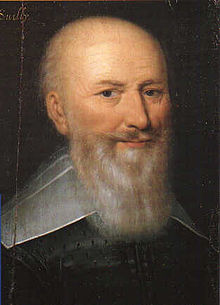

baron de rosny                             demassie

Baron de Rosny                                Andre de Maisse

Her Clerk of the Council, Robert Beale, believed that she was a “princess of great wisdom, learning and experience” and Sir John Harington wrote how Elizabeth would pass her judgment on matters and knew how to “cunningly commit the good issue to her own honour and understanding…” (Sitwell 87). Harington also observed that he “never did find greater show of understanding and learning than she was blessed with” (Hibbert 114).
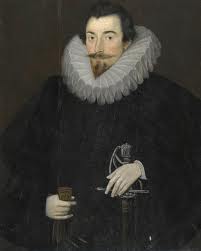
johnharington

Sir John Harington

The success of Elizabeth’s education is well-known and documented.  Her preference for Roger Ascham as her tutor showed early on her judgment in men.  He was an excellent choice and provided her not only a thorough education but a life-time love of learning. Even as queen, Elizabeth continued her studies as it was well-known she spent a part of her day reading and at study “by a wise distribution of her time” (Bohun 346).  Ascham had nothing but praise for the quick mind and abilities of his pupil.  Below, reproduced in its entirety is a letter Ascham wrote to his friend, Johannes Sturm, German scholar concerning Elizabeth:

“It is difficult to say, whether the gifts of nature or of fortune are most to be admired in my distinguished mistress.  The praise which Aristotle gives, wholly centres in her; beauty, stature, prudence, and industry.  She has just passed her sixteenth birthday and shows such dignity and gentleness as are wonderful at her age and in her rank.  Her study of true religion and learning is most eager.  Her mind has no womanly weakness, her perseverance is equal to that of a man, and her memory long keeps what it quickly picks up.  She talks French and Italian as well as she does English, and has often talked to me readily and well in Latin, moderately in Greek.  When she writes Greek and Latin, nothing is more beautiful than her handwriting” (Neale 14 – 15).

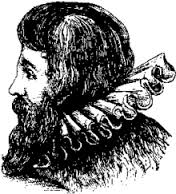
      aschamengraving2                                           roger asham

Princess Elizabeth and                                     Sketch of Roger Ascham
Roger Ascham

Like her grandfather Henry VII, her skill in many languages allowed her to take a prominent role in the diplomacy of her country as she could meet with ambassadors herself.  Her intellect allowed her to match the professional diplomats in subtlety and the language of diplomacy itself.

Elizabeth’s skills in government did not come from specific training as an apprentice but from her formal, classical and humanist education and her practical, political education of survival during her brother’s and sister’s reigns.

Without going into great detail, the young Elizabeth’s handling of the Thomas Seymour issue shows the intelligence, courage and composure she displayed while detained and questioned by Sir Robert Tyrwhitt.  Tyrwhitt wrote the Lord Protector “I do assure your grace, she hath a very good wit, and nothing is gotten of her, but by great policy” (Erickson 88).

Another early example comes during her sister Mary’s reign.  While under suspicion as part of the Wyatt Rebellion, Elizabeth negotiated with the councilors sent to arrest her to write a letter to Mary. Using her talents and education, Elizabeth not only composed a brilliant note, she also managed to utilize enough time that the tide had altered deflecting her move to the Tower for one more day.  On the letter itself, she made diagonal marks at the end of the second page to ensure no one would tamper with the document.
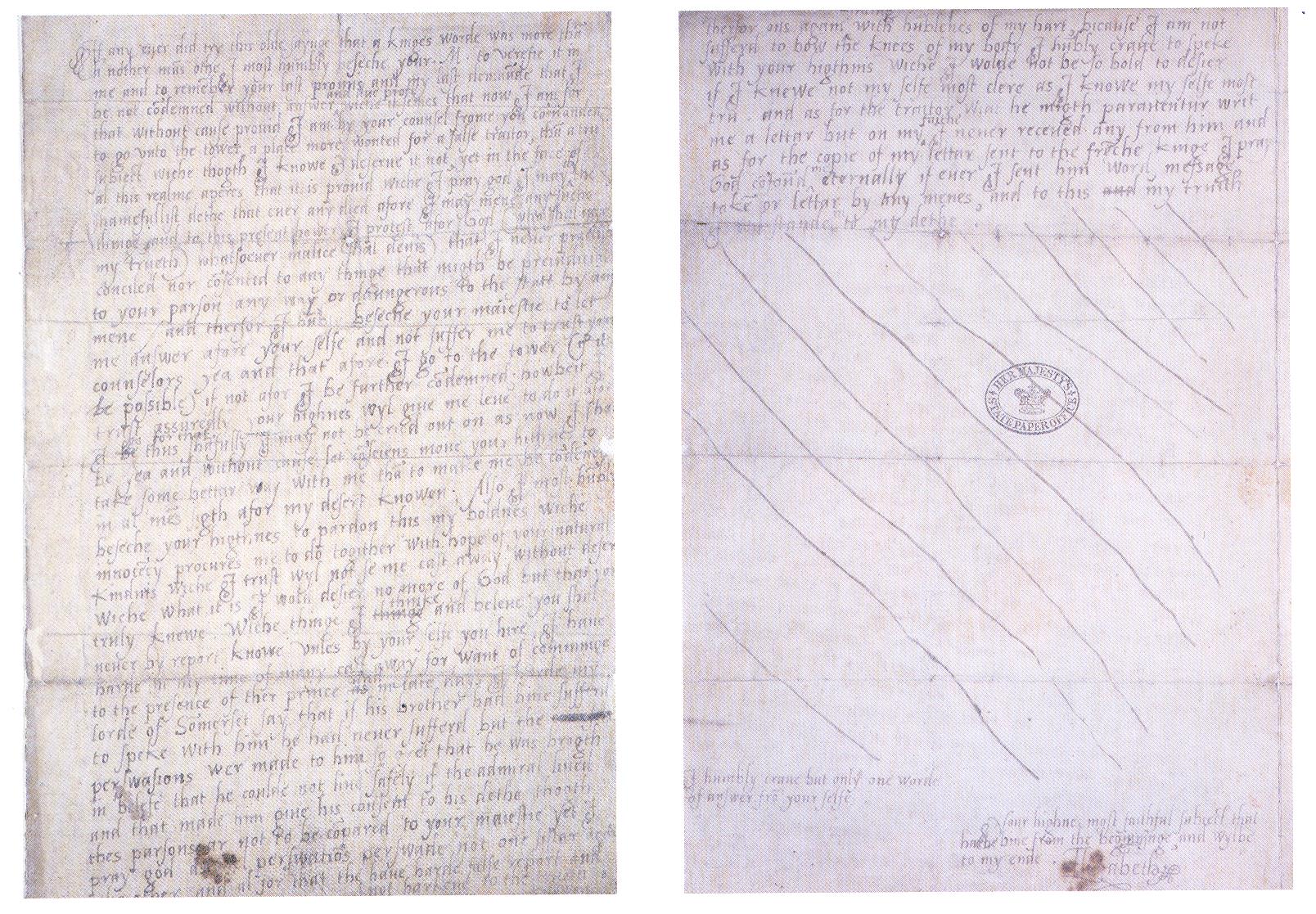
diagonal letters 001

Letter to Mary with diagonal lines across second page

As a mature and seasoned sovereign, Elizabeth continually dealt with complicated and life-threatening situations.  Would all decisions be exact?  Of course they would not.  Yet, most historians agree with her contemporary John Hayward’s exclamation concerning her character that she was “in purpose, just; of spirit, above credit … as well for depth of judgment…” (Hayward 8).  Maybe her wisdom came from knowing that her success came from serving England and her peoples and from making decisions that rested on the good of the kingdom.  Or maybe it was simply she had a brain in her head and she used it:

There is small disproportion betwixt a fool who
useth not wit because he hath it not and him
that useth it not when it should avail him
Queen Elizabeth

References 

Bacon, Francis.  The Works of Lord Bacon:  Philosophical Works.  Longman and Co. 1858-1859.  Google Books. Web. 11 Apr. 2013.

Bacon, Francis, and J. Rawson Lumby. Bacon’s History of the Reign of King Henry VII,. Cambridge: University, 1902. Internet Archive. Web. 22 Jan. 2013.

Bohun, Edmund. The Character of Queen Elizabeth, Or, A Full and Clear Account of Her Policies and the Methods of Her Government Both in Church and State, Her Virtues and Defects Together with the Characters of Her Principal Ministers of State … London: Printed for Ric. Chiswell at the Rose and Crown in St. Paul’s Church-Yard(IS), 1693. Google Books. Web. 26 Jan. 2013.

Commynes, Philippe de.  The memoirs of Philip de Commines, Lord of Argenton: containing the histories of Louis XI and Charles VIII. Kings of France and of Charles the Bold, Duke of Burgundy. To which is added, The scandalous chronicle, or Secret history of Louis XI  London:  H. G. Bohn, 1855.  Internet Archive. Web. 10 Feb. 2013.

Elton, G. R. England Under the Tudors. Third ed. London:  Routledge, 1991. Print.

Fisher, John, and John E. B. Mayor. The English Works of John Fisher, Bishop of Rochester. London: N. Trübner for the Early English Text Society, 1876. Google Books. Web. 12 Feb. 2013.

Erickson, Carolly. The First Elizabeth. New York: Summit Books. 1983. Print.

Griffiths, Ralph A. and Roger S. Thomas.  The Making of the Tudor Dynasty.  New York: St. Martin’s Press, 1985. Print.

Hall, Edward, Henry Ellis, and Richard Grafton. Hall’s Chronicle; Containing the History of England, during the Reign of Henry the Fourth, and the Succeeding Monarchs, to the End of the Reign of Henry the Eighth, in Which Are Particularly Described the Manners and Customs of Those Periods. London: Printed for J. Johnson and J. Rivington; T. Payne; Wilkie and Robinson; Longman, Hurst, Rees and Orme; Cadell and Davies; and J. Mawman, 1809. Archive.org. Web. 2 Jan. 2013.

Hayward, John, and John Bruce. Annals of the First Four Years of the Reign of Queen Elizabeth. London: Printed for the Camden Society by J.B. Nichols and Son, 1840. Google Books. Web. 19 Jan. 2013.

Hibbert, Christopher.  The Virgin Queen: Elizabeth I, Genius of the Golden Age.  New York: Addison-Wesley Publishing Company, Inc., 1991.  Print.

Jones, Michael K. and Malcolm G. Underwood.  The King’s Mother: Lady Margaret

Beaufort, Countess of Richmond and Derby. New York: Cambridge University Press, 1992. Print.

Loades, David, ed. The Tudor Chronicles: The Kings.  New York: Grove Weidenfeld, 1990.  Print.

Neale, J. E. Queen Elizabeth I. Garden City, NY: Doubleday, 1957. Print.

Norton, Elizabeth.  Margaret Beaufort: Mother of the Tudor Dynasty.  Stroud: Amberley, 2010. Print.

Okerlund, Arlene Naylor.  Elizabeth of York.  New York: Palgrave Macmillan, 2009. Print.

Penn, Thomas.  Winter King; the Dawn of Tudor England.  New York: Penguin Books, 2012. Print.

Pollard, Albert Frederick, ed. The Reign of Henry VII: From Contemporary Sources.[S.l.]: Longmans Green and, Co. 1913. Google Books. Web. 1 Apr. 2013. 

Ridley, Jasper. Elizabeth I: The Shrewdness of Virtue.  New York: Fromm International Publishing Corporation, 1989.  Print.

Ross, Josephine.  The Tudors, England’s Golden Age.  London: Artus, 1994.  Print. 

Sitwell, Edith.  The Queens and the Hive.  Harmondsworth: Penguin Books, 1966. Print.

Somerset, Anne. Elizabeth I.  New York: Alfred A. Knopf, 1991. Print.

Vergil, Polydore, The Anglica Historia of Polydore Vergil, A.D. 1485-1537 (translated by Denys Hay), London: Office of the Royal Historical Society, Camden Series, 1950. Web. 29 Mar. 2013.

Weir, Alison.  The Life of Elizabeth I.  New York: Ballatine Books, 1998. Print.

Persona Non Grata

Persona Non Grata

As a young man, the Earl of Richmond claimed that “from the time he was five years old he had been always a fugitive or a prisoner (Commynes 396-397). When Henry was just over four years old, Pembroke Castle, where he had lived with his mother and paternal uncle, Jasper Tudor, was overridden by William Herbert during a stage of the War of the Roses.  Henry’s ward-ship was given to Herbert and he was raised along with the Herbert children at Raglan Castle.  In fact, Anne Devereux , Herbert’s wife, held Henry’s affection throughout her life.

When William Herbert died in battle in 1469, following another stage of the War of the Roses and the return of the Lancastrians, Henry and Pembroke Castle were returned to Jasper Tudor. This time of stability was short-lived. By 1470 the Yorkist king, Edward IV, returned to power.  It is not the purpose here to explain the minutiae of this civil war; let it suffice to say that it was expedient for Jasper and Henry to leave the country.

Intended for France, contrary winds blew them to Brittany (Often referred to as Bretagne) where Henry was to begin his 14-year exile as an enforced guest at the court of Francis II, Duke of Brittany  (Griffiths, Hutchinson, Norton, Penn, Roberts, Vergil).

vannes
City of Vannes with the St.Peter Cathedral where Henry VII sent gifts in acknowledgement of his time there.  He also depicted the city’s patron Saint, St. Vincent in his chapel in Westminster Abbey.

Because of the threats on his life and kidnapping plots, and the logistics of maintaining basically a refugee household, Henry was transferred from place to place.  He was never truly settled.  “Dependent on the whims of others, he learned to think like the fugitive he now was:  to watch and assess loyalties, to sift information from rumour and, caught in the wash of European power politics, to understand how they affected his own fortunes” (Penn 4-5).

Tour dd Elven
Chateau Lagoet’s Tour de Elven where Henry was kept between 1474-1476.

chateau of nantes
Chateau Vannes built by Francis II and visited several times by Henry.

His experiences certainly affected him.  “He developed an exile’s patience, inured to a life in which stretches of empty time were punctuated by sudden alerts, moments of danger in which logical clear-headedness meant the difference between life and death” (Penn 5).  He became resourceful, determined and “unabashed and unafraid when faced with adversity.  He was capable of swift and decisive reactions, and yet he also learned the value of careful and detailed planning in order to avoid needless risks” (Griffiths168), all seemingly positive traits learned while under house arrest and exile.  Some historians believe exile also created in Henry “an almost pathological suspicion” (Jones 61).

Regardless, Henry certainly impressed the French diplomat, Philippe Commynes who met him while he was in Brittany and France.  Commynes marveled that Henry “without power, without money, without right … and without any reputation but what his person and deportment excited; for he had suffered much, been in distress all the days of his life, and particularly a prisoner in Bretagne to Duke Francis from the eighteenth year of his age who treated him as kindly as the necessity of his imprisonment would permit…” would emerge strong and noble (Commynes 560).

Vannes h7 excile
In the fifteenth century this gate in Vannes, Brittany was where Henry VII, as Earl of Richmond, passed into the city which protected other English expats.

In 1483 circumstances galvanized Henry to attempt an invasion of England; a pro-Lancastrian conspiracy, headed by the Duke of Buckingham, gained support in England; and Margaret Beaufort, Henry’s mother, began negotiations with the ex-Queen Elizabeth Woodville to marry their children (Henry to Elizabeth of York) to unite the Houses of York and Lancaster.  After extensive preparations, several ships set sail toward Wales where Henry knew support would be the strongest and he could gain an entry point.  After accompanying ships went astray, Henry “learnt the virtue of caution that day” (Griffiths102).  Wisely, Henry returned to Brittany disappointed but not defeated.

About 10 months later, Henry was informed of a different sort of conspiracy which would have Brittany (under the leadership of Pierre Landais, chief advisor to an incapacitated Francis II) hand him over to Richard III.  Henry organized his flight from the town of Vannes to France dressed as a groom with a small group of expats, he escaped across the border.  Later when a recovering Francis II learned what had happened, he gave safe-conduct passage to the remaining retainers of Henry’s who were still in Brittany. This was a relief to Henry, who had a strong sense of obligation to those who shared his exile.  Once in France, Henry obtained men and equipment from Charles VIII to launch an invasion of England in August of 1485 at the age of 28 (Griffiths, Hutchinson, Norton, Penn, Vergil, Roberts).  The rest they say is history.

The impressions made on him from his years of exile affected more than just his personality.  Henry VII was known for his preference for speaking French, his understanding of European politics and his unfamiliarity with English ways.  Nevertheless, he was able to establish one of the most infamous ruling dynasties in England culminating in the rule of his granddaughter, Elizabeth Regina.

Unlike her grandfather, who had his mother and paternal uncle to direct him, Elizabeth had no such guidance and her apprenticeship to the throne was as severe as his had been.  She too spent many years in a form of exile.  She had to learn the art of statecraft and how to assimilate various players’ actions all while in seclusion at country houses with little or no contact with politicians both domestic or foreign.    

She was able to create a strategy and with determination she maintained her course. This is not to say that she was inflexible.  Elizabeth knew when to shift her course of action as her survival demanded it.

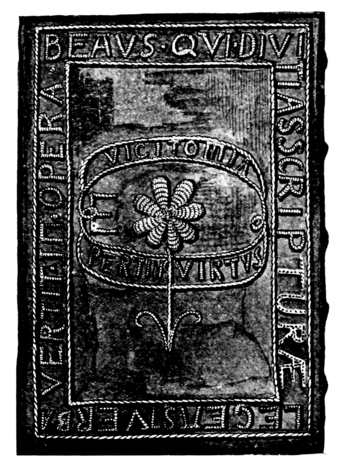
A religious book, The Epistles of St. Paul, owned by Elizabeth during the time that she was imprisoned by Queen Mary, has been preserved in the Bodleian Library.  Amongst the passages she had designed was Vincit omnia pertinax virtus.  E. C. In translation, Tenacious virtue conquers all* Elizabeth the Captive (Marshall 158, Nichols 11).  Beyond her perseverance, her courage, cool headedness, self-reliance and self-possession were cemented during her removal from Court. Also forged during this time were several of her least attractive characteristics: her lack of candor, her ability to conceal her true intentions, her inability to trust, her extreme caution and her vacillation. 

Epistles of st paul
The Epistles of St. Paul preserved by the Bodleian Library showing the above mentioned phrase done in needlework by Elizabeth.

While Henry VII as Earl of Richmond spent 14 years in exile, Elizabeth experienced removal from Court several times.  First was her self-imposed banishment to Hatfield after the Seymour troubles.  She was barely 15 and she had the wisdom to rehabilitate her reputation by concentrating on running the estate, biding her time and minding her behavior.  She led an exemplary life of scholarly pursuits in a decorous manner.  She remained there when the Duke of Northumberland, using Lady Jane Grey as his figurehead, and Mary struggled for the throne.  Once Mary was victorious, Elizabeth journeyed from Hatfield to offer congratulations and support (Erickson, Hibbert, MacCaffrey, Neale, Ridley).

Hatfield_House_Old_Palace Hatfield Old Palace

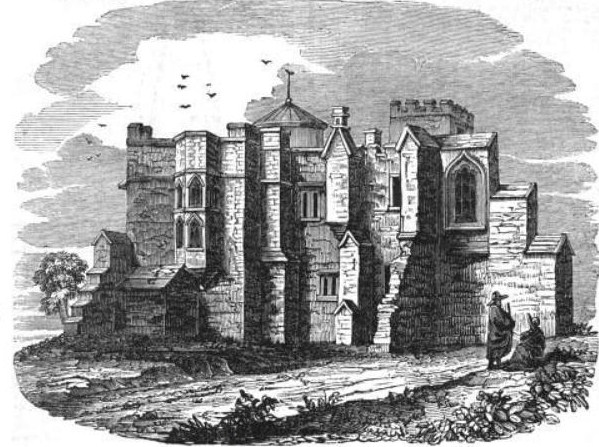
As mentioned above, Elizabeth was detained by Queen Mary at Woodstock after the Wyatt Rebellion.  This captivity, when Elizabeth was 21, was conducted differently from her grandfather’s escape to Brittany.

A letter preserved in the Talbot Papers from Robert Swift, steward to the Earl of Shrewsbury, reported on May 20, 1554,“Of Saterdaye, at one of the cloke at afternone, my Lady Elisabethe was delyv’ed out of Towre by the Lord Tresorer and my Lord Chamb’leyn, and went to Richemonde (on her way to the old Palace of Woodstock, where she remained in confinement till the end of April in the next year,) by water furthewy’er she landyd; wher she shal be attended upon by sundreye of garde, and some officers of ev’y office in the Quen’s howse, but how long she shall co’tinewe there I know not”  (Nichols 8).

woodstock ruins cropped Woodstock Palace drawn in 1714 

Although her custodian, Sir Henry Bedingfield, a Privy Council member under Queen Mary, attempted to spirit her away it was not the case.  People gathered to watch her pass, shouted support, offered her cakes and treats and rang the bells of their churches.  The entire journey saw demonstrations favorable to Elizabeth to such an extent that at one point Bedingfield reminded their hosts along the route that Elizabeth was “a prisoner who had offended against the Queen” (Ridley 62).  Once ensconced in Woodstock, Elizabeth knew her status as in the above reference to herself as ‘captive’ and also in the famous couplet she etched onto a window pane while at Woodstock when she signed herself as prisoner. 

“Much suspected by me,
Nothing proved can be,
Quoth Elizabeth prisoner” (Nichols 9).

After almost a year’s confinement, Elizabeth was summoned to Hampton Court by orders directed to Sir Henry Bedingfeld by Queen Mary: 

Hampton Court, April 17, 1555.

Trusty and well beloved, we greet you well. And forasmuch as we have resolved to have the Lady Elizabeth to repair nearer unto us, we do therefore pray and require you do declare unto her that our pleasure is she shall come to us to Hampton Court in your company with as much speed as you can have things in order for that purpose; wherein you shall not need to make any delay for calling of any other numbers than these, which are yourself and [those that] be now there attendant upon her, And of the time of your setting forward from thence, and by what day you shall think you may be there, we require you to advertise us by your letters with speed. Mary, the Queen (Mumby 187).

bedingfield

Sir Henry Bedingfield

Elizabeth spent time at Hampton Court and other houses from April 1555 until October when she returned to Hatfield.  At Hatfield with her trusted servants, Elizabeth could still not feel safe as Mary had her under continual surveillance (Erickson 153).  Eventually Mary’s suspicions eased, “there was something like a tacit truce between the two sisters.  Elizabeth, withdrawn to country retirement at Hatfield…remained carefully aloof from all political activity. On both sides civility and decorum served to mask underlying unease” (MacCaffrey 25). It was here at Hatfield where Elizabeth learned of her ascension to the throne in November of 1558.

Works Cited

Commynes, Philippe de.  The memoirs of Philip de Commines, Lord of Argenton: containing the histories of Louis XI and Charles VIII. Kings of France and of Charles the Bold, Duke of Burgundy. To which is added, The scandalous chronicle, or Secret history of Louis XI  London:  H. G. Bohn, 1855.  Internet Archive, Web. 10 Feb. 2013. http://archive.org/details/historicalmemoi00comigoog

Erickson, Carolly. The First Elizabeth. New York: Summit Books. 1983. Print.

Griffiths, Ralph A. and Roger S. Thomas.  The Making of the Tudor Dynasty.  New
York: St. Martin’s Press, 1985. Print.

Hibbert, Christopher.  The Virgin Queen: Elizabeth I, Genius of the Golden Age.  New York: Addison-Wesley Publishing Company, Inc., 1991.  Print.

Hutchinson, Robert. Young Henry: The Rise of Henry VIII. London: Weidenfeld &
Nicolson, 2011. Google Books. Web. 02 Dec. 2012.

Jones, Michael K. and Malcolm G. Underwood.  The King’s Mother: Lady Margaret
Beaufort, Countess of Richmond and Derby. New York: Cambridge University Press, 1992. Print.

Marshall, Edward. The Early History of Woodstock Manor and Its Environs, in Bladon, Hensington, New Woodstock, Blenheim; with Later Notices:. Oxford: J. Parker and, 1873. Internet Archive. Web. 18 Feb. 2013.

MacCaffrey, Wallace. Elizabeth I. London: E. Arnold. 1993. Print.

Mumby, Frank  Arthur, and Elizabeth. The Girlhood of Queen Elizabeth, a Narrative in Contemporary Letters, London: Constable, 1909. Internet  Archive. Web. 19 Feb. 2013.

Neale, J. E. Queen Elizabeth I. Garden City, NY: Doubleday, 1957. Print.

Nichols, John. The Progresses and Public Processions of Queen Elizabeth. Among Which Are Interspersed Other Solemnities, Public Expenditures, and Remarkable Events during the Reign of That Illustrious Princess. Collected from Original MSS., Scarce Pamphlets, Corporation Records, Parochial Registers, &c., &c.: Illustrated with Historical Notes. New York: B. Franklin, 1823. Google Books. Web. 19 Jan. 2013.

Norton, Elizabeth.  Margaret Beaufort: Mother of the Tudor Dynasty.  Stroud: Amberley, 2010. Print.

Penn, Thomas.  Winter King; the Dawn of Tudor England.  New York: Penguin Books, 2012. Print.

“Queen Elizabeth, Her Progresses and Processions: Confinement of the Princess Elizabeth in the Tower–Her Removal to Woodstock.” The Saturday Magazine 21 Apr. 1838: 146-47. Google Books. Web. 18 Feb. 2013. <http://books.google.com/books?id=i1YFAAAAQAAJ&pg=PA145&dq=saturday+magazine+372&hl=en&sa=X&ei=yKEiUb_1LfGLyAHc1YCwBA&ved=0CDAQ6AEwAA#v=onepage&q=saturday%20magazine%20372&f=false&gt;.

Ridley, Jasper. Elizabeth I: The Shrewdness of Virtue.  New York: Fromm International Publishing Corporation, 1989.  Print.

Roberts, Peter.  “The Welshness of the Tudors.” History Today. History Today.com, n.d. Web. 11 Feb. 2013.

Vergil, Polydore. Polydore Vergil, Anglica Historia (1555 Version). Ed. Dana F. Sutton. Irvine: University of California, 2005. Polydore Vergil, Anglica Historia (1555 Version). The Philological Museum, 04 Aug. 2005. Web. 02 Jan. 2013.

For a reproduction of Queen Mary’s orders to Sir Henry Bedingfeld on his duties and responsibilities as keeper of the then Lady Elizabeth consult the digitized volume of The Girlhood of Queen Elizabeth: A Narrative in Contemporary Letters pages 135 & 135 at the following address: http://books.google.com/books?id=bpkQAAAAYAAJ&pg=PA134&dq=A+Memorial+given+by+the+Queen’s+Highness++unto+her+trusty+and+right+councillor&hl=en&sa=X&ei=p9ooUYOoC8XHrQGnyIGgDw&ved=0CDAQ6AEwAA#v=onepage&q=A%20Memorial%20given%20by%20the%20Queen’s%20Highness%20%20unto%20her%20trusty%20and%20right%20councillor&f=false

*Special thanks to Jamie, a Latin instructor, for her help with the translation of the quote by Elizabeth I.

Fate is Remarkable

 Fate is Remarkable:

Henry Tudor as Earl of Richmond and Elizabeth Tudor as Lady Elizabeth were each in their time potential heirs to the English throne.  Remarkably, both believed in their chance and right to rule.  They took their fate into their own hands,  ensuring their options remained open as they forged their paths to the throne.

Henry was a young man of around 15 years of age in September of 1471 when he and his paternal uncle, Jasper Tudor, found themselves avoiding the Yorkist threat of Edward IV in England by sailing for France.  As fate would have it, storms blew them off course and they landed in Brittany.  Thus began Henry’s 14-year exile.


Pembroke Castle

Pembroke Castle from which Henry, Earl of Richmond and Jasper Tudor, Earl of Pembroke fled in 1471.

Astoundingly, Henry was able to direct much of his destiny while in Brittany despite being removed from England and under close surveillance as a possible political pawn between France, Brittany and England.

During the majority of his years in exile, Henry honed his leadership skills as the focal point of the expatriates who joined him . He kept informed of the events in England so when conditions seemed favorable to an invasion in 1483 Henry attempted it. Philippe de Commynes diplomat and historian for the Dukes of Burgundy and later the Kings of France, who was often in Brittany, reported that, upon King Edward’s death, Francis II, Duke of Brittany, “supplied the Earl of Richmond liberally both with men and ships …and sent him to land his forces in England; but; meeting with foul weather, he was driven into Dieppe, and from thence went back into Bretagne” (Commynes 313).  The Lancastrians wisely abandoned the invasion.

Henry earnestly began preparations at this time for his ascension to the throne and to legitimize his claim.  It was reported, first by Bernard Andreas, an early biographer of Henry VII, that Henry made a formal pledge while in exile in Britanny at Rennes Cathedral on Christmas Day 1483 that whenever he obtained the crown he would marry Elizabeth of York, the eldest daughter of Edward IV (Andreas 25).  Negotiations had been on-going and culminated in the marriage agreement which would unite the houses of York and Lancaster and eventually give Henry’s children a strong claim to the throne.


Rennes Cath

Rennes Cathderal

Henry realized that it was paramount to secure the support of men in England and Wales.  Having the Yorkist leadership on his side (proof is the marriage agreement between him and Elizabeth) emboldened him to write several letters to supports, especially those in Wales where his base was strongest and from where he planned to march on Richard.  He asked for their aid and promised to remember their good offices.  Not a very hefty guarantee despite his signature as H.R. the regal monogram.  Below is an example of one such correspondence:  (Roberts 403)

H7 Letter Use

Once the invasion was imminent, Henry continued to contact sympathizers promising deliverance from servitude if they marched with him.  In the letter below Henry does not come off as a ‘poor exile’.  Here Henry refers to himself as King and Richard III as a usurper of Henry’s rights.

“By the King
Right trusty and well-beloved, wee greete you well:
And whereas it is soe, that, through the helpe of Almighty
God, the assistance of our loveing and true subjects … in all haste
possible to descend into our realme of England, not only for
the adoption of the Crowne, unto us of right appertaining,
but also for the oppression of the odious tyrant Richard,
late duke of Gloucester, usurper of our said right; and …
moreover to reduce as well our said realme of England into
its ancient estate, honour, and property … and the people of the
same to their dear erst liberties, delivering them of such
miserable servitude as they have piteously long stood in.
We desire and pray you, and upon your allegiance strictly
charge and command you, that immediately upon the sight
hereof with all such power as ye may make, defencibly
arrayed for the warre, ye addresse you towards us, without
any tarrying upon the way, until such time as ye be with
us, … your singular good Lord, and that ye faile not hereof as ye
will avoyd our grievous displeasure, and answere it unto
your peril.  Given under our signet…” (Jones 25).

When Henry learned that Pierre Landais, chief advisor to the Duke of Brittany, was in negotiations with Richard III to extradite Henry to England he knew he had to act.  According to Commynes, there was “some agreement with king Richard, much to his [Henry’s] prejudice and disadvantage… he and his retinue went away privately without taking their leave of the duke” (Commynes 313).  What Henry had done was to orchestrate his own escape to France from the town of Vannes dressed as a groom with a small group of loyal Lancastrians. Once in France, King Charles VIII provided aid in money, men and artillery and after extensive preparations a final and successful invasion was made.   That August of 1485, Henry had to have realized that he was taking his fate into his own hands (Commynes, Griffiths, Hutchinson, Norton, Penn, Roberts and Vergil). 

vannes

Vannes, Brittany

Henry and we will see his granddaughter, Elizabeth, learned patience and persistence as exiles, but also as rulers-in-waiting they recognized the time for decisive action. By taking full advantage of circumstances they achieved their goal—becoming seated on the throne of England as an all-powerful sovereign.

As a young woman of 15, Elizabeth was involved, unwittingly, in the schemes of Thomas Seymour the widower of her last step-mother, Catherine Parr.  His ambition and folly are well-known and to have involved this young person was unconscionable.  It is not the point here to explain the elaborate plan although it must be acknowledged that the affect on Elizabeth was immense. Certainly it took its toll emotionally and physically, and Elizabeth was unwell for some months after. However, as well as affecting her health, it also affected her reputation and this was a great concern to Elizabeth.

  Seymour Thomas       
Thomas Seymour    

Always sensitive about what people thought of her, Elizabeth wanted the rumor that she was pregnant by the Admiral suppressed. She wrote to Edward Seymour, the Lord Protector, demanding a public statement be made disclaiming the rumors and threatening punishment for those who continued spreading the tale.  Here is a remarkable example of Elizabeth taking matters into her own hands when she penned “rumours abroad which be greatly both against my honour and honesty, which, above all other things, I esteem, which be these, that I am in the Tower, and with child by my Lord Admiral.  My lord, these are shameful slanders, for which besides the great desire I have to see the King’s Majesty, I shall most heartily desire your lordship that I may come show myself there as I am.  Written in haste.  Your assured friend to my little power, Elizabeth” (Mumby 45).

Seymour Edward
Edward Seymour

More letters of the same vein were sent, such as this one to the Lord Protector, on February 21, 1549, in which she wrote requesting “unto your lordship and the rest of the Council to send forth a proclamation into the countries that they refrain their tongues, declaring how the tales be but lies, it should make both the people think that you and the Council have great regard that no such rumors should be spread of any of the king’s majesty’s sisters (as I am, though unworthy)” (Marcus 33).

She was successful; a proclamation was eventually issued.  Elizabeth steadfastly professed her innocence to Seymour’s plans to marry her and saying she would never do anything without the Council’s permission.  Elizabeth understood the moral of the experience: she was careful of her lifestyle; she scrupulously avoided any hint of scandal; she became very conservative in her dress—plain, sober colors, little adornment or jewelry–as she presented an image of modesty and decorum; she managed her own bookkeeping; and she applied herself to her studies.  This remarkable young woman knew she needed to gain what she could from this experience and that was to maintain her reputation and secure her servants’ freedom (Erickson, MacCaffrey, Neale, and Ridley).

During the investigation, several members of Elizabeth’s household were detained, most painfully for Elizabeth her governess, Kat Ashley—it would be sometime before they were reunited.  The Lord Protector was subjected to a flurry of letters demanding the return of Kat Ashley to Elizabeth’s service and the dismissal of other ladies appointed to her household.   She continued protestations of innocence that there was ever any intention to marry–Thomas Seymour or anyone– without permission from the King, the Council or the Lord Protector.  “I am not of so simple understanding” (Marcus 33) this 15-year old told seasoned politicians.

Elizabeth was at Hatfield in late November of 1556 when she was summoned by Queen Mary to London.  While there Mary presented to her sister a prospective marriage with Emmanuel Philibert, the Duke of Savoy.  Contemporary Westerners cannot understand the strength of will and purpose it took for Elizabeth to decline.  Society of her time could not fathom a young woman not wanting to marry and even more so, defying the express wishes of her family let alone her sovereign.  Her rationale for declining was that she would not marry anyone.  Having been invited for the Christmas festivities, she abruptly returned to Hatfield on December 3rd after only a short stay in London (Bassnett, Gristwood, Machyn, Plowden, and Somerset).

Em Phil savoy
Emmanuel Philibert, Duke of Savoy

Perhaps she had displeased the Queen over her refusal despite having through her “amiable condescension, obliging address, and agreeable conversation, procured her new interests and attachments, and even engaged the best part of the Lords of the Council in her favor” (Nichols 25).

Leaving London
This is an eye witness account of Elizabeth’s entry and then exit from London on 28 November and 3 December 1556.

During the spring of 1558 when approached by the King of Sweden as a possible bride for his son, Elizabeth would tell Mary’s representative Thomas Pope that what she believed in 1556 was still true: “I assure you upon my truthe and fidelitie, and as God be mercifull unto me, I am not at this tyme otherways mynded, than I have declared unto you; no, though I were offered the greatest Prince in all Europe” (Nichols 24).  This was the response Pope declared “the Ladye Elizabeth hir Graces aunswere made at Hattfield, the xxvi of April 1558, to Sir T. Pope, Knt. Being sent from the Queenes Majestie to understand how hir Grace lyked of the mocyon of marryage made by the Kynge elect of Swethelandes Messenger” (Nichols 25).  Elizabeth had chartered her course of remaining unmarried, and was determined to control that element of her life.

Legend has it that Elizabeth was in the parkland at Hatfield seated beneath an oak tree on November 17, 1558, when news reached her of Mary’s death. She is said to have whispered in Latin what she truly must have felt: “A Domino factum est istud et est mirabile in oculis nostris” –This is the Lord’s doing, and it is marvelous in our eyes.”
Hatfield_House_Old_Palace
Hatfield Old Palace 

Even if Elizabeth did give Divine credit for this awe-inspiring event, she did much to keep herself safe and established in a position for inheriting.  Elizabeth was at twenty-five years old Queen of England. For the first time in her life, her destiny lay completely in her own hands.  Fate is remarkable.

Works Cited

Andreas, Bernardus, and James Gairdner. Historia Regis Henrici Septimi Necnon AliaQuaedam Ad Eundem Regem Spectantia. London: Longman, Brown, Green, Langmans, and Roberts, 1858. Google Books. Web. 2 Mar. 2013.

 Bassnett, Susan.  Elizabeth I: a Feminist Perspective.  Oxford: Berg Publishers, 1997. Print.

Commynes, Philippe de.  The memoirs of Philip de Commines, Lord of Argenton: containing the histories of Louis XI and Charles VIII. Kings of France and of Charles the Bold, Duke of Burgundy. To which is added, The scandalous chronicle, or Secret history of Louis XI  London:  H. G. Bohn, 1855.  Internet Archive, Web. 10 Feb. 2013.

Erickson, Carolly. The First Elizabeth. New York: Summit Books. 1983. Print.

Griffiths, Ralph A. and Roger S. Thomas.  The Making of the Tudor Dynasty.  New
York: St. Martin’s Press, 1985. Print.

Gristwood, Sarah.  Elizabeth & Leicester:  Power, Passion, Politics. New York: Viking Press, 2007.  Print.

Hutchinson, Robert. Young Henry: The Rise of Henry VIII. London: Weidenfeld & Nicolson, 2011. Google Books. Web. 02 Dec. 2012.

Jones, W. Garmon. Welsh Nationalism and Henry Tudor. London: Honourable Society of Cymmrodorion, 1918. Internet Archive. Web. 2 Mar. 2013.

MacCaffrey, Wallace. Elizabeth I. London: E. Arnold. 1993. Print.

Machyn, Henry. The Diary of Henry Machyn, Citizen and Merchant-taylor of London From 1550 to 1563. Ed. John Gough Nichols. London: Camden Society, 1848. Google Books. Web. 24 Feb. 2013.

Marcus, Leah S. et al., eds. Elizabeth I: The Collected Works. Chicago: University of Chicago Press, 2002. Print.

Mumby, Frank  Arthur, and Elizabeth. The Girlhood of Queen Elizabeth, a Narrative in Contemporary Letters, London: Constable, 1909. Internet  Archive. Web. 18 Feb. 2013.

Neale, J. E. Queen Elizabeth I. Garden City, NY: Doubleday, 1957. Print.

Nichols, John. The Progresses and Public Processions of Queen Elizabeth. Among Which Are Interspersed Other Solemnities, Public Expenditures, and Remarkable Events during the Reign of That Illustrious Princess. Collected from Original MSS., Scarce Pamphlets, Corporation Records, Parochial Registers, &c., &c.: Illustrated with Historical Notes. New York: B. Franklin, 1823. Google Books. Web. 19 Jan. 2013.

Norton, Elizabeth.  Margaret Beaufort: Mother of the Tudor Dynasty.  Stroud: Amberley, 2010. Print.

Penn, Thomas.  Winter King; the Dawn of Tudor England.  New York: Penguin Books, 2012. Print.

Plowden, Allison.  Marriage with My Kingdom.  New York: Stein and Day, 1977. Print.

Ridley, Jasper. Elizabeth I: The Shrewdness of Virtue.  New York: Fromm International
Publishing Corporation, 1989.  Print.

Roberts, Emma. Memoirs of the Rival Houses of York and Lancaster: Historical and Biographical, Embracing a Period of Engl. History from the Accession of Richard II. to the Death of Henry VII. ; in Two Volumes. London: Harding & Lepard, 1827. Google Books. Web. 9 Feb. 2013.

Somerset, Anne. Elizabeth I.  New York: Alfred A. Knopf, 1991. Print.

Vergil, Polydore. Polydore Vergil, Anglica Historia (1555 Version). Ed. Dana F. Sutton. Irvine: University of California, 2005. Polydore Vergil, Anglica Historia (1555 Version). The Philological Museum, 04 Aug. 2005. Web. 02 Jan. 2013.