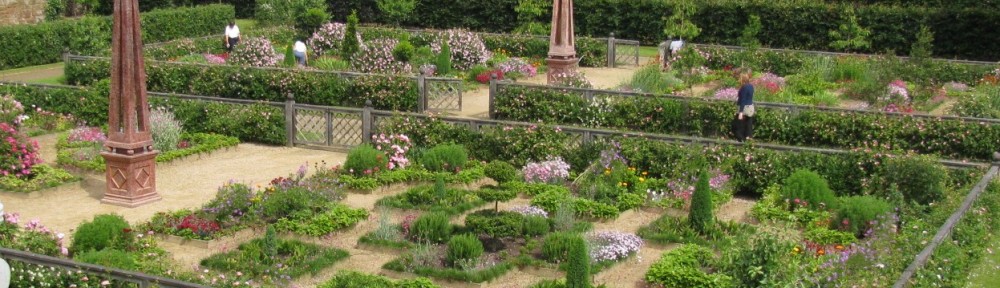
The Second Step-Mother to Elizabeth, Anne of Cleves
After the death of Jane Seymour, Henry began negotiations with European Royal houses. Henry was still Catholic in the sense that he did not agree to reforms in the services of worship. In 1539 he had the Act of Six Articles drawn up which kept the traditional church teachings, especially the doctrine of transubstantiation. His advisors such as Cromwell and Cranmer did not relish a Catholic bride and steered Henry toward the Protestant countries and dukedoms. The Duke of Cleves was a mild Protestant and had two unmarried sisters. Anne was the ‘lucky’ bride. She was married to Henry in January 1540 and divorced six months later in July.

Henry VIII illustrated on his Marriage Proclamation to Anne of Cleves, January 5, 1540.
Tradition has passed down that Anne was so disgusting to Henry that he declared after first meeting her that “I like her not”. Anne gets an unjustified description as ‘The Flanders mare’. She was not as unattractive (we will not delve into the issue of painting by Hans Hoblein) as Henry’s supporters and biographers make out (for evidence consult the individual biographies referenced below). Their first meeting did not go well and Henry could not overlook her response. He projected his shortcomings onto her. What had happened was, Henry full of romantic ideas of surprising his bride, entered her presence shortly after her arrival on the shores of England, disguised as a messenger. Anne spoke few words of English, her ladies in waiting were complete foreigners, and no one advised her about Henry’s preference for masquerades which included coming upon ‘unsuspecting’ Courtiers in disguise. Startled by this muddied, elderly messenger acting very familiarly to her, Anne responded coldly and not with the delighted surprise Henry expected.

The (in)famous Hans Holbein Painting, 1539
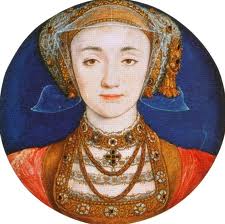
Miniature attributed to Hans Holbein, 1539

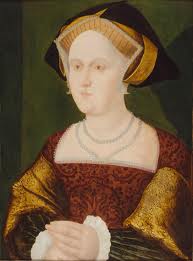
Attributed to Barthel Bruyn, 1540s
Not her features but perhaps the whole package was deemed lacking by Henry—a man captivated by the accomplishments Anne Boleyn learned at the Court of France. Anne of Cleves, on the other hand, was reared to be a practical companion to a man with position and power, her talents of intelligence and common sense lent themselves to being a successful housewife. Dancing, playing musical instruments, and speaking in foreign languages would not have been part of her upbringing. Was she unattractive? That debate we will leave behind. This blogger believes Anne was probably attractive but “had no accomplishments whatever” that Henry found so necessary (Strickland 410).

Ceremonial bedhead created for the marriage of Henry and Anne
According to Gregorio Leti, an Italian historian writing in the late 1600s with access to documents that have since disappeared, Elizabeth wrote to her father about this time asking for permission to meet her new step-mother, Anne of Cleves.
I would like to caution us to accept Leti’s work with a touch of reserve. Mary Anne Everett Wood, a later historian, reminds us “the originals have perished, or are no longer accessible” (Wood 14). Leti would have translated his sources into his native Italian and the only text available of his work is itself a French translation published in Amsterdam in 1694 titled, La Vie d’Elizabeth, reine d’Angleterre. This work was supposedly suppressed in England by royal authority. The letter, which has no date or signature, written when Elizabeth would have been a little over six years old is below.
Madame,—I am struggling between two contending wishes—one is my impatient desire to see your Majesty, the other that of rendering the obedience, I owe to the commands of the King my father, which prevent me from leaving my house till he has given me full permission to do so. But I hope that I shall be able shortly to gratify both these desires. In the meantime, I entreat your Majesty to permit me to show, by this billet, the zeal with which I devote my respect to you as my queen, and my entire obedience to you as to my mother. I am too young and feeble to have power to do more than to felicitate you with all my heart in this commencement of your marriage. I hope that your Majesty will have as much good will for me as I have zeal for your service. (Queen Elizabeth I 21)
Anne showed the letter to the king and he would not let Elizabeth come to court. Henry “took the letter and gave it to Cromwell” ordering him to write a reply. “Tell her,” he said brutally, “that she had a mother so different from this woman that she ought not to wish to see her” (Weir 408). Whether or not the story is true, Henry did not withhold permission for long as Elizabeth was eventually brought to Court from Hertford Castle to meet Anne.
Leti reports that “Anne of Cleves, when she saw Elizabeth, was charmed by her beauty, wit and …that she conceived the most tender affection for her. Anne claimed that to have had Elizabeth “for her daughter would have been greater happiness to her than being queen” (Strickland Life of Queen Elizabeth I 15). This sentiment should not be diluted by the fact that Anne was queen for only six months.
When Henry could not evade the wedding, he became determined to divorce Anne as soon as he could. According to Martin Hume, when confronted about a previous marriage (a pre-contract to the Duke of Lorraine has been mentioned in many biographies but no marriage so I take this with a grain of salt) Anne replied, “Please your Majesty, it is true I was espoused to him, but when the Duke spoke to me about marrying your Majesty, he told me my husband was dead, and I know nothing more about it” (Hume 93). Hume continues that Henry, angry at the Duke of Cleves for giving him a married woman, called together his Council for advice on what to do. The Council recommended a divorce and agreed he should make an allowance for Anne to live on after their marriage was dissolved. “The lady took it pleasantly enough” (Hume 95).

Rare document with the signature “Anna the Queen”

Most signatures are “Anna the Daughter of Cleves”
When the “conditions of her divorce were arranged, she (Anne) requested, as a great favour, that she might be permitted to see her (Elizabeth) sometimes” (Strickland Life of Queen Elizabeth I 15). Henry agreed as long as Elizabeth addressed her as Lady Anne instead of Queen Anne (Lindsey 156). Anne’s relationships and status were established by that new title.
Upon her divorce Anne retained a position in the family and Court with the status as the King’s Sister. She gained a sizable income “secured on the Cornish tin mines,” (Hume 95) plus lands and properties granted to her “to the value of £3,000* a year” (Strickland 419). Anne was given Richmond Palace, Hever Castle, Penshurst, Dartford Castle, a London residence, plus other estates such as the land-hold in Lewes.
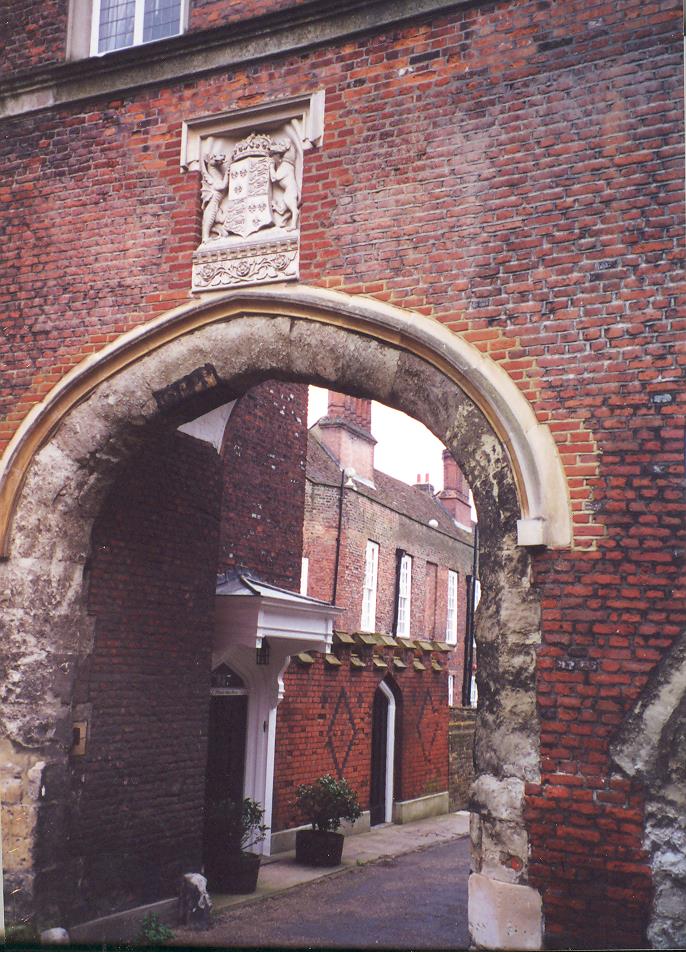
Gate at Richmond Palace
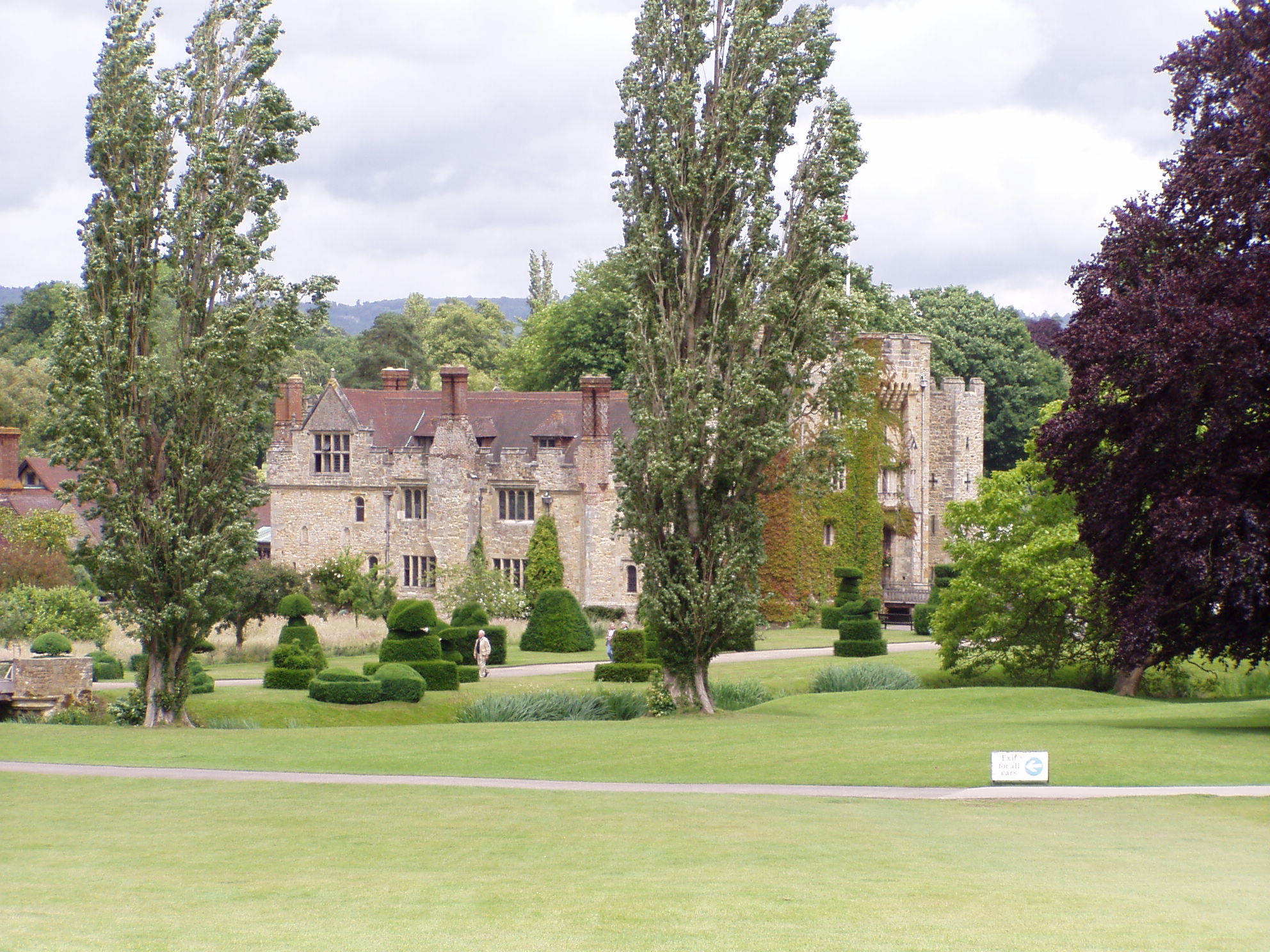
Hever Castle

Anne of Cleves House in Lewes, now a museum
Anne experienced considerable freedom and it appears as if she bore the loss of her husband quite cheerfully. She enjoyed her life in England learning to dance and play music, hunting, dressing in fine clothes and having a pleasant relationship with Henry.
Her amiableness is shown in her dedication to Henry in the Book of Hours, Salisbury 1533 “I beseche your grace huble when ye loke on this rember me. Yor graces assured anne the dowther off cleves” (Anne of Cleves). In the modern translation: “I beseech your grace humbly when you look on this remember me. Your grace’s assured Anne the daughter of Cleves.”

Dedication in the Book of Hours in Anne’s handwriting. She gave this to Henry as a gift.
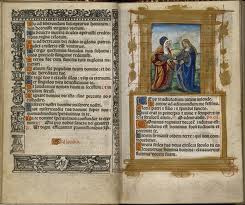
A decorated and illuminated page in the Book of Hours, Salisbury
This daughter of Cleves did have quite a unique status not only in England but in the scene of international politics. Many could not define if she was free to marry and her brother put out feelers once in a while to consider her return to Cleves or create clarity in her position. What I found interesting was the diplomatic dispatch, reprinted below, which the French Ambassador, Charles de Marillac, to the English Court sent to his king concerning the inquiry made by the Duke of Cleves after the arrest of Catherine Howard, the fifth wife of Henry VIII.

William, Duke of Cleves
December 16, 1541 Marillac to Francis I
Told by the ambassador of Cleves that, upon letters of credence from his master, he sought to speak with this King about lady Anne, but as the King’s grief did not permit it he yesterday went before the Council and, after declaring his master’s thanks for the King’s liberality to his sister, prayed them [to find] means to reconcile the marriage and restore her to the estate of queen. They answered, on the King’s behalf, that the lady should be graciously entertained and her estate rather increased than diminished, but the separation had been made for such just cause that he prayed the Duke never to make such a request. The ambassador asking to have this repeated, Winchester, with every appearance of anger, said that the King would never take back the said lady and that what was done was founded upon great reason, whatever the world might allege. The ambassador dared not reply, for fear that they might take occasion to treat her worse; but came to tell Marillac, because his master wrote that they would beg Francis to intercede. Thinks there are two courses open, either to intercede so dexterously as not to show that it is done with authority, and thus frighten the English into a league with the Emperor, or else to say nothing about it. London, 16 Dec. 1541. (Gairdner XVI 678)
After Henry’s death, the financial situation of Anne of Cleves did change and there was talk of her returning to Cleves. This, of course, came to nothing as she was at Court for Edward and Mary’s rule.
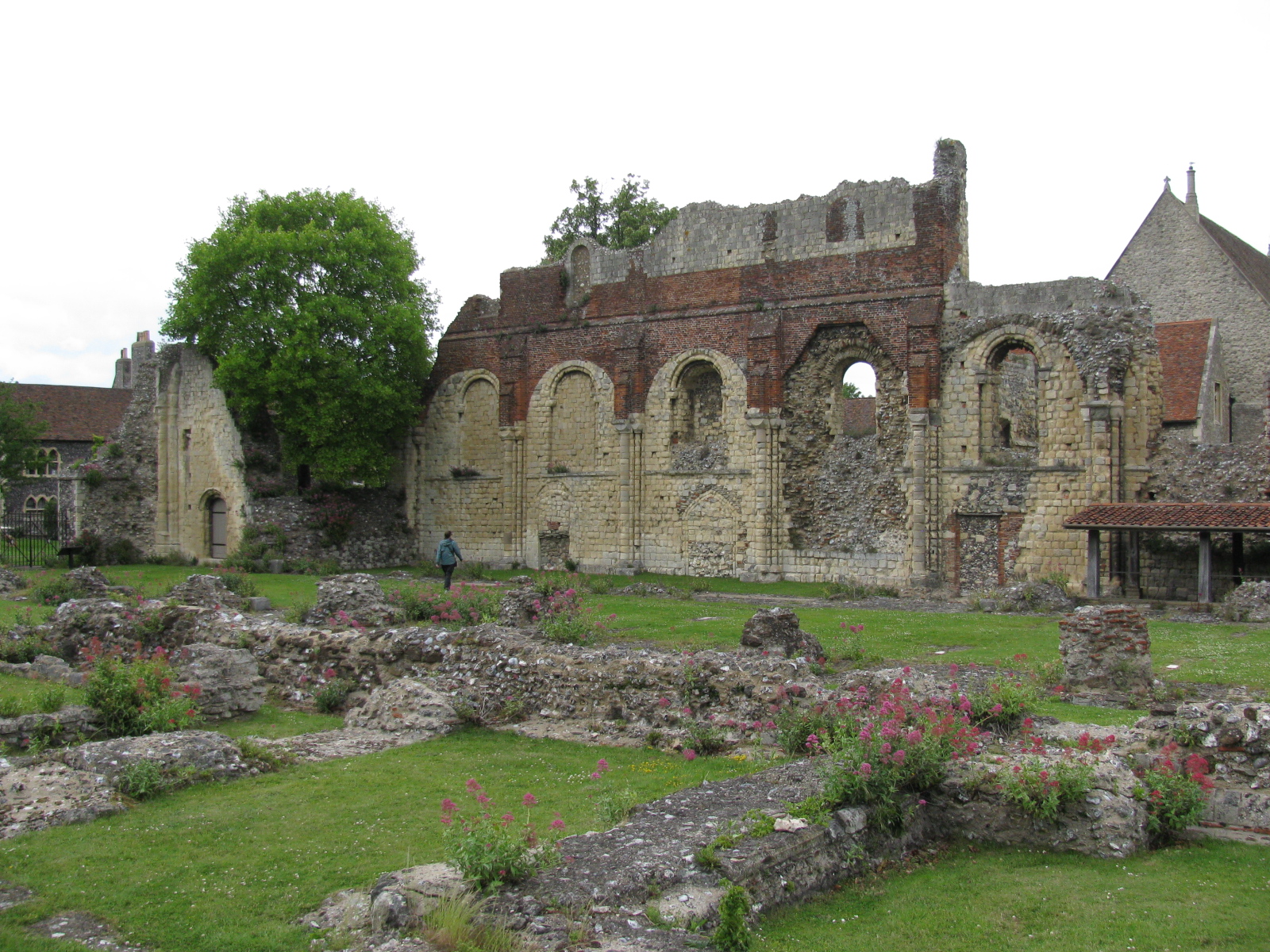
St. Augustine’s Abbey, Canterbury. Anne and Elizabeth spent a great deal of time here.
Throughout Mary’s reign, Anne and Elizabeth were often seen together. Starting on 30 September 1553 when they rode in a carriage during Queen Mary’s coronation procession. They were together at the state banquet later too. “The two of them sat together at the end of the table, Elizabeth now heiress-presumptive to the throne, and Anna of Cleves’ precedence moved up to that of the third lady in the land” (Fraser 409).
Although “Madam of Cleves always paid great honour to Madam Mary” (Hume 92), Anne did create controversy when she joined Elizabeth in not attending the Catholic Mass during the early part of Mary’s reign. The Queen had words with Anne and she afterwards did attend services (Ridley 47). Being so close to the same age, one could imagine how Anne and Mary could get along, but it was with Elizabeth that Anne shared the most affection until the day she died, 16 July 1557 at Chelsea Manor.

Tomb of Anne of Cleves at Westminster Abbey
Anne’s last will and testament was not as bountiful as commentators would have expected. She did leave some items to her step-daughters. To Elizabeth she left some jewels with the hope that one of her ladies-in-waiting, Dorothy Curson, could join the younger woman’s household.
Anne’s influence may have extended further than imagined to the unmarried state of Elizabeth. Somerset implies that witnessing her father’s distaste and rejection of Anne of Cleves and her brother-in-law Philip’s lack of respect and attraction for Mary, Elizabeth did not want to experience the same thing herself. So as queen Elizabeth supposedly told Count Feria, the Spanish Ambassador, that she had “taken a vow to marry no man whom she has not seen, and will not trust portrait painters” (Somerset 92).
*The equivalent of £3,000 in 1540 would be worth £1,508,000 in 2010 currency of the retail price index. This was calculated using the website, Measuring Worth.com.
References
“Anne of Cleves’s Book of Hours.” -Folger Shakespeare Library. Folger Shakespeare Library, n.d. Web. 8 May 2013.
Elton, G. R. England Under the Tudors. Third ed. London: Routledge, 1991. Print
Erickson, Carolly. The First Elizabeth. New York: Summit Books. 1983. Print.
Fraser, Antonia. The Wives of Henry VIII. New York: Alfred A. Knopf, 1992. Print.
Gairdner, James and R. H. Brodie (editors). “Henry VIII: December 1541, 11-20.” Letters and Papers, Foreign and Domestic, Henry VIII, Volume 16: 1540-1541 (1898): 671-681. British History Online. Web. 12 May 2013.
Gairdner, James and R. H. Brodie (editors). “Henry VIII: January 1542, 1-10.” Letters and Papers, Foreign and Domestic, Henry VIII, Volume 17: 1542 (1900): 1-9. British History Online. Web. 12 May 2013.
Lindsey, Karen. Divorced, Beheaded, Survived: A Feminist Reinterpretation of the Wives of Henry VIII. Reading, Massachusetts: Addison-WESLEY Publishing Company, 1995. Print.
Neale, J. E. Queen Elizabeth I. Garden City, NY: Doubleday, 1957. Print.
Norton, Elizabeth. Anne of Cleves: Henry VIII’s Discarded Bride. Stroud, Gloucestershire: Amberley Publishing, 2010. Print.
Queen Elizabeth I, Frank Mumby, and R. S. Rait. The Girlhood of Queen Elizabeth: A Narrative in Contemporary Letters. Boston: Houghton Mifflin, 1909. Google Books. Web. 9 May 2013.
Ridley, Jasper. Elizabeth I: The Shrewdness of Virtue. New York: Fromm International Publishing Corporation, 1989. Print.
Saaler, Mary. Anne of Cleves: Fourth Wife of Henry VIII. London: The Rubicon Press, 1995. Print.
Starkey, David. Six Wives: The Queens of Henry VIII. London: Chatto & Windus, 2003. Print.
Strickland, Agnes. Life of Elizabeth, Queen of England, with Anecdotes of Her Court, from Official Records and Other Authentic Documents, Private as Well as Public. New York: Miller, 1903 Internet Archive. Web. 6 May 2013.
Strickland, Agnes, Elisabeth Strickland, and Rosalie Kaufman. The Queens of England, Abridged and Adapted from Strickland’s “Queens of England” Chicago: Werner, 1895. Internet Archive. Web. 4 May 2013.
Weir, Alison. The Six Wives of Henry VIII. New York: Grove Weidenfeld, 1991. Print.
Warnicke, Retha. The Marrying of Anne of Cleves: Royal Protocol in Tudor England. Cambridge: Cambridge University Press, 2000. Print.
Wood, Mary Anne Everett. Letters of Royal and Illustrious Ladies of Great Britain: From the Commencement of the Twelfth Century to the Close of the Reign of Queen Mary : Edited, Chiefly from the Originals in the State Paper Office, the Tower of London, the British Museum and Other State Archives. Vol. II. London: Henry. Colburn, 1846. Google Books. Web. 12 May 2013.


 elizregina