In the Stars

In the Stars

Many believed Henry VII’s well-known interest in prophesy could have stemmed from his Welsh background as the Welsh “follow prophecies, affirming that they are true” (Tremlett 100) and have a “prophetic tradition” (Thornton 15). As discussed in a previous blog, King Henry VI, upon meeting the young Henry, Earl of Richmond, gave a prophecy that he would become king (Bacon, Vergil).

Henry VII did not have a formal Royal Astrologer but Gulielmus Parronus Placentinus, an Italian known in England as William Parron, came close.  Parron is credited, according to an expert at the British Library, with bringing to England the practice of creating astrological almanacs for the nation (Pickup).  Astrology almanacs were compilations of astrological data that was considered useful for physicians and other medical professionals as well as for the general public (Parker).  Evidence shows that Parron received payments from the king, possibly for an early almanac, as seen in the king’s account books from 6 March 1499: “To Master William Paromis an astronymyre £1” (Macalister 301). After making several successful prognostications, Parron presented to Henry, De astrorum succincte vi fatali, (The Fateful Meaning of the Stars) completed on 15 October 1499. In this work Parron ingratiated himself by giving justifications for Henry’s actions on many fronts especially his treatment of Perkin Warbeck and the Earl of Warwick saying that people born under bad stars must die before infecting the country.  A “satisfyingly closed logic, and it satisfied Henry’s conscience” (Penn 38).

Parron’s last known compilation for the Tudor family was a horoscope in late 1502 titled, Liber de Optimo fato Henrici Eboraci ducis et optimorum ipsius parentum, (The Book of the Excellent Fortunes of Henry Duke of York and his Parents). This was less than successful and perhaps why he disappears from official sources.  It is supposed he left England in disgrace after predicting that Queen Elizabeth, Henry VII’s wife, would live until she was 80.  She died shortly thereafter at the age of 37.  As an aside, he also foretold that Prince Henry, the future Henry VIII would have a happy marriage and many sons (Carlin, Penn, Tucker).

The following illustrations are from Parron’s 1502 horoscope and almanac including the cover page, his dedication page and the illustration of Henry VII –note the Tudor roses in the border.

Parron 1503 Almanac  Royal 12 B vi  1v  Royal 12 B vi  2r

Parron was not the only astrologer and scientist to whom Henry offered his patronage.  Dr. Janina Ramirez explained that “Henry VII saw himself as a patron of science and scholarship and in Tudor times astrology was held in high esteem” (Ridgway).  At court was Lewis of Caerleon, physician to Margaret Beaufort, who was valued for his “astronomical and astrological skills, and he received considerable remuneration and generous favours from the monarch” (Pahta 50).  Added to the list of astrologers were John Argentine who “assembled an extensive collection of astrological and astronomical treatises” and was “appointed physician and chaplain” to Prince Arthur, son of Henry VII (Pahta 50); and John Killingworth “perhaps the most important of fifteenth-century English astrologers” (Pahta 51).  Killingworth’s scientific manuscript of planetary data and prophecies was written for Henry VII in 1490.  Another example of Henry’s patronage was the sculptures on the ceilings at Merton College where Bishop Richard Fitzwilliam’s “astrological symbols were next to the royal arms of Henry VII, showing that Henry was ruling not just England but the cosmos. Astrology was the science of the day and was seen as important” (Ridgway).

The strong influence prophecy and astrology held over Henry VII did not diminish throughout the Tudor time-period and was as prominent with his granddaughter, Elizabeth Regina.   Enter John Dee, astrologer, astronomer, mathematician, alchemist, and rumored neocromancer who found time “to dabble in the mysteries of the occult” (Brimacombe 143).  He was a Fellow of Trinity College, Cambridge; an acquaintance to Continental academics, Abraham Ortelius, Gemma Frisius—Court Astrologer to Charles V— and Geradus Mercator; and, a friend to influential people— Roger Ascham, Robert Dudley and Lord Pembroke.  In fact, Dudley and Pembroke introduced him to the 25-year old Elizabeth when she needed to set the date for her coronation.  This auspicious occasion could not just be any day. It would be the birth date of the Elizabethan Age and had to be considered carefully (Bassnett, Brimacombe, Somerset, Watkins).

John Dee      

                                          johndee

John Dee would become an influential member of Elizabeth’s circle (he was a cousin to Blanche Parry, Elizabeth’s gentlewoman, and had been a member of the Duke of Northumberland’s household when Robert Dudley was a youth). By 1564 when he had returned from the Emperor’s Court, Dee was “appointed Royal Adviser in mystic secrets” (Bassnett 63), another way of saying Court Astrologer.  Elizabeth offered him apartments at Court (something most people vied for their entire lives) and he turned her down fearing it would interfere with his studies. Supposedly he “applied himself to his studies with such diligence that he allowed only four hours for sleep, and two for his meals and recreation”  (Nichols 414). He appreciated Elizabeth’s support and acknowledged it:  “Whereupon her Majestie had a little perusion of the same with me, and then in most heroicall and princely wise did comfort and encourage me in my studies philosophicall and mathematicall” (Dee Autobiographical 19).

“In the sixteenth century, the borderline between science and sorcery was often perilously narrow” (Brimacombe 144). The role of natural magic cannot be ignored in the rise of experimental science .  This reminds me of some experiments that science teachers demonstrated when I was in school.  The exploding volcano bordered on magic!  Some authors suspect “Sir Walter Ralegh and his circle of friends practiced sorcery at this infamous ‘School of the Night’ at his home at Sherborne in Dorset” (Brimacmbe 144) and others that it was a gathering to discuss all topics of learning especially religion (Marlowe Society). Dee was very much aware of the links between religious thoughts and the sciences “which fruite and gaine if I attaine unto, it shall encourage me hereafter, in such like sort to translate, and set abroad some other good authors, both pertaining to religion (as partly I have already done) and also pertaining to the Mathematicall Artes” (Dee Mathmatical iii).

Elizabeth, a highly educated, intelligent woman, frequently consulted Dee be it for explanations for comets, a toothache, diet and medicines, navigation (he is reported to have coined the term British Empire) and the dangers to be apprehended from a waxen image of her with a pin struck through its breast, which had been found in Lincoln’s Inn Fields.  Her faith in his abilities also earned him the role as a foreign spy “reporting, in code, to both the Queen and William Cecil on intrigues abroad.  His coded letters were signed using the numerals 007” (Watkins 39).

When Dee was in England, she visited him at his home in Mortlake, Surrey, where he was reputed to have one of the largest private libraries in Europe along with his famous laboratories (Brimacombe, Hibbert, Lipscomb, Watkins). Although it was suggested in some readings that Dee built an astrolabe for Elizabeth, the only evidence found was one made for her by the Flemish instrument maker Thomas Gemini.

Astrolabe known to belong to Elizabeth with enlargement of the inscription.

astrolobe     Astrolabe closeup

Today we would call the Elizabethans superstitious*, not understanding the seriousness in which they took elements of magic, the occult and alchemy.  In fact, I get the impression that many modern writers try to ‘excuse’ Elizabeth’s reliance on Dee by down-playing her interest or referring to her as impressionable. Elizabeth was in good company as there are letters that William Cecil wrote to Edward Kelley, Dee’s colleague for many years when they lived in Europe conducting experiments, to encourage him to return to England with his “powder that could transform base metals into gold” (Bassnett 63).  Even the Archbishop of Canterbury responded to Elizabeth’s fears of assassination and assured her that no harm would come to her so long as her “birth sign, Virgo, was in the ascendant” (Hibbert 72).

Ironically, despite Elizabeth’s beliefs and interests, when it was predicted in 1572 there would be a series of catastrophes after the appearance of a comet, it was reported that “with a courage answerable to the greatness of her state, she caused the window to be set open and cast out this word, jacta est alea, the dice are thrown” (Malcolm 355). Added to this account was the following when there were prophecies circulating about the countryside.  Elizabeth sent out a proclamation in which she “warns all not to be moved by murmurers and spreaders of rumours, the dissemination of which is to be punished as the spreading of sedition (Pollen 340).

Thus is another paradox of Elizabeth Regina:  her pragmatic response to threats to her realm and her embracing prophecies.  When in January 1603 John Dee cast her horoscope and warned her to “beware of Whitehall” (Sitwell 454) she moved to Richmond.  She did so seeing it as a realistic response.  Ironically, it was at Richmond that she died about two months later. Thus the tradition of the Tudors’ consultation with and acceptance of astrologer’s predictions was maintained.

*A consultation with an astrologer in the time of Queen Elizabeth was reported to last about “15 minutes and cost 2s. 6d” (Emerson 264).

Works Cited

Bacon, Francis, and J. Rawson Lumby. Bacon’s History of the Reign of King Henry VII,. Cambridge: University, 1902. Internet Archive. Web. 22 Jan. 2013.

Bassnett, Susan.  Elizabeth I: a Feminist Perspective.  Oxford: Berg Publishers, 1997. Print.

Brimacombe, Peter.  All the Queen’s Men: the World of Elizabeth I.  Stroud: Sutton Publishing, 2000.  Print.

Carlin, Martha. “Parron, William.” Oxford DNB. Oxford University Press, Jan. 2013. Web. 02 Feb. 2013.

Dee, John. Autobiographical Tracts of Dr. John Dee … Ed. James Crossley. [Manchester]: Printed for the Chetham Society, 1851. Google Books. Web. 31 Jan. 2013.

Dee, John. Mathematicall Praeface to Elements of Geometrie of Euclid of Megara. [S.l.]: General, 13 Jul 2007. Project Gutenburg. Web. 31 Jan. 2013.

Emerson, Kathy L. The Writer’s Guide to Everyday Life in Renaissance England : from 1485-1649. Cincinnati, Ohio: Writer’s Digest Books, 1996. Print.

Hibbert, Christopher.  The Virgin Queen: Elizabeth I, Genius of the Golden Age.  New York: Addison-Wesley Publishing Company, Inc., 1991.  Print.

Lipscomb, Suzannah.  A Visitor’s Companion to Tudor England. London : Ebury Press, 2012. Print.

Macalister, J. Y. W., and Alfred W. Pollard, eds. New Series. The Library; a Quarterly Review of Bibliography and Library Lore, Etc. Dec. 1899-Oct. 1909. Vol. IV. London: Alexander Moring, 1913. Third Series. Internet Archive. Web. 4 Feb. 2013.

Malcolm, James Peller. Anecdotes of the Manners and Customs of London from the Roman Invasion to the Year 1700: Including the Origin of British Society, Customs and Manners, with a General Sketch of the State of Religion, Superstition, Dresses, and Amusements of the Citizens of London, during That Period: To Which Are Added, Illustrations of the Changes in Our Language, Literary Customs, and Gradual Improvement in Style and Versification, and Various Particulars concerning Public and Private Libraries. London: Longman, Hurst, Rees, Orme, and Brown, 1811. Google Books. Web. 3 Feb. 2013.

Marlowe Society. “The Free-Thinkers.”: Marlowe & The School of Night. The Marlowe Society, 2012. Web. 01 Feb. 2013.

Nichols, John. The Progresses and Public Processions of Queen Elizabeth. Among Which Are Interspersed Other Solemnities, Public Expenditures, and Remarkable Events during the Reign of That Illustrious Princess. Collected from Original MSS., Scarce Pamphlets, Corporation Records, Parochial Registers, &c., &c.: Illustrated with Historical Notes. New York: B. Franklin, 1823. Google Books. Web. 19 Jan. 2013.

Pahta, Päivi, and Andreas H. Jucker. Communicating Early English Manuscripts. Cambridge: Cambridge UP, 2010. Google Books. Web. 4 Feb. 2013.

Parker, Derek. “Skyscript: The Rise and Fall of the Astrological Almanac by Derek Parker. The Traditional Astrologer Magazine, Dec. 2004. Web. 04 Feb. 2013.

Penn, Thomas.  Winter King; the Dawn of Tudor England.  New York: Penguin Books, 2012. Print.

Pickup, Oliver. “It’s Nostra-dumbass! Astrologer Predicted Henry VIII Would Marry Well and Take Care of the Church.” Mail Online. Daily Mail, 26 Aug. 2011. Web. 03 Feb. 2013.

Pollen, John Hungerford. The English Catholics in the Reign of Queen Elizabeth: A Study of Their Politics, Civil Life, and Government : From the Fall of the Old Church to the Advent of the Counter-Reformation. London: Longmans, Green, 1920. Internet Archive. Web. 30 Jan. 2013.

Ridgway, Claire. “Illuminations: The Private Lives of Kings – Libraries Gave Us Power.” The Anne Boleyn Files RSS. N.p., 24 Jan. 2012. Web. 05 Feb. 2013.

Sitwell, Edith.  The Queens and the Hive.  Harmondsworth: Penguin Books, 1966. Print.

Somerset, Anne. Elizabeth I.  New York: Alfred A. Knopf, 1991. Print.

Thornton, Tim. Prophecy, Politics and the People in Early Modern England. Woodbridge: Boydell, 2006. Google Books. Web. 2 Feb. 2013.

Tremlett, Giles.  Catherine of Aragon: Henry’s Spanish Queen.  London: Faber and             Faber, 2010. Print.

Tucker, M. J. “Life at Henry VII’s Court.” History Today. History Today.com, n.d. Web. 4 Feb. 2013.

Vergil, Polydore. “Full Text of “Three Books of Polydore Vergil’s English History,             Comprising the Reigns of Henry VI., Edward IV., and Richard III. from an Early            Translation, Preserved among the Mss. of the Old Royal Library in the British             Museum”” Full Text of “Three Books of Polydore Vergil’s English History,             Comprising the Reigns of Henry VI., Edward IV., and Richard III. from an Early             Translation, Preserved among the Mss. of the Old Royal Library in the British             Museum” Internet Archive, n.d. Web. 27 Oct. 2012.

Watkins, Susan, and Mark Fiennes. The Public and Private Worlds of Elizabeth I. New York, NY: Thames and Hudson, 1998. Print.

An Adventurer’s Spirit

An Adventurer’s Spirit

Henry VII and Elizabeth I shared an interest in maritime explorers and financially supporting them.  John Cabot and his son, Sebastian, were actively sponsored by Henry VII.  Their voyage located Newfoundland for England in 1497 and paved the way for settlements.  John Cabot was lost at sea. The exact dates are unverified but most agree it was around 1500.  Sebastian followed his example with an expedition to North America in the final years of Henry VII’s reign.

Although Henry VIII appointed Sebastian Cabot as cartographer at Greenwich, he was reluctant to sponsor voyages so Sebastian moved on to Spain and set sail under the Spanish flag.

Cartography by Sebastian Cabot

  sebast cabot map     sebatian cabot mapb              

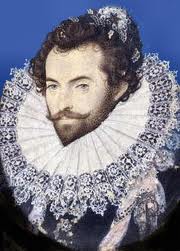
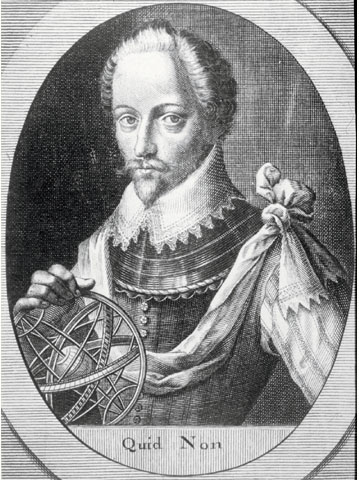
Elizabeth, as is well-known, subsidized trips made by Sir Francis Drake, Sir Walter Raleigh, Martin Frobisher, John Davis and Humphrey Gilbert.  Not all were successful. However failure did not deter multiple voyages from the same adventurers.

        Sir Francis Drake                                  Sir Walter Raleigh Drake            Ralegh 

While puzzling over why Henry VII and Elizabeth I, both known to be miserly, would support explorers through investments and patents, I came up with the traditional reasons.  They did it to stimulate England’s economy, to rival Spain in land acquisition and to create a niche as a leading power in Europe.

But, I wasn’t satisfied.  If those were the only reasons, why didn’t Henry VIII actively sponsor exploration?  There had to be more and I believe it is this: Henry VII and his granddaughter shared personality traits with explorers.

 Martin Frobisher                                            Humphrey Gilbert       Frobisher              gilbert humphrey

Henry and Elizabeth proved time and time again (even before they took over their respective thrones) that they had courage in abundance, adventurous spirits and confidence to overcome obstacles.  Throw in natural curiosity and ‘gambling’ natures and one can see the multiple facets of their kindred spirits with the explorers.

Henry VII and Elizabeth ensured their place in history by sponsoring these men and allying themselves to the explorers’ outcomes.   Although the consequences may not have been immediately evident, it would emerge that the voyages expanded England’s knowledge of the world; cemented England’s presence on the North American continent and the high seas of the Atlantic; realized England’s role in the valuable fishing industry and established England’s wealth based on the commodities and mineral deposits of the claimed lands.


Fit for a King

Fit for a King

The need to express majesty may have been greater in Henry VII and Elizabeth I than in royals contemporary with them or even before and after their reigns.  Both had precarious claims to the throne, both had rivals waiting to step in and both had to project strength to Continental Courts. Henry and Elizabeth used Court ceremonial, dress and jewels and building programs / portraiture to convey their royal dignity.

Henry VII realized the need to show his majesty to the nobles at home and abroad at his coronation.  If he “looked, behaved and ruled like a king, perhaps the exhausted, traumatized country of England would come to believe he was one” (Penn 11). Apparently he succeeded as a contemporary recalled the rejoicing “[f]or whan the kynge … was crowned in all that grete tryumphe & glorye…” (Fisher 306).

One of the greatest ceremonials that Henry VII hosted was the marriage of his son Arthur to Catherine of Aragon in November of 1501.  It is not the scope of this entry to discuss the entire celebrations but it was well-known to have cost a great deal of money with the purpose being to emphasize to the Spanish the affluence and security of his Court.  The Spanish were impressed as were envoys from around Europe. A contemporary who attended the wedding feast described the display of plate which was intended to show Henry’s wealth, “And ye shall understande that in the said halle was ordeyned a cupbourde of 6 stages height, being Tryangled; the which Cupbord was garnysshed w gilt plate, as fflagons, greate pottes, standing, cuppys, and bolles, to a greate value” (Kingsford 250).

Henry VII’s expenses reveal that he did not spare for his attire of which he had a “penchant for expensively dyed black clothes” (Penn 6). Jewelry purchased for large sums of money were of “diverse precious stones and other juells that come from beyond the see” (Norton 147).  Raimondo de’ Raimondi of Soncino, Milanese Ambassador in England, wrote to Ludovico Maria Sforza, Duke of Milan: “His Majesty, in addition to his wonderful presence, was adorned with a most rich collar, full of great pearls and many other jewels, in four rows, and in his bonnet he had a pear-shaped pearl, which seemed to me something most rich” (Hinds).

Henry had an affinity for the European Courts, which is understandable when one thinks of the many years he spent on the Continent, and tried to copy many of their fashions, be it traditions or architecture. Building projects culminated in his stunning chapel at Westminster Abbey, although Richmond Palace, built on the site of the burned Sheen, was also a great showpiece.  Henry spared no expense in providing the palace with tapestries, furnishings and other costly adornments. In fact, Richmond was referred to by contemporaries as …“Riche mount a pun on Henry’s title as Earl of Richmond, and his conspicuous talent for heaping up wealth” (Perry 17).

Richmond 1562
Richmond 1562

Although not as ‘cash rich’ as her grandfather, Elizabeth understood the need to display her majesty at her coronation.  Sir John Hayward, writing his recollections of Elizabeth’s reign, recalled how for her coronation procession she was “most royally furnished, both for her persone and for her trayne, knowing right well that in pompous ceremonies a secret of government doth much consist, for that the people are naturally both taken and held with exterior shewes” (Bruce 15).  And what a show she put on!  C. S. Knighton and Richard Mortimer, while quoting the oft-footnoted Neville Williams’ estimate that the cost of the coronation was £16,742, believe it was closer to £20,000—or about 10% of her annual revenue (Knighton 125).  Since Williams’ figure is the most credited, I used that to calculate the current value of costs:  £4,730.00 using the retail price index or £73,900.00 using average earnings figures*. “We learn that besides the queen’s parliament robe there were provided a kirtle, surcoat, and mantle of crimson velvet furred with ermine, and like robes of purple velvet, also furred with ermine” (Grindal).

Westminster
Westminster Abbey

As queen, Elizabeth had gowns from all over Europe and was described by a German visitor, Heutzner, as “very majestic” (Ripley 317). Her wardrobe was extensive and famous.  Not only were the dresses and sleeves made of costly fabrics such as satin and velvet (her favored color scheme was of black and white), they were also embellished with gold braid, fur (mink) and precious gems.  The French were impressed with the number of pearls on her gowns saying that “…all the other princes of Christendom had not the like quantity of pearls of that sort” (Somerset 360). Elizabeth loved clothes and realized “the part which external magnificence could play in propagating an image of regality and power…” (Somerset 357).

Her jewels were beyond compare as she had at her disposal the wealth which her father had accumulated from the dissolution of the monasteries and the rings, pendants, necklaces and bracelets she acquired.  of her ostentatious display.  Andre de Maisse, the French Ambassador to her Court, wrote to Henry IV of her ostentatious display that she “wore innumerable jewels on her person, not only on her head, but also within her collar, about her arms and on her hands, with a very great quantity of pearls, around her neck and on her bracelets”…(Erickson 389). Another Ambassador of Venice, Giovanni Scaramelli, described her gown of silver and gold which “showed her throat encircled with pearls and rubies….”  Elizabeth “wore great peals like pears round the forehead.  She had a vast quantity of gems and pearls upon her person; even under her stomacher she was covered with golden jeweled girdles and single gems, carbuncles, balas-rubies and diamonds.  Round her wrists in place of bracelets she wore double rows of pearls of more than medium size” (Perry 316).

demassie                                         sforza
Attributed as  Andre de Maisse            Giovanni Scaramelli, 
Ambassador to France                           Ambassador to Venice

As Roy Strong reminds us, the purpose of state portraits was to “depict a ruler accompanied by the full panoply of state …posed in a majestic and grave manner…” (Strong 37). Elizabeth knew she needed portraiture “designed to emphasize the legitimacy of the Tudor right to the throne” (Strong 12) and this was demonstrated in the painting, The Allegory of the Tudor Succession, 1572.  It is well-known that the images approved by Elizabeth Regina were not intended to imitate her features true to life.  State portraiture was to convey her majesty, power and successes.

Although other rulers of the era used similar elements such as dress and ceremonies to project royal imagery, Henry VII and Elizabeth I understood their particular need to convey the legitimacy of their power.

*Used the calculator at Measuringworth http://www.measuringworth.com/ppoweruk/


Works Cited

Erickson, Carolly. The First Elizabeth. New York: Summit Books. 1983. Print.

Fisher, John. The English Works of John Fisher, Bishop of
Rochester.
London: Published for the Early English Text
Society by Trübner, 1876. Google Books. Web. 24 Nov. 2012.

Grindal, Edmund. The Remains of Edmund Grindal: Successively Bishop of London and Archbishop of York and Canterbury. Cambridge [England: Printed at the UP, 1843. Google Books. Web. 21 Nov. 2012.

Hayward, John, and John Bruce. Annals of the First Four Years of the Reign of Queen Elizabeth. London: Printed for the Camden Society by J.B. Nichols and Son, 1840. Google Books. Web. 24 Nov. 2012.

Hinds, Allen, ed. “Milan: 1497.” Calendar of State Papers and Manuscripts in theArchives and Collections of Milan: 1385-1618. (1912): 310-341. British History Online. Web. 24 November 2012.

Kingsford, Charles Lethbridge. Chronicles of London (1189-1509). Oxford: Clarendon, 1905. 234-50. Google Books. Web. 21 Dec. 2012.

Knighton, C. S., and Richard Mortimer. Westminster Abbey Reformed: 1540-1640. Aldershot, Hants, England: Ashgate, 2003. Google Books. Web. 25 Nov. 2012.

Norton, Elizabeth.  Margaret Beaufort: Mother of the Tudor Dynasty.  Stroud: Amberley, 2010. Print.

Penn, Thomas.  Winter King; the Dawn of Tudor England.  New York: Penguin Books, 2012. Print.

Perry, Maria.  The Word of a Prince: A Life of Elizabeth from Contemporary Documents. Woodbridge, Suffolk: The Boydell Press, 1990.  Print.

Ridley, Jasper. Elizabeth I: The Shrewdness of Virtue.  New York: Fromm International Publishing Corporation, 1989.  Print.

Somerset, Anne. Elizabeth I.  New York: Alfred A. Knopf, 1991. Print.

Strong, Roy C. Gloriana: The Portraits of Queen Elizabeth I. London: Pimlico, 2003. Print.

Eat, Drink and Be Moderate

Eat, Drink and Be Moderate

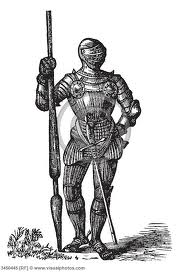
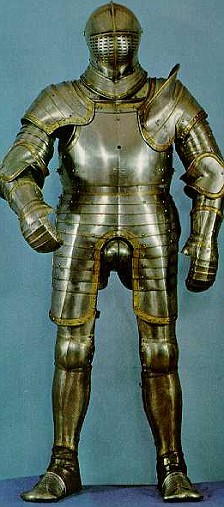
We all have the image of Henry VIII as a man who did nothing in moderation, especially eating and drinking.  The last suit of armor that was created for him in the later years of his reign shows a waist measuring 52 inches and his chest at 53 inches. Contrast Henry VIII’s  measurements to the physical appearance, obviously maintained from moderation, of his father and daughter.

Although Edward Hall, a contemporary of Henry VII, was not using the following to describe Henry and his eating habits, the words could certainly apply. “Surely, this good & modest prince did not deuoure cosume y substance & ryches of his realme…” (Hall 505). Although there are not reams of written documentation of Henry VII being moderate in his consumption the evidence rests in his portraits and the few descriptions of his physical appearance.

Hall wrote “He [Henry] was a man of body but leane and spare, albeit mighty and stronge therwith, of personage and stature, somewhat hygher then the meane sorte of men be, of a wonderfull beutye and fayre complexion, of countenaunce mery and smylyng especially in his communicacion, hys eyes graye, his teethe syngle, and heare thynne…” (Hall 504).

Halll’s description of Henry VII was certainly seconded by Polydore Vergil an Italian priest who was commissioned by Henry VII to write a history of Britain.  In that history, Anglica Historia, Henry was described: “Statura, quae parum iustam excederet, forma exima, vultu praesertim in sermone hilari, oculis glaucis, dentibus raris, capillo etiam raro…”  The translation is provided: “His body was slender but strong and solid, a little above average in height. His appearance was handsome, particularly when his expression was happy in conversation. He had blue eyes, few teeth, and sparse hair…” (Vergil).

h7armour                   armour henry viii    

Armor of King Henry VII                                 Armor of King Henry VIII
No date given                                          Seven years before his death

If we examine several contemporary descriptions given throughout Elizabeth’s adult life we can see little change in her appearance. In a report back to Venice the ambassador, Giovanni Michiel, stated in May of 1557 Elizabeth “nel 1533, del mese di settembre, onde viene ad essere al presente di venti tre anni, giovane tenuta non manco bella d’animo, che sia di corpo, ancora che di faccia si può dire che sia piuttosto graziosa che bella; ma della persona ѐ grande e ben formata, di bella carne, ancorchѐ olivastra, begli occhi e sopra tutto bella mano, della quale ne fa professione” (Albèri 13).  This has been translated as follows, Elizabeth “was born in September 1533, so she is now 23 years old. She is a young woman, whose mind is considered no less excellent than her person, although her face is comely rather than handsome, but she is tall and well formed, with a good skin, although swarthy; she has fine eyes and above all a beautiful hand of which she makes a display” (Brown, Rawdon).  From gloves owned by her we have evidence of her exceptionally long fingers, which she was immensely proud of as they take pride of place in many portraits.  Her height is likely to have been between 5’ 3” and 5’ 5” and at the age of 64 she was declared to be “very strongly built” (Brown, Horatio).

If we examine several contemporary descriptions given throughout Elizabeth’s adult life, we can see little change in her appearance. In a report back to Venice the ambassador, Giovanni Michiel, stated in May of 1557: “My Lady Elizabeth was born in September 1533, so she is now 23 years old. She is a young woman, whose mind is considered no less excellent (bello) than her person, although her face is comely (gratiosa) rather than handsome, but she is tall and well formed, with a good skin, although swarthy (ancorchè olivastra); she has fine eyes and above all a beautiful hand of which she makes a display (della quale ne fa professione)” (Brown, Rawdon).  From gloves owned by her we have evidence of her exceptionally long fingers, which she was immensely proud of as they take pride of place in many portraits.  Her height is likely to have been between 5’ 3” and 5’ 5” and at the age of 64 she was declared to be “very strongly built” (Brown, Horatio).

As Queen we learn from Sir Francis Bacon that “she was tall of stature, of comely limbs, and excellent feature in her countenance; Majesty sate under the veil of sweetness, and her health was sound and prosperous” (Nicholas xiii). Thomas Fuller seconded these views commenting, “She was of person tall, of hair and complexion fair, well favoured, but high nosed; of limbs and feature, neat; of a stately and majestic deportment” (Fuller 255-256).

Not to be outdone, John Hayward gave an extensive description: “Shee was a Lady, upon whom nature had bestowed, and well-placed, many of her fairest favores; of stature meane, slender, straight, and amiably composed; of such state in her carriage, as every motione of her seemed to beare majesty; her haire was inclined to pale yellow, her forehead large and faire, a semmeing sete for princely grace; her eyes lively and sweete, but short-sighted; her nose somewhat rising in the middest; the whole compasse of her countenance somewhat long, but yet of admirable beauty, not so much in that which is tearmed the flower of youth, as in a most delightfull compositione of majesty and modesty in equall mixture” (Hayward 7).

In his book, A Journey into England, Paul Hentzner (sometimes referred to as Heutzner) wrote of seeing the Queen at Greenwich when she was age 65: “her face is oblong, fair but wrinkled; her eyes small, yet black and pleasant; her nose a little hooked; her lips narrow, and her teeth black; (a defect the English seem subject to from their too great use of sugar) …” (Hentzner 26).

Sugar appears to be the only edible that Elizabeth Regina consumed beyond moderation.  Elizabeth “at least in adult life, ate lightly, and there is no evidence of her over indulgence in childhood” (Erickson 45).  “For her private pleasures she used them moderately and warily, without touch to her reputation or offense to her people. She was in her diet very temperate, as eating but a few kinds of meat and those not compounded; the wine she drank was mingled with water, containing three parts more in quantity than the wine itself. Precise hours of refection she observed not, as never eating but when her appetite required it” (Robinson 192-193). She “habitually eschewed rich food” (Somerset 350) and during her visit to Kenilworth in 1575 it was reported that “Her Majesty eat smally or nothing” (Nicholas 456).

“In life, shee was most innocent; in desire, moderate” (Hayward 7) and “did beare herself moderately and respectively to all…” (Hayward 9). This moderation led Thomas Fuller to declare that “By her temperance she improved that stock of health which nature bestowed on her…”(Fuller 254).

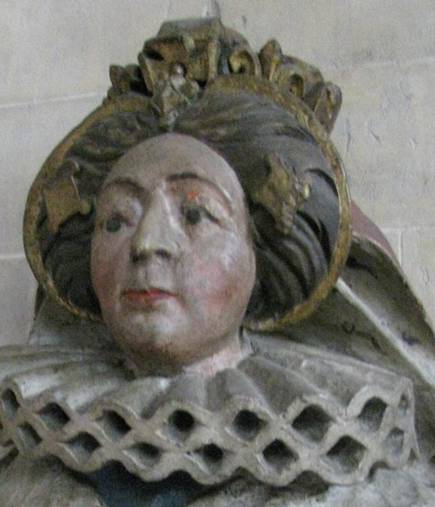
Her natural physique certainly seems to have come to her from her grandfather. Besides having both been described as abstentious in eat and drink, Henry VII and Elizabeth shared many common physical characteristics.  They were tall, slender and strong. Both showed the presence of dental troubles and thinning hair.  Each was proclaimed to have a happy expression and contemporaries readily proclaimed them handsome. As the rulers they were, Henry VII and Elizabeth Regina comported themselves in the majestic manner befitting regal personages.

h7 death mask        Bristol5

Death Mask of Henry VII               Image of Elizabeth at St. Mary Redcliffe Church in Bristol

Works Cited

Albèri, Eugenio, ed. Le Relazione Degli Ambasciatori Veneti Al Senato Durante Il Secolo Decimosesto. Firenze: Società Editrice Fiorentina, 1855. Stoira Di Venezia. Web. 21 Jan. 2013. <le relazioni degli ambasciatori veneti al senato durante il secolo decimosesto>.

Brown, Horatio F. (editor). “Venice: November 1596.” Calendar of State Papers Relating to English Affairs in the Archives of Venice, Volume 9: 1592-1603 (1897): 236-245. British History Online. Web. 19 January 2013.

Brown, Rawdon (editor). “Venice: May 1557, 11-15. Calendar of State Papers Relating to English Affairs in the Archives of Venice”, Volume 6: 1555-1558 (1877): 1041-1095. British History Online. Web. 19 January 2013.

Erickson, Carolly. The First Elizabeth. New York: Summit Books. 1983. Print.

Fuller, Thomas. The Holy State and the Profane State. Chiswick:  Charles Whittingshaw 1648. Google Books. Web. 19 Jan. 2013.

Hall, Edward, Henry Ellis, and Richard Grafton. Hall’s Chronicle; Containing the History of England, during the Reign of Henry the Fourth, and the Succeeding Monarchs, to the End of the Reign of Henry the Eighth, in Which Are Particularly Described the Manners and Customs of Those Periods. London: Printed for J. Johnson and J. Rivington; T. Payne; WIlkie and Robinson; Longman, Hurst, Rees and Orme; Cadell and Davies; and J. Mawman, 1809. Archive.org. Web. 2 Jan. 2013.

Hayward, John, and John Bruce. Annals of the First Four Years of the Reign of Queen Elizabeth. London: Printed for the Camden Society by J.B. Nichols and Son, 1840. Google Books. Web. 19 Jan. 2013.

Hentzner, Paul, and R. Bentley. A Journey into England. In the Year M.D. XC. VIII.Reading: Reprinted at the Private of T.E. Williams, 1807. Google Books. Web. 19 Jan. 2013.

Nichols, John. The Progresses and Public Processions of Queen Elizabeth. Among Which Are Interspersed Other Solemnities, Public Expenditures, and Remarkable Events during the Reign of That Illustrious Princess. Collected from Original MSS., Scarce Pamphlets, Corporation Records, Parochial Registers, &c., &c.: Illustrated with Historical Notes. New York: B. Franklin, 1823. Google Books. Web. 19 Jan. 2013.

Somerset, Anne. Elizabeth I.  New York: Alfred A. Knopf, 1991. Print.

Vergil, Polydore. Polydore Vergil, Anglica Historia (1555 Version). Ed. Dana F. Sutton. Irvine: University of California, 2005. Polydore Vergil, Anglica Historia (1555 Version). The Philological Museum, 04 Aug. 2005. Web. 02 Jan. 2013.

Dieu et mon Droit

Dieu et mon Droit

Although Henry (Earl of Richmond and later Henry VII) was born to a lawfully married couple, his ancestry implied illegitimacy.  Whereas, Queen Elizabeth I had to contend with the doubts over the legality of the marriage between her parents, and the Parliamentary action of July 1536 declaring her illegitimate.  Both Henry VII and Elizabeth I realized the importance of confirming their claim to the throne, and how they handled this issue is interesting.

Henry was named for his half-uncle King Henry VI.  His grandmother, Katherine of Valois, was married to King Henry V of England and gave birth to the future Henry VI.  As a widow Katherine married Owen Tudor.  Some people at that time and even now believe there was no marriage ceremony.  In all probability they wed in secret, or perhaps a wedding away from Court would not have been as well documented which could add to people’s suspicions.  Their eldest surviving son was Edmund, first Earl of Richmond.  Edmund went on to marry Margaret Beaufort who herself descended from questionable legitimacy.

Margaret’s great-grandmother, Katherine Swynford, was the mistress of John of Gaunt (son of King Edward III and father of Henry VI).  After John was widowed, he married Katherine and received a Papal Bull declaring their children legitimate.  Shortly after, in February of 1397, Richard II legitimized his cousins. The Letters Patent were read in Parliament, ratified and confirmed, making the legitimization an Act of Parliament.  Regardless, the taint of illegitimacy lingered. Thus, in 1407 John Beaufort, Duke of Somerset, the eldest child of John of Gaunt and Katherine Swynford asked his half-brother, King Henry IV, for an exemplification of the original Letters Patent. This is where things get tricky.

Henry IV must have felt some threat from the Beauforts to his throne for he inserted the phrase ‘excepta dignitate regali’ which meant his half-siblings were not eligible for the royal dignity—they could not inherit the throne.  Although people could argue endlessly as to whether children born of parents who were married to other spouses were legitimate, the legal fact remains.  Henry IV could not on his own authority alter the Letters Patent issued in a previous reign which had become law through the ratification of Parliament.  This has been discussed in much greater detail by Michael Jones and Malcolm Underwood in The King’s Mother and by Samuel Bentley in the Excerpta Historica which includes a transcript of the Letters Patent.

So where does this place Henry when he came to the throne in 1485?  Henry used the 1397 Act to cement his royal lineage even though, interestingly enough, he did not base his claim to the throne on this act.  He probably realized its precariousness and he intentionally kept his genealogy vague (Jones, Penn).  Henry obviously ignored the 1407 statute that said the Beauforts would be excluded from the throne (Griffiths 183). Therefore, Henry VII could claim the throne as the heir of the House of Lancaster through the lineage of John of Gaunt. So it is the Beaufort line on the female side that gave Henry the greatest claim to the throne. His mother, a firm supporter in his right of inheritance, made popular the story recounted by Vergil of the prophecy made by Henry VI upon meeting the young Henry, Earl of Richmond:

Whan the king saw the chylde, beholding within himself without
speache a prety space the haultie disposition therof, he ys
reportyd to H. 6 pro have sayd to the noble men ther present.
This trewly, this is he unto whom both we and our adversaryes
must yeald and geave of H. 7. over the domynion.  Thus the holy
man shewyd yt woold coome to passe that Henry showld in time enjoy
the kingdom. (Vergil 135)

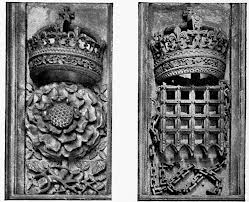
Years into his reign, Henry VII still worried that, although he was the acknowledged victor at Bosworth and the Pope had confirmed his right to the crown, he still felt the need to ensure his rule to the point of naming his first son Arthur to connect himself to the king of legend (Perry). It is obvious there were no Yorkist names for his sons—no Edward, no George, no Richard.  He also used Lancastrian names for his daughters. Carrying this further, Henry reinforced his family’s royal connections and lineage using symbolism including the Tudor rose and the Beaufort portcullis.

The Tudor Rose emerged upon the marriage of Henry VII and Elizabeth of York.  The smaller, white rose of York was surrounded by the large, red rose of Lancaster to become the emblem of the union.  The Tudor Rose was used expansively throughout the successive reigns in various formats making it perhaps the most recognizable symbol of the Tudors.  Less dramatic but in use longer was the portcullis of the Beaufort badge.  Beaufort Castle in Champagne, France, was where John of Gaunt had a stronghold.  The family embedded the portcullis into the design of the badge for the Somerset dukedom.  This was used extensively from the time of Henry VII from the badge of the London Borough of Richmond to the architecture in the King’s Chapel at Cambridge.  Its importance is seen in its longevity for in the modern era it was used on the backside of the penny until 2008.

Corfe Castle, a Beaufort stronghold, and its local parish church was used by Henry to show the legitimacy of the Beaufort line. On the left side of the door was the coats-of-arms with the shield on its side symbolizing an illegitimate line while on the right it was upright (Jones 71-72).

portcullis rose

Photographs from the online version of A Short Account of King’s College Chapel by W. P. Littlechild.

While Henry stressed his maternal line, he did identify with his paternal Welsh side (Norton 44).  This was the exact opposite position of his granddaughter, Elizabeth.

Elizabeth maintained the silence that surrounded her mother as she knew opening up that line of thinking would question her claim to the throne. Following that same reasoning, at the urging of her councilors notably Nicholas Bacon, Elizabeth did not pass any legislation legitimizing herself, as Henry VIII’s will gave her the right to succession  (Ridley 85).  By invoking her right to succeed via Henry’s will, she tactically ignored the Act of Succession of July 1536 in which Henry declared her illegitimate and excluded her from any inheritance.  The page from The Statutes at Large of Henry VIII’s reign is below as it contains the annulment of his marriage to Anne Boleyn as well (Pickering 422).

                  Statute E1     

Both Mary and Elizabeth spent many years in the limbo world of being an illegitimate child of a king.  Illegitimate royal children held positions at Court but could not inherit the throne nor provide attractive prospects for foreign marriages. Several years into her reign when members of Parliament approached her urging her to marry and name her successor, Elizabeth was not welcoming.  She remembered that when her sister Mary was fighting for her right to succeed after Edward VI had altered the succession some of these very men declared “my sister and I were bastards” (Marcus 97).  It is easy to conclude that the question of her legitimacy and others’ responses to it was never far from her mind. Although her line in succession was reinstated in June 1543 by act of Parliament (and, as mentioned above, in December of 1546 by Henry’s will), Elizabeth was not declared legitimate. This issue was pressed by Mary as Queen when, in 1553, her Parliament repealed the divorce between Henry VIII and Catherine of Aragon thus reinforcing Elizabeth’s illegitimacy (Somerset 35).

Thus it was in Elizabeth’s interest to face the world in as firm a position as possible when she became queen. It was well-known she would often reference her father when she spoke, perhaps to instill her claim to the throne and famously referred to herself as the ‘lion’s cub’.  Those who knew her must have recognized this as we see attempts made in pageants and writings to promote her legitimate status.

At her coronation pageant at Gracechurch Street, her ancestors were depicted as the “valiant and noble prince King Henry the eighth” and “the right worthy Lady Queen Anne…”  The entire quote is recreated below as it stresses that Anne was the wife of Henry:

Out of which two roses sprang, two branches gathered into one,
which were directed upward to the second stage or degree wherein
was placed one representing the valiant and noble prince King
Henry the eighth, which sprang out of the former stock, crowned
with a crown imperial, and by him sat one representing the right
worthy Lady Queen Anne, wife to the said King Henry the eighth and
mother to our most sovereign Lady Queen Elizabeth that now is,
both appareled with scepters and diadems and other furniture due
to the estate of a king and queen … (Warkentin 78).

One avenue taken to promote her legitimacy was to invoke her descent from the legendary King Arthur.  A pageant at Kenilworth in 1575 declared the lake was being kept until a true heir of Arthur came and it would be handed over.  Although it was meant in all seriousness, Elizabeth could not help but tease when she exclaimed that she thought the lake had always been hers (or was it a reminder to Leicester that she was the one of royal blood?).  An account of this pageant written by John Nichols but gleaned from the contemporary source, George Gascoigne’s Princely Pleasures at Kenelwoorth Castle, is shared below:

…first of the auncientee of the Castl, whoo had been ownerz
of the same e’en till this day, most allweyz in the hands of
the Earls of Leyceter ; hoow shee had kept this Lake sins King
Arthur’z dayz ; and now understanding of her Highness hither
cumming, thought it both office and duetie, in humble wize to
discover her and her estate ; oflfering up the same her Lake
and poour therein, with promise of repayre unto the Coourt. It
pleazed her Highness too thank this Lady, and too add withall,
we had thought indeed the Lake had been oours, and doo you call
it yourz noow ? Well, we will herein common more with yoo
hereafter (Nichols 431).

In Spencer’s Faerie Queene, the link to King Arthur was wrapped in allegory throughout.  In Book II, Canto X titled “A chronicle of Briton Kings, from Brute to Vthers rayne.  And rolles of Elfin Emperours, till time of Gloriane”, we see Spencer’s attempt to link the historical Arthur to Elizabeth as the stanzas relate to the book, History of the Kings of Britain by Geoffrey of Monmouth:

Who now shall giue vnto me words and sound,
Equall vnto this haughtie enterprise?
Or who shall lend me wings, with which from ground
Lowly verse may loftily arise,
And lift it selfe vnto the highest skies?
More ample spirit, then hitherto was wount,
Here needes me, whiles the famous auncestries
Of my most dreaded Soueraigne I recount,
By which all earthly Princes she doth farre surmount.

Ne vnder Sunne, that shines so wide and faire,
Whence all that liues, does borrow life and light,
Liues ought, that to her linage may compaire,
Which though from earth it be deriued right,
Yet doth it selfe stretch forth to heauens hight,
And all the world with wonder ouerspred;
A labour huge, exceeding farre my might:
How shall fraile pen, with feare disparaged,
Conceiue such soueraine glory, and great bountihed?

Argument worthy of Moeonian quill,
Or rather worthy of great Phoebus rote,
Whereon the ruines of great Ossa hill,
And triumphes of Phlegræan Ioue he wrote,
That all the Gods admird his loftie note.
But if some relish of that heauenly lay
His learned daughters would to me report,
To decke my song withall, I would assay,
Thy name, ô soueraine Queene, to blazon farre away.

Thy name soueraine Queene, thy realme and race,
From this renowmed Prince deriued arre,
Who mightily vpheld that royall mace,
Which now thou bear’st, to thee descended farre
From mightie kings and conquerours in warre,
Thy fathers and great Grandfathers of old,
Whose noble deedes aboue the Northerne starre
Immortall fame for euer hath enrold;
As in that old mans booke they were in order told.

Carolly Erickson mentioned that Elizabeth had a large genealogy of her personal lineage which she kept.  There was reference to it in Robert Cecil’s papers as seen below.  Now this does not necessarily mean it was important to her, but it is noteworthy that it was kept and recorded.                          

                     salsbury calendar   

Thanks to Vicki Perry, Head of Archives and Historic Collections Library and Archives at Hatfield House, who responded to an inquiry concerning the genealogical scroll.  She informed me that the scroll itself is on view at Hatfield House (only a small portion is shown at a time) and a digitized copy is at the British Library–reference number Cecil Papers 357.

Although much of this evidence is anecdotal, there are enough instances to realize that both Henry VII and Elizabeth I were concerned with projecting an image of their lineage, ancestral connections and right to the throne.

Works Cited

Bentley, Samuel, ed. “Issue of Katherine de Roelt, Wife of Sir Hugh Swynford, and Afterwards of John of Gaunt Duke of Lancaster.  Letters Patent of  King Henry the Fourth Certifying the Legitimacy of Sir Thomas Svvynford;with Notices of the Swynford Family.” Excerpta Historica: Or, Illustrations of English History. London: Samuel Bentley, 1831. 152-54. Web. 15 Nov. 2012.

Cecil, Sir Robert, Marquess of Salisbury. “Elizabeth.” Calendar of the Manuscripts of the Most Honourable, the Marquess of Salisbury Preserved at Hatfield House, Hertfordshire. Vol. 11. London: His Majesty’s Stationery Office, 1906. 147+. Great Britain, Royal Commission on Historical Manuscripts. Web. 13 Nov. 2012.

Erickson, Carolly. The First Elizabeth. New York: Summit Books. 1983. Print.

Griffiths, Ralph A. and Roger S. Thomas.  The Making of the Tudor Dynasty.  New York: St. Martin’s Press, 1985. Print.

Jones, Michael K., and Malcolm G. Underwood. The King’s Mother: Lady Margaret Beaufort, Countess of Richmond and Derby. Cambridge, England: Cambridge UP, 1992. Print.

Littlechild, Walter Poole, ed. A Short Account of King’s College Chapel. 2nd ed. Cambridge: W. HEFFER & SONS, 1921. Project Gutenberg, 2 Aug. 2008. Web. 15 Nov. 2012.

Marcus, Leah S. et al., eds. Elizabeth I: The Collected Works. Chicago: University of Chicago Press, 2002. Print.

Nichols, John. The Progresses and Public Processions of Queen Elizabeth. Among Which Are Interspersed Other Solemnities, Public Expenditures, and Remarkable Events during the Reign of That Illustrious Princess. London: Printed by and for J. Nichols, 1823. Web.  29 Oct. 2012.

Norton, Elizabeth.  Margaret Beaufort: Mother of the Tudor Dynasty.  Stroud: Amberley, 2010. Print.

Penn, Thomas.  Winter King; the Dawn of Tudor England.  New York: Penguin Books, 2012. Print.

Perry, Maria.  The Word of a Prince: A Life of Elizabeth from Contemporary Documents. Woodbridge, Suffolk: The Boydell Press, 1990.  Print.

Pickering, Danby, Esq. “Statues Made at Westminster, Year 28 of Henry VIII, Year 1536.” Statue At Large: From the Fifth Year of King Richard III to the 31st Year of King Henry VIII. Vol. 4. London: Gray’s Inn, 1763. 421-22. Google Books. Web. 09 Nov. 2012.

Ridley, Jasper. Elizabeth I: The Shrewdness of Virtue.  New York: Fromm International Publishing Corporation, 1989.  Print.

Somerset, Anne. Elizabeth I.  New York: Alfred A. Knopf, 1991. Print.

Spenser, Edmund, and Alexander Balloch Grosart. The Complete Works in Verse and Prose of Edmund Spenser. [Manchester]: Printed for the Spenser Society, 1882. Web. 29 Oct. 2012.

Vergil, Polydore.  Full Text of “Three Books of Polydore Vergil’s English History, Comprising the Reigns of Henry VI., Edward IV., and Richard III. from an Early Translation, Preserved among the Mss. of the Old Royal Library in the British Museum” Internet Archive, n.d. Web. 27 Oct. 2012.

Warkentin, Germain, ed. “The Queen’s Majesty’s Passage & Related         Documents.” Google Books. N.p., n.d. Web. 28 Oct. 2012.

The Lion’s Grandcub

The Lion’s Grandcub

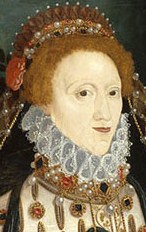
henry 7          elizagheer2

Elizabeth I Regina spent her reign comparing herself to her father, referring to herself as “The Lion’s Cub”.  She shared many characteristics with him:  gregariousness, love of music and dance, charm, studiousness, precociousness, and enjoyment of pageants and entertainments.  There were also common traits of a less positive nature such as stubbornness, temper, pride and vanity.

One must wonder as she aged, if similarities to her father meant as much to her as she saw the differences in their rule.  Courtiers feared her wrath, but not for their lives as those in Henry VIII’s time would have.  She wrote to the Irish Council “If this had been in our father’s time … you may soon conceive how it would have been taken.  Our moderate reign and government can be contented to bear this, so you will take this for a warning” (Somerset 575).

What is proposed here is that Elizabeth was much more similar to her grandfather Henry VII in temperament and in style of rule.  Although Henry VII was not popular throughout his entire reign, charismatic or in possession of the ‘common touch’ such as his granddaughter, like her he did bring civil and economic stability to England and he restored law and order.

An efficient administrator, Henry VII maintained peace throughout his reign by international trade and diplomacy—methods of statecraft emulated by Elizabeth I, The Lion’s Grandcub.

In future blog entries, the similarities between Henry VII and Elizabeth will be addressed independently.  The following chart alphabetically lists the topics to be covered.

 Topics Comparing Henry VII and Elizabeth I

An Adventurer’s Spirit

Dieu et mon Droit

Eat, Drink and Be Moderate

Fate is Remarkable

Fit for a King

Heir Unapparent

Holding the Reins

In the Stars

Persona non Grata

“…Reigned with your loves”

Rest in Peace

$afe and $ound

Tight Purse Strings

Why Do Today…?”

Words to the Wise

Why Elizabeth I?

When in fourth grade a book, Young Bess, by Margaret Irwin reached my hands. From the moment the novel was started, I was a committed Queen Elizabeth I fan.

Her qualities of intelligence, wit, courage and judgment, just to name a few, were readily revealed through my extensive reading and over the years my admiration for her increased.

The purpose of this blog is to discuss questions on topics pertinent to Elizabeth I Regina  and her reign by synthesizing information from a variety of text sources and information gained by visiting historic sites.