Two’s Company, Three’s a Crowd: Part V

Two’s Company, Three’s a Crowd:  Part V

Already in December of 1558 Gómez Suárez de Figueroa, Count de Feria was plotting how to approach Elizabeth on marrying King Philip.  He knew that she was convinced that a foreigner was too divisive for the realm.  Added to this he had to persuade her not to marry an Englishman by pointing out that she would not want to “hold herself less than her sister, who would never marry a subject” (Hume Simancas: December 1558 4). His strategy included telling her it would look bad for her to marry a subject where there are so many worthy princes.  “After that we can take those whom she might marry here and pick them to pieces one by one, which will not require much rhetoric, for there is not a man amongst them worth anything” (Hume Simancas: December 1558 4).  The Count would stress the need for an alliance with Spain against the French threat and add the argument of maintaining the Catholic faith to secure her throne.  Okay, he had the strategy, now to implement it.

Philip’s Decision to Propose Marriage

Philip’s instructions to his ever-faithful ambassador, de Feria, on 10 January 1559 were to propose marriage to Elizabeth Regina when de Feria could obtain a private audience with Elizabeth.  The ever-cautious king did stipulate that Count Feria was not to propose any conditions until he ascertained “how the Queen is disposed towards the matter itself” (Hume Simancas January 1559 8).  Philip did struggle with his conscience and “many great difficulties” but he “decided to place on one side all other considerations which might be urged against it” and was “resolved to render this service to God, and offer to marry the queen of England”  (Hume Simancas January 1559 8).  He wrote to his Ambassador in England that he believed as a faithful Catholic he had “to sacrifice my private inclination” and if “it was not to serve God, believe me, I would not have got into this… Nothing would make me do this except the clear knowledge that it would gain the kingdom [of England] for his service and faith” (Somerset 107).

The difficulties Philip envisioned with the marriage included his obligation to be in his other dominions and therefore could not be in England; Elizabeth’s lack of sincere commitment to the Catholic faith; the French perceived threat to their interests; and, Spain’s exhausted treasury.  Despite these and “many other difficulties no less grave,” Philip admits that he “cannot lose sight of the enormous importance of such a match to Christianity and the preservation of religion” (Hume Simancas January 1559 8).   Philip did not think he could, in all conscience, risk the loss of England, and put neighboring countries in danger, to the Protestant faith.  

Ip2 for part V
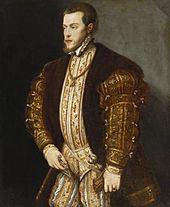
Philip II by Anthonis Mor Van Dashorst, 1549-1555

Philip figured that as Elizabeth would have to be Catholic to marry him, it would “be evident and manifest” that he was “serving the Lord in marrying her and that she has been converted by his act” (Hume Simancas January 1559 8).   Not so astonishingly, Philip wanted to portray himself with having the upper hand, being seen as the benefactor of as many things as possible and to once again force a sense of obligation on Elizabeth.

Count de Feria, so loyal to his country and king, could not contemplate that Elizabeth would not readily marry Philip.  Imagine his surprise when she thanked him for the compliments but requested time to think it over—which she did for several months. 

Perhaps de Feria would have done well to have remembered Elizabeth’s comments in November 1558 when she referred to the loss of the peoples’ affections that her sister Mary experienced upon marriage to a foreigner.  This topic was discussed more thoroughly in the blog entry, “Two’s Company, Three’s a Crowd: Part IV” at http://www.elizregina.com.

Elizabeth told de Feria that she would lay the question before her Privy Council and Parliament.  The Ambassador certainly had an ear to the ground.  He heard the rumblings that Elizabeth’s First Parliament was going to push forward the issue of her marriage (this topic has been discussed in the blog entry “Heir Unapparent” at https://elizregina.com/2013/04/02/heir-unapparent/).  He advised his king on 31 January 1559 “to wait for Parliament to press the Queen to marry” which she did not want to have happen.  If she did declare her choice while Parliament was sitting, “if the person chosen is not to their liking they could use the national voice to stop the affair” (Hume Simancas January 1559 13).

Elizabeth assured Count de Feria that if she were to marry anyone it would be Philip. Of course, the councilors were against it, just as she probably suspected they would be.  Elizabeth understood the diplomatic responses she had to make.  She was holding out on giving a true answer as she waited for the international scene to unfold and she did not think it was politic to turn Philip down outright, as she needed Spain and his good will.

One objection Elizabeth raised to the marriage was the consanguinity of her relationship with Philip. As the widow of her sister, she walked the fine line as her father had married his brother’s widow.  Henry VIII divorced Catherine of Aragon based on the violation of the Book of Leviticus.  A dispensation from the Pope would tactically admit her illegitimacy by saying that she and Philip could marry; there could be no way to apply the objection of consanguinity to Henry and Catherine’s marriage because if they were legally married, Henry’s marriage to Anne Boleyn would have been bigamous.
Elizabeth_I_in_coronation_robes
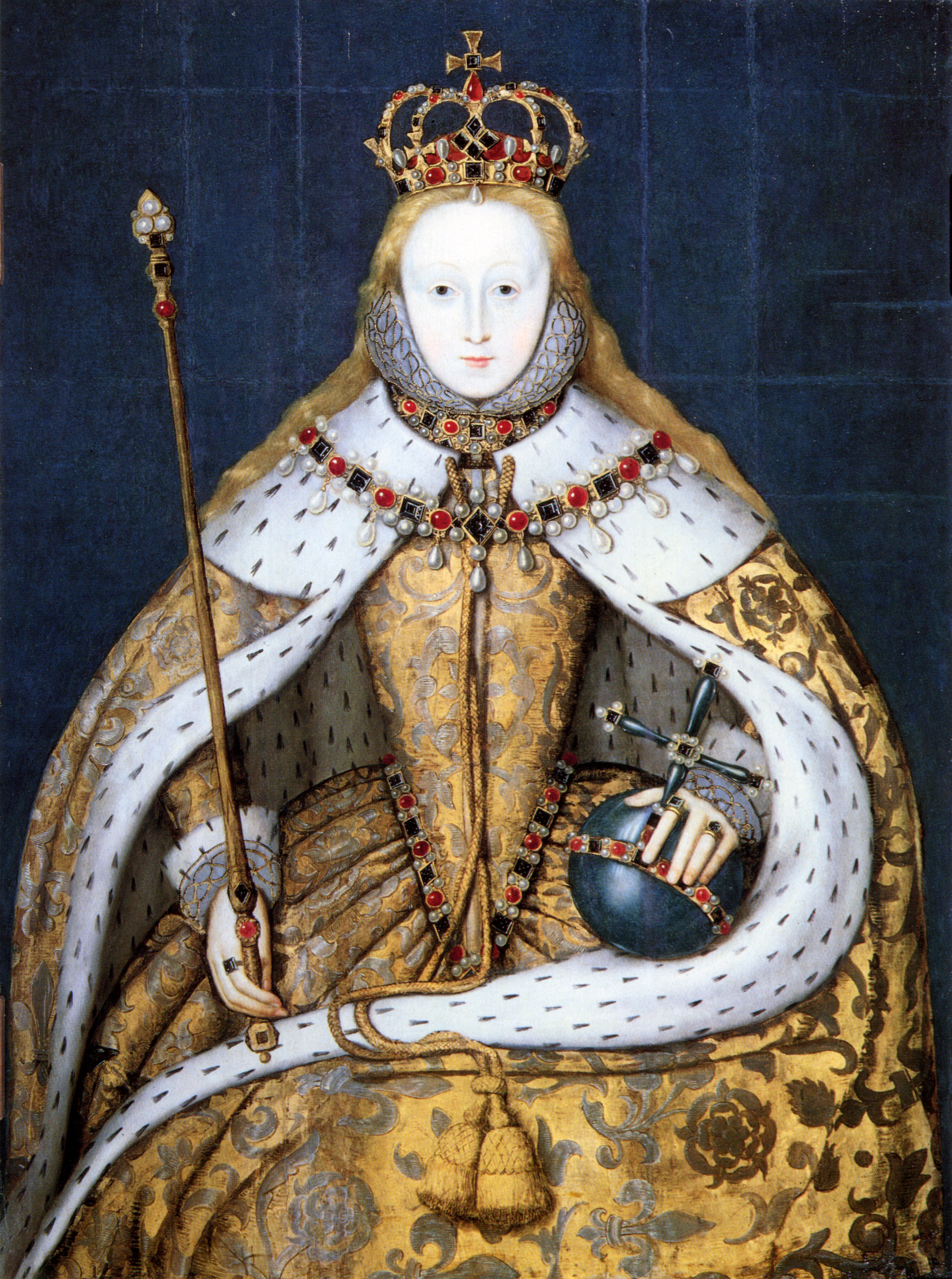
Elizabeth Regina, Coronation Portrait

By the time of his letter to his King on February 12th, de Feria was clued to Elizabeth’s responses and her delays.  He reported that at his audience with her the day before she “began to answer me by keeping to her old argument for not wishing to marry” but when he “cut short the reply” and pressed for an answer his exasperation could be felt.  “I soon understood what the answer would be, namely, that she did not think of marrying, and so to shelve the business with fair words” (Hume Simancas February 1559 14). So ended this conversation, yet, the Count’s optimism could not be curtailed.  He believed that even though he “would have no answer that was not a very good one” he “left the matter open” (Hume Simancas February 1559 14).

By February 12, Paulo Tiepolo, Venetian Ambassador to King Philip’s Court was conceding that “the discussion about the Queen’s marriage to this King has in great measure ceased, and it seems that the whole of this negotiation will depend on the resolve of Parliament about religion” (Brown Venice February 1559 21).

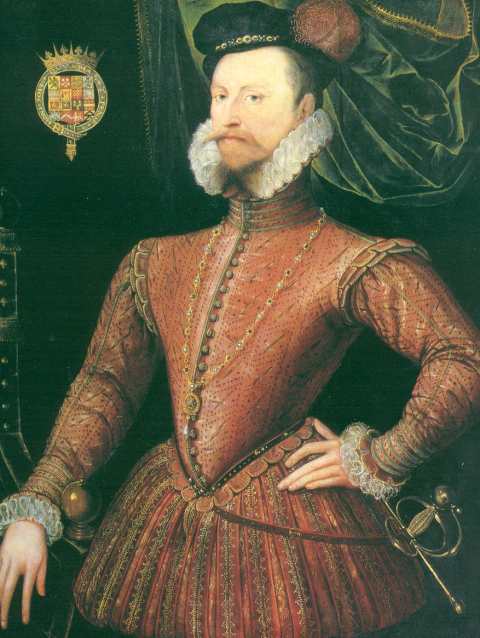
Some flippancy could not be held back from a London writer in correspondence with Paulo Tiepolo. Tiepolo related that the Londoner revealed that “Parliament also sent a deputation to pray the Queen that she will be pleased to marry within the Realm” and although no particular candidate was mentioned “her Majesty, after having first made some verbal resistance to the first point, as becoming a maiden, replied that to oblige them she would marry; adding with regard to the second point, that she had well seen how many inconveniences her sister was subjected to, from having married a foreigner. Obviously, knowing Elizabeth fairly well, the correspondent continued “some persons are of the opinion that she will marry to please herself (as it seems to me that I also should do the like), and perhaps a person of not much lineage. Amongst those most frequently mentioned is a gentleman who is now in Flanders, and who is said to be ill there. Guess who he is!” (Brown Venice February 1559 19).  Robert Dudley never was out of peoples’ thoughts as Elizabeth’s possible consort.
Robert_Dudley_Leicester8
Robert Dudley, Earl of Leicester 

One thing that discomposed the Ambassador was the suspicion he had over the integrity of his correspondence with Spain.  He wrote to his fellow ministers in a debriefing at the end of February 1559 that sometimes it seemed as if Elizabeth could read his thoughts.  He speculated that Elizabeth was “so well informed about this that it looks as if she had seen His Majesty’s letters.  This should be taken good note of” (Hume Simancas February 1559 17).

The Rejection

On 19 March, de Feria shared with Philip that during his audience with Elizabeth she told him “she could not marry your Majesty as she was a heretic. I was much surprised to hear her use such words and begged her to tell me the cause of so great a change since I last discussed the subject with her, but she did not enlighten me” (Hume Simancas March 1559 18).

By this time the international situation had shifted as she was in sounder diplomatic standing with France and she could not keep up the pretext that she would be a Catholic.  She and Parliament were pressing forward with religious changes as de Feria wrote to Philip on March 18th that she was “resolved about what was yesterday passed in Parliament, and which Cecil and Chamberlain Knollys and their followers have managed to bring about for their own ends” (Hume Simancas March 1559 18).

Feria was quite astounded by her response which he could only contribute to those heretics who “leave no stone unturned to compass their ends that no doubt they have persuaded her that your Majesty wishes to marry her for religious objects alone, and so she kept repeating to me that she was heretical and consequently could not marry your Majesty” (Hume Simancas March 1559 18).  Fearful of losing the objective Feria told his King that he assured her that he “did not consider she was heretical and could not believe that she would sanction the things which were being discussed in Parliament, because if she changed the religion she would be ruined” (Hume Simancas March 1559 18).

Now we see the blend of religious policy, marriage policy and foreign policy. In Spanish eyes to balance all three was virtually impossible. Those Spanish eyes were not viewing Elizabeth Regina in all her determined glory.  Elizabeth was determined to return her country to the Church of Henry VIII if not Edward VI; she was determined not to marry; and she was equally determined to pacify French and Spanish demands.  Paulo Tiepolo wrote from Brussels on 19 March 1559 to the Doge that the Bishop of Aquila told him that Elizabeth risked “alienating herself entirely from the Catholic religion” but he also “bestowed on her as much praise for talent and ability as was ever given to any other woman” (Brown Venice March 1559 44).  High praise indeed.

Lorenzo_Priuli_Cropped
Lorenzo Priuli, Doge of Venice

Philip wrote to his Ambassador, Count de Feria, on 23 March after the negotiations for marriage to Elizabeth had failed expressing lukewarm regret.  “By your letters and by the bishop of Aquila I am informed of the Queen’s decision about the marriage, and, although I cannot help being sorry that the affair has not been arranged, as I greatly desired and the public weal demanded, yet as the Queen thinks it was not necessary and that with good friendship we shall attain the same object, I am content that it should be so” (Hume Simancas March 1559 19).

Elizabeth was to rely on Philip’s “friendship implicitly so that no opportunity shall be presented for the French to be appealed to in case of necessity.…”  The Hapsburg interests emerged in the direct mission for de Feria: “The main end and aim that you must have in view in all things is to obstruct and impede, by every way, form and means, any rupture between the Catholics and heretics in England, this being the best course for the pacification of the country, and for the welfare of our interests, as it will deprive the French of any excuse for putting their foot in the country, which is the thing principally to be avoided” (Hume Simancas March 1559 20).  Quite an assignment.

As always Philip needed to cover all his bases.  Worried that “the Queen might perhaps think I was offended at her rejection of the marriage,” he wrote a separate letter to de Feria that was to be presented to Elizabeth. For a man who approached the proposal feeling “like a condemned man awaiting his fate” (Somerset 107), he wanted to maintain the idea of friendship between them.  The letter Feria was commissioned to give to Elizabeth stressed to her that Philip was “quite satisfied with what pleases her.”  Feria was given a bit of leeway by his boss to give the necessary “complimentary words and offers of service…in accord with the contents of the letter” and Spanish interests (Hume Simancas March 1559 20).

It is good to see Philip acknowledge the diligence of his hard-working Ambassador by including in the letter praise for “the prudence, moderation and zeal” Count de Feria had shown in all his dealings with the Queen.  The King thanked his servant but could not help but send a not-so-subtle message that he expected Feria “to continue the same care, diligence and good will in the guidance of affairs touching my interests” (Hume Simancas March 1559 20).

The King wanted his ambassador to ensure the Queen understood that he would always be ready to assist her and cooperate with her government.  Philip did want to assure her that he would “preserve the good friendship and brotherhood that I have hitherto maintained.” Elizabeth was also to be advised that Philip would “render her any service in the matter of her marriage …with all the goodwill …ever shown in matters that concern her” (Hume Simancas March 1559 19).

Elizabeth took the chance to tease de Feria on his master’s inconstancy saying that if Philip would not change religions for “all the kingdoms of the earth” then “much less would he do it for a woman.”  Feria’s romantically diplomatic answer was that “men did more for a woman than for anything else” (Hume Simancas March 1559 18).  According to his report, Elizabeth shifted the line of the interview by discussing the large sums of money taken out of the country every year for the Pope and that she knew it must be ended.

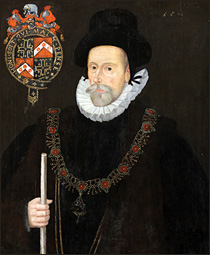
Interestingly, Feria revealed a maneuver on the part of Sir Francis Knollys.  He said that about a half hour after they were talking, Knollys came to announce supper was ready.  Feria clearly thought this was “arranged by those who are working this wickedness, for there is nothing that annoys them more than that I should speak to her.”  He took his leave and informed Philip that he told her “that she was not the Queen Elizabeth that I knew and that I was very dissatisfied with what I had heard, and if she did what she said she would be ruined” (Hume Simancas March 1559 18).  Pretty courageous fellow.
francisknollys
 Sir Francis Knollys

For references, please refer to the blog entry “Two’s Company, Three’s a Crowd: Part I.”

Two’s Company, Three’s a Crowd: Part IV

Two’s Company, Three’s a Crowd: Part IV

The diplomatic accounts sent to Philip II by his Spanish Ambassador to England, Gómez Suárez de Figueroa, Count de Feria, will be quoted at length as they give such clear and vivid pictures of the events from spring of 1558 until the autumn.  Philip, convinced that if his wife Mary I died the preferred successor would be Princess Elizabeth, tried to preserve close ties with the princess while maintaining the upper hand.  He had quite a job for himself.

 Philip Turns His Attention to Elizabeth—1558

As everyone at Court, except for Queen Mary, realized her pregnancy was a delusion, Philip turned his attention to Elizabeth.  He did not have an easy task in convincing his wife to accept her sister as heir.  Ambassador Michiel wrote to the Doge of Venice on October 29, 1558, that King Philip had sent over his envoy, Count de Feria to visit the Queen and to convince her that it was better to arrange the marriage of Elizabeth now while they could “prevent the evils which might occur were Lady Elizabeth, seeing herself slighted, to choose after Her Majesty’s death, or perhaps even during her lifetime, to take for her husband some individual who might convulse the whole kingdom into confusion. For many days during which the confessor treated this business, he found the Queen utterly averse to give Lady Elizabeth any hope of the succession, obstinately maintaining that she was neither her sister nor the daughter of the Queen’s father, King Henry, nor would she hear of favouring her, as she was born of an infamous woman, who had so greatly outraged the Queen her mother and herself”  (Queen Elizabeth I 242-243).

This was to be done in utmost secrecy for Elizabeth could not be slighted if the Queen would not agree to it.  There was also the fear if the French found out it could jeopardize any marriage schemes as the “greater part of England is opposed to the Queen, and most hostile to King Philip and his dependants, and much inclined towards Miladi Elizabeth, who has always shown greater liking for the French faction than for this other” (Queen Elizabeth I 243).  As seen in a previous blog, “Two’s Company, Three’s a Crowd: Part III” Mary and Elizabeth were both against a marriage for Elizabeth, albeit for different reasons.  Philip may have seen the writing on the wall concerning the Savoy and Swedish marriage proposals but he was not without schemes.  He knew he needed to keep Elizabeth in his favor.

When Charles V died in September, Philip wrote to Elizabeth himself to tell her about it.  She in turn wrote a reply to him.  “Sire and dearest cousin, The honour which your Majesty has done me by sending a gentleman to advertise me of the death of the august Emperor, your father of most glorious memory, agreeably reminds me that your Majesty continues to honour me with that generous good-will which you have been pleased ever to bestow on me, and from which I have felt so much advantage that, in calling to mind these Graces and favours, I can find no other fit means of evincing my gratitude than by earnestly remembering that the life I enjoy is equally the fruit of the Queen my sister’s goodness and of your Majesty’s magnanimous protection” (Queen Elizabeth I 239-240).

Charles v for part four
Charles V by Titian

Elizabeth went on to tell Philip that she was “employed at present in reading the history of his warlike actions, and his great feats of courage and valour, in order to redouble, by the glorious memory of the father, the veneration and esteem which I have for the son.

“I pray God that amidst the afflictions which such a loss causes you, he may load your life with prosperity and happiness; so shall I ever, with great satisfaction, assure you that I am your Majesty’s very humble servant and sister-in-law, Elizabeth” (Queen Elizabeth I 240).

Mary’s View of Elizabeth

Venetian Ambassador Michiel, who described Mary as “a very great and rare example of virtue and magnanimity, a real portrait of patience and humility,” also was aware of “her evil disposition towards her sister my Lady Elizabeth, which although dissembled, it cannot be denied that she displays in many ways the scorn and ill will she bears her.”

Michiel perceived that “what disquiets her most of all is to see the eyes and hearts of the nation already fixed on this lady as successor to the Crown, from despair of descent from the Queen, to see the illegitimate child of a criminal who was punished as a public strumpet, on the point of inheriting the throne with better fortune than herself, whose descent is rightful, legitimate, and regal. Besides this the Queen’s hatred is increased by knowing her to be averse to the present religion, that she has recanted, she is nevertheless supposed to dissemble, and to hold to it more than ever internally” (Brown VI May 1557 884).

Philip was up against a strong force. Mary truly wanted to be a loving and obedient wife, which would have meant following in with Philip’s plans of complete reconciliation with Elizabeth and, more importantly, announcing her as heir.  Mary preferred to wait and let events unravel.  She still held hope that she would have her own child or, if that would not be the case, then “referring the matter after her death to those whom it concerns either by right or by force” (Brown VI May 1557 884).  This was at complete variance with Philip who “it cannot be supposed will choose to delay until then, nor remain at the mercy of the English and their divisions, he would therefore wish to secure himself immediately and proclaim the heir” (Brown VI May 1557 884).  Yet, where Elizabeth was concerned there was too much anger, jealousy and distrust on Mary’s side to overcome.

Why were these feelings of Mary’s so difficult to submerge?  Let us return to Ambassador Michiel’s report. Elizabeth is described physically as very attractive and as “a young woman, whose mind is considered no less excellent than her person; and her intellect and understanding are wonderful, as she showed very plainly by her conduct when in danger and under suspicion.”  It is of Michiel’s opinion that “as a linguist she excels the Queen” speaking Latin, Greek, and Italian.  Perhaps Mary would not feel overshadowed by these skills, except as the Ambassador shrewdly related that everybody believed Elizabeth resembled King Henry VIII “more than the Queen” and “he therefore always liked her and had her brought up in the same way as the Queen.” This perhaps could have been easier to swallow for Mary, but she was aware “that she [Elizabeth] was born of such a mother,” and that Elizabeth believed she was no less legitimate than Mary was (Brown VI May 1557 884).

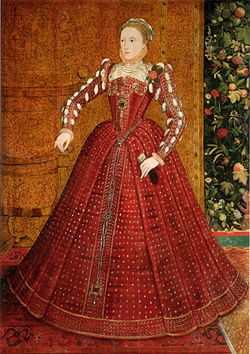
Elizabeth_I_Steven_Van_Der_Meulen
Elizabeth by Steven van der Meulen, 1563

Added to Elizabeth’s faults, was the fact that Mary had to be aware that as the years passed, “there is not a lord or gentleman in the kingdom who has failed, and continues endeavouring, to enter her service himself or to place one of his sons or brothers in it, such being the love and affection borne her” (Brown VI May 1557 884).  Michiel explained that Elizabeth was always in need of money “and would be much more so did she not steadily restrain herself to avoid any increase of the Queen’s hatred and anger”; therefore, she did not increase the number of servants or add expenditures of any kind.

When requested to take on household members, Elizabeth would decline pleading her relative state of poverty and “by this astute and judicious apology she adroitly incites a tacit compassion for herself and consequently yet greater affection, as it seems strange and vexatious to everybody that being the daughter of a King she should be treated and acknowledged so sparingly” (Brown VI May 1557 884).

An example of Mary’s anger we have seen in her frustration in having to give way to the daughter of Anne Boleyn and her jealousy showed in her annoyance of Elizabeth’s skills and popularity.  An example of her distrust is perfectly illustrated over Elizabeth’s professed religious convictions.  Ambassador Michiel, recognized the danger to Catholicism if Elizabeth succeeded as she would “reverse of what the Queen has done, this seeming to her a sort of revenge. Besides this, she would think that nothing could render her more popular, independently of her own interest through the restitution to herself and to the Crown of all those revenues amounting to upwards of 60,000l., of which the Queen has deprived it.  And “and above all she would withdraw the obedience to the Pope, were it solely for the sake of not seeing money go out of the kingdom” (Brown VI May 1557 884).

Perhaps Mary’s policy should have been to remove Elizabeth from her realm.  The Queen’s reluctance to acknowledge Elizabeth’s legitimacy via a diplomatic marriage kept her sister in the kingdom.  Maybe a reversal of her decision would have eased many of her concerns.  Below is a lengthy extract from a diplomatic dispatch between Count Feria, the Spanish Ambassador to England and Philip II explaining the events of May 1558.

May 1, 1558, de Feria to King Philip II
“An ambassador of the King of Sweden came here recently. He appears to be a learned man. Several days passed without his having audience of the Queen or even demanding it. His mission appears to consist of two parts: one about commercial affairs between England and Sweden, and the other to negotiate a match between the Lady Elizabeth and the King of Sweden’s son, for which purpose he brought a letter from the young man accrediting him to the Lady. Before he had been received by the Queen, he went to present his letter to the Lady Elizabeth. The Queen is writing to you on the subject; and as I have heard from her all I know about it I need say no more. She fancies herself very much where this matter is concerned. She was angry with me the other day when she knew that I was sending a servant of mine to Antwerp on my own business, thinking that I meant to write to your Majesty before she had done so about this matrimonial affair. She spoke to me very severely.

erik_xiv_van_der_meulen
Eric XIV of Sweden by Steven van der Meulen, 1561 

“When this ambassador first arrived, the Queen was greatly distressed, thinking that your Majesty would blame her because the match proposed a year ago [to Philip’s choice, Emmanuel Philibert, Duke of Savoy] had not come off. Now that the Lady Elizabeth has answered that she does not wish to marry, the Queen has calmed down; but she takes a most passionate interest in the affair. She now realises that her pregnancy has come to nothing, and seems afraid your Majesty will urge her to take a decision (about marrying off Elizabeth). Figueroa and I think your Majesty ought to do this, grasping the occasion supplied by this ambassador and the pregnancy matter, but it must not be raised at the same time as the military affair, for that might spoil everything. I do not think the Queen will wish to prevent Elizabeth from succeeding, in case God grants no issue to your Majesties” (Tyler XIII May 1558 425).

Official Response to Swedish Proposals
While in Brussels, Philip wrote a response to de Feria on May 7, 1558.
“I am answering your letter in my own hand, as you will see.  You will also see that I am writing to the Privy Council about the four points raised by the Swedish ambassador on behalf of his King concerning trade between England and Sweden. As the terms he proposes are harsh and impracticable, you will try to get them to temporise, keeping me informed of anything they may intend to do so that I may signify my pleasure to them” (Tyler XIII May 1558 429) .

On May 18, 1558, Ambassador Feria, ever the conscientious diplomat, informed his king of the merry-go-round of events in England. “They tell me that with this courier they are sending a report to your Majesty, with the reply they think of making to the Swedish Ambassador. What the Swede is trying to do will come to nothing.

“I have already written to your Majesty that I did not see the Lady Elizabeth when she was here. As my principal support in negotiating the matters I was sent here for was the Queen’s goodwill, I thought I had better avoid upsetting her, especially as your Majesty had not given me any special instructions” (Tyler XIII May 1558 435).

Feria clarified that he had sent word to Elizabeth that he had permission from the king to visit her and asked another courtier, referred to as Paget and it is assumed to be Charles Paget, to offer his excuses for not meeting her earlier.  It appears that Paget rather fumbled the job.  Feria explained that he had asked one of the women close to Elizabeth if Paget had done so and she told him “that he asked the Lady Elizabeth whether I had been to see her, and that when she said I had not, he expressed great surprise and said nothing further.”   Now in a bit of a tricky situation Feria decided, “I do not think that things ought to be left there, but that it would be well that I should go and see her before I leave the country; she lives twenty miles from here. As your Majesty is fully informed, you will send me instructions. If I am to see her, you must write about it to the Queen” (Tyler XIII May 1558 435).

Since Count de Feria appeared to be anxious about Mary’s reception to the news that he had gone to visit Elizabeth. It is obvious his commission dealt with the sensitive topics of either the succession or a possible marriage for Elizabeth.  Regardless, Philip did agree to Feria’s perception that Mary had to be informed of his actions with the unwritten idea that Mary would be angry at such an overture.  Several days later Feria received word from Philip saying “I approve of your intention not to leave England without visiting the Lady Elizabeth. I am writing to the Queen that I have instructed you to do so, and that she is to speak to you in the same sense. Thus I hope that the Queen will take it well.

“The Council have written to me how they intend to answer the Swedish Ambassador. Their reply seems to me satisfactory, except that I should like to have them add that they were not pleased with his going to make a proposal to the Lady Elizabeth without the Queen’s knowledge, and that in future neither he nor anyone else on his master’s behalf should come to negotiate such matters without informing the Queen in advance, for if they did, the Queen would greatly resent it and could not fail to show her resentment in some appropriate manner” (Tyler XIII May 1558 440).

Elizabeth Gripsholm
Elizabeth, in the ‘Gripsholm Portrait’ –a painting done specifically for Erik of Sweden.

Obviously, Philip had written Count Feria on May 27, 1558, and quickly sent off the missive.  On the same day, he received the message that Feria had written on the 18th.  Therefore, Philip wrote again on the 27th praising Feria that he was “glad to hear that you had gone to see the Lady Elizabeth. When you come, you will report what happened between her and you” (Tyler XIII May 441).  Again, the topic of conversation between Count Feria and Elizabeth had been too sensitive to commit to paper; the communiqué would be done in person to the King.  If the discussion concerned the Swedish marriage proposal, the diplomatic course laid down by Philip was followed by his faithful envoy.  Several months later Feria had the satisfaction to write, “The Swedish Ambassador was satisfied with the answer he received from the Council, and said that he wished to report to his master and wait here for an answer. When the Queen reproved him in presence of the Councillors and Petre for having made a proposal to the Lady Elizabeth without her knowledge, he put up a feeble defence, but then repeated his request. Her Majesty answered that she did not intend to proceed further in this matter. I believe she intends to write to your Majesty about what happened between her and the ambassador” (Tyler XIII July 1558 457).

P2 for part four
King Philip II by Titian, 1554

Regardless of what Philip and his envoy publically proclaimed, another meeting between the Spanish Ambassador and Elizabeth took place sometime in June of 1558 at Hatfield.  He kept Philip informed of the arrangements, letting him know “I am going to see the Lady Elizabeth on Friday, 16 miles from here, as your Majesty has ordered me to do. (Tyler XIII June 1558 444).  After the meeting, Feria continued with King Philip’s instructions for filling him in on the details in person and kept to a bare bones account that he wrote on 23 June: “I went to visit the Lady Elizabeth, as your Majesty instructed me to do. She was very much pleased; and I was also, for reasons I will tell your Majesty when I arrive over there. (Tyler XIII June 1558 451).  It appears that when Count Feria returned to Brussels he had information to share that would apparently satisfy Hapsburg interests.

The marriage of Mary, Queen of Scots and the future Francis II had taken place in the spring of 1558.  Philip understood the dangers of Mary’s claim to the English throne to his country.  Elizabeth herself must have been feeling more confident of her position as these international developments strengthened her case at home among not only the English, but also the Hapsburgs.  Philip needed Elizabeth, as she was well aware.

Count de Feria Meets His Match
Count Feria had returned to his master in Brussels and was sent back to England relatively quickly as news of the Queen’s ill-health reached her husband. The meeting between Elizabeth and Feria will be relayed extensively below due to the insightful nature not only of the event but also of Feria’s interpretation of Elizabeth’s character.  The basis for the bulk of the communiqué derives from David Loades’ materials with extended passages from various sources to emphasis other points.

14 November 1558
“I arrived here on Wednesday, the ninth of this month, at lunchtime and found the Queen our lady’s health to be just as Dr. Nunez* describes in his letter to your Majesty.  There is, therefore, no hope of her life, but on the contrary each hour I think that they will come to inform me of her death, so rapidly does her condition deteriorate from one day to the next.  She was happy to see me, since I brought her news of your Majesty, and to receive the letter, although she was unable to read it.  In view of this I felt that there was not time to waste on other matters and sent word to the council to assemble as I wished to talk to them on your Majesty’s behalf.  This I preceded to do ….I also declared your Majesty’s will on the question of the succession to the kingdom, and told them how pleased your Majesty would be to hear of their good offices with Madame Elizabeth on this matter, reminding them how your Majesty had sought to have this done much earlier, as they all well knew.  These councilors are extremely frightened of what Madame Elizabeth will do with them.  They have received me well, but somewhat as they would a man who came with bulls from a dead pope.

“The day after I arrived, I went to a house belonging to a gentleman some twenty three miles from there, where Madame Elizabeth is staying.**  She received me well but not as joyfully as she did last time. She asked me to dine with her and the wife of Admiral Clinton who was there when I arrived was also invited.  After dinner she rose and told me that should I desire to speak with her I might now do so, for she was giving orders that only two or three women who could speak no other language than English should remain in the room… I gave her to understand that it was your Majesty who had procured her recent recognition as the queen’s sister and successor, and not the Queen or the council, and that this was something your Majesty had been trying to secure for some time, as she no doubt realized, for it was common knowledge in the whole kingdom; and I condemned the Queen and the council severely… She was very open with me on many points, much more than I would have expected, and although it is difficult to judge a person one has known for a short a time as I have known this woman, I shall tell your Majesty what I have been able to gather.  She is a very vain and clever woman.  She must have been thoroughly schooled in the manner in which her father conducted his affairs, and I am very much afraid that she will not be well disposed in matters of religion, for I see her inclined to govern through men who are believed to be heretics, and I am told that all the women around her definitely are.  Apart from this it is evident that she is highly indignant about what has been done to her during the Queen’s lifetime. She puts great store by the people, and is very confident that they are all on her side—which is certainly true…

Brockett
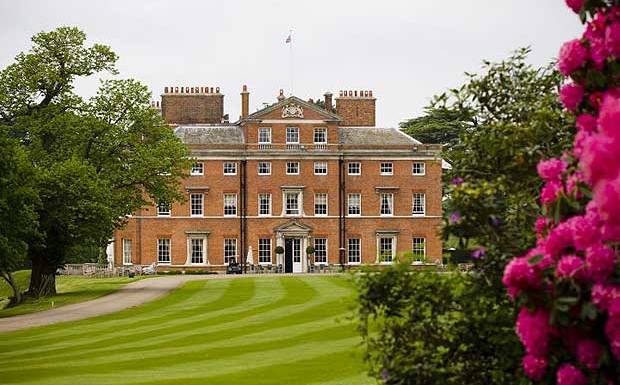
Brockett Hall

“I have been told for certain that Cecil, who was King Edward’s secretary, will also be secretary to Madame Elizabeth.  He is said to be an able and virtuous man, but a heretic…

“Last night they administered extreme unction to the queen or lady and today she is better, although there is little hope of her life. Our Lord etc., From London, 14th November 1558” (Loades Mary Tudor 200-202).

mary for part four
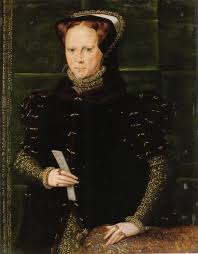
Mary I by Hans Eworth, 1555-1558.

If the Ambassador thought his advice would be listened to meekly, let alone followed, he had another think coming.   When the discussion emerged about the Privy Council members, Feria counseled Elizabeth to show restraint and not seek revenge.  Elizabeth told him that she wanted to make the “councillors who had wronged her admit they had done so” (Perry 126).  She acknowledged Philip’s support when she was detained by her sister and how Philip “had shown her favour and helped her to obtain her release. She felt that it was not dishonourable to admit that she had been a prisoner; on the contrary, it was those who had put her there who were dishonoured because she had never been guilty of having acted or said anything against the queen, nor would she ever confess otherwise” (Porter 405).

What a gal!  Faced still with a tremendous amount of uncertainty and with no true internship in the halls of power, Elizabeth’s courage and sangfroid are astounding.  A baffled Feria shared with Philip, the person who Feria felt was solely responsible for obtaining the throne for Elizabeth, that she “puts great store by the people who put her in her present position, and she will not acknowledge that your Majesty or the nobility of this realm had any part in it, although, as she herself, says, they have all sent her assurances of their loyalty…. There is not a heretic or traitor in all the kingdom, who has not joyfully raised himself from the grave to come to her side. She is determined to be governed by no one” (Perry 125).

Feria claimed that Elizabeth had not received him as ‘joyfully’ as before— the change could be easily explained.  Her position as future queen was much more secure; her sister had recently acknowledged the succession which was linked back to her father’s actions.  The Third Act of Succession of 1544 gave the act of law to the last will and testament of Henry VIII.  In 1546, Henry spelled out exactly how the succession should proceed if his son Edward died childless and if his daughter Mary did as well.  Mary used that Act as her claim to the succession over Lady Jane Grey yet was loath to enact it for her half-sister.  In the autumn of 1558 Mary acknowledged the fact that she might die without issue and so on 28 October she added a codicil to her will—written in March of that same year.  She left the “government, order and rule” of the kingdom to her “next heir and successor, according to the laws and statues of this realm” (Alford 28).  Mary consciously did not mention Elizabeth by name nor did she accept her as her heir willingly. Christophe d’Assonleville, the Imperial envoy from Brussels, wrote to Philip that the Privy Council had persuaded Mary to “make certain declarations in favour of the Lady Elizabeth concerning the succession.  Her Majesty consented; and the Comptroller and the Master of the Rolls are being sent to-day on her behalf and that of the Council to visit the Lady Elizabeth and inform her that the Queen is willing that she succeed in the event of her own death” (Tyler XIII November 1558 498).  Good news for Philip as he was in full support of Elizabeth as heir— there really was no choice in his eyes—and Feria had the delicate task of dealing with Elizabeth as the soon-to-be-Queen while diplomatically presenting the belief that Mary would recover.  This interview could not have been easy for the Count.

While giving praise for Philip’s support, Elizabeth did not hesitate to imply that Mary had hurt her realm by “sending large sums of money and jewels out of the country to her husband” (Porter 405). “She then went on to discomfort him further by observing that her sister had lost her subjects’ affection by marrying a foreigner, to which he had relied, punctiliously but untruthfully, that on the contrary Philip had been much loved.  She was grateful for Philip’s support but set no particular store by it, placing all her confidence in the English people, who were she was convinced, ‘all on her side’.  This, Feria concluded ruefully, ‘is undoubtedly true’” (Loades Mary Tudor 199).

JOanna regent of spain
Joanna, Regent of Spain

*Luis Nunez was a Portuguese physician practicing in the Netherlands, sent over with de Feria.

**Most likely Brockett Hall, home of Sir John Brockett, who was one of her Hatfield tenants.

For references, please refer to the blog entry “Two’s Company, Three’s a Crowd: Part I.”
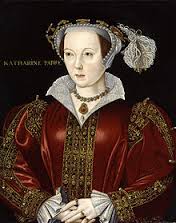
The Fourth Step-Mother of Elizabeth, Katherine Parr

The Fourth Step-Mother of Elizabeth, Katherine Parr
As discussed in an earlier blog entry, Catherine Howard, Henry VIII passed a law that required all future queens of England to have chaste pasts or be willing to confess any ‘indiscretions.’  Obviously, this eliminated many candidates.  Who would be free from scandal or brave enough to tell Henry if she was not?

Enter Katherine Parr, the daughter of Thomas and Maud Parr.  Maud, a lady-in-waiting to Queen Catherine of Aragon, was a highly intelligent and well-educated woman.  Queen Catherine placed her in charge of the education of many of the youngsters at Court. Her children, especially Katherine, benefited greatly from the Court tutors and developed a life-long love of learning.  Maud was widowed at the age of 25 and never remarried.  She concentrated her efforts on establishing good matches for her children and protecting her son’s inheritance.  In 1529 when Katherine was 16 or 17, she was married to Edward Borough.  Edward was in his early twenties when he died in 1533.  It is often confused that she married his grandfather, another Edward, perpetuating the myth of her marrying aged widowers. This blogger wonders if the confusion came because she would have resided in a multi-generational household perhaps with the grandfather-in-law as the head.

gains
The Borough family manor, Gainsborough Old Hall.

gbbimages
Gainsborough Old Hall

Maud Parr died the year after Katherine was widowed and it left the young woman basically independent.  Katherine arranged her own next marriage to John Neville, Lord Latimer of Snape Castle in Yorkshire, a man in his early forties.  The exact date is unknown but they married in 1534.  Lord Latimer had two children both of whom became very close to their young stepmother, especially the daughter, Margaret.  From the time of her marriage, Katherine had the responsibilities of the household.  Her responsibilities expanded to include the entire estate when Lord Latimer took an active role, on the side of the rebels, in the Pilgrimage of Grace.  As examples of her abilities, Katherine withheld a siege, protected the occupants of the household and managed, with the help of her brother William, to gain a pardon for Latimer.  King Henry did not hold it against Latimer and both Katherine and her husband were welcomed back to Court.

snape9
Snape Castle

It was while at Court, with Latimer ailing and soon dying, that Henry became aware of the thirty-year-old Lady Latimer.  Described as attractive but not pretty, Katherine always dressed impeccably, had the translucent skin that was so praised in Tudor times, auburn colored hair and a dignified bearing.

parrk
Katherine Parr by an unknown artist.  Displayed at Montacute House.

Thomas Wriothesley, Lord Chancellor, wrote to the Duke of Norfolk that there was “a woman, in my judgement, for certain virtue, wisdom and gentleness, most meet for his Highness.  And sure I am that his Majesty had never a wife more agreeable to his heart than she is.  The Lord grant them long life and much joy together” (Weir 498).  Praise indeed considering he later tried to have her arrested and executed.

Eustace Chapuys, the Spanish Ambassador, reported to Charles V that Katherine “is graceful and of cheerful countenance; and is praised for her virtue” (Hume 248).  He continued that she was not “so beautiful” and that there was “no hope of issue, seeing that she had none with her two former husbands” (Gairdner XVIII 954).  Charming and amiable, she was pleasant to nobles and servants alike.  Sensible and efficient, a good conversationalist, experienced with step-children, and having aided an ailing spouse, Katherine seemed ideal to become the sixth wife of Henry VIII.

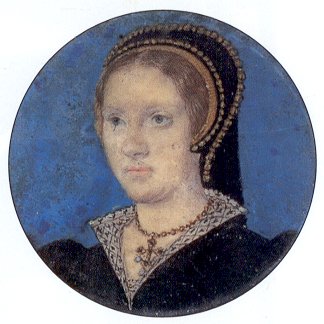
parrhorenbout
Miniature of Katherine by Lucas Horenbout, 1544

kp5
Held in the possession of the National Portrait Gallery, this portrait had been mistakenly identified as Lady Jane Grey for many years.  Done in 1545 it is now credited to be Katherine Parr.

Interestingly, she was the only one of Henry’s wives who did not want to become his next bride. Historians believe this for a couple of reasons: she was intelligent enough to see the dangers involved; and she had developed an interest in Thomas Seymour, Lord High Admiral.  Once Henry proposed, Katherine accepted her fate and became determined to make the best of the situation.  Most commentators now believe she saw her chance to promote a more liberal religious agenda and the betterment of her family.  As was Henry’s custom, his bride’s family advanced along with her elevation.  Katherine’s brother, William Parr, was granted the Earldom of Essex in his own right.  Her sister Ann and brother-in-law Sir William Herbert gained positions at Court as did members of her extended family, the Throckmortons and her step-daughter Margaret Neville.

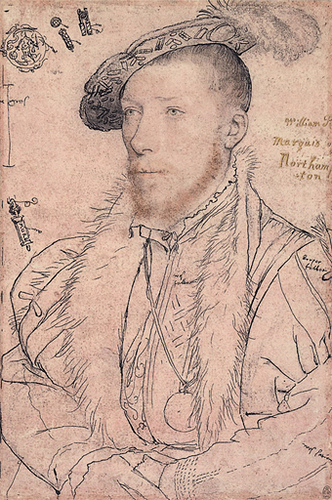
parr by holbien
William Parr in a sketch by Hans Holbein.

As Queen, Katherine used her influence to encourage the King to bring to Court his children from their respective households.  She felt they should be there, beyond the wedding celebrations, and see their father more.  Henry gave his approval and Katherine wrote them all to come.  Agnes Strickland assures that Katherine, who knew Princess Mary well, was also “acquainted with Elizabeth before she became queen, and greatly admired her wit and manners” (Strickland Volume 4 14).

A letter from 10-year-old Elizabeth survives in which she wrote, flowing with gratitude, to acknowledge what Katherine had done.

“Madame, The affection that you have testified in wishing that I should be suffered to be with you in the Court, and requesting this of the King my father, with so much earnestness, is a proof of your goodness.  
So great a mark of your tenderness for me obliges me to examine myself a little, to see if I can find anything in me that can merit it, but I can find nothing but a great zeal and devotion to the service of your Majesty.  But as that zeal has not been called into action so as to manifest itself, I see well tha tit is only the greatness of soul in your Majesty which makes you do me this honour, and this redoubles my zeal towards your Majesty.  I can assure you also that my conduct will be such that you shall never have cause to complain of hainv done me the honour of calling me to you; at least, I will make it my constant care that I do nothing but with a design to show always my obedience and respect.  I await with  much iimpatience the orders of the King my father for the accomplishment of the happiness for which I sigh, and I remain with much submission, your Majesty’s very dear Elizabeth” (Queen Elizabeth I 21-22).

There is an interesting interlude in the chronology of Elizabeth’s life between the summers of 1543 and 1544.  Most historians (Linda Porter is an exception) believe Elizabeth offended her father in some way and was banished to Ashridge near the Hertfordshire-Buckinghamshire border—near Berkhamsted where the Queen held the lordship of the manor. Because Katherine kept in contact with Elizabeth and she sent her other step-daughter, Margaret Neville, to act “as liaison between her step-mother and step-sister” it appears as if the youngster had not offended her (James 172-173).  Elizabeth, obviously, had no ill-feelings as she wrote to Katherine that “Inimical Fourtune …has deprived me for a whole year of your most illustrious presence….”  Elizabeth conveyed to Katherine her belief that she was “not only bound to serve but also to revere you with daughterly love …”(Marcus 5).

Henry was abroad, Katherine was Regent and Elizabeth was persistent.  By petitioning her step-mother to speak to her father, who was on military campaign, Elizabeth was able to end “this my exile” (Marcus 5). Katherine successfully convinced the King to allow Elizabeth to join her at Hampton Court in late July of 1544 cementing her step-daughter’s affection.  Elizabeth seemed secure in Katherine’s affection although she never took it for granted as she wrote “I know that I have your love and that you have not forgotten me for if your grace had not a good opinion of me you would not have offered friendship to me that way” (James 136).

exile letter 001

Fragment of the letter to Katherine from 10-year-old Elizabeth.  Written in Italian.  On line five you can make out the reference to her exile [mio exilio].

The regard Elizabeth had for Katherine was also shown in the New Year’s Day gift that she presented to her in December of 1544.  Elizabeth translated, in italic script, Marguerite of Navarre’s Le Miroir de l’ame pecheresse [The Mirror of a Sinful Soul].  The gift itself was a tribute to her spiritual leanings, her education and her affection.  The dedication was “To our most noble and virtuous Queen Katherine, Elizabeth, her humble daughter, wisheth perpetual felicity and everlasting joy.” In the accompanying letter Elizabeth hoped that Katherine would “rub out, polish, and mend (or else cause to mend) the words (or rather the order of my writing), the which I know in many places to be rude and nothing done as it should be” (Marcus 6-7).  This shows the trust Elizabeth had for Katherine as a loving mentor and the respect she had for Katherine’s intellectual abilities.

bookblue
Elizabeth’s translation of The Mirror of the Sinful Soul with a cover of embroidery she worked herself.  Notice Katherine’s initials in the center.

The next year, Elizabeth translated Katherine’s book, Prayers or Meditations, into French, Italian and Latin for her father (James 137).  One would suspect that Elizabeth would not want to upset Henry nor jeopardize Katherine by presenting to him materials that would be contrary to his religious beliefs.
gift
Gift to Henry VIII from Elizabeth.  A translation of the work, Prayers or Meditations, by Katherine Parr in multiple languages and covered in embroidery by Elizabeth. 

When Henry had gone to France in July 1544, he appointed Katherine his Regent. This certainly was an expression of his respect and affection for her.  Lord Chancellor Wriothesley, Archbishop Cranmer, Lord Hertford, Dr. Thomas Thirlby and William Petre were her advisors.  Not a woman to be gainstayed, in September 1544, Katherine, dealing with her Regency Council, let it be known that exasperation had set in and she was “wearied with their continual clamor” (Gairdner XIX 231).

Thomas Wriothesley, despite his earlier praise for Katherine, grew to distrust her as he was concerned about the liberal religious views she held and strong personality.  Early in 1544 Katherine had written in the Tenth Psalm of her text Psalms or Prayers taken out of the Holy Scripture this thought-provoking sentence “I am so vexed that I am utterly weary; help me against them that lie in wait for me” (Parr 318).  This has been tagged as a response to the Catholic attempts to discredit her, led by Wriothesley and Stephen Gardiner, Bishop of Winchester, because of her evangelical leanings.

1stEarlOfSouthampton
Thomas Wriothesley, 1st Earl of Southampton, Lord Chancellor

The unease of these two men reached a peak in the summer of 1546 and led to their attempt to arrest Katherine.  They convinced Henry that she harbored radical leanings and fueled his irritation of the recent views Katherine had expressed. Wriothesley lined up the arrest warrant, gathered forty yeomen of the guard and descended upon Katherine while she was in the Whitehall gardens with Henry.

Little did Wriothesley know, Katherine had been warned and had hastened to Henry to apologize for seeming to overstep her boundaries.  She assured the King that she had debated him to distract him from the pain in his leg and to take instruction from him on the proper theological discourse, not to lecture him. Katherine supposedly said that she felt it “preposterous for a woman to instruct her lord” (Strickland III 246). Henry was certainly ready to believe her.  Upon the conclusion of Katherine’s assurances, Henry replied, “And is it so, sweetheart?  Then we are perfect friends” (Strickland III 246).

When Wriothesley came to arrest her, Henry gave him a dressing down and sent him off.  Obviously, this was a very close call for Katherine and she never again conveyed any views counter to the Establishment.

One area which Katherine thwarted convention was in her encouragement of Elizabeth’s education.  The resulting life-long influence cannot be undervalued.  For over four years, although they did not live together that entire time, a close bond was formed. This intelligent and capable woman encouraged and loved this exceptional child.  By taking charge of Elizabeth’s education, both book learning and practical application (Elizabeth witnessed Katherine’s Regency), Katherine influenced the reign of her step-daughter.

Elizabeth received an excellent education.  She was educated alongside her brother for many years until it was decided by Katherine to employ a tutor solely for the princess. This would have been an exception rather than the rule in 16th century England although there were many highly educated women of the previous generation:  Anne Boleyn, Mary More and, of course, Katherine Parr.  Katherine’s deep and genuine love of learning makes her so admirable as an interesting, remarkable woman.

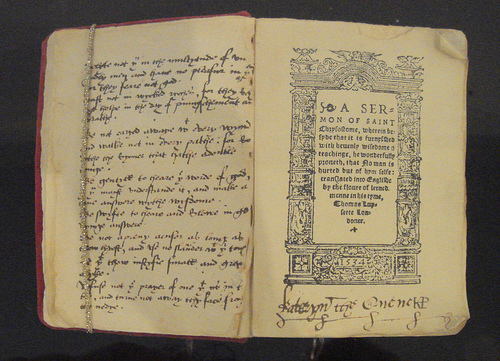
Lamentations1
Copy of Katherine’s text, Lamentations of a Sinner, published in 1547 with her signature.
signature

As Maud Parr’s daughter, a woman who had set up a school at Court and bequeathed money in her will for education, Katherine’s taste for learning was formed young and continued throughout her life.  Margaret Neville, her step-daugher, said in the spring of 1545 “I am never able to render to her grace sufficient thanks for the goodly education and tender love and bountiful goodness which I have evermore found in her highness….”  Prince Edward pretty much said the same thing in 1546.  He thanked Katherine for her “tender and loving letters” and for the “encouragement to go forward in such things wherein your grace beareth me on hand that I am already entered” (James 141).  And Elizabeth praised Katherine for her “fervent zeal your Highness hath towards all godly learning” (Wood 178).

The educations of Edward and Elizabeth were certainly guided by Katherine Parr. Many of their tutors were committed Protestants and humanists.  The tutors’ willingness to educate the princess in the exacting disciplines was telling.  With Katherine also in charge of Jane Grey’s education, her patronage and direction helped formulate two of the sharpest minds of the era—both belonging to females.  Of note is a rare difference of opinion between Katherine and her step-daughter.  In early 1548, Elizabeth’s tutor, William Grindal died.  Katherine wanted to replace him with Francis Goldsmith but Elizabeth wanted Roger Ascham, a fellow from St. John’s College in Cambridge who was well-acquainted with Katherine (James 322).  Writing to Edward’s tutor, Sir John Cheke, Ascham expressed his “uneasy at being the cause of disagreement between the queen and her stepdaughter on such an important matter, actually counseled Elizabeth to accept Goldsmith” (Porter 306). It probably did not take much persuasion, as Ascham became the royal tutor.

roger asham                  dowmmnload

Roger Ascham                                            Sir John Cheke

Elizabeth is a product of Katherine Parr.  The future Queen Regina’s education, religious beliefs, and open-mindedness stem from the guidance of her step-mother. Her devotion was reflected in 1582, when Thomas Bentley’s work, The Monument of Matrons, depicted Katherine Parr as one of the virtuous Queens of history (Fraser 405). Elizabeth’s actions of not forgetting the woman who had permitted her to see the possibilities of rule and to establish England as a cultural center, was certainly a tribute.

The relationship of Elizabeth and Katherine cannot be revealed without the discussion of Thomas Seymour.  This blogger does not want to expend too much time on this topic for all its relevance because of its worthiness of an entire entry on its own.  Thomas Seymour, as brother-in-law to King Henry VIII and uncle to the future king, held prominent positions at Court.  He was there during the times that Katherine Parr was and they began a romance before Henry VIII turned his attention to her.  Upon Henry’s death in January of 1547, the sensible Katherine allowed Seymour to talk her into marriage well before the conventional time-frame of mourning was over.  Katherine had married him for love and as a last chance of happiness.

Seymour Thomas
Thomas Seymour, Lord High Admiral

Little did Katherine know that Seymour had had designs on Elizabeth as a possible wife.  He never quite seemed to relinquish the idea and for her own safety, Elizabeth was removed from her step-mother’s household at Chelsea in 1548 to the care of Anthony Denny and his wife at Cheshunt.  Katherine was pregnant and Seymour could not keep in check his, shall it be said, emotional immaturity and grandiose aspirations.

The story leads to Sudeley Castle where Katherine gave birth to a baby girl, Mary, and died days later of puerperal fever.  She is buried in the chapel in the Castle grounds.

sudeley
Sudeley Castle

burial
Katherine Parr was interred in St. Mary’s Chapel on the grounds of Sudeley under this tomb in the 1800s.

When Elizabeth left Chelsea for her own residence of Cheston, Katherine, according to Gregorio Leti, told her “God has given you great qualities.  Cultivate them always, and labour to improve them, for I believe you are destined by Heaven to be Queen of England” (Strickland 26).

References

Erickson, Carolly. The First Elizabeth. New York: Summit Books. 1983. Print.

Fraser, Antonia.  The Wives of Henry VIII.  New York:  Alfred A. Knopf, 1992. Print.

Gairdner, James, ed. Letters and Papers, Foreign and Domestic, of the Reign of Henry VIII. Vol. 19. London: Longman, Green, Longman & Roberts, 1888. Google Books. Web. 4 May 2013..

Haselkorn, Anne M., and Betty Travitsky. The Renaissance Englishwoman in Print: Counterbalancing the Canon. Amherst: University of Massachusetts, 1990. Google Books. Web. 27 May 2013.

Hibbert, Christopher.  The Virgin Queen: Elizabeth I, Genius of the Golden Age.  New York: Addison-Wesley Publishing Company, Inc., 1991.  Print.

Hume, Martin A. Sharp. Chronicle of King Henry the Eighth of England: Being a Contemporary Record of Some of the Principal Events of the Reigns of Henry VIII and Edward VI, Written in Spanish by an Unknown Hand ; Translated, with Notes and Introduction, by Martin A. Sharp Hume. London: George Belland Sons, 1889. Internet Archive. Web. 4 May 2013.

James, Susan. Catherine Parr:  Henry VIII’s Last Love. Stroud, Gloucestershire: Tempus Publishing. 2008. Print.

James, Susan.  Kateryn Parr:  The Making of a Queen. Brookfield, USA: Ashgate, 1999. Print.

Lindsey, Karen.  Divorced, Beheaded, Survived:  A Feminist Reinterpretation of the Wives of Henry VIII.  Reading, Massachusetts:  Addison-WESLEY Publishing Company, 1995. Print.

Loades, David. The Chronicles of the Tudor Queens.  Stroud, Gloucestershire: Sutton Publishing, 2002. Print.

Marcus, Leah S. et al., eds. Elizabeth I: The Collected Works. Chicago: University of Chicago Press, 2002. Print.

McCaffrey  MacCaffrey, Wallace. Elizabeth I. London: E. Arnold. 1993. Print.

Neale, Neale, J. E. Queen Elizabeth I. Garden City, NY: Doubleday, 1957. Print.

Parr, Katherine, and Janel Mueller. Katherine Parr: Complete Works and Correspondence. Chicago, IL [etc.: University of Chicago, 2011. Google Books. Web. 23 May 2013.

Porter, Linda.  Katherine the Queen:  The Remarkable Life of Katherine Parr.  London:  McMillian, 2010. Print.

Pryor, Felix.  Elizabeth I, Her Life in Letters.  Berkeley, California: University of           California Press, 2003.  Print.

Queen Elizabeth I, Frank Mumby, and R. S. Rait. The Girlhood of Queen Elizabeth: A Narrative in Contemporary Letters. Boston: Houghton Mifflin, 1909. Google Books. Web. 9 May 2013.

Ridley Ridley, Jasper. Elizabeth I: The Shrewdness of Virtue.  New York: Fromm International Publishing Corporation, 1989.  Print.

Somerset Somerset, Anne. Elizabeth I.  New York: Alfred A. Knopf, 1991. Print.

Starkey, David.  Six Wives: The Queens of Henry VIII.  London:  Chatto & Windus, 2003.  Print.

Strickland, Agnes, and Elisabeth Strickland. Lives of the Queens of England, from the Norman Conquest. Vol. III. London: Colburn & Co. Publishers, 1851. Google Books. Web. 7 May 2013.

Strickland, Agnes, and Elisabeth Strickland. Lives of the Queens of England, from the Norman Conquest. Vol. IV. London: Longmans, Green, 1857. Google Books. Web. 2 May 2013.

Strickland, Agnes, and Elisabeth Strickland. Lives of the Queens of England, from the Norman Conquest; with Anecdotes of Their Courts, Now First Published from Official Records and Other Authentic Documents, Private as Well as Public. Vol. VI. London: Henry Colburn, 1844. Google Books. Web. 15 Mar. 2013.

Tytler, Sarah.  Tudor Queens and Princesses.  New York:  Barnes and Noble, 1993. Print.

Weir, Alison. The Children of Henry VII.  New York:  Ballantine Books, 1996. Print

Weir, Alison.  The Six Wives of Henry VIII.  New York: Grove Weidenfeld, 1991. Print.

Wood, Mary Anne Everett. Letters of Royal and Illustrious Ladies of Great Britain: From the Commencement of the Twelfth Century to the Close of the Reign of Queen Mary : Edited, Chiefly from the Originals in the State Paper Office, the Tower of London, the British Museum and Other State Archives. Vol. II. London: Henry. Colburn, 1846. Google Books. Web. 12 May 2013.

The First Step-Mother to Elizabeth, Jane Seymour

The First Step-Mother to Elizabeth, Jane Seymour

Bound to obey and serve.  That was the motto selected by Jane when she became queen.  Was it true or did she know that would be what Henry VIII would want?

Jane had been a lady-in-waiting to Anne Boleyn and her persona does not come to us very clearly via contemporary sources.  History has given her to be modest, virtuous, obedient, and accepting. She is seen as solid, pleasant, dignified and calm.  She is most often judged neither good nor bad.  Sadly, perhaps her character is viewed so positively because of the fact that she produced the longed-for heir and died before Henry became tired of her.

It is not the place here to go into details about Jane Seymour, her courtship with Henry and her death.  Nor enter the debate of whether she was spotted by Henry or was selected (fascinating discussion but one not necessary to this blog entry)

Physically we have paintings by Hans Holbein, in her lifetime, and several artists’ work, posthumously, plus the verbal description by the Spanish Ambassador, Eustace Chapuys who determined that “She is of no great beauty, so fair that one would call her pale.  The said Seymoure is not a woman of great wit, but she may have good understanding” (Lindsey 119).  Historians have given weight to Chapuys’ account since he was not a champion of Anne Boleyn and would have welcomed her fall.

jane holbien to use                   jane unkown

Famous Hans Holbein portrait       Unknown painter

That lack of wit but understanding does lead to the supposition that Jane could figure out how to deal with Henry.  But how could she not be worried about marring a man who had discarded one wife and killed another?  Her understanding had to extend to realizing the possible risk she was taking.

jane english
Jane attributed to The English School

Agnes Strickland does not perpetuate the image of the meek and docile bride as “we have so little that is favorable to relate of this queen” (Strickland 408).  Although Strickland will give Jane credit for being a discrete, beautiful young woman she does wonder if she was as heartless as her bridegroom.  Jane had to know what was happening in the Tower of London to Anne Boleyn while she was planning her marriage to Henry.  “The giddiness of youth cannot be pleaded as apology for Jane Seymour’s indecency, for she was no child when she permitted herself to be courted by the royal Bluebeard, and must have been entirely conscious of the enormity of her actions” (Strickland 403).  Jane’s actions led to her engagement to Henry the day after Anne’s execution and their marriage 10 days later.

We do know that as a step-mother, Jane treated Mary well and granted her special privileges while Elizabeth “was placed out of sight” (Erickson 31). Her motivation for championing Mary could have been kindness or as some believe social snobbery.

She wanted to have someone of her status at Court.  “Now that it hath pleased Your Grace to make me your wife, there are none but my inferiors to make merry withal, Your Grace excepted—unless it would please you that we might enjoy the company of the Lady Mary at court.  I could make merry with her” (Lindsey 132, Hume The Wives of Henry VIII 303).  Although this does not mesh with Polydore Vergil’s view that Jane was “a woman of the utmost charm both in appearance and character,” it is understood that Mary’s situation improved under Jane (Fraser 235). What of Elizabeth?

Martin Hume reported that, after Queen Jane had brought about the reconciliation between Henry and Mary, she fell to her knees and said, “Your Majesty knows how bad Queen Anne was, and it is not fit that her daughter should be Princess.  So the King ordered it to be proclaimed that in future none should dare to call her Princess, but madam Elizabeth” (Hume 72 -73).  This was only done after Henry implied that all the harm that had come to Mary, the humiliations and banishments had been from Anne Boleyn.  “My daughter, she who did you so much harm, and prevented me from seeing you for so long, has paid the penalty” (Hume 72). Therefore, several days after the wedding, The Lord Chancellor made a speech in Parliament about extolling the King’s virtues but ended “with the information that Anne Boleyn’s daughter was not heir to the throne of England” (Strickland 407).  This story appears to come from a Spanish merchant, Antonio de Guaras writing to King Philip II.  Many speculate that this was just wishful thinking on the part of the loyal Spaniard.

Elizabeth was not completely banished from Court. She was brought to Court along with Mary when Henry, faced with rebellion, felt it necessary to show a united front.   This public relations move was reported by Le Cardinal du Bellay Ambassador to the French Court.  He observed that rather than “soften the temper of the people” the peoples’ opinions were so fixed “they think of nothing but liberty. Madam Marie is now the first after the Queen, and sits at table opposite her, a little lower down, after having first given the napkin for washing to the King and Queen.  Madame Isabeau (Elizabeth) is not at that table, though the King is very affectionate to her.  It is said he loves her much” (Gairdner 346).

When Elizabeth was four, Jane gave birth to Edward.  At his baptism at Hampton Court, Mary was a godmother and Elizabeth held the chrisom cloth although she, in turn, was carried by Edward Seymour.  As known, Jane died shortly after the birth due to puerperal fever.  Mary was chief mourner at Jane’s funeral.  Elizabeth did not take part but that was probably due to her age.

jane h e
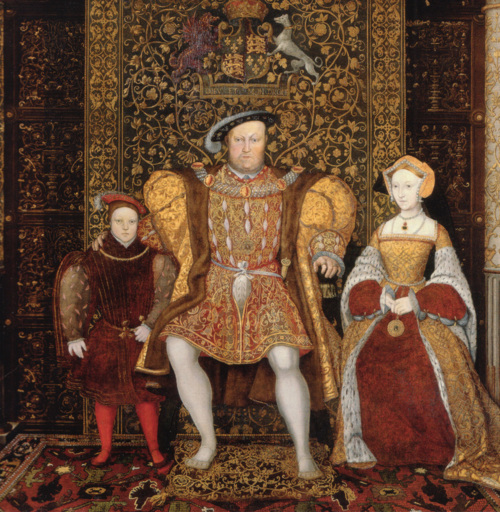
Posthumous rendering of Jane with Edward and Henry

References

Elton, G. R. England Under the Tudors. Third ed. London:  Routledge, 1991. Print

Erickson, Carolly. The First Elizabeth. New York: Summit Books. 1983. Print.

Fraser, Antonia.  The Wives of Henry VIII.  New York:  Alfred A. Knopf, 1992. Print.

Gairdner, James, ed. Letters and Papers, Foreign and Domestic, of the Reign of Henry VIII. Vol. 11. London: Longman, Green, Longman & Roberts, 1888. Google Books. Web. 4 May 2013.

Hume, Martin A. Sharp. Chronicle of King Henry the Eighth of England: Being a Contemporary Record of Some of the Principal Events of the Reigns of Henry VIII and Edward VI, Written in Spanish by an Unknown Hand ; Translated, with Notes and Introduction, by Martin A. Sharp Hume. London: George Belland Sons, 1889. Internet Archive. Web. 4 May 2013.

Hume, Martin. The Wives of Henry the Eighth and the Parts They Played in History. New York: McClure, Phillips & Co., 1905. Google Books, n.d. Web. 06 May 2013.

Lindsey, Karen.  Divorced, Beheaded, Survived:  A Feminist Reinterpretation of the Wives of Henry VIII.  Reading, Massachusetts:  Addison-WESLEY Publishing Company, 1995. Print.

Ridley, Jasper. Elizabeth I: The Shrewdness of Virtue.  New York: Fromm International Publishing Corporation, 1989.  Print.

Perry, Maria.  The Word of a Prince: A Life of Elizabeth from Contemporary Documents.  Woodbridge, Suffolk: The Boydell Press, 1990.  Print.

Ridgeway, Claire.  The Fall of Anne Boleyn.  UK:  MadeGlobal Publishing, 2012.  Print.

Somerset, Anne. Elizabeth I.  New York: Alfred A. Knopf, 1991. Print.

Starkey, David.  Six Wives: The Queens of Henry VIII.  London:  Chatto & Windus, 2003.  Print.

Strickland, Agnes, Elisabeth Strickland, and Rosalie Kaufman. The Queens of England, Abridged and Adapted from Strickland’s “Queens of England” Chicago: Werner, 1895. Internet Archive. Web. 4 May 2013.

Warnicke, Retha.  The Rise and Fall of Anne Boleyn.  Cambridge:  Cambridge University Press. 1998.  Print.

Weir, Alison.  The Six Wives of Henry VIII.  New York: Grove Weidenfeld, 1991. Print.