Two’s Company, Three’s a Crowd: Part II

Two’s Company, Three’s a Crowd: Part II

To understand the relationship between Elizabeth Regina and Philip II, a study must be made of the events of their association and the outcomes.  These include two attempts to place Elizabeth on the throne during Mary’s reign; the role Philip played in how Elizabeth was treated in the aftermath of each rebellion; and Mary’s view of her sister’s place in the succession.

Wyatt Rebellion, 1554
Sir Thomas Wyatt was the leader of a rebellion instigated in early 1554 by Mary’s proposed marriage to Philip of Spain.  Once she became queen, Mary repealed the act which declared her parents’ marriage invalid and herself illegitimate.  She was, as queen, a highly eligible match even though she was 37, certainly middle-aged in that era.  She assured Charles V she would be guided by him in her selection of husband, and low and behold his son, Philip, a widower at 26, was the most eligible prince in Catholic Europe.  Mary was determined to marry him.
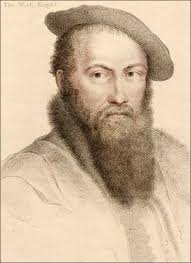
thomas wyatt
Sir Thomas Wyatt

The Wyatt Rebellion caused her to take decisive action.  She went to the Guildhall and gave a speech to the populace assuring them that she married Philip only with the consent of her councilors and that she was firstly married to her kingdom.

Wyatt did enter London; Mary sent her troops after him.  She did not flee and, while she was praying for her country’s safety, Wyatt was captured.  The rebel said he took action being “persuaded, that by the marriage of the Prince of Spain, the second person of this realm, and next heir to the crown, should have been in danger; and I, being a free-born man, should, with my country, have been brought into bondage and servitude of aliens and strangers” (Strype 132).  Rebellion was saving England from the Catholic scourge by ‘the second person of this realm.’  Thus, Elizabeth was implicated although Wyatt never named her during his interrogations or on the scaffold.  Elizabeth was sent to the Tower for two months where she was held prisoner, questioned and intimidated.     
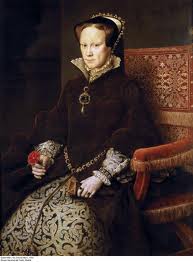
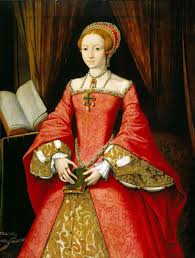
bloody mary     elizabeth 1 by scrouts
  Mary I                                           Princess Elizabeth 

Simon Renard, Ambassador to Spain, wrote to his sovereign, Charles V, 22 March 1554 that there was disagreement in the Council when “it was proposed to throw the Lady Elizabeth into the Tower, the Council expressed a wish to know exactly the reason, and the upshot was that the heretics combined against the Chancellor, and stuck to it that the law of England would not allow of such a measure because there was not sufficient evidence against her, that her rank must be considered and that she might perfectly well be confined elsewhere than in the Tower.”  Renard relayed that no one would “accept the responsibility of taking custody of her.”  Because of the councilors shying away from taking charge of Elizabeth, they “decided to conduct her to the Tower last Saturday, by river and not through the streets; but it did not happen that day, because when the tide was rising Elizabeth prayed to be allowed to speak to the Queen, saying the order could not have been given with her knowledge, but merely proceeded from the Chancellor’s hatred of her. If she could not speak to the Queen, she begged to be allowed to write to her. This was granted, and while she was writing the tide rose so high that it was no longer possible to pass under London bridge, and they had to wait till the morrow” (Tyler XII March).
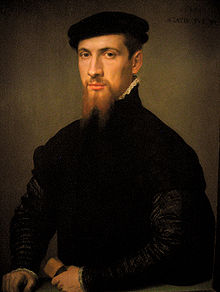
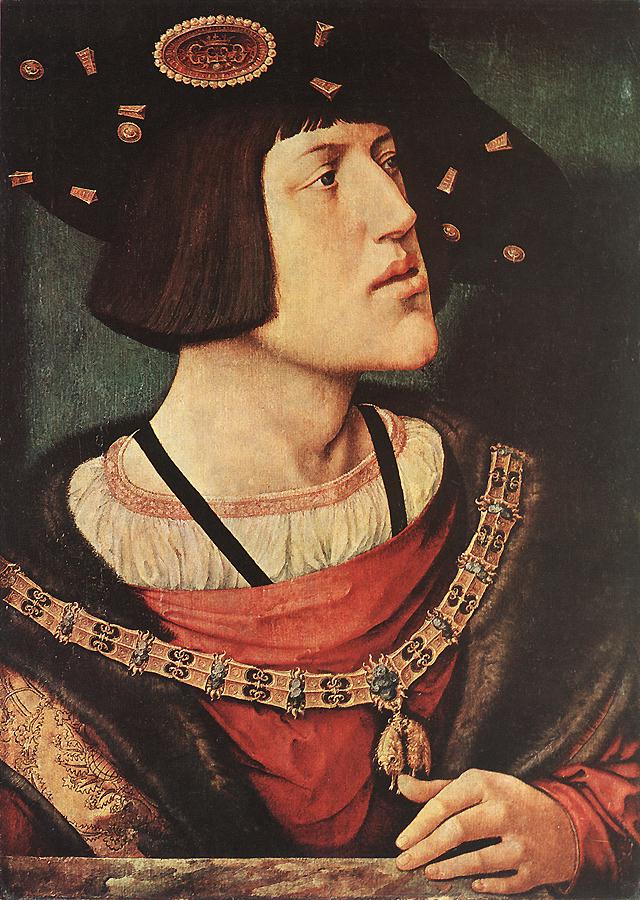
Simon_Renard    charles v
  Simon Renard                                    A Youthful Charles V

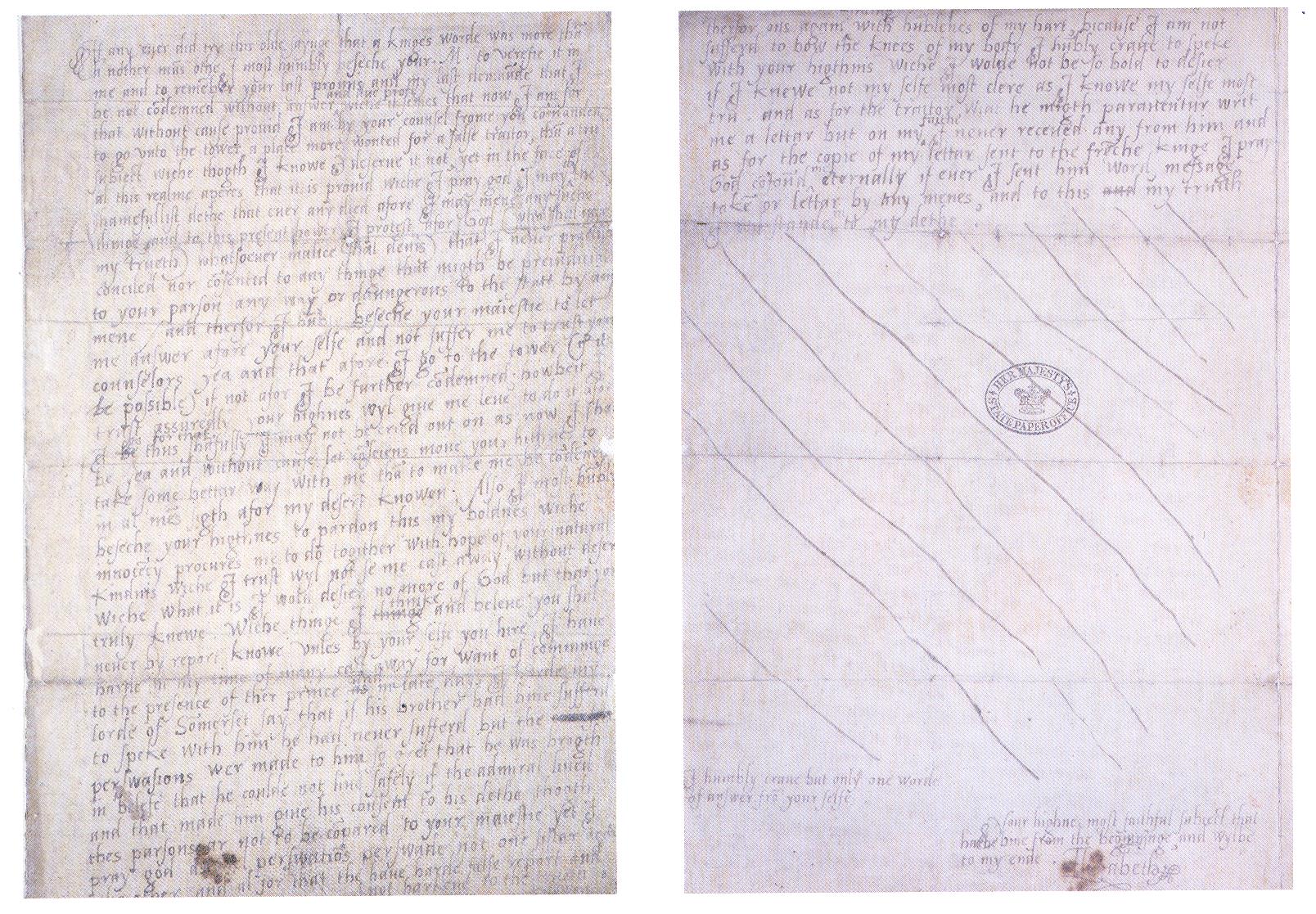
Elizabeth had achieved her purposes: she had postponed her imprisonment in the Tower and had written to her sister.  This letter of March 16, 1554, one of Elizabeth’s most famous, was a marvel how she handled her sister and logically argued her innocence while writing under distressing circumstances. 

Elizabeth beseeched Mary to remember her agreement to Elizabeth’s request “That I be not condemned without answer and due proof.” Elizabeth wanted her sister to know that “I am by your Council from you commanded to go unto the Tower, a place more wonted for a false traitor than a true subject.”  Although she bravely declared that she will go and be proved innocent, she pledged to her sister “I protest afore God that I never practiced, counseled, nor consented to anything that might be prejudicial to your person any way or dangerous to the state by any mean.”  Elizabeth appealed for an opportunity to meet with the Queen to tell her in person of her innocence and asked her sister to pardon her boldness, excusing her actions “which innocency procures me to do, together with the hope of your natural kindness.…”  The evidence of a letter written by Wyatt is addressed by logically stating “he might peradventure write me a letter, but on my faith I never received any from him.”  Elizabeth completed the letter by making diagonal lines across the bottom so that nothing could be inserted and signed herself “Your highness’ most faithful subject that hath been from the beginning and will be to my end, Elizabeth”   (Marcus 41-42). 
diagonal letters 001
   The letter Elizabeth wrote to Mary in March of 1554

Her collaboration in the rebellion was never proven.  Renard suggests that Gardiner “held documentary evidence of her [Elizabeth’s] active interest in the plot, but that he destroyed this because it also involved young Courtenay” (Queen Elizabeth 110).  Not having direct proof of her sister’s guilt, Mary was reluctant to condemn Elizabeth and so  released her to house arrest.  John Foxe informed “The xix daye of Maye, the Ladye Elizabeth, Sister to the Queene, was brought oute of the Tower, and committed to the kepyng of Syr Henry Benifielde… shewed himself more harde and strayte unto her, then eyther cause was geven of her parte, or reason of his owne parte.”  Foxe showed the surprise not in Bedingfield’s  bad treatment but in the benevolence shown by Elizabeth once she came to the throne.  Praising her for not taking revenge as other monarchs “oftentimes requited lesse offences with losse of life,” Foxe explained that Elizabeth did not deprive Bedingfield of his liberty “save only that he was restrained  for not comming to the court” (Foxe V 1072).

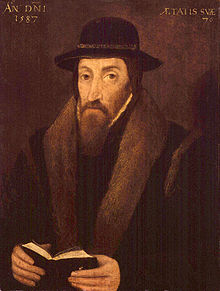
StephenGardiner    John_Foxe
  Stephen Gardiner                                               John Foxe

When she was released from Woodstock, it was to come to Court to witness the birth of Mary’s heir.  Sources differ on when Mary’s pregnancy was officially announced with some historians, such as Jasper Ridley, claiming it was in the spring of 1555 while we have an official document from January.  The Doge Francesco Venier of Venice did send his Ambassador Giovanni Michiel instructions 5 January 1555 to congratulate the King and Queen on the “certainty now obtained of the Queen giving an heir to the realm” (Brown VI January 5).  Further exclamations were extended for this “auspicious and desired event” concluding this was a “great gift conferred on the whole of Christendom” (Brown VI January  6). 
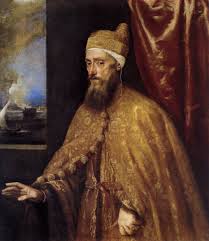
venier doge
Francesco Venier, Doge of Venice

Regardless of when it was officially announced, the impending event did affect Elizabeth.  On 29 April 1555, Michiel reported to the Doge, “that day or on the morrow Elizabeth Tudor was to arrive at Hampton Court from Woodstock.” Then on the 6th of May he informed the Venetian officials that when Elizabeth “appeared she was neither met nor received by anyone, but was placed in the apartment lately inhabited by the Duke of Alva, where she lives in retirement, not having been seen by any one, save once or twice by their Majesties, by private stairs” (Brown VIPreface 16).  

Elizabeth was housed with a “certain Sir Thomas Pope, a rich and grave gentleman, of good name, both for conduct and religion; the Queen having appointed him Miladi’s governor. I am told …they also assigned her a widow gentlewoman, as governess, in lieu of her own who is a prisoner, she herself likewise may be also said to be in ward and custody, though in such decorous and honourable form as becoming” (Brown VI June 514). No ifs, ands or buts about it, Elizabeth was still under house arrest.   Elizabeth’s release is credited to Philip’s influence on Mary.  Philip realized without an heir born of Mary, Elizabeth would be the successor.  To preserve Hapsburg interests, Philip realized Elizabeth had to be married to a Catholic prince: the intended bridegroom was Emmanuel Philibert, Prince of Piedmont and titular Duke of Savoy. 

Philip had plans for Elizabeth.  Antoine de Noailles wrote to the Queen-Dowager of Scotland in September 1555 informing her of Elizabeth’s popularity and the fact that “his Grace, the said Lord King, has shown a friendly disposition for her, and he has written several letters to the Queen, his wife, commending the Princess to her care”  (Queen Elizabeth I 200).

Dudley Conspiracy, Late 1555 -1556

Another rebellion against the reign of Queen Mary began in December 1555.  In a letter to Sir William Petre, Secretary of State, dated January 21, 1556, Nicholas Wotton, Dean of Canterbury and English Ambassador to France, wrote of information he had gleaned from an informant.  There was a “plot against the Queen which he said was devised by some of the best in England, and so many were agreed thereupon that it was impossible but that it must take effect; that the matter had been in hand about a year ago.”  The conspirators’ intentions were not to kill her Majesty “but to deprive her of her estate…” Wotton “did not think it necessary to write thereof to her Majesty lest she might suddenly be troubled with it, and conceive some greater fear of it than were good for her to do.”  Petre was to inform the Queen when “it shall not disquiet her Majesty” (Turnbull 285-286).  Mary was disquieted though and fearful for her life. 

WilliamPetre       Nicholas_Wotton
    Sir William Petre                            Nicholas Wotton, Dean of Canterbury

Called the Dudley Conspiracy for the main instigator, Sir Henry Dudley (a distant relative to John Dudley, the executed Duke of Northumberland and Robert Dudley, the future favorite of Elizabeth), its purpose became clearer as the investigation continued.   Mary and Philip were to be deposed and replaced by Elizabeth with her consort being Edward Courtenay. 

Imprisoned during the time of Henry VIII, Courtenay spent 15 years in confinement.  Released upon Mary’s ascension to the throne, he was created 1st Earl of Devon and sent on several diplomatic missions.  His hopes of marriage to Mary fell flat when she espoused Philip.  Courtenay then turned his attention to Elizabeth obviously seeing marriage as his way to the throne.  After serving more time in the Tower for the Wyatt Rebellion, the Earl of Devon was exiled to Europe until his death in September of 1556.  He found acceptance in Venice where he became the focal point for further conspiracies such as the Dudley Rebellion.
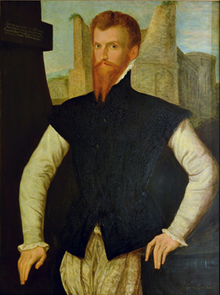
EdwardCourtenayD1556
Edward Courtenay, 1st Earl of Devon

Several prominent supporters of the rebellion were Lord Thomas Howard, Sir Peter Killigrew, Henry Peckham and several members of the Throckmorton clan.  One cannot underestimate the organization of Dudley and his fellow conspirators.  They raised money, attempted to gain powerful allies such as the King of France and landed gentry, approached Courtenay and saturated England with anti-Catholic and anti-Spanish writings. It was subversive writings such as these that were found in the London residence of Kat Ashley, governess to Princess Elizabeth. 

Giovanni Michiel, Ambassador to England for Venice kept the Doge and the Venetian Senate informed of what was occurring.  Michiel reported on 2 June, “The number of persons imprisoned increases daily… Mistress [Katharine] Ashley was taken thither [to the Tower], she being the chief governess of Miladi Elizabeth, the arrest, together with that of three other domestics, having taken place in the country, 18 [Venetian] miles hence, even in the aforesaid Miladi’s own house [Hatfield], and where she at present resides, which has caused great general vexation.  I am told that they have all already confessed to having known about the conspiracy; so not having revealed it, were there nothing else against them, they may probably not quit the Tower alive, this alone subjecting them to capital punishment. This governess was also found in possession of those writings and scandalous books against the religion and against the King and Queen which were scattered about some months ago, and published all over the kingdom” (Brown VIJune 505).

katahsley
Kat Ashley

People close to Elizabeth knew about the plot — that has been well established.  How involved was Elizabeth? The only written link between her and the rebels occurred in February 1556 when Anne, Duke de Montmorency, Constable of France wrote to the French Ambassador, Antoine de Noailles that “above all restrain Madame Elizabeth from stirring at all in the affair of which you have written to me, for that would be to ruin everything” (Queen Elizabeth I 203).  Can this letter be seen as proof of Elizabeth’s willing cooperation with the Dudley plot?  Although it is damaging, it is not conclusive.  This could be a misinterpretation of information gathered by the Constable or wishful thinking. 

Constable of France
Anne, Duke de Montmorency, Constable of France

Noailles and King Henri II were implicated in the Dudley plot.  Because the international diplomatic scene had changed with the Vaucelles truce, Henri did not want to antagonize Charles and Philip so he “advised the conspirators to defer the execution of their plans” which they ignored (Acton 544).  The success of the plot depended on too many people and too many variables (this blog will not relay the details there are many sources available including contemporary diplomatic dispatches in the Calendar of State Papers-Venice Volume VI).  A conspirator, Thomas White, on staff at the Royal Exchequer was to ensure the robbery of funds to finance the conspiracy (Whitelock Mary Tudor 303).  Ambassador Michiel wondered if White came forward “either from hope of reward, or to exculpate himself… revealed the plot to Cardinal Pole” (Brown VI March 5 434).  White was rewarded as shown in the Originalia Roll (the fine roll sent to the Exchequer) for Mary and Philip because “of good and faithful service by our beloved servant, Thomas White, gentleman, in the late conspiracy against us, our crown and dignity attempted not long since by Henry Dudley and his accomplices” (Thoroton Society 52).  A known conspirator rewarded: what of Elizabeth? 
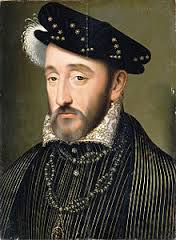
henri ii
King Henri II of France

Convinced that Elizabeth was aware of the plot, Mary sent her trusted courtier, Francesco Piamontese, to Brussels to consult with Philip on how to handle the situation.  Venetian Ambassador Michiel went further to explain that this issue was very sensitive because of Kat Ashley’s involvement “by reason of her grade with the “Signora,” who is held in universal esteem and consideration” (Brown VI June 505).  So not only is a trusted servant of Elizabeth’s in possession of seditious materials, it appears to be universally acknowledged that Elizabeth is very popular. Would it be wise to move against her too aggressively?  A tricky situation for Mary.

In June Michiel wrote to his superiors in Venice, “Finally, at the very hour when persons were departing, her chamberlain and the courier Francesco Piamontese returned” from Brussels to the Queen’s relief.  “As for many months the Queen has passed from one sorrow to another” (Brown VI June 525). 

So what was to become of Elizabeth?  What guidance had Philip given his wife concerning the suspicions of her sister?  What Mary received was pro-Hapsburgian advice. Despite Michiel’s predicitons, none of Elizabeth’s household members were executed nor was she punished. Although there was strong evidence that those around her were involved in treasonous activities (Kat Ashley being in posession of the seditious materials was enough cause for punishment beyond time in the Tower) and questions concerning what Elizabeth knew, any action against her would threaten her succession.  “There is little doubt that it was the King’s influence which prevented Elizabeth herself from being again arrested on this occasion and sent to the Tower with the four other members of her household.  It is difficult otherwise to account for Mary’s leniency” (Queen Elizabeth I 209).

tower of london
Tower of London

Hapsburg interests demanded that Elizabeth be heir to the throne of England over Mary, Queen of Scots.  Mary had the surest position of inheritance after Elizabeth and as the fiancé of the dauphin of France, could unite Scottish, French and English dominions and interests which would threaten the power of Spain. Hapsburg interests prevailed.  “Piamontese returned to London with an unequivocal message from the king: no further inquiries should be made into Elizabeth’s guilt, nor any suggestion made that her servants had been implicated in the plot with her authority” (Whitlock 307).  Philip was more than willing to be lenient with Elizabeth.  By 1556 few people believed that Mary would produce an heir and looked toward Elizabeth to be the next queen.  It probably was wise on the part of the councilors not to antagonize Elizabeth.  She was considered the preferred heir, and her smooth succession could halt potential civil conflict or French interference to place Mary Stuart on the throne—both good enough reasons to leave well-enough alone.

So, astoundingly, Elizabeth remained free.  Protestations of ignorance about her household’s activities were enough.  Mary probably did not believe her but allowed the stories that Elizabeth’s name had been used without authority to be circulated.  This blogger cannot help but feel for the position in which Mary was placed.  Her motto, ‘Truth, Daughter of Time,’ seemed to be jeopardized as she did her husband’s bidding; although, with most of Mary’s submissiveness it was up to a point. 

According to Michiel, in June of 1556 Mary sent two of her gentlemen, Sir Henry Hastings, and Sir H. Francis Englefield, to Elizabeth with a “message of good will…with a ring worth 400 ducats, and also to give her minute account of the cause of their arrest, to aquaint her with what they had hitherto deposed and confesssed, and to persaude her not to take amiss the removal from about her persons of similar folds, who subjected her to the danger of some evil suspicion; assuring her of the Queen’s good will and disposiiton, provided she continue to live becomingly, to Her Majesty’s liking.  Using in short loving and gracious expressions, to show her that she is neither neglected nor hated, but loved and esteemed by Her Majesty.  This message is considered most gracious by the whole kindom, everybody in general wishing her all ease and honour, and very greatly regretting any trouble she may incure; the proceeding having been not only necessary but profitable, to warn her of the licentious life led, especially in matters of religion, by her household” (Queen Elizabeth I 210).

henry hastings
  Henry Hastings 

Ambassador Michiel let on that Elizabeth’s household would be made up of persons the Queen believed to better serve her.  It is assumed Mary thought her sister guilty and urged Elizabeth “to keep so much the more to her duty, and together with her attendants behave the more cautiously” (Queen Elizabeth I 210).

Mary feigned that she believed Elizabeth had been in danger of “being thus clandestinely exposed to the manifest risk of infamy and ruin.” So, the solution was for the Queen to remodel Elizabeth’s household “in another form, and with a different sort of persons to those now in her service, replacing them by such as are entirely dependent on her Majesty; so that as her own proceedings and those of all such persons as enter or quit her abode will be most narrowly scanned” (Brown VIJune 505).

Assigned to Elizabeth’s household was “Sir Thomas Pope, a rich and grave gentleman, of good name, both for conduct and religion; the Queen having appointed him Miladi’s governor, and she having accepted him willingly, although he himself did his utmost to decline such a charge. I am told that besides this person, they also assigned her a widow gentlewoman, as governess, in lieu of her own who is a prisoner, so that at present having none but the Queen’s dependents about her person, she herself likewise may be also said to be in ward and custody, though in such decorous and honourable form as becoming” (Brown VI June 514). 

tpope
  Sir Thomas Pope

Pope was commissioned by Mary’s Council in July of 1556 to keep Elizabeth informed of the activities confessed by the Dudley conspirators “how little these men stick, by falsehood, and untruth, to compass their purpose; not letting, for that intent, to abuse the name of her Grace, or any others” (Queen Elizabeth I 213). 

Elizabeth did write to the Queen in careful phraseology about the information she had received from Pope.  “Of this I assure your majesty, though it be my part above the rest to bewail such things though my name had not been in them, yet it vexeth me too much …as to put me in any part of his [the devil] mischievous instigations.  And like as I have been your faithful subject from the beginning of your reign, so shall no wicked persons cause me to change to the end of my life.  And thus I commit your majesty to God’s tuition, whom I beseech long time to preserve … from Hatfield this present Sunday, the second day of August. Your majesty’s obedient subject and humble sister, Elizabeth” (Marcus 43-44).

For references, please refer to the blog entry “Two’s Company, Three’s a Crowd: Part I.”
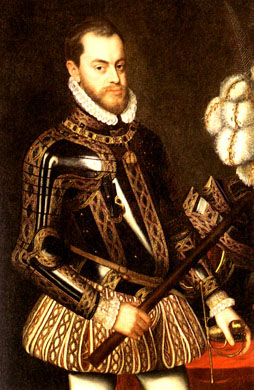
Two’s Company, Three’s a Crowd: Part I

Two’s Company, Three’s a Crowd: Part I

Many of Elizabeth Regina’s international affairs were intertwined with those of Philip II.  Most students of history understand his connection as King of Spain and the adversary who lost The Spanish Armada.  Many forget his role as ruler of the Netherlands and Elizabeth’s opposition to his sovereignty there.  Even more do not realize his role as her brother-in-law, Philip was married to Elizabeth’s half-sister Mary for several years.  What was the basis of their relationship?  Did Elizabeth feel any allegiance to Philip for the contribution he made to her relationship with her sister and her position at Court? How did this association influence both countries’ foreign policies?  These questions and several others will be addressed in a series of blogs entitled “Two’s Company, Three’s a Crowd”.

Philip II 

Who was Philip II of Spain?  Born 21 May 1527, his parents were Charles I of Spain (Charles V, Holy Roman Emperor) and Isabella of Portugal.  Given a classical education, he was also given practical instruction.  Philip spent much time as interim ruler of Spain while his father traveling through his domains and much of Philip’s time was spent in the 17 Provinces of the Spanish Netherlands (territories of modern day Belgium, The Netherlands and Luxemburg) where he became nominal ruler from 1549.

Married four times, he was created King of Naples upon his marriage to his second wife, Mary I of England, in order to share equal rank as a ruling sovereign with his new bride.  Philip arrived in Winchester on July 19, 1554, where he met with Mary for the first time prior to their marriage held in the cathedral on 25 July 1554.

philip-ii
  Philip II

As King of Naples and England, Philip’s main concern at all times was for Hapsburg interests.  Leaving England for Flanders in late August of 1555, he attempted to impose the will of the Holy Roman Empire in central Europe.  He returned to his wife 18 March 1557 to request her support in the war against France.  He left again four months later never to return.  Mary did embroil England in a war with France on behalf of his interests and lost Calais January 7, 1558.

Philip’s royal rank was secured when his father abdicated in 1556 and he became ruler in the Spanish Netherlands, Burgundy and Spain. Besides titles in many European territories that had once been part of the Holy Roman Empire, Philip became King of Portugal in 1580 through his mother’s claims.

Referred to accurately as the “secretary-king” or the “king of paper”, Philip ruled “through the written word rather than through personal contact and debate.” As a young king he was a “shy, passive, sedentary man” resolving perfectly to rule his “far-flung dominions with pen and ink alone” (Boyden 66).  Words to describe Philip would be pious, frugal in dress and at table, hard-working, and conscientious.  This blogger believes his dominate trait was loyalty—to the Hapsburg interests.  Politically, this trait overshadowed his religious scruples; religiously, this trait overshadowed his politics. Regardless, from the time of his father’s abdication until his own death at the age of 71 in 1598, Philip ruled absolutely. On one occasion, he wrote “I don’t know if [people] think I’m made of iron or stone. The truth is, they need to see that I am mortal, like everyone else” — but he seldom had qualms about exercising his absolute power (Parker).  Surprisingly, the cautious almost hesitant Philip of his early reign morphed into a more reckless, imprudent ruler in his later years as he struggled with his country’s relations with the Low Countries and England.

bloody mary
  Mary I

England’s military and financial assistance to the Dutch rebels, the seizure of Spanish bullion ships and lack of cooperation with Spain—as perceived by Philip—led to deteriorating relations between the two countries.  Whereas Elizabeth ruled in a time of change, ironically in the face of her motto Semper eadem, he was seen to hold to tradition.  While she did try to keep things familiar, he had to innovate in response to the needs of his vast empire and the shifting international scene.

Despite four marriages and the births of many children, Philip constantly contended with inadequate heirs who were sickly or mentally unstable.  He exclaimed once in frustration, “God, who has given me so many Kingdoms to govern, has not given me a son fit to govern them” (Philip II of Spain).

Mary I

Upon the death of Edward VI and the proclamation of Jane Grey as Queen, there was confusion and anger from the London masses.  Many landowners favored the ‘old religion’ and thus supported Mary when she came to call on the magnates to rally troops for her cause.  She stunned the foreign ambassadors (most likely thinking she couldn’t succeed without foreign troops and intervention) with a following of thousands at Framlingham in Suffolk.

The rationale included in Jane’s proclamation was set to instill fear in the country.  It was a warning that if Mary were to take over the throne and eventually marry “any stranger born out of this realm…to have the laws and customs of his … country …practiced and put in use within this realm, rather than the laws, statues, and customs here… of long time used, …to the peril of conscience and the utter subversion of the common weal of this realm” (Castor 409).

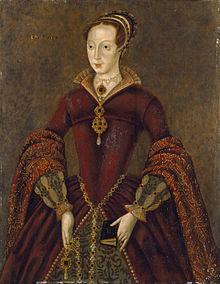
ladyjayne
  The “Streatham” portrait believed to be Lady Jane Grey

Mary’s sex and the traditional role of wife were against her but the people knew her to be the rightful heir.  When she was set to marry Philip of Spain and the people expressed their concern, she gave a rousing speech to ease their fears.  Mary proclaimed, “I am already married to the Common Weal and the faithful members of the same; the spousal ring whereof I have on my finger: which never hitherto was, nor hereafter shall be, left off.  Protesting unto you nothing to be more acceptable to my heart, nor more answerable to my will, than your advancement in wealth and welfare, with the furtherance of God’s glory” (Loades Chronicle of Tudor Queens 36).  This assertion that she was married to her kingdom was a smart political move.

Many people in the country could not fathom that as a woman she did not need a husband to carry out “the offices which do not properly belong to woman’s estate” (Castor 428). Linked to this was the belief that Mary would not hand over the power of England to her husband.  The marriage treaty solved this fear.  Philip would have little to do with the running of the country.  He could assist and that was about it. Mary would do all in her power to appear to include him yet there was no doubt that she, who had been trained as a sovereign Princess of Wales, would be ruler of England.  In the Council Register two days after their marriage it was noted that “At Winchester, 27th July, This daye it was ordered by the boarde that a note of all such matteres of state as should passe from hence should be pute into Latten and Spanyche from henceforth.  It was also ordered that all matteres of estate passynge in the kinge and quenes names should be signed with both their handes” (Nichols Chronicle of Queen Jane 135). So he could read documents in Spanish, he could sign them, but he would be greatly restricted in his formal influence.

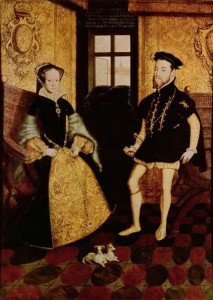
Philip mary
Mary and Philip 

Did Mary need a husband to help rule England.  No.  She needed one for an heir though. She had misread her people.  They opposed the foreign match with Philip.  Yes, he was Catholic, the choice of the advisor she so admired (Charles V), and he was from her mother’s homeland.  These emotional elements were also supported by the more practical and political merits of his being a good choice from a limited selection.  It is well-known that Mary fell head-over-heels in love with Philip.  With a restricted formal influence, his informal influence was close to boundless. Giovanni Michiel, Ambassador to England for Venice reported to the Doge and the Venetian Senate that Queen Mary’s representative, Francesco Piamontese, was sent in June 1556 to Brussels because “it being credible that nothing is done, nor does anything take place, without having the King’s opinion about it, and hearing his will” (Brown VI June 1-15 505).

charles
Charles V

Simon Renard, Ambassador to Spain in England was instructed to feel Mary out about the union.   Charles also inquired about his son’s view.  Dutifully, he responded “I very well see the advantages that might accrue from the successful conclusion of this affair.”  Philip assured his father, “ If you wish to arrange the match for me, you know that I am so obedient a son that I have no will other than yours” (Patterson 42-43).  Mary, showing as much filial loyalty as Philip assured Renard that she wanted to please Charles “in the same way she would wish to please her father” (Patterson 43).  The marriage was inevitable despite Mary’s need to have the Privy Council’s approval.  Charles V was aware of this and worked hard behind the scenes to get members on his side.  The importance of this marriage, uniting England and Hapsburg territories, was discussed in many contemporary writings; all agree that the purpose was for “temporal and spiritual peace and unity among Europeans” (Hunt 152).  Quite a mission.

Simon_Renard
 Simon Renard, Spanish Ambassador to England

John Elder shared many details about the ceremonies which marked the marriage between Mary and Philip in the summer of 1554.  Philip had “landed  at Southampton in Hamshire, within ten mile of the citie of Winchester, on Friday the xx day of July at iii of the clocke at afternone” and was met by “the lords of the counsel and diverse other noble men” (Nichols The Chronicle of Queen Jane 137-138).  Philip rode through Winchester “on a faire white horse, in a riche coate embroidered with gold, his doublet, hosen, and hat suite-like” (Nichols The Chronicle of Queen Jane 139).

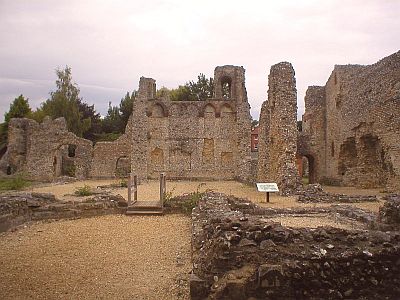
Mary stayed at Wolvesey Palace (the Old Bishop’s Palace) and Philip was housed in the Dean’s house. They met on July 23rd for the first time at Wolvesey Palace and while some reports say Mary spoke French, most sources agree they conversed “in the Spanishe tongue” (Nichols Chronicle of Queen Jane 140).

OLYMPUS DIGITAL CAMERA
Ruins of Wolvesey Palace, where Mary and Philip met for the first time

The wedding, held on 25 July 1554 the feast day of St. James, patron saint of Spain, was very sumptuous with many sources describing decorations of the churches and palaces and the splendor of the clothes and jewelry of the participants.  We know Philip was attired “in brocade, covered with white velvet, rich in gold and pearls, with a very rich brocade collar, a ruby robe, richly decorated with gold and pearls  and diamond buttons” (Hunt 148).  Mary was dressed “in silver cloth with a cloak …a very rich collar and hair decoration…a belt in the richest gold, with jewellery on the breast with a diamond in the center” (Hunt 148).

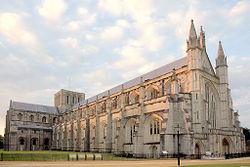
At the Cathedral Philip was met by the Bishop of Winchester, Stephen Gardiner Lord Chancellor and five other bishops all “mitred, coped, and staved” where he knelt, kissed the crucifix, prayed and then entered “upon a skafholde which was made for the solomnizacion of his marriage” (Nichols The Chronicle of Queen Jane 139).  Remarkably, throughout the ceremony Mary was placed on the right and Philip on the left, the opposite of the conventional set-up.  Perhaps to placate her English subjects or her own feelings of triumph, Mary showed herself as the ruling sovereign with Philip as consort.

StephenGardiner
Stephen Gardiner, Lord Chancellor and Bishop of Winchester

Regardless of who was seen as sovereign and consort, the royal titles are impressive.  John Elder, with relish, gives the list in the “stile in Latin” and the “stile in Englishe” which will be recreated below:

"Philip and Marie, by the grace of God king and quene of England, 
Fraunce, Naples, Hierusalem, and Irelande, defenders of the faith, 
princes of Spain and Secy, archdukes of Austria, dukes of Millan,
Burgundy, and Brabant, counties of Haspurge, Flaunders, and Tiro” 
(Nichols Chronicle of Queen Jane 142).

After the ceremony Philip “addressed the Spanish lords who were about him, and told them they must at once forget all the customs of Spain, and live in all respects after the English fashion” (Nichols The Chronicle of Queen Jane 139).  Post wedding celebrations were then held at Wolvesey Palace where there was much “triumphing, bankating, singing, masking, and daunsing, as was never seen in Englande heretofore” (Nichols Chronicle of Queen Jane 136).

WinCathi
Winchester Cathedral

Two days later, in the Council Register it was noted that “At Winchester, 27th July, This daye it was ordered by the boarde that a note of all such matteres of state as should passe from hence should be pute into Latten and Spanyche from henceforth, and the same to be delyvered to such as it should please the kinges highnes to appointe to recave it.  It was also ordered that all matteres of estate passynge in the kinge and quenes names should be signed with both their handes” (Nichols Chronicle of Queen Jane 135).

Elder was beside himself exclaiming the joy after “this moste noble mariage” of seeing dual sovereignty with “the kinges magestie and the queen sitting under the cloth of estate” (Nichols Chronicle of Queen Jane 143).  We know this did not come to pass without problems.  In January of 1554, after hearing the rumors of a possible match between Mary and Philip, a group of gentlemen organized an uprising known as the Wyatt Rebellion.  This will be further discussed in the blog entry, “Two’s Company, Three’s a Crowd: Part II.”

References

Acton, Lord, comp. The Cambridge Modern History Planning by the Late Lord Acton. Ed. A. W. Ward, G. W. Prothero, and Stanley Leathes. The Reformation  Vol. II. New York: Macmillan, 1904. Google Books. Web. 27 July 2013.

Alford, Stephen. The Watchers: A Secret History of the Reign of Elizabeth I. London: Allen Lane, 2012. Google Books. Web. 9 Aug. 2013.

Allan, James Crosby (editor). “Elizabeth: February 1577, 1-15.” Calendar of State Papers Foreign, Elizabeth, Volume 11: 1575-1577 (1880): 501-518. British History Online. Web. 17 July 2013.

Boyden, James M. The Courtier and the King: Ruy Gómez De Silva, Philip II, and the Court of Spain. Berkeley: University of California, 1995. Google Books. Web. 20 July 2013.

Brown, Rawdon (editor). “Venice: January 1556.” Calendar of State Papers Relating to English Affairs in the Archives of Venice, Volume 6: 1555-1558, 1877. British History Online. Web. 21 July 2013.

Brown, Rawdon (editor). “Venice: June 1556, 1-15.” Calendar of State Papers Relating to English Affairs in the Archives of Venice, Volume 6: 1555-1558 (1877): 472-484. British History Online. Web. 26 July 2013.

Brown, Rawdon (editor). “Venice: June 1556, 16-30.” Calendar of State Papers Relating to English Affairs in the Archives of Venice, Volume 6: 1555-1558, 1877. British History Online. Web. 21 July 2013.

Brown, Rawdon (editor). “Venice: March 1556, 16-31.” Calendar of State Papers Relating to English Affairs in the Archives of Venice, Volume 6: 1555-1558 (1877): 377-395. British History Online. Web. 28 July 2013.

Brown, Rawdon (editor). “Venice: May 1557, 11-15.” Calendar of State Papers Relating to English Affairs in the Archives of Venice, Volume 6: 1555-1558 (1877): 1041-1095. British History Online. Web. 08 August 2013.

Brown, Rawdon and G. Cavendish Bentinck (editors). “Venice: February 1559.” Calendar of State Papers Relating to English Affairs in the Archives of Venice, Volume 7: 1558-1580 (1890): 24-41. British History Online. Web. 21 July 2013.

Brown, Rawdon and G. Cavendish Bentinck (editors). “Venice: March 1559.” Calendar of State Papers Relating to English Affairs in the Archives of Venice, Volume 7: 1558-1580 (1890): 41-59. British History Online. Web. 21 July 2013.

Brown, Rawdon (editor). “Venice: June 1556, 1-15.” Calendar of State Papers Relating to English Affairs in the Archives of Venice, Volume 8: 1581-1591, 1877. British History Online. Web. 17 July 2013.

Castor, Helen.  She-Wolves: The Women Who Ruled England Before Elizabeth. London:  Faber and Faber. 2010. Print.

Erickson, Carolly. The First Elizabeth. New York: Summit Books. 1983. Print.

Foxe, John.  The Unabridged Acts and Monuments Online orTAMO.  Book 5. Sheffield: HRI Online Publications, Sheffield, 2011.  Humanities Research Institute. Web. 21 June 2013.

Hume, Martin (editor). “Simancas: December 1558.” Calendar of State Papers, Spain (Simancas), Volume 1: 1558-1567 (1892): 7-21. British History Online. Web. 16 August 2013.

Hume, Martin (editor). “Simancas: January 1559.” Calendar of State Papers, Spain (Simancas), Volume 1: 1558-1567 (1892): 21-26. British History Online. Web. 11 August 2013.

Hume, Martin A. S. (editor). “Simancas: March 1559.” Calendar of State Papers, Spain (Simancas), Volume 1: 1558-1567 (1892): 37-46. British History Online. Web. 18 July 2013.

Hume, Martin (editor). “Simancas: April 1559.” Calendar of State Papers, Spain (Simancas), Volume 1: 1558-1567 (1892): 46-64. British History Online. Web. 11 August 2013.

Hume, Martin (editor). “Simancas: May 1559.” Calendar of State Papers, Spain (Simancas), Volume 1: 1558-1567 (1892): 64-78. British History Online. Web. 13 August 2013.

Hume, Martin (editor). “Simancas: July 1559.” Calendar of State Papers, Spain (Simancas), Volume 1: 1558-1567 (1892): 81-91. British History Online. Web. 14 August 2013.

Hume, Martin (editor). “Simancas: January 1561.” Calendar of State Papers, Spain (Simancas), Volume 1: 1558-1567 (1892): 178-180. British History Online. Web. 16 August 2013.

Hunt, Alice and Anna Whitelock (editors). Tudor Queenship:  The Reigns of Mary and Elizabeth. New York: Palgrave MacMillian, 2010.  Print.

Kamen, Henry. Philip of Spain. New Haven, Connecticut: Yale University Press, 1997. Print.

de Lisle, Leanda.  “King Henry’s Niece” History Today 63.8 (2013): 42-46. Print.

Loades, David. The Chronicles of the Tudor Queens.  Stroud, Gloucestershire: Sutton Publishing, 2002. Print.

Loades, David.  Mary Tudor:  The Tragical History of the First Queen of England.  Kew, Richmond: The National Archives, 2006. Print.

MacCaffrey, Wallace. Elizabeth I. London: E. Arnold. 1993. Print.

Marcus, Leah S. et al., eds. Elizabeth I: The Collected Works. Chicago: University of Chicago Press, 2002. Print.

Neale, J. E. Queen Elizabeth I. Garden City, NY: Doubleday, 1957. Print.

Nichols, John Gough. The Chronicle of Queen Jane, Two Years of Queen Mary, and Especially of the Rebellion of Sir Thomas Wyat.  London: J. B Nichols and Son, 1822. Google Books. Web. 17 June 2013.

Nichols, John. The Progresses and Public Processions of Queen Elizabeth. Among Which Are Interspersed Other Solemnities, Public Expenditures, and Remarkable Events during the Reign of That Illustrious Princess. Collected from Original MSS., Scarce Pamphlets, Corporation Records, Parochial Registers, &c., &c.: Illustrated with Historical Notes. New York: B. Franklin, 1823. Google Books. Web. 19 Jan. 2013.

Norton, Elizabeth.  England’s Queens. Stroud, Gloucestershire: Amberley, 2011. Print.

Parker, Geoffery. “The Grand Strategy of Philip II.” Books. New York Times on the Web, 1999. Web. 22 July 2013. 

Patterson, Benton Rain. With the Heart of a King: Elizabeth I of England, Philip II of Spain, and the Fight for a Nation’s Soul and Crown. New York: St. Martins, 2007. Google Books. Web. 17 July 2013.

Perry, Maria.  The Word of a Prince: A Life of Elizabeth from Contemporary Documents.  Woodbridge, Suffolk: The Boydell Press, 1990.  Print.

“Philip II of Spain.” – Wikiquote. 13 April 2012, n.d. Web. 22 July 2013.

Plowden, Allison.  Marriage with My Kingdom:  The Courtships of Elizabeth I.  New York:  Stein and Day, 1977. Print.

Porter, Linda.  The First Queen of England:  The Myth of “Bloody Mary”.  New York: St. Martin’s Press, 2007. Print.

Pryor, Felix.  Elizabeth I, Her Life in Letters.  Berkeley, California: University of California Press, 2003.  Print.

Queen Elizabeth I, Frank Mumby, and R. S. Rait. The Girlhood of Queen Elizabeth: A Narrative in Contemporary Letters. Boston: Houghton Mifflin, 1909. Google Books. Web. 9 May 2013.

Ravenscroft, Janet. “Philip II: A Pen Portrait.” History Today 60.10 (2010): 25-28. Print.

Ridley, Jasper. Elizabeth I: The Shrewdness of Virtue.  New York: Fromm International Publishing Corporation, 1989.  Print.

Ronald, Susan.  Heretic Queen:  Queen Elizabeth I and the Wars of Religion.  New York:  St. Martin Press, 2012.  Print.

Sitwell, Edith.  The Queens and the Hive.  Harmondsworth: Penguin Books, 1966. Print.

Somerset, Anne. Elizabeth I.  New York: Alfred A. Knopf, 1991. Print.

Starkey, David.  Elizabeth:  The Struggle for the Throne. New York:  HarperCollins Publishers. 2001. Print

Strickland, Agnes, Elisabeth Strickland, and Rosalie Kaufman. The Queens of England, Abridged and Adapted from Strickland’s “Queens of England” Chicago: Werner, 1895. Internet Archive. Web. 4 May 2013.

Strype, John.  Ecclesiastical memorials, Relating Chiefly to Religion, and The Reformation of It, and the Emergencies of the Church of England, Under King Henry VIII, King Edward VI, and Queen Mary I with Large Appendixes, Containing Original Papers, Records, &c. Historical memorials, Ecclesiastical and Civil, of Events Under the Reign of Queen Mary I Wherein Are Brought to Light Various Things Concerning the Management of Affairs, During the Five Years of Her Government.  Vol. III Part I. Oxford: Clarendon Press, 1822.  Google Books. Web. 17 June 2013.

Thoroton Society. Transactions of the Thoroton Society of Nottinghamshire, Volumes 11-13. Ed. John Standish. Vol. XI. Nottingham: Thoroton Society, 1907. Google Books. Web. 28 July 2013.

Turnbull, William B., ed. Calendar of State Papers, Foreign Series, of the Reign of Mary, 1553-1558, Preserved in the State Paper Department of Her Majesty’s Public Record Office. Vol. II. London: Longman, Green, Longman and Roberts, 1861. Google Books. Web. 28 July 2013.

Tyler, Royall (editor). “Spain: March 1554, 21-31.” Calendar of State Papers, Spain, Volume 12: 1554 (1949): 164-180. British History Online. Web. 28 July 2013.

Tyler, Royall (editor). “Spain: June 1555.” Calendar of State Papers, Spain, Volume 13: 1554-1558 (1954): 207-226. British History Online. Web. 30 July 2013. 

Tyler, Royall (editor). “Spain: February 1558.” Calendar of State Papers, Spain, Volume 13: 1554-1558 (1954): 349-365. British History Online. Web. 17 July 2013. http://www.british-history.ac.uk/report.aspx?compid=88625

Tyler, Royall (editor). “Spain: June 1558.” Calendar of State Papers, Spain, Volume 13: 1554-1558 (1954): 394-402. British History Online. Web. 24 July 2013.

Tyler, Royall (editor).  “Spain: July 1558.” Calendar of State Papers, Spain, Volume 13:  1554-1558 (1954): 402-405.  British History Online.  Web. 14 July 2013. 

Tyler, Royall (editor). “Spain: May 1558.” Calendar of State Papers, Spain, Volume 13: 1554-1558 (1954): 378-393. British History Online. Web. 17 July 2013.

Tyler, Royall (editor). “Spain: November 1558.” Calendar of State Papers, Spain, Volume 13: 1554-1558 (1954): 435-442. British History Online. Web. 24 July 2013.

Waller, Maureen. Sovereign Ladies: Sex, Sacrifice, and Power : The Six Reigning Queens of England. New York: St. Martin’s Griffin, 2008. Google Books. Web. 24 July 2013.

Wart, Thomas. The Life of Sir Thomas Pope, Founder of Trinity College Oxford, Chiefly Compiled from the Original Evidences, with an Appendix of Papers, Never Before Printed. 2nd ed. London: Thomas Cadell, n.d. Internet Archive. Web. 30 July 2013.

Weir, Alison.  The Life of Elizabeth I.  New York: Ballatine Books, 1998. Print.

Whitelock, Anna.  Mary Tudor:  Princess, Bastard, Queen. New York:  Random House, 2009. Print.

The Third Step-Mother to Elizabeth, Catherine Howard

The Third Step-Mother to Elizabeth, Catherine Howard

Henry was infatuated with Catherine Howard.  At Oatlands the two were married on July 28 a couple of weeks after Henry’s marriage to Anne of Cleves was dissolved. The King kept it a secret for many days because he wanted to enjoy his bride before Court etiquette interfered.

He showered his young bride with gifts, gowns, jewels, anything she wanted and did any act which would show his affection.  Henry granted Catherine all the lands that had been Queen Jane’s and even had a gold half-crown coin minted to commemorate his marriage to this perfection of womanhood with Henricus VIII, Rutilans rosa sine spina; “Henry VIII, the shining rose without a thorn” (Dye 771).  Henry also granted her political protection by passing through parliament the Queen Consort Act of 1540.  This legislation allowed the Queen to “act as a woman sole, without the consent of the King’s Highness” (Weir 436).  Perhaps Henry felt safe in her devotion as Catherine adopted as her device, Non aultre volontè que le sinne; “No other will than his.”

coinrosaspina2
Gold Crown Coin with Henricus VIII, Rutilans rosa sine spina —the reverse the crown shield of the royal coat of arms.  

Many observers did not think he showed such generosity or affection to his other wives.  The French Ambassador, Charles de Marillac reported in early September that the “King is so amourous of her that he cannot treat her well enough and caresses her more than he did the others”  (Gairdner XVI 5).

The new queen was still a teenager.  Most historians calculate that she was about 15 when 49-year-old Henry married her.  Physically, Charles de Marillac described Catherine as “rather graceful than beautiful, of short stature, etc.” (Gairdner XVI 5).

Catherine howared02        catherine howard3
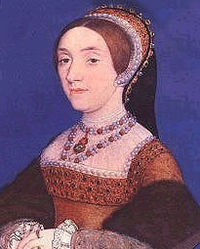
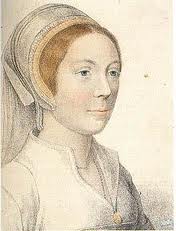
Miniature by Hans Holbein                 After Hans Holbein

Was Catherine, personality-wise, a “frivolous, empty-headed young girl who cared for little else but dancing and pretty clothes” (Weir 434)?  Was she simply captivating, pleasant and kind-hearted enough to want everyone to be happy?  Perhaps she did let things go to her head and recklessness took center-stage but one could not call her scheming, “lewd, sly, pitiable” (Sitwell 53).  It does appear as if Catherine was charming, sensual and obedient–a great combination for Henry.

Catherine Howard / Elizabeth Seymour
Also attributed to Hans Holbein

Not only was Henry delighted with his new bride, Elizabeth, Catherine’s seven-year-old stepdaughter, was too.  When Catherine was publicly acknowledged by Henry as his queen, “she directed that the princess Elizabeth should be placed opposite to her at table, because she was of her own blood and lineage.”  At all the public engagements which continued to celebrate the marriage, Catherine “gave the lady Elizabeth the place of honour nearest to her own person” because, according to Gregorio Leti, “that she [Elizabeth] was her cousin” (Strickland Lives of the Queens of England, from the Norman Conquest 15-16).  Elizabeth Boleyn, Anne’s mother, was a sister to Edmund Howard, Catherine’s father (and to Thomas Howard, Third Duke of Norfolk), so they were first cousins.  Elizabeth Regina would technically have been Catherine’s first cousin once removed.

thomas howard norfolk
Thomas Howard, Duke of Norfolk

Catherine did not only favor Elizabeth when they were residing in the same palaces, she made a point for the two of them to meet.  Based on account records from the Master of the Barge, it has been shown that on 5 May 1541 Catherine arranged that Elizabeth would be taken from Suffolk Place to Chelsea where she, Catherine joined her on 6 May (Gairdner XVI 391). 

Besides the attention Catherine showed her youngest step-daughter she also gave her presents of jewelry as shown in November of 1541.  Records show that she gave a jewel “to lady Elizabeth, the King’s daughter, being …of little thing worth.”  Regardless of the value, it was a kind gesture as when Catherine had “23 pairs of beads minutely described, with crosses, pillars, and tassels attached. One is marked as given by the Queen to lady Elizabeth, the King’s daughter” (Gairdner XVI 686).

Catherine Howard’s fall came after John Lascelles revealed to Archbishop Cranmer the Queen’s sexual activity during her years at the Dowager Duchess of Norfolk’s estate. The Dowager was Catherine’s step-grandmother.  Like all children of aristocratic families, Catherine and her eleven siblings, were sent to other households at young ages.  Included in the Norfolk household was Lascelles’ sister, Mary Hall, who knew of the goings on in the maid’s dormitory.  Many of the young women ‘entertained’ men after hours and Catherine was one of them.  She was about 13 at the time and had a physical relationship with Francis Dereham–after earlier being involved with her music teacher, Henry Manox.

Cranmer took the information very seriously.  Political, religious and social motivations were all involved here as Catherine was a conservative and Lascelles and Cranmer were Protestants.  Cranmer began a full investigation which led to allegations of Catherine’s being intimate with Thomas Culpeper, a member of the king’s privy chamber, after her marriage to Henry.

Thomas_Cranmer
Archbishop of Canterbury Thomas Cranmer

Under interrogation (read that as some type of torture most likely), Culpeper admitted to being in love with Catherine, that she had rebuffed him at first then grew to love him.  Culpeper “persisted in denying his guilt and said it was the Queen who, through lady Rocheford, solicited him to meet her in private in Lincolnshire, when she herself told him that she was dying for his love” (Gairdner XVI 651-652).  The prisoner said that although they spent time alone and in private, they never committed adultery.  This did not matter.  The Council felt there was enough evidence:  Jane Boleyn, Lady Rochford, Catherine’s Lady-in-Waiting, professed to have helped them arrange their meetings and implied she guessed there was a physical relationship between them (Her cooperation did not save her. Rochford was executed as an accomplice.) and, most importantly, a letter from Catherine found in Culpeper’s belongings.  The letter is reproduced below.

jane parkerboylen
Jane Parker Boleyn, Lady Rochford

Master Coulpeper, I hertely recomend me unto youe praying you to 
sende me worde how that you doo. Yt was showed me that you was
sike, the wyche thynge trobled me very muche tell suche tyme that I
here from you praying you to send me worde how that you do.
For I never longed so muche for [a] thynge as I do to se you and
to speke wyth you, the wyche I trust shal be shortely now, the
wyche dothe comforthe me verie much whan I thynk of ett and
wan I thynke agan that you shall departe from me agayne
ytt makes my harte to dye to thynke what fortune I have
that I cannot be always yn your company. Y[e]t my trust ys
allway in you that you wolbe as you have promysed me
and in that hope I truste upon styll, prayng you than that
you wyll com whan my lade Rochforthe ys here, for then
I shalbe beste at leaysoure to be at your commarendmant.
Thaynkyng you for that you have promysed me to be so
good unto that pore felowe my man, whyche is on of the
grefes that I do felle to departe from hym for than I do
know noone that I dare truste to sende to you and therfor
I pray you take hym to be wyth you that I may sumtym
here from you one thynge. I pray you to gyve me a horse
for my man for I hyd muche a do to gat one and
thefer I pray sende me one by hym and yn so doying I
am as I sade afor, and thus I take my leve of you
trusting to se you s[h]orttele agane and I wode you was
wythe me now that yoo maitte se what pane I take
yn wryte[n]g to you.

Yours as long as
lyffe endures
Katheryn

One thyng I had forgotten and that hys to instruct my man to tare here wyt[h] me still, for he sas wat so mever you bed hym he wel do et and […]

When the King was notified of the accusations by a document left for him in his church pew, his anger knew no bounds.  He supposedly called for a sword to slay her himself as she would never have “such delight in her inconstancy as she would have torture in her death” (Hibbert 23).

Catherine was arrested at Hampton Court and moved shortly afterwards to Syon House.  She was there until February 11, 1542, when she was taken by barge to the Tower of London.  On Sunday the 12th she was told to prepare herself for death.  In a dispatch to his king, Chapuys conveyed that “she asked to have the block brought in to her, that she might know how to place herself; which was done, and she made trial of it.”  On February 1542, Marillac reported, she was beheaded on Tower Green by axe “after the manner of the country. The Queen was so weak that she could hardly speak, but confessed in few words that she had merited a hundred deaths for so offending the King who had so graciously treated her” (Gairdner XVI 44).  Chapuys let Charles V know that Catherine was executed “in the same spot where Anne Boleyn had been executed. Her body was then covered [with a black cloak] and her ladies took it away” (Gairdner XVII 51).

syon remnant gothic
Gothic ornamentation remnant from  Syon

No records survive of Elizabeth’s reactions to the sudden loss of any of her step-mothers.  Elizabeth was too young to be greatly affected by the death of Jane Seymour and her only living step-mother, Anne of Cleves, she still had contact with.  What impact would it have had on Elizabeth?  Could we go as far as Anne Somerset working from the text of Larissa J. Taylor-Smither’s article, “Elizabeth I: A Psychological Profile” to say that the “shock of Catherine Howard’s execution (when Elizabeth was at the impressionable age of eight) would have been more immediate, for even if Elizabeth had not been especially close to her young stepmother, Catherine’s sudden extinction must at the very least have had a powerful effect on her subconscious” (Somerset 96).  With no recorded evidence of Elizabeth’s reaction, nor any evidence of altered personality traits or behavior, this blogger thinks it is best to refrain from any such speculation.  

Henry’s reaction to Catherine’s death was made clear. Shortly after her execution, Chapuys wrote that the King has been in better spirits and during the last three days before Lent there has been much feasting (Gairdner XVII 51).  Henry found himself in an unusual position—that of widower.  Anne Boleyn’s death occurred after he had dissolved their marriage so this was the first time he was widowed.

Chapuys, the Spanish Ambassador, reported to his Imperial colleague, Nicolas Granvelle, that Henry “felt the case of the Queen, his wife, and has certainly shown greater sorrow at her loss than at the faults, loss, or divorce of his preceding wives.”  He cites a parable of the widow who cries most bitterly at the death of her tenth husband because she had always been sure of the next.  Chapuys speculates this is the same with Henry as “it does not seem that he has formed any new plan”(Gairdner XVI 653).

nicolas-granvelle
Nicholas Granvelle

Henry, most diplomats and contemporaries assumed, would soon enough be taken up with his matrimonial status.  Charles de Marillac did not mince words to Francis I when he observed “It is not yet said who will be Queen; but the common voice is that this King will not be long without a wife, for the great desire he has to have further issue” (Gairdner XVI 44).  While Eustace Chapuys explained to Charles V that “Parliament prays him to take another wife, he will not, I think, be in a hurry to marry; besides, few, if any, ladies now at Court would aspire to such an honour, for a law has just been passed that should any King henceforth wish to marry a subject, the lady will be bound, on pain of death, to declare if any charges of misconduct can be brought against her, and all who know or suspect anything of the kind against her are bound to reveal it within 20 days, on pain of confiscation of goods and imprisonment for life” (Gairdner XVII 50).

The King was ensuring that his next bride would not put him in a position of uncertainty which would give cause for him to receive any other letters such as the sympathetic, comforting one from his fellow sovereign, Francis I of France.  Francis proclaimed to Henry, concerning Catherine’s behavior, that he “feels the grief of the King, his brother, as his own. Still his good brother should consider that the lightness of women cannot bind the honor of men and that the shame is confined to those who commit the crime” (Gairdner XVI 649).

francisi
King Francis I of France

Even though his matrimonial record was not smooth, King Henry VIII  was not deterred from acquiring another bride. In a relatively short amount of time, he had provided his children with a new step-mother.

References

Denny, Joanna.  Katherine Howard:  A Tudor Conspiracy.  London: Portrait, 2005. Print.

Dye, John S. Dye’s Coin Encyclopædia: A Complete Illustrated History of the Coins of the World. Philadelphia: Bradley & Co., 1883. Google Books. Web. 12 May 2013.

Erickson, Carolly. The First Elizabeth. New York: Summit Books. 1983. Print.

Fraser, Antonia.  The Wives of Henry VIII.  New York:  Alfred A. Knopf, 1992. Print.

Gairdner, James and R. H. Brodie (editors). “Henry VIII: December 1541, 11-20.” Letters and Papers, Foreign and Domestic, Henry VIII, Volume 16: 1540-1541 (1898): 671-681. British History Online. Web. 12 May 2013.

Gairdner, James and R. H. Brodie (editors). “Henry VIII: January 1542, 1-10.” Letters and Papers, Foreign and Domestic, Henry VIII, Volume 17: 1542 (1900): 1-9. British History Online. Web. 12 May 2013.

Hibbert, Christopher.  The Virgin Queen: Elizabeth I, Genius of the Golden Age.  New York: Addison-Wesley Publishing Company, Inc., 1991.  Print.

Hume, Martin. The Wives of Henry the Eighth and the Parts They Played in History. New York: McClure, Phillips & Co., 1905. Google Books, n.d. Web. 06 May 2013.

Lindsey, Karen.  Divorced, Beheaded, Survived:  A Feminist Reinterpretation of the Wives of Henry VIII.  Reading, Massachusetts:  Addison-WESLEY Publishing Company, 1995. Print.

Neale, J. E. Queen Elizabeth I. Garden City, NY: Doubleday, 1957. Print.

Ridley, Jasper. Elizabeth I: The Shrewdness of Virtue.  New York: Fromm International Publishing Corporation, 1989.  Print.

Somerset, Anne. Elizabeth I.  New York: Alfred A. Knopf, 1991. Print.

Starkey, David.  Six Wives: The Queens of Henry VIII.  London:  Chatto & Windus, 2003.  Print.

Strickland, Agnes. Life of Elizabeth, Queen of England, with Anecdotes of Her Court, from Official Records and Other Authentic Documents, Private as Well as Public. New York: Miller, [18-. Internet Archive. Web. 6 May 2013.

Strickland, Agnes, and Elisabeth Strickland. Lives of the Queens of England, from the Norman Conquest; with Anecdotes of Their Courts, Now First Published from Official Records and Other Authentic Documents, Private as Well as Public. Vol. 6. London: Henry Colburn, 1844. Google Books. Web. 15 Mar. 2013.

Weir, Alison.  The Six Wives of Henry VIII.  New York: Grove Weidenfeld, 1991. Print.

The Second Step-Mother to Elizabeth, Anne of Cleves

The Second Step-Mother to Elizabeth, Anne of Cleves

After the death of Jane Seymour, Henry began negotiations with European Royal houses.  Henry was still Catholic in the sense that he did not agree to reforms in the services of worship. In 1539 he had the Act of Six Articles drawn up which kept the traditional church teachings, especially the doctrine of transubstantiation. His advisors such as Cromwell and Cranmer did not relish a Catholic bride and steered Henry toward the Protestant countries and dukedoms.  The Duke of Cleves was a mild Protestant and had two unmarried sisters.  Anne was the ‘lucky’ bride. She was married to Henry in January 1540 and divorced six months later in July.

Cleves henry viii enthronedjpg
Henry VIII illustrated on his Marriage Proclamation to Anne of Cleves, January 5, 1540.

Tradition has passed down that Anne was so disgusting to Henry that he declared after first meeting her that “I like her not”.  Anne gets an unjustified description as ‘The Flanders mare’.  She was not as unattractive (we will not delve into the issue of painting by Hans Hoblein) as Henry’s supporters and biographers make out (for evidence consult the individual biographies referenced below). Their first meeting did not go well and Henry could not overlook her response.  He projected his shortcomings onto her. What had happened was, Henry full of romantic ideas of surprising his bride, entered her presence shortly after her arrival on the shores of England, disguised as a messenger.  Anne spoke few words of English, her ladies in waiting were complete foreigners, and no one advised her about Henry’s preference for masquerades which included coming upon ‘unsuspecting’ Courtiers in disguise. Startled by this muddied, elderly messenger acting very familiarly to her, Anne responded coldly and not with the delighted surprise Henry expected.

cleves holbien
The (in)famous Hans Holbein Painting, 1539

cleves miniture
Miniature attributed to Hans Holbein, 1539

Anne of Cleves
Attributed to Barthel Bruyn, 1540s

Not her features but perhaps the whole package was deemed lacking by Henry—a man captivated by the accomplishments Anne Boleyn learned at the Court of France.  Anne of Cleves, on the other hand, was reared to be a practical companion to a man with position and power, her talents of intelligence and common sense lent themselves to being a successful housewife.  Dancing, playing musical instruments, and speaking in foreign languages would not have been part of her upbringing.  Was she unattractive?  That debate we will leave behind.  This blogger believes Anne was probably attractive but “had no accomplishments whatever” that Henry found so necessary (Strickland 410).

14.236
Ceremonial bedhead created for the marriage of Henry and Anne

According to Gregorio Leti, an Italian historian writing in the late 1600s with access to documents that have since disappeared, Elizabeth wrote to her father about this time asking for permission to meet her new step-mother, Anne of Cleves.

I would like to caution us to accept Leti’s work with a touch of reserve. Mary Anne Everett Wood, a later historian, reminds us “the originals have perished, or are no longer accessible” (Wood 14).  Leti would have translated his sources into his native Italian and the only text available of his work is itself a French translation published in Amsterdam in 1694 titled, La Vie d’Elizabeth, reine d’Angleterre. This work was supposedly suppressed in England by royal authority.  The letter, which has no date or signature, written when Elizabeth would have been a little over six years old is below.

Madame,—I am struggling between two contending wishes—one is my impatient desire to see your Majesty, the other that of rendering the obedience, I owe to the commands of the King my father, which prevent me from leaving my house till he has given me full permission to do so.  But I hope that I shall be able shortly to gratify both these desires.  In the meantime, I entreat your Majesty to permit me to show, by this billet, the zeal with which I devote my respect to you as my queen, and my entire obedience to you as to my mother.  I am too young and feeble to have power to do more than to felicitate you with all my heart in this commencement of your marriage.  I hope that your Majesty will have as much good will for me as I have zeal for your service. (Queen Elizabeth I 21)

Anne showed the letter to the king and he would not let Elizabeth come to court.  Henry “took the letter and gave it to Cromwell” ordering him to write a reply.  “Tell her,” he said brutally, “that she had a mother so different from this woman that she ought not to wish to see her” (Weir 408). Whether or not the story is true, Henry did not withhold permission for long as Elizabeth was eventually brought to Court from Hertford Castle to meet Anne.

Leti reports that “Anne of Cleves, when she saw Elizabeth, was charmed by her beauty, wit and …that she conceived the most tender affection for her. Anne claimed that to have had Elizabeth “for her daughter would have been greater happiness to her than being queen” (Strickland Life of Queen Elizabeth I 15). This sentiment should not be diluted by the fact that Anne was queen for only six months.

When Henry could not evade the wedding, he became determined to divorce Anne as soon as he could. According to Martin Hume, when confronted about a previous marriage (a pre-contract to the Duke of Lorraine has been mentioned in many biographies but no marriage so I take this with a grain of salt) Anne replied, “Please your Majesty, it is true I was espoused to him, but when the Duke spoke to me about marrying your Majesty, he told me my husband was dead, and I know nothing more about it” (Hume 93). Hume continues that Henry, angry at the Duke of Cleves for giving him a married woman, called together his Council for advice on what to do.  The Council recommended a divorce and agreed he should make an allowance for Anne to live on after their marriage was dissolved.  “The lady took it pleasantly enough” (Hume 95).

cleves dedication
Rare document with the signature “Anna the Queen”

download
Most signatures are “Anna the Daughter of Cleves”

When the “conditions of her divorce were arranged, she (Anne) requested, as a great favour, that she might be permitted to see her (Elizabeth) sometimes” (Strickland Life of Queen Elizabeth I 15).  Henry agreed as long as Elizabeth addressed her as Lady Anne instead of Queen Anne (Lindsey 156).  Anne’s relationships and status were established by that new title.
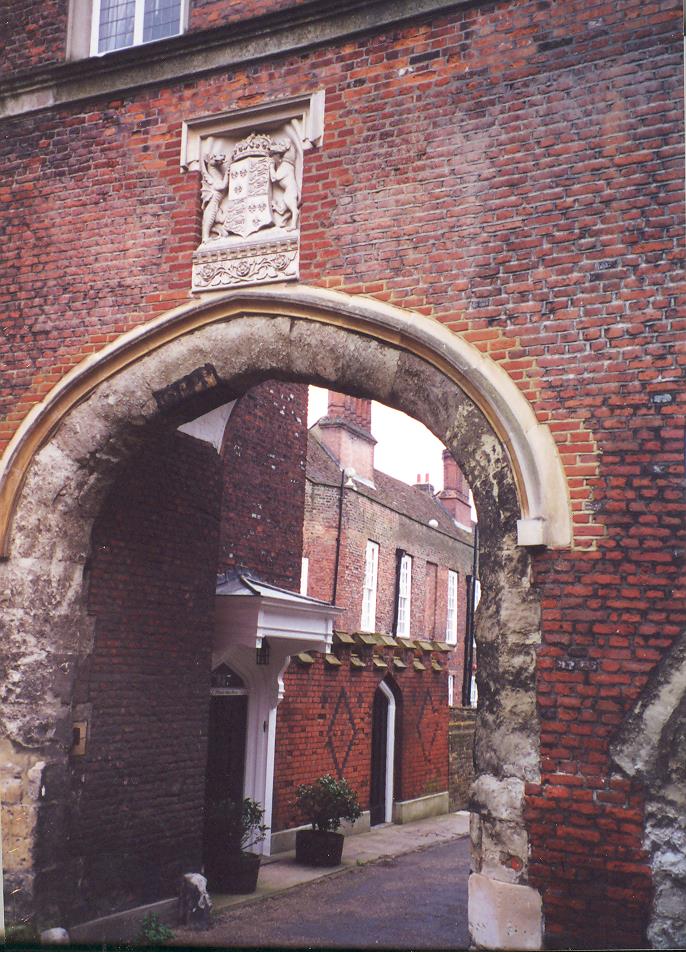
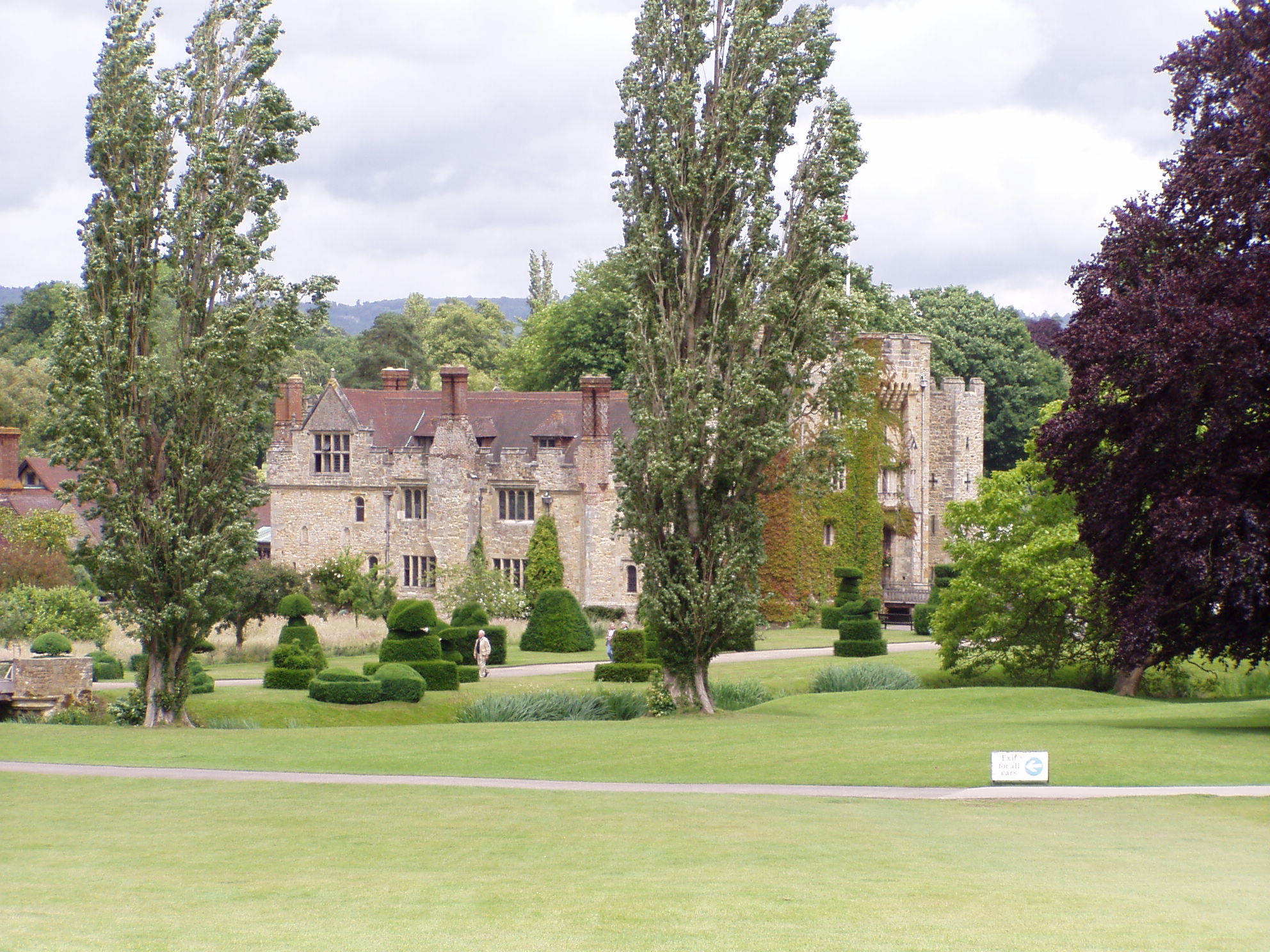
Upon her divorce Anne retained a position in the family and Court with the status as the King’s Sister. She gained a sizable income “secured on the Cornish tin mines,” (Hume 95) plus lands and properties granted to her “to the value of £3,000* a year” (Strickland 419). Anne was given Richmond Palace, Hever Castle, Penshurst, Dartford Castle, a London residence, plus other estates such as the land-hold in Lewes.

richmond palace 001
Gate at Richmond Palace   

OLYMPUS DIGITAL CAMERA
Hever Castle

Anne Cleeves House in Lewes
Anne of Cleves House in Lewes, now a museum

Anne experienced considerable freedom and it appears as if she bore the loss of her husband quite cheerfully. She enjoyed her life in England learning to dance and play music, hunting, dressing in fine clothes and having a pleasant relationship with Henry.

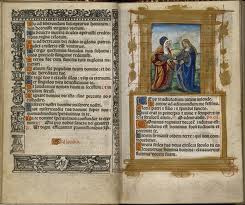
Her amiableness is shown in her dedication to Henry in the Book of Hours, Salisbury 1533 “I beseche your grace huble when ye loke on this rember me. Yor graces assured anne the dowther off cleves” (Anne of Cleves).  In the modern translation: “I beseech your grace humbly when you look on this remember me.  Your grace’s assured Anne the daughter of Cleves.”

cleves book of hours
Dedication in the Book of Hours in Anne’s handwriting.  She gave this to Henry as a gift.  

cleves book of hours pictures
A decorated and illuminated page in the Book of Hours, Salisbury

This daughter of Cleves did have quite a unique status not only in England but in the scene of international politics.  Many could not define if she was free to marry and her brother put out feelers once in a while to consider her return to Cleves or create clarity in her position.  What I found interesting was the diplomatic dispatch, reprinted below, which the French Ambassador, Charles de Marillac, to the English Court sent to his king concerning the inquiry made by the Duke of Cleves after the arrest of Catherine Howard, the fifth wife of Henry VIII.

cleves william
William, Duke of Cleves

December 16, 1541 Marillac to Francis I 
Told by the ambassador of Cleves that, upon letters of credence from his master, he sought to speak with this King about lady Anne, but as the King’s grief did not permit it he yesterday went before the Council and, after declaring his master’s thanks for the King’s liberality to his sister, prayed them [to find] means to reconcile the marriage and restore her to the estate of queen. They answered, on the King’s behalf, that the lady should be graciously entertained and her estate rather increased than diminished, but the separation had been made for such just cause that he prayed the Duke never to make such a request. The ambassador asking to have this repeated, Winchester, with every appearance of anger, said that the King would never take back the said lady and that what was done was founded upon great reason, whatever the world might allege. The ambassador dared not reply, for fear that they might take occasion to treat her worse; but came to tell Marillac, because his master wrote that they would beg Francis to intercede. Thinks there are two courses open, either to intercede so dexterously as not to show that it is done with authority, and thus frighten the English into a league with the Emperor, or else to say nothing about it.  London, 16 Dec. 1541. (Gairdner XVI 678)

After Henry’s death, the financial situation of Anne of Cleves did change and there was talk of her returning to Cleves.  This, of course, came to nothing as she was at Court for Edward and Mary’s rule.

084
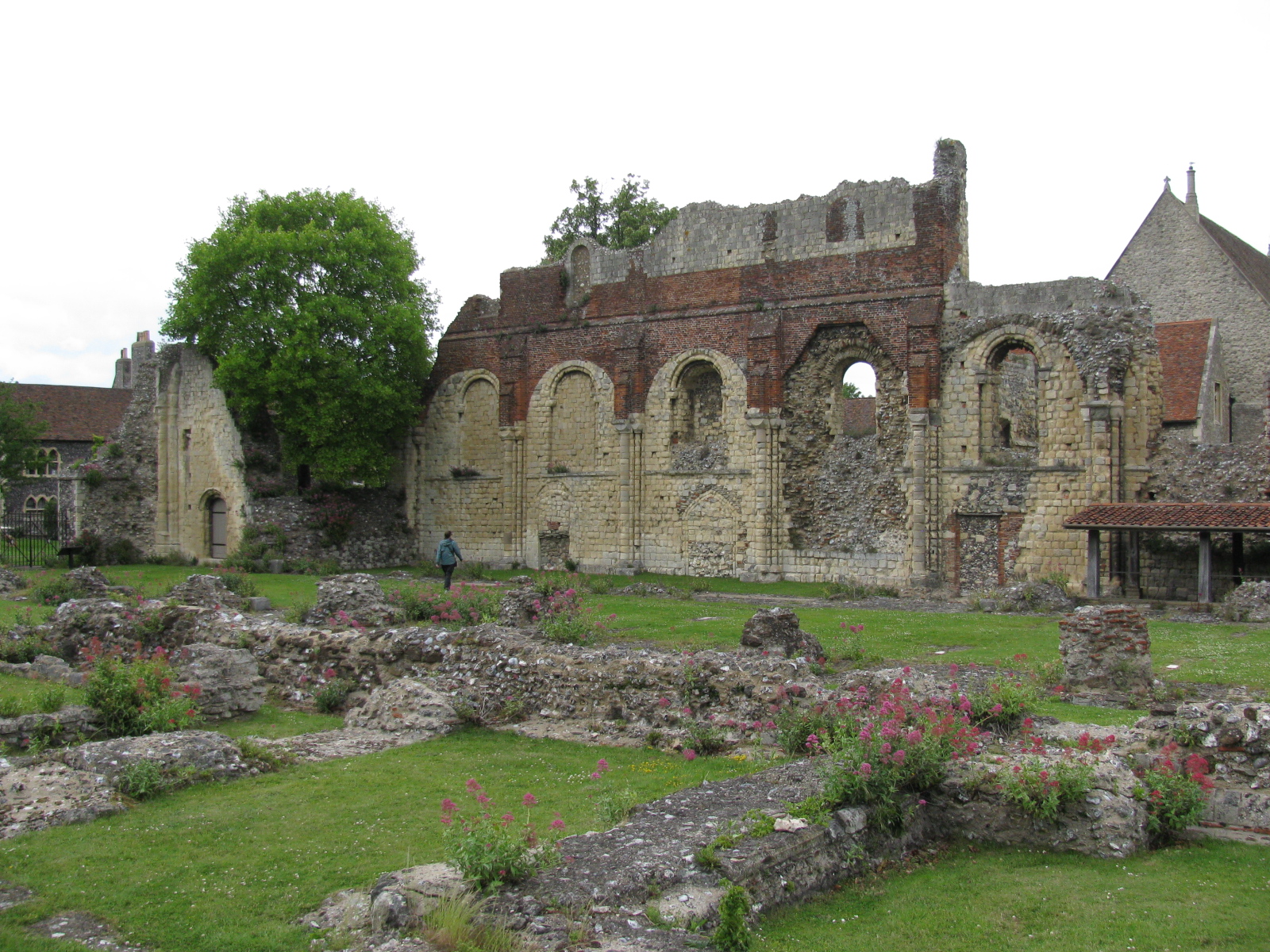
St. Augustine’s Abbey, Canterbury.  Anne and Elizabeth spent a great deal of time here. 

Throughout Mary’s reign, Anne and Elizabeth were often seen together. Starting on 30 September 1553 when they rode in a carriage during Queen Mary’s coronation procession.   They were together at the state banquet later too. “The two of them sat together at the end of the table, Elizabeth now heiress-presumptive to the throne, and Anna of Cleves’ precedence moved up to that of the third lady in the land”  (Fraser 409).

Although “Madam of Cleves always paid great honour to Madam Mary” (Hume 92), Anne did create controversy when she joined Elizabeth in not attending the Catholic Mass during the early part of Mary’s reign.  The Queen had words with Anne and she afterwards did attend services (Ridley 47).  Being so close to the same age, one could imagine how Anne and Mary could get along, but it was with Elizabeth that Anne shared the most affection until the day she died, 16 July 1557 at Chelsea Manor.

cleves tomb
Tomb of Anne of Cleves at Westminster Abbey

Anne’s last will and testament was not as bountiful as commentators would have expected.  She did leave some items to her step-daughters.  To Elizabeth she left some jewels with the hope that one of her ladies-in-waiting, Dorothy Curson, could join the younger woman’s household.

Anne’s influence may have extended further than imagined to the unmarried state of Elizabeth.  Somerset implies that witnessing her father’s distaste and rejection of Anne of Cleves and her brother-in-law Philip’s lack of respect and attraction for Mary, Elizabeth did not want to experience the same thing herself.  So as queen Elizabeth supposedly told Count Feria, the Spanish Ambassador, that she had “taken a vow to marry no man whom she has not seen, and will not trust portrait painters” (Somerset 92).

*The equivalent of £3,000 in 1540 would be worth £1,508,000 in 2010 currency of the retail price index. This was calculated using the website, Measuring Worth.com.

References

“Anne of Cleves’s Book of Hours.” -Folger Shakespeare Library. Folger Shakespeare Library, n.d. Web. 8 May 2013.

Elton, G. R. England Under the Tudors. Third ed. London:  Routledge, 1991. Print

Erickson, Carolly. The First Elizabeth. New York: Summit Books. 1983. Print.

Fraser, Antonia.  The Wives of Henry VIII.  New York:  Alfred A. Knopf, 1992. Print.

Gairdner, James and R. H. Brodie (editors). “Henry VIII: December 1541, 11-20.” Letters and Papers, Foreign and Domestic, Henry VIII, Volume 16: 1540-1541 (1898): 671-681. British History Online. Web. 12 May 2013.

Gairdner, James and R. H. Brodie (editors). “Henry VIII: January 1542, 1-10.” Letters and Papers, Foreign and Domestic, Henry VIII, Volume 17: 1542 (1900): 1-9. British History Online. Web. 12 May 2013.

Lindsey, Karen.  Divorced, Beheaded, Survived:  A Feminist Reinterpretation of the Wives of Henry VIII.  Reading, Massachusetts:  Addison-WESLEY Publishing Company, 1995. Print.

Neale, J. E. Queen Elizabeth I. Garden City, NY: Doubleday, 1957. Print.

Norton, Elizabeth.  Anne of Cleves:  Henry VIII’s Discarded Bride.  Stroud, Gloucestershire: Amberley Publishing, 2010. Print.

Queen Elizabeth I, Frank Mumby, and R. S. Rait. The Girlhood of Queen Elizabeth: A Narrative in Contemporary Letters. Boston: Houghton Mifflin, 1909. Google Books. Web. 9 May 2013.

Ridley, Jasper. Elizabeth I: The Shrewdness of Virtue.  New York: Fromm International Publishing Corporation, 1989.  Print.

Saaler, Mary.  Anne of Cleves:  Fourth Wife of Henry VIII.  London:  The Rubicon Press, 1995. Print.

Starkey, David.  Six Wives: The Queens of Henry VIII.  London:  Chatto & Windus, 2003.  Print.

Strickland, Agnes. Life of Elizabeth, Queen of England, with Anecdotes of Her Court, from Official Records and Other Authentic Documents, Private as Well as Public. New York: Miller, 1903 Internet Archive. Web. 6 May 2013.

Strickland, Agnes, Elisabeth Strickland, and Rosalie Kaufman. The Queens of England, Abridged and Adapted from Strickland’s “Queens of England” Chicago: Werner, 1895. Internet Archive. Web. 4 May 2013.

Weir, Alison.  The Six Wives of Henry VIII.  New York: Grove Weidenfeld, 1991. Print.

Warnicke, Retha. The Marrying of Anne of Cleves:  Royal Protocol in Tudor England. Cambridge: Cambridge University Press, 2000. Print.

Wood, Mary Anne Everett. Letters of Royal and Illustrious Ladies of Great Britain: From the Commencement of the Twelfth Century to the Close of the Reign of Queen Mary : Edited, Chiefly from the Originals in the State Paper Office, the Tower of London, the British Museum and Other State Archives. Vol. II. London: Henry. Colburn, 1846. Google Books. Web. 12 May 2013.

The First Step-Mother to Elizabeth, Jane Seymour

The First Step-Mother to Elizabeth, Jane Seymour

Bound to obey and serve.  That was the motto selected by Jane when she became queen.  Was it true or did she know that would be what Henry VIII would want?

Jane had been a lady-in-waiting to Anne Boleyn and her persona does not come to us very clearly via contemporary sources.  History has given her to be modest, virtuous, obedient, and accepting. She is seen as solid, pleasant, dignified and calm.  She is most often judged neither good nor bad.  Sadly, perhaps her character is viewed so positively because of the fact that she produced the longed-for heir and died before Henry became tired of her.

It is not the place here to go into details about Jane Seymour, her courtship with Henry and her death.  Nor enter the debate of whether she was spotted by Henry or was selected (fascinating discussion but one not necessary to this blog entry)

Physically we have paintings by Hans Holbein, in her lifetime, and several artists’ work, posthumously, plus the verbal description by the Spanish Ambassador, Eustace Chapuys who determined that “She is of no great beauty, so fair that one would call her pale.  The said Seymoure is not a woman of great wit, but she may have good understanding” (Lindsey 119).  Historians have given weight to Chapuys’ account since he was not a champion of Anne Boleyn and would have welcomed her fall.

jane holbien to use                   jane unkown

Famous Hans Holbein portrait       Unknown painter

That lack of wit but understanding does lead to the supposition that Jane could figure out how to deal with Henry.  But how could she not be worried about marring a man who had discarded one wife and killed another?  Her understanding had to extend to realizing the possible risk she was taking.

jane english
Jane attributed to The English School

Agnes Strickland does not perpetuate the image of the meek and docile bride as “we have so little that is favorable to relate of this queen” (Strickland 408).  Although Strickland will give Jane credit for being a discrete, beautiful young woman she does wonder if she was as heartless as her bridegroom.  Jane had to know what was happening in the Tower of London to Anne Boleyn while she was planning her marriage to Henry.  “The giddiness of youth cannot be pleaded as apology for Jane Seymour’s indecency, for she was no child when she permitted herself to be courted by the royal Bluebeard, and must have been entirely conscious of the enormity of her actions” (Strickland 403).  Jane’s actions led to her engagement to Henry the day after Anne’s execution and their marriage 10 days later.

We do know that as a step-mother, Jane treated Mary well and granted her special privileges while Elizabeth “was placed out of sight” (Erickson 31). Her motivation for championing Mary could have been kindness or as some believe social snobbery.

She wanted to have someone of her status at Court.  “Now that it hath pleased Your Grace to make me your wife, there are none but my inferiors to make merry withal, Your Grace excepted—unless it would please you that we might enjoy the company of the Lady Mary at court.  I could make merry with her” (Lindsey 132, Hume The Wives of Henry VIII 303).  Although this does not mesh with Polydore Vergil’s view that Jane was “a woman of the utmost charm both in appearance and character,” it is understood that Mary’s situation improved under Jane (Fraser 235). What of Elizabeth?

Martin Hume reported that, after Queen Jane had brought about the reconciliation between Henry and Mary, she fell to her knees and said, “Your Majesty knows how bad Queen Anne was, and it is not fit that her daughter should be Princess.  So the King ordered it to be proclaimed that in future none should dare to call her Princess, but madam Elizabeth” (Hume 72 -73).  This was only done after Henry implied that all the harm that had come to Mary, the humiliations and banishments had been from Anne Boleyn.  “My daughter, she who did you so much harm, and prevented me from seeing you for so long, has paid the penalty” (Hume 72). Therefore, several days after the wedding, The Lord Chancellor made a speech in Parliament about extolling the King’s virtues but ended “with the information that Anne Boleyn’s daughter was not heir to the throne of England” (Strickland 407).  This story appears to come from a Spanish merchant, Antonio de Guaras writing to King Philip II.  Many speculate that this was just wishful thinking on the part of the loyal Spaniard.

Elizabeth was not completely banished from Court. She was brought to Court along with Mary when Henry, faced with rebellion, felt it necessary to show a united front.   This public relations move was reported by Le Cardinal du Bellay Ambassador to the French Court.  He observed that rather than “soften the temper of the people” the peoples’ opinions were so fixed “they think of nothing but liberty. Madam Marie is now the first after the Queen, and sits at table opposite her, a little lower down, after having first given the napkin for washing to the King and Queen.  Madame Isabeau (Elizabeth) is not at that table, though the King is very affectionate to her.  It is said he loves her much” (Gairdner 346).

When Elizabeth was four, Jane gave birth to Edward.  At his baptism at Hampton Court, Mary was a godmother and Elizabeth held the chrisom cloth although she, in turn, was carried by Edward Seymour.  As known, Jane died shortly after the birth due to puerperal fever.  Mary was chief mourner at Jane’s funeral.  Elizabeth did not take part but that was probably due to her age.

jane h e
Posthumous rendering of Jane with Edward and Henry

References

Elton, G. R. England Under the Tudors. Third ed. London:  Routledge, 1991. Print

Erickson, Carolly. The First Elizabeth. New York: Summit Books. 1983. Print.

Fraser, Antonia.  The Wives of Henry VIII.  New York:  Alfred A. Knopf, 1992. Print.

Gairdner, James, ed. Letters and Papers, Foreign and Domestic, of the Reign of Henry VIII. Vol. 11. London: Longman, Green, Longman & Roberts, 1888. Google Books. Web. 4 May 2013.

Hume, Martin A. Sharp. Chronicle of King Henry the Eighth of England: Being a Contemporary Record of Some of the Principal Events of the Reigns of Henry VIII and Edward VI, Written in Spanish by an Unknown Hand ; Translated, with Notes and Introduction, by Martin A. Sharp Hume. London: George Belland Sons, 1889. Internet Archive. Web. 4 May 2013.

Hume, Martin. The Wives of Henry the Eighth and the Parts They Played in History. New York: McClure, Phillips & Co., 1905. Google Books, n.d. Web. 06 May 2013.

Lindsey, Karen.  Divorced, Beheaded, Survived:  A Feminist Reinterpretation of the Wives of Henry VIII.  Reading, Massachusetts:  Addison-WESLEY Publishing Company, 1995. Print.

Ridley, Jasper. Elizabeth I: The Shrewdness of Virtue.  New York: Fromm International Publishing Corporation, 1989.  Print.

Perry, Maria.  The Word of a Prince: A Life of Elizabeth from Contemporary Documents.  Woodbridge, Suffolk: The Boydell Press, 1990.  Print.

Ridgeway, Claire.  The Fall of Anne Boleyn.  UK:  MadeGlobal Publishing, 2012.  Print.

Somerset, Anne. Elizabeth I.  New York: Alfred A. Knopf, 1991. Print.

Starkey, David.  Six Wives: The Queens of Henry VIII.  London:  Chatto & Windus, 2003.  Print.

Strickland, Agnes, Elisabeth Strickland, and Rosalie Kaufman. The Queens of England, Abridged and Adapted from Strickland’s “Queens of England” Chicago: Werner, 1895. Internet Archive. Web. 4 May 2013.

Warnicke, Retha.  The Rise and Fall of Anne Boleyn.  Cambridge:  Cambridge University Press. 1998.  Print.

Weir, Alison.  The Six Wives of Henry VIII.  New York: Grove Weidenfeld, 1991. Print.