Two’s Company, Three’s a Crowd: Part IV

Two’s Company, Three’s a Crowd: Part IV

The diplomatic accounts sent to Philip II by his Spanish Ambassador to England, Gómez Suárez de Figueroa, Count de Feria, will be quoted at length as they give such clear and vivid pictures of the events from spring of 1558 until the autumn.  Philip, convinced that if his wife Mary I died the preferred successor would be Princess Elizabeth, tried to preserve close ties with the princess while maintaining the upper hand.  He had quite a job for himself.

 Philip Turns His Attention to Elizabeth—1558

As everyone at Court, except for Queen Mary, realized her pregnancy was a delusion, Philip turned his attention to Elizabeth.  He did not have an easy task in convincing his wife to accept her sister as heir.  Ambassador Michiel wrote to the Doge of Venice on October 29, 1558, that King Philip had sent over his envoy, Count de Feria to visit the Queen and to convince her that it was better to arrange the marriage of Elizabeth now while they could “prevent the evils which might occur were Lady Elizabeth, seeing herself slighted, to choose after Her Majesty’s death, or perhaps even during her lifetime, to take for her husband some individual who might convulse the whole kingdom into confusion. For many days during which the confessor treated this business, he found the Queen utterly averse to give Lady Elizabeth any hope of the succession, obstinately maintaining that she was neither her sister nor the daughter of the Queen’s father, King Henry, nor would she hear of favouring her, as she was born of an infamous woman, who had so greatly outraged the Queen her mother and herself”  (Queen Elizabeth I 242-243).

This was to be done in utmost secrecy for Elizabeth could not be slighted if the Queen would not agree to it.  There was also the fear if the French found out it could jeopardize any marriage schemes as the “greater part of England is opposed to the Queen, and most hostile to King Philip and his dependants, and much inclined towards Miladi Elizabeth, who has always shown greater liking for the French faction than for this other” (Queen Elizabeth I 243).  As seen in a previous blog, “Two’s Company, Three’s a Crowd: Part III” Mary and Elizabeth were both against a marriage for Elizabeth, albeit for different reasons.  Philip may have seen the writing on the wall concerning the Savoy and Swedish marriage proposals but he was not without schemes.  He knew he needed to keep Elizabeth in his favor.

When Charles V died in September, Philip wrote to Elizabeth himself to tell her about it.  She in turn wrote a reply to him.  “Sire and dearest cousin, The honour which your Majesty has done me by sending a gentleman to advertise me of the death of the august Emperor, your father of most glorious memory, agreeably reminds me that your Majesty continues to honour me with that generous good-will which you have been pleased ever to bestow on me, and from which I have felt so much advantage that, in calling to mind these Graces and favours, I can find no other fit means of evincing my gratitude than by earnestly remembering that the life I enjoy is equally the fruit of the Queen my sister’s goodness and of your Majesty’s magnanimous protection” (Queen Elizabeth I 239-240).

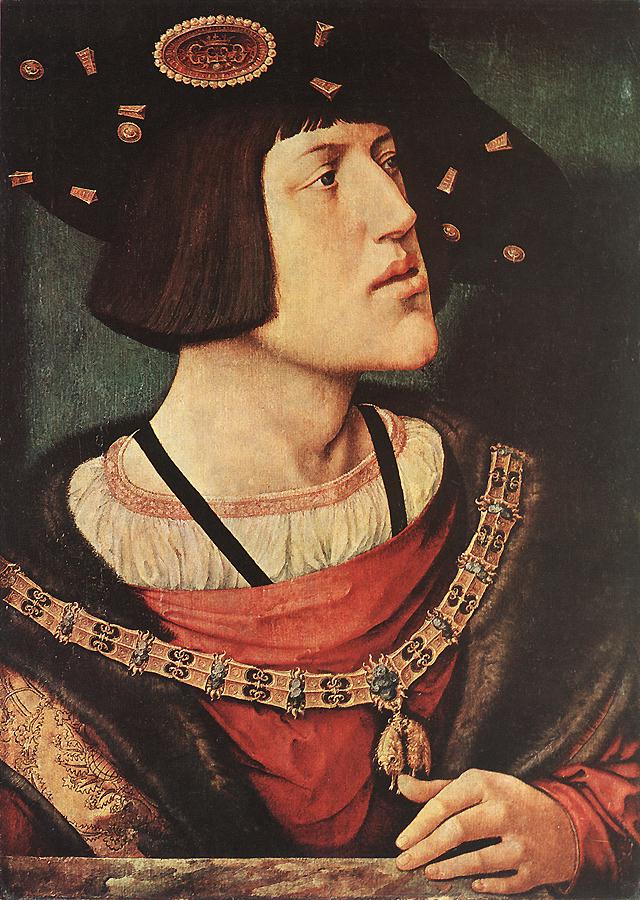
Charles v for part four
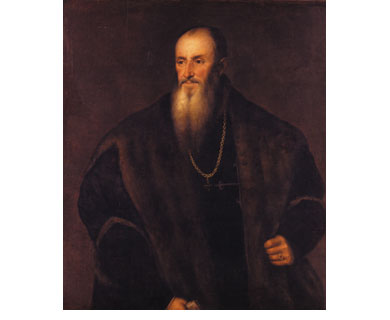
Charles V by Titian

Elizabeth went on to tell Philip that she was “employed at present in reading the history of his warlike actions, and his great feats of courage and valour, in order to redouble, by the glorious memory of the father, the veneration and esteem which I have for the son.

“I pray God that amidst the afflictions which such a loss causes you, he may load your life with prosperity and happiness; so shall I ever, with great satisfaction, assure you that I am your Majesty’s very humble servant and sister-in-law, Elizabeth” (Queen Elizabeth I 240).

Mary’s View of Elizabeth

Venetian Ambassador Michiel, who described Mary as “a very great and rare example of virtue and magnanimity, a real portrait of patience and humility,” also was aware of “her evil disposition towards her sister my Lady Elizabeth, which although dissembled, it cannot be denied that she displays in many ways the scorn and ill will she bears her.”

Michiel perceived that “what disquiets her most of all is to see the eyes and hearts of the nation already fixed on this lady as successor to the Crown, from despair of descent from the Queen, to see the illegitimate child of a criminal who was punished as a public strumpet, on the point of inheriting the throne with better fortune than herself, whose descent is rightful, legitimate, and regal. Besides this the Queen’s hatred is increased by knowing her to be averse to the present religion, that she has recanted, she is nevertheless supposed to dissemble, and to hold to it more than ever internally” (Brown VI May 1557 884).

Philip was up against a strong force. Mary truly wanted to be a loving and obedient wife, which would have meant following in with Philip’s plans of complete reconciliation with Elizabeth and, more importantly, announcing her as heir.  Mary preferred to wait and let events unravel.  She still held hope that she would have her own child or, if that would not be the case, then “referring the matter after her death to those whom it concerns either by right or by force” (Brown VI May 1557 884).  This was at complete variance with Philip who “it cannot be supposed will choose to delay until then, nor remain at the mercy of the English and their divisions, he would therefore wish to secure himself immediately and proclaim the heir” (Brown VI May 1557 884).  Yet, where Elizabeth was concerned there was too much anger, jealousy and distrust on Mary’s side to overcome.

Why were these feelings of Mary’s so difficult to submerge?  Let us return to Ambassador Michiel’s report. Elizabeth is described physically as very attractive and as “a young woman, whose mind is considered no less excellent than her person; and her intellect and understanding are wonderful, as she showed very plainly by her conduct when in danger and under suspicion.”  It is of Michiel’s opinion that “as a linguist she excels the Queen” speaking Latin, Greek, and Italian.  Perhaps Mary would not feel overshadowed by these skills, except as the Ambassador shrewdly related that everybody believed Elizabeth resembled King Henry VIII “more than the Queen” and “he therefore always liked her and had her brought up in the same way as the Queen.” This perhaps could have been easier to swallow for Mary, but she was aware “that she [Elizabeth] was born of such a mother,” and that Elizabeth believed she was no less legitimate than Mary was (Brown VI May 1557 884).
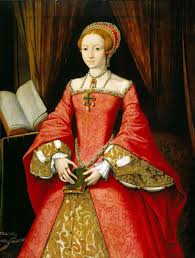
Elizabeth_I_Steven_Van_Der_Meulen
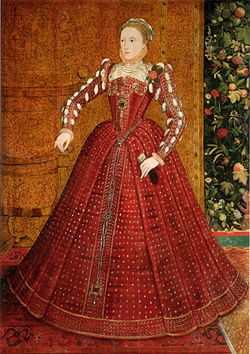
Elizabeth by Steven van der Meulen, 1563

Added to Elizabeth’s faults, was the fact that Mary had to be aware that as the years passed, “there is not a lord or gentleman in the kingdom who has failed, and continues endeavouring, to enter her service himself or to place one of his sons or brothers in it, such being the love and affection borne her” (Brown VI May 1557 884).  Michiel explained that Elizabeth was always in need of money “and would be much more so did she not steadily restrain herself to avoid any increase of the Queen’s hatred and anger”; therefore, she did not increase the number of servants or add expenditures of any kind.

When requested to take on household members, Elizabeth would decline pleading her relative state of poverty and “by this astute and judicious apology she adroitly incites a tacit compassion for herself and consequently yet greater affection, as it seems strange and vexatious to everybody that being the daughter of a King she should be treated and acknowledged so sparingly” (Brown VI May 1557 884).

An example of Mary’s anger we have seen in her frustration in having to give way to the daughter of Anne Boleyn and her jealousy showed in her annoyance of Elizabeth’s skills and popularity.  An example of her distrust is perfectly illustrated over Elizabeth’s professed religious convictions.  Ambassador Michiel, recognized the danger to Catholicism if Elizabeth succeeded as she would “reverse of what the Queen has done, this seeming to her a sort of revenge. Besides this, she would think that nothing could render her more popular, independently of her own interest through the restitution to herself and to the Crown of all those revenues amounting to upwards of 60,000l., of which the Queen has deprived it.  And “and above all she would withdraw the obedience to the Pope, were it solely for the sake of not seeing money go out of the kingdom” (Brown VI May 1557 884).

Perhaps Mary’s policy should have been to remove Elizabeth from her realm.  The Queen’s reluctance to acknowledge Elizabeth’s legitimacy via a diplomatic marriage kept her sister in the kingdom.  Maybe a reversal of her decision would have eased many of her concerns.  Below is a lengthy extract from a diplomatic dispatch between Count Feria, the Spanish Ambassador to England and Philip II explaining the events of May 1558.

May 1, 1558, de Feria to King Philip II
“An ambassador of the King of Sweden came here recently. He appears to be a learned man. Several days passed without his having audience of the Queen or even demanding it. His mission appears to consist of two parts: one about commercial affairs between England and Sweden, and the other to negotiate a match between the Lady Elizabeth and the King of Sweden’s son, for which purpose he brought a letter from the young man accrediting him to the Lady. Before he had been received by the Queen, he went to present his letter to the Lady Elizabeth. The Queen is writing to you on the subject; and as I have heard from her all I know about it I need say no more. She fancies herself very much where this matter is concerned. She was angry with me the other day when she knew that I was sending a servant of mine to Antwerp on my own business, thinking that I meant to write to your Majesty before she had done so about this matrimonial affair. She spoke to me very severely.

erik_xiv_van_der_meulen
Eric XIV of Sweden by Steven van der Meulen, 1561 

“When this ambassador first arrived, the Queen was greatly distressed, thinking that your Majesty would blame her because the match proposed a year ago [to Philip’s choice, Emmanuel Philibert, Duke of Savoy] had not come off. Now that the Lady Elizabeth has answered that she does not wish to marry, the Queen has calmed down; but she takes a most passionate interest in the affair. She now realises that her pregnancy has come to nothing, and seems afraid your Majesty will urge her to take a decision (about marrying off Elizabeth). Figueroa and I think your Majesty ought to do this, grasping the occasion supplied by this ambassador and the pregnancy matter, but it must not be raised at the same time as the military affair, for that might spoil everything. I do not think the Queen will wish to prevent Elizabeth from succeeding, in case God grants no issue to your Majesties” (Tyler XIII May 1558 425).

Official Response to Swedish Proposals
While in Brussels, Philip wrote a response to de Feria on May 7, 1558.
“I am answering your letter in my own hand, as you will see.  You will also see that I am writing to the Privy Council about the four points raised by the Swedish ambassador on behalf of his King concerning trade between England and Sweden. As the terms he proposes are harsh and impracticable, you will try to get them to temporise, keeping me informed of anything they may intend to do so that I may signify my pleasure to them” (Tyler XIII May 1558 429) .

On May 18, 1558, Ambassador Feria, ever the conscientious diplomat, informed his king of the merry-go-round of events in England. “They tell me that with this courier they are sending a report to your Majesty, with the reply they think of making to the Swedish Ambassador. What the Swede is trying to do will come to nothing.

“I have already written to your Majesty that I did not see the Lady Elizabeth when she was here. As my principal support in negotiating the matters I was sent here for was the Queen’s goodwill, I thought I had better avoid upsetting her, especially as your Majesty had not given me any special instructions” (Tyler XIII May 1558 435).

Feria clarified that he had sent word to Elizabeth that he had permission from the king to visit her and asked another courtier, referred to as Paget and it is assumed to be Charles Paget, to offer his excuses for not meeting her earlier.  It appears that Paget rather fumbled the job.  Feria explained that he had asked one of the women close to Elizabeth if Paget had done so and she told him “that he asked the Lady Elizabeth whether I had been to see her, and that when she said I had not, he expressed great surprise and said nothing further.”   Now in a bit of a tricky situation Feria decided, “I do not think that things ought to be left there, but that it would be well that I should go and see her before I leave the country; she lives twenty miles from here. As your Majesty is fully informed, you will send me instructions. If I am to see her, you must write about it to the Queen” (Tyler XIII May 1558 435).

Since Count de Feria appeared to be anxious about Mary’s reception to the news that he had gone to visit Elizabeth. It is obvious his commission dealt with the sensitive topics of either the succession or a possible marriage for Elizabeth.  Regardless, Philip did agree to Feria’s perception that Mary had to be informed of his actions with the unwritten idea that Mary would be angry at such an overture.  Several days later Feria received word from Philip saying “I approve of your intention not to leave England without visiting the Lady Elizabeth. I am writing to the Queen that I have instructed you to do so, and that she is to speak to you in the same sense. Thus I hope that the Queen will take it well.

“The Council have written to me how they intend to answer the Swedish Ambassador. Their reply seems to me satisfactory, except that I should like to have them add that they were not pleased with his going to make a proposal to the Lady Elizabeth without the Queen’s knowledge, and that in future neither he nor anyone else on his master’s behalf should come to negotiate such matters without informing the Queen in advance, for if they did, the Queen would greatly resent it and could not fail to show her resentment in some appropriate manner” (Tyler XIII May 1558 440).

Elizabeth Gripsholm
Elizabeth, in the ‘Gripsholm Portrait’ –a painting done specifically for Erik of Sweden.

Obviously, Philip had written Count Feria on May 27, 1558, and quickly sent off the missive.  On the same day, he received the message that Feria had written on the 18th.  Therefore, Philip wrote again on the 27th praising Feria that he was “glad to hear that you had gone to see the Lady Elizabeth. When you come, you will report what happened between her and you” (Tyler XIII May 441).  Again, the topic of conversation between Count Feria and Elizabeth had been too sensitive to commit to paper; the communiqué would be done in person to the King.  If the discussion concerned the Swedish marriage proposal, the diplomatic course laid down by Philip was followed by his faithful envoy.  Several months later Feria had the satisfaction to write, “The Swedish Ambassador was satisfied with the answer he received from the Council, and said that he wished to report to his master and wait here for an answer. When the Queen reproved him in presence of the Councillors and Petre for having made a proposal to the Lady Elizabeth without her knowledge, he put up a feeble defence, but then repeated his request. Her Majesty answered that she did not intend to proceed further in this matter. I believe she intends to write to your Majesty about what happened between her and the ambassador” (Tyler XIII July 1558 457).
P2 for part four
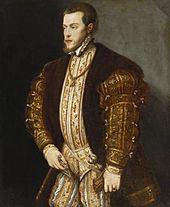
King Philip II by Titian, 1554

Regardless of what Philip and his envoy publically proclaimed, another meeting between the Spanish Ambassador and Elizabeth took place sometime in June of 1558 at Hatfield.  He kept Philip informed of the arrangements, letting him know “I am going to see the Lady Elizabeth on Friday, 16 miles from here, as your Majesty has ordered me to do. (Tyler XIII June 1558 444).  After the meeting, Feria continued with King Philip’s instructions for filling him in on the details in person and kept to a bare bones account that he wrote on 23 June: “I went to visit the Lady Elizabeth, as your Majesty instructed me to do. She was very much pleased; and I was also, for reasons I will tell your Majesty when I arrive over there. (Tyler XIII June 1558 451).  It appears that when Count Feria returned to Brussels he had information to share that would apparently satisfy Hapsburg interests.

The marriage of Mary, Queen of Scots and the future Francis II had taken place in the spring of 1558.  Philip understood the dangers of Mary’s claim to the English throne to his country.  Elizabeth herself must have been feeling more confident of her position as these international developments strengthened her case at home among not only the English, but also the Hapsburgs.  Philip needed Elizabeth, as she was well aware.

Count de Feria Meets His Match
Count Feria had returned to his master in Brussels and was sent back to England relatively quickly as news of the Queen’s ill-health reached her husband. The meeting between Elizabeth and Feria will be relayed extensively below due to the insightful nature not only of the event but also of Feria’s interpretation of Elizabeth’s character.  The basis for the bulk of the communiqué derives from David Loades’ materials with extended passages from various sources to emphasis other points.

14 November 1558
“I arrived here on Wednesday, the ninth of this month, at lunchtime and found the Queen our lady’s health to be just as Dr. Nunez* describes in his letter to your Majesty.  There is, therefore, no hope of her life, but on the contrary each hour I think that they will come to inform me of her death, so rapidly does her condition deteriorate from one day to the next.  She was happy to see me, since I brought her news of your Majesty, and to receive the letter, although she was unable to read it.  In view of this I felt that there was not time to waste on other matters and sent word to the council to assemble as I wished to talk to them on your Majesty’s behalf.  This I preceded to do ….I also declared your Majesty’s will on the question of the succession to the kingdom, and told them how pleased your Majesty would be to hear of their good offices with Madame Elizabeth on this matter, reminding them how your Majesty had sought to have this done much earlier, as they all well knew.  These councilors are extremely frightened of what Madame Elizabeth will do with them.  They have received me well, but somewhat as they would a man who came with bulls from a dead pope.

“The day after I arrived, I went to a house belonging to a gentleman some twenty three miles from there, where Madame Elizabeth is staying.**  She received me well but not as joyfully as she did last time. She asked me to dine with her and the wife of Admiral Clinton who was there when I arrived was also invited.  After dinner she rose and told me that should I desire to speak with her I might now do so, for she was giving orders that only two or three women who could speak no other language than English should remain in the room… I gave her to understand that it was your Majesty who had procured her recent recognition as the queen’s sister and successor, and not the Queen or the council, and that this was something your Majesty had been trying to secure for some time, as she no doubt realized, for it was common knowledge in the whole kingdom; and I condemned the Queen and the council severely… She was very open with me on many points, much more than I would have expected, and although it is difficult to judge a person one has known for a short a time as I have known this woman, I shall tell your Majesty what I have been able to gather.  She is a very vain and clever woman.  She must have been thoroughly schooled in the manner in which her father conducted his affairs, and I am very much afraid that she will not be well disposed in matters of religion, for I see her inclined to govern through men who are believed to be heretics, and I am told that all the women around her definitely are.  Apart from this it is evident that she is highly indignant about what has been done to her during the Queen’s lifetime. She puts great store by the people, and is very confident that they are all on her side—which is certainly true…
Brockett
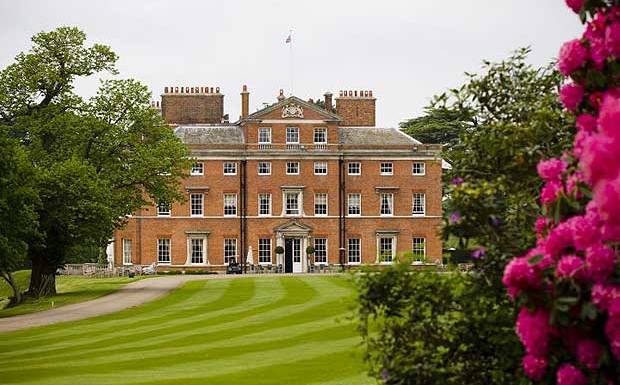
Brockett Hall

“I have been told for certain that Cecil, who was King Edward’s secretary, will also be secretary to Madame Elizabeth.  He is said to be an able and virtuous man, but a heretic…

“Last night they administered extreme unction to the queen or lady and today she is better, although there is little hope of her life. Our Lord etc., From London, 14th November 1558” (Loades Mary Tudor 200-202).
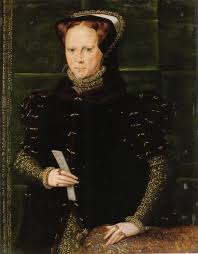
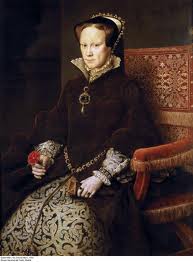
mary for part four
Mary I by Hans Eworth, 1555-1558.

If the Ambassador thought his advice would be listened to meekly, let alone followed, he had another think coming.   When the discussion emerged about the Privy Council members, Feria counseled Elizabeth to show restraint and not seek revenge.  Elizabeth told him that she wanted to make the “councillors who had wronged her admit they had done so” (Perry 126).  She acknowledged Philip’s support when she was detained by her sister and how Philip “had shown her favour and helped her to obtain her release. She felt that it was not dishonourable to admit that she had been a prisoner; on the contrary, it was those who had put her there who were dishonoured because she had never been guilty of having acted or said anything against the queen, nor would she ever confess otherwise” (Porter 405).

What a gal!  Faced still with a tremendous amount of uncertainty and with no true internship in the halls of power, Elizabeth’s courage and sangfroid are astounding.  A baffled Feria shared with Philip, the person who Feria felt was solely responsible for obtaining the throne for Elizabeth, that she “puts great store by the people who put her in her present position, and she will not acknowledge that your Majesty or the nobility of this realm had any part in it, although, as she herself, says, they have all sent her assurances of their loyalty…. There is not a heretic or traitor in all the kingdom, who has not joyfully raised himself from the grave to come to her side. She is determined to be governed by no one” (Perry 125).

Feria claimed that Elizabeth had not received him as ‘joyfully’ as before— the change could be easily explained.  Her position as future queen was much more secure; her sister had recently acknowledged the succession which was linked back to her father’s actions.  The Third Act of Succession of 1544 gave the act of law to the last will and testament of Henry VIII.  In 1546, Henry spelled out exactly how the succession should proceed if his son Edward died childless and if his daughter Mary did as well.  Mary used that Act as her claim to the succession over Lady Jane Grey yet was loath to enact it for her half-sister.  In the autumn of 1558 Mary acknowledged the fact that she might die without issue and so on 28 October she added a codicil to her will—written in March of that same year.  She left the “government, order and rule” of the kingdom to her “next heir and successor, according to the laws and statues of this realm” (Alford 28).  Mary consciously did not mention Elizabeth by name nor did she accept her as her heir willingly. Christophe d’Assonleville, the Imperial envoy from Brussels, wrote to Philip that the Privy Council had persuaded Mary to “make certain declarations in favour of the Lady Elizabeth concerning the succession.  Her Majesty consented; and the Comptroller and the Master of the Rolls are being sent to-day on her behalf and that of the Council to visit the Lady Elizabeth and inform her that the Queen is willing that she succeed in the event of her own death” (Tyler XIII November 1558 498).  Good news for Philip as he was in full support of Elizabeth as heir— there really was no choice in his eyes—and Feria had the delicate task of dealing with Elizabeth as the soon-to-be-Queen while diplomatically presenting the belief that Mary would recover.  This interview could not have been easy for the Count.

While giving praise for Philip’s support, Elizabeth did not hesitate to imply that Mary had hurt her realm by “sending large sums of money and jewels out of the country to her husband” (Porter 405). “She then went on to discomfort him further by observing that her sister had lost her subjects’ affection by marrying a foreigner, to which he had relied, punctiliously but untruthfully, that on the contrary Philip had been much loved.  She was grateful for Philip’s support but set no particular store by it, placing all her confidence in the English people, who were she was convinced, ‘all on her side’.  This, Feria concluded ruefully, ‘is undoubtedly true’” (Loades Mary Tudor 199).

JOanna regent of spain
Joanna, Regent of Spain

*Luis Nunez was a Portuguese physician practicing in the Netherlands, sent over with de Feria.

**Most likely Brockett Hall, home of Sir John Brockett, who was one of her Hatfield tenants.

For references, please refer to the blog entry “Two’s Company, Three’s a Crowd: Part I.”

Two’s Company, Three’s a Crowd: Part III

Two’s Company, Three’s a Crowd: Part III

Philip protected Elizabeth after the Wyatt and Dudley rebellions.  She was indebted to him for her improved treatment by her sister, Queen Mary, and the Court.  Philip “wisely determined that Elizabeth’s petty misdemeanours should be winked at” (Strickland 111).  Why should activity, bordering on treason, be ignored?  Elizabeth was the main heir with Mary, Queen of Scots and Dauphiness of France was second.  Hapsburg interests had to prevent the balance of power in Europe from moving to the French.  If Mary Stuart became Queen of England, France and Scotland, Spain would lose its hold on world affairs.  Therefore, “this sudden kindness of Philip, who thought Elizabeth a much less obnoxious character than his father Charles the Fifth had conceived her to have been, did not arise from any regular principle of real generosity, but partly from an affection of popularity, and partly from a refined sentiment of policy” (Nichols 11).

Philip Understood Elizabeth Was the Best Heiress Presumptive

There were issues with Elizabeth as heir: first, her sister did not relish the thought of appointing a successor.  Even when Philip sent his confessor “Fresneda to England to urge Mary to send a message to Elizabeth recognizing her as heir to the throne,” Mary refused (Ridley 72).  The antagonism Mary felt toward Elizabeth was a difficulty that Philip knew he had to overcome.  He did persuade Mary to make an effort at reconciliation and enfold Elizabeth into the Court.  One-time Ambassador from Spain, Simon Renard, succinctly stated a second issue in June of 1555 he wrote a memorandum to Charles V outlining his concerns. “I foresee trouble on so great a scale that the pen can hardly set it down. Certain it is that the order of succession has been so badly decided that the Lady Elizabeth comes next, and that means heresy again, and the true religion overthrown. Churchmen will be wronged, Catholics persecuted; there will be more acts of vengeance than heretofore…. A calamitous tragedy will lie ahead” (Tyler XIII June 1555 216).

charles
Charles V

Spanish diplomats foresaw that if Elizabeth were to succeed, there would be religious revolution once again.  But, what if she were married to a Catholic?  Philip realized she was the only plausible successor to his wife and that Elizabeth would be queen because the people would not have it any other way.  If he could use Elizabeth to promote Hapsburg interests and encourage her to be beholden to those interests, things would turn in his favor.   Elizabeth could be a “demure, flatteringly deferential young lady” (Plowden 68).  Philip saw no reason why with the right husband, suggested by her concerned and kindly brother-in-law, this ‘calamitous tragedy’ could be avoided. 

The Savoy Marriage

What criteria would entail the right husband?  He must be a Catholic, a Hapsburg ally or dependent with enough status to garner a marriage to a Queen Regnant.

In a memorandum prepared for Philip by Simon Renard, he let it be known that Elizabeth should marry the Duke of Savoy.  This would have placed a lieutenant in England to help Queen Mary when Philip would be absent and help promote international relations (Plowden 65). 

Simon_Renard
Simon Renard 

That early proposal between Elizabeth and Emmanuel Philibert, Duke of Savoy, was suggested but came to nothing.  Philip did not give up easily.  According to several written sources upon meeting Elizabeth at Court, Philip “paid her such obeisance as to fall with one knee to the ground, notwithstanding his usual state and solemnity” (Nichols 11). He did not account for her resolve. “Elizabeth failed not to avail herself of every opportunity of paying her court to her royal brother-in-law, with whom she was on very friendly terms, although she would not comply with his earnest wish of her becoming the wife of his friend and ally, Philibert of Savoy” (Strickland 110). 

Late in 1556, Philip again pursued this alliance.  This time he put extreme pressure on Mary to ensure it took place. Letters between Mary and Philip show the tension this caused as he felt Mary should force Elizabeth to wed.  She was reluctant to do that and used it as a way to get her husband back to England’s shores as then they could pray together to God—this was too weighty a matter to be determined without Him and him.  Mary probably did not want Elizabeth to marry and produce an heir, strengthening her position for the throne; she also was reluctant to approve of it without the consent of Parliament.  Philip implied if Parliament did not agree he would blame her.  Mary wrote to him: “But since your highness writes in those letters, that if Parliament set itself against this thing, you will lay the blame upon me, I beseech you in all humility to put off the business till your return, and then you shall judge if I am blameworthy or no.  For otherwise your highness will be angry against me, and that will be worse than death for me, for already I have begun to taste your anger all too often, to my great sorrow” (Porter 399). 

mp to redo
Philip and Mary

Despite Mary’s protests of being held to blame, she did take steps to achieve Philip’s request.  Elizabeth was sent for to join the Christmas Court.  She arrived in London on 28 November and returned to Hatfield by 3 December.  It was assumed the Queen brought up the subject of the marriage to Philibert and Elizabeth rejected the proposal.  This topic has been more fully discussed in the blog entry, ‘Fate is Remarkable’, at https://elizregina.com/2013/03/12/fate-is-remarkable/

Em Phil savoy
Emmanuel Philibert, Duke of Savoy

Elizabeth was allowed to return to Court before the end of February 1557.  Philip returned to England in the spring of 1557 to gain support for his war with France and “to settle his scheme for the marriage of Elizabeth and Emmanuel Philibert” (Queen Elizabeth I 235).  While he was successful in obtaining a commitment for the war, he was not successful regarding Elizabeth.  Mary and Elizabeth both were stubbornly opposed to it.  If Elizabeth were to marry Emmanuel Philibert, Philip would acquire a Catholic client state out of England. To him it would be a win-win situation.  To Mary it was not.  She could not sanction the alliance as it would be as good as handing Elizabeth the succession.  Mary felt that Elizabeth should not be the Tudor heir because she was an illegitimate heretic. “Mary seems to have convinced herself that Elizabeth’s whole claim to royalty was fraudulent” (Loades Mary Tudor 169).

While the Queen had her reasons for not sanctioning her sister’s marriage, Elizabeth  would not approve of the marriage either.  She perceived that the succession had to clearly be acquired on her own, not as if it had been orchestrated by Philip

Marriage Proposal to the Crown Prince of Sweden
Elizabeth was acting with great circumspection so as not to jeopardize her position nor antagonize her sister.  Therefore, when the King of Sweden, in the spring of 1558, sent an envoy to her to propose marriage between her and his son, she hastily informed him that any such request must first be submitted to the Queen and her Council.

Gustav-I-Sweden      Eric K of SW
King Gustav I Vasa of Sweden              Eric, Crown Prince soon Eric XIV

Sir Thomas Pope informed Mary what had taken place.  According to him, when Elizabeth let the Ambassador know in no uncertain terms that she would not treat with him, the Ambassador assured her that the king was “as a man of honor and a gentleman” who “thought it most proper to make the first application to herself” and that “having by this preparatory step obtained her consent, he would next mention the affair in form to her majesty” (Wart 96) .    Evidently, Elizabeth informed the Swede that she “could not listen to any proposals of that nature, unless made by the queen’s advice or authority” and “that if left to her own will, we would always prefer a single condition of life” (Wart 97). 

Mary was very pleased when she heard how Elizabeth had handled the situation.  She called Sir Thomas Pope to Court to hear of the meeting first hand.  She then commissioned Sir Thomas “to write to the princess and acquaint her with how much she was satisfied with this prudent and dutiful answer to the king of Sweden’s proposition.”  He was then returned to Hatfield to stress to Elizabeth how much her conduct was appreciated by the Queen and also to find out what Elizabeth’s views were concerning matrimony in general. Pope was to “receive from her own mouth the result of her sentiments concerning it;  and at the same time to take an opportunity of founding her affections concerning the duke of Savoy, without mentioning his name” (Wart 98).  The Hapsburgs were still anxious to form another alliance between the English and Spanish crowns.  Sir Thomas knew the importance of this to the Queen and did his best to carry out his mission and inform her of the results.  On April 26, 1558, he informed the Queen of his conversation with Elizabeth when she responded to his questions concerning the Swedish and Savoy proposals and matrimony.  

tpope
Sir Thomas Pope

“Whereunto after a little  pause taken, her grace answered in forme following, ‘Master Pope i requyre you, after my most humble commendaticions to the quenes majestie, to render unto the same lyke tahnkes, that it pleased her highnes of her goodnes, to conceive so well of my answer made to the same messenger; and herwithal, of her princelie consideration, with such speede to command you by your letters to signyfie the same unto me: who before remained wonderfullie perplexed, fering that her majestie might mistake the same: for which her goodnes I ackowledge myself bound to honour, serve, love, and obey her highnes, during my life.  Requyring you also to saye unto her majestie, that in the king my brothers time, there was offered me a verie honorable marriage or two: and ambassadors sent to treat with me touching the same; whereupon I made my humble suit unto his highness, as some of honour yet living can be testimonies, that it would lyke the same to give me leave, with his graces favour, to remayne in that estate I was, which of all others best liked me or pleased me’”  (Wart 99-100).

Elizabeth finished off her argument by stressing to Pope her sentiments.  “And, in good faith, I pray you say unto her Highness, I am even at this present of the same mind, and so intend to continue, with Her Majesty’s favour: and assuring her Highness I so well like this estate, as I persuade myself there is not any kind of life comparable unto it”  (Queen Elizabeth I 237).

Once the Princess’s response had been recorded, Pope informed Queen Mary what he then announced.  “And when her Grace had thus ended, I was so bold as of myself to say unto her Grace, her pardon first required that I thought few or none would believe but that her Grace could be right well contented to marry; so that there were some honourable marriage offered her by the Queen’s Highness, or by Her Majesty’s assent. Whereunto her Grace answered, ‘What I shall do hereafter I know not; but I assure you, upon my truth and fidelity, and as God be merciful unto me, I am not at this time otherwise minded than I have declared unto you; no, though I were offered the greatest prince in all Europe.’ And yet perchance the Queen’s Majesty may conceive this rather to proceed of a maidenly shamefacedness, than upon any such certain determination” (Queen Elizabeth I 237-238).  Here was a man who, as a product of his era and not understanding the true will of Elizabeth, could not fathom that she would not wish to marry.

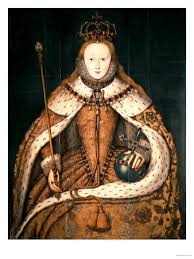
eliz cornation
Elizabeth in her Coronation Robes, less than a year after her interview with Pope

To complete the inquiry and perhaps to put her stamp on the response which Elizabeth must have known was being sent to her sister, she wrote a letter to Mary.  The letter that follows comes to us from the historian Gregorio Leti’s sources. 

“Madame, my dear Sister, However deeply I may
have fallen into disgrace with your Majesty, I have
always felt that you were so just and good that I
have never imputed the cause to anything but my
own ill-fortune. And even if my troubles had been a
thousand times greater they would have been incapable
of removing from my heart the loyalty and respect
which I owe to your Majesty. The ties of blood by
which we are united make me devotedly attached to
your interests, and I am ever inspired by a perfect
submission to the Royal and Sovereign authority of
your Majesty. The answer which I gave to the
Swedish ambassador is an evidence of my obedience;
I could not have replied in any other manner without
failing in my duty to you. But the thanks, which
you have been pleased to send me by Mr. Pope, is
only a part of your generous kindness, which has
filled me with affection and gratitude for you. I can
assure you, Madame, that since I have been old
enough to reason, I have had no other thought in my
heart for you except the love which one owes to a
sister, and, even more, the profound respect which
is due to a mistress and a queen. My feelings
will never change, and I should welcome, with
much pleasure, opportunities of showing you that I
am your Majesty’s very obedient servant and sister,
ELIZABETH” (Queen Elizabeth I 239).

Phantom Pregnancy of 1558—Its Foundation from 1556

“Philip was forced to acknowledge defeat” (Queen Elizabeth I 235).  Elizabeth had evaded his attempts to influence her to wed.  She remained in the background under the watchful eye of Sir Thomas Pope at Hatfield while the queen harbored hopes of another pregnancy.  Philip’s brief visit to England in the spring of 1557 to untangle the Savoy and surprise Swedish marriage proposals and ask for military assistance was enough to raise the hopes of Mary that she was expecting a child.  Responses by the principal parties, the Court and even the international diplomatic world to Mary’s declared pregnancy of 1557 were cemented in the events of 1556.

Back in 1556 Simon Renard kept Charles V informed of the minute details of Mary’s pregnancy telling the emperor “that one cannot doubt that she is with child. A certain sign of this is the state of the breasts, and that the child moves. Then there is the increase of the girth, the hardening of the breasts and the fact that they distill” (Tyler XIII June 1555 217).

Shortly thereafter Renard had to let the expectant grandfather know the reason he had not written to him with the good news.  Apparently the Queen’s “doctors and ladies have proved to be out in their calculations by about two months, and it now appears that she will not be delivered before eight or ten days from now” (Tyler XIII June 1555 216).

Of one thing Renard was certain, “everything in this kingdom depends on the Queen’s safe deliverance.” He was incredulous “how the delay in the Queen’s deliverance encourages the heretics to slander and put about false rumours; some say that she is not with child at all…. Those whom we have trusted inspire me with the most misgivings as to their loyalty. Nothing appears to be certain, and I am more disturbed by what I see going on than ever before” (Tyler XIII June 1555 216).  The Ambassador was concerned for Hapsburg and Catholic interests as members of the Privy Council were showing “an increasing amount of boldness and evil intentions” indicating a possible warming to the French (Tyler XIII June 1555 216).

These passages, except for the change of name and dates, could have been written in 1558.   Philip had left England to lead his troop in the war against France but dutifully sent Count de Feria to Mary “to congratulate her on the announcement that she had sent him of her new hopes of an heir to the throne hopes which he probably knew to be illusory, though he so far humoured her as to say that her letter contained the best news that he had heard since the loss of Calais” (Queen Elizabeth I 239.

Upon their marriage Mary was 37 years old, eleven years older than Philip.  She did not wear those years well.  Years of stress, worry and ill-health had taken their toll on her. Now, several years into their marriage with one delusionary pregnancy behind her, chances were this would be too.  Philip recognized her to be mortally ill since he had been out of the country for over a year and would have noticed the marked difference in her health that those close to home may have not detected.  When he was back in Brussels he wrote to his sister and speculated what he “must do in England, in the event either of the Queen’s survival or of her death, for these are questions of the greatest importance, on which the welfare of my realms depend” (Tyler November 1558 502).

bloody mary
Queen Mary I

In the summer the Queen was clearly becoming weaker and weaker.  “It was clear that there was no pregnancy” (Whitelock 327).  By the end of October it “became apparent to everyone, Mary included, that she was not going to survive” (Porter 403).

Queen Mary died November 17, 1558.  Foxe’s narrated from information he received from Rees Mansell, a gentleman of Mary’s privy chamber, that Queen Mary at “about three or four o’clock in the morning, yielded life to nature, and her kingdom to Queen Elizabeth her sister.  As touching the manner of whose death, some say that she died of a tympany, some (by her much sighing before her death) supposed she died of thought and sorrow.  Whereupon her council, seeing her sighing, and desirous to know the cause, to the end they might minister the more ready consolation unto her, feared, as they said, that she took that thought for the king’s Majesty her husband, which was gone from her.  To whom she answering again, ‘Indeed,’ said she, ‘that may be one cause, but that is not the greatest wound that pierceth my oppressed mind:’ but what that was, she would not express to them.  Albeit, afterward, she opened the matter more plainly to Master Rise and Mistress Clarencius (if it be true that they told me, which heard it of Master Rise himself); who then, being most familiar with her, and most bold about her, told her, that they feared she took thought for King Philip’s departing from her. ‘Not that only,’ said she, ‘but when I am dead and opened, you shall find Calais lying in my heart.’  And here an end of Queen Mary” (Foxe 330).

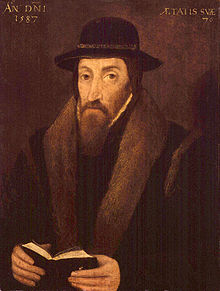
John_Foxe
John Foxe

While Philip, the historic records shows, was courteous and gentlemanly toward her, affection did not seem to run too deep.  In the midst of a business letter to his sister, Joanna of Austria, Princess Dowager of Portugal, Regent of Spain, Philip announced the death of his wife, Queen Mary concluding, “I felt a reasonable regret for her death” (Tyler November 1558 502).  Maybe he was ‘made out of iron and stone.’

For references, please refer to the blog entry “Two’s Company, Three’s a Crowd: Part I.”
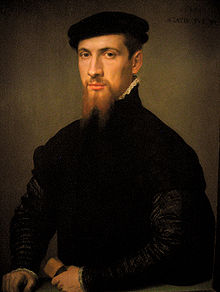
Two’s Company, Three’s a Crowd: Part II

Two’s Company, Three’s a Crowd: Part II

To understand the relationship between Elizabeth Regina and Philip II, a study must be made of the events of their association and the outcomes.  These include two attempts to place Elizabeth on the throne during Mary’s reign; the role Philip played in how Elizabeth was treated in the aftermath of each rebellion; and Mary’s view of her sister’s place in the succession.

Wyatt Rebellion, 1554
Sir Thomas Wyatt was the leader of a rebellion instigated in early 1554 by Mary’s proposed marriage to Philip of Spain.  Once she became queen, Mary repealed the act which declared her parents’ marriage invalid and herself illegitimate.  She was, as queen, a highly eligible match even though she was 37, certainly middle-aged in that era.  She assured Charles V she would be guided by him in her selection of husband, and low and behold his son, Philip, a widower at 26, was the most eligible prince in Catholic Europe.  Mary was determined to marry him.

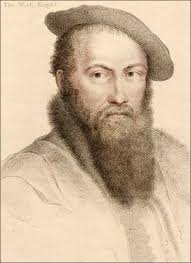
thomas wyatt
Sir Thomas Wyatt

The Wyatt Rebellion caused her to take decisive action.  She went to the Guildhall and gave a speech to the populace assuring them that she married Philip only with the consent of her councilors and that she was firstly married to her kingdom.

Wyatt did enter London; Mary sent her troops after him.  She did not flee and, while she was praying for her country’s safety, Wyatt was captured.  The rebel said he took action being “persuaded, that by the marriage of the Prince of Spain, the second person of this realm, and next heir to the crown, should have been in danger; and I, being a free-born man, should, with my country, have been brought into bondage and servitude of aliens and strangers” (Strype 132).  Rebellion was saving England from the Catholic scourge by ‘the second person of this realm.’  Thus, Elizabeth was implicated although Wyatt never named her during his interrogations or on the scaffold.  Elizabeth was sent to the Tower for two months where she was held prisoner, questioned and intimidated.     

bloody mary     elizabeth 1 by scrouts
  Mary I                                           Princess Elizabeth 

Simon Renard, Ambassador to Spain, wrote to his sovereign, Charles V, 22 March 1554 that there was disagreement in the Council when “it was proposed to throw the Lady Elizabeth into the Tower, the Council expressed a wish to know exactly the reason, and the upshot was that the heretics combined against the Chancellor, and stuck to it that the law of England would not allow of such a measure because there was not sufficient evidence against her, that her rank must be considered and that she might perfectly well be confined elsewhere than in the Tower.”  Renard relayed that no one would “accept the responsibility of taking custody of her.”  Because of the councilors shying away from taking charge of Elizabeth, they “decided to conduct her to the Tower last Saturday, by river and not through the streets; but it did not happen that day, because when the tide was rising Elizabeth prayed to be allowed to speak to the Queen, saying the order could not have been given with her knowledge, but merely proceeded from the Chancellor’s hatred of her. If she could not speak to the Queen, she begged to be allowed to write to her. This was granted, and while she was writing the tide rose so high that it was no longer possible to pass under London bridge, and they had to wait till the morrow” (Tyler XII March).

Simon_Renard    charles v
  Simon Renard                                    A Youthful Charles V

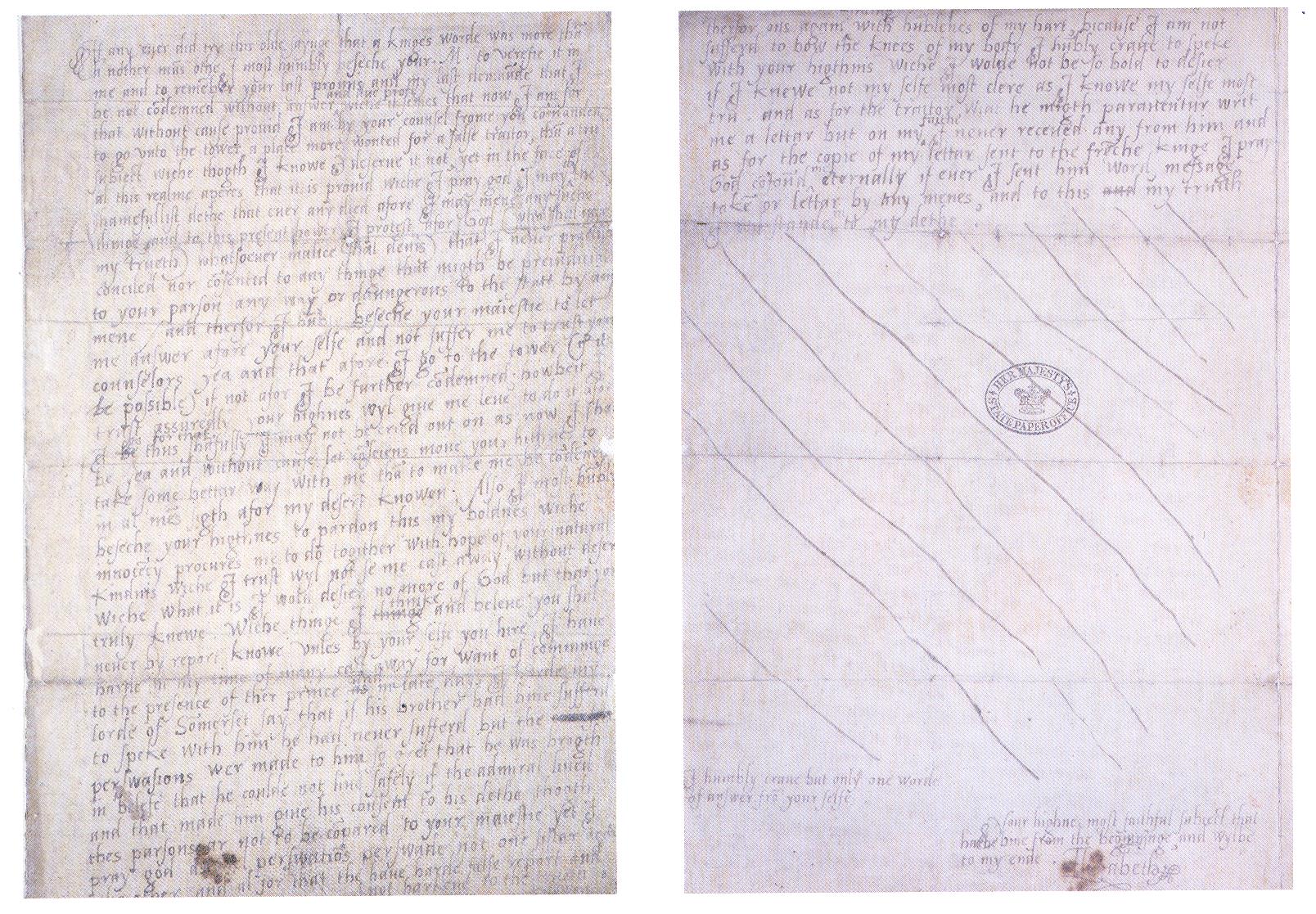
Elizabeth had achieved her purposes: she had postponed her imprisonment in the Tower and had written to her sister.  This letter of March 16, 1554, one of Elizabeth’s most famous, was a marvel how she handled her sister and logically argued her innocence while writing under distressing circumstances. 

Elizabeth beseeched Mary to remember her agreement to Elizabeth’s request “That I be not condemned without answer and due proof.” Elizabeth wanted her sister to know that “I am by your Council from you commanded to go unto the Tower, a place more wonted for a false traitor than a true subject.”  Although she bravely declared that she will go and be proved innocent, she pledged to her sister “I protest afore God that I never practiced, counseled, nor consented to anything that might be prejudicial to your person any way or dangerous to the state by any mean.”  Elizabeth appealed for an opportunity to meet with the Queen to tell her in person of her innocence and asked her sister to pardon her boldness, excusing her actions “which innocency procures me to do, together with the hope of your natural kindness.…”  The evidence of a letter written by Wyatt is addressed by logically stating “he might peradventure write me a letter, but on my faith I never received any from him.”  Elizabeth completed the letter by making diagonal lines across the bottom so that nothing could be inserted and signed herself “Your highness’ most faithful subject that hath been from the beginning and will be to my end, Elizabeth”   (Marcus 41-42). 

diagonal letters 001
   The letter Elizabeth wrote to Mary in March of 1554

Her collaboration in the rebellion was never proven.  Renard suggests that Gardiner “held documentary evidence of her [Elizabeth’s] active interest in the plot, but that he destroyed this because it also involved young Courtenay” (Queen Elizabeth 110).  Not having direct proof of her sister’s guilt, Mary was reluctant to condemn Elizabeth and so  released her to house arrest.  John Foxe informed “The xix daye of Maye, the Ladye Elizabeth, Sister to the Queene, was brought oute of the Tower, and committed to the kepyng of Syr Henry Benifielde… shewed himself more harde and strayte unto her, then eyther cause was geven of her parte, or reason of his owne parte.”  Foxe showed the surprise not in Bedingfield’s  bad treatment but in the benevolence shown by Elizabeth once she came to the throne.  Praising her for not taking revenge as other monarchs “oftentimes requited lesse offences with losse of life,” Foxe explained that Elizabeth did not deprive Bedingfield of his liberty “save only that he was restrained  for not comming to the court” (Foxe V 1072).

StephenGardiner    John_Foxe
  Stephen Gardiner                                               John Foxe

When she was released from Woodstock, it was to come to Court to witness the birth of Mary’s heir.  Sources differ on when Mary’s pregnancy was officially announced with some historians, such as Jasper Ridley, claiming it was in the spring of 1555 while we have an official document from January.  The Doge Francesco Venier of Venice did send his Ambassador Giovanni Michiel instructions 5 January 1555 to congratulate the King and Queen on the “certainty now obtained of the Queen giving an heir to the realm” (Brown VI January 5).  Further exclamations were extended for this “auspicious and desired event” concluding this was a “great gift conferred on the whole of Christendom” (Brown VI January  6). 

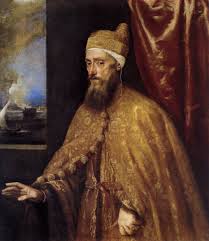
venier doge
Francesco Venier, Doge of Venice

Regardless of when it was officially announced, the impending event did affect Elizabeth.  On 29 April 1555, Michiel reported to the Doge, “that day or on the morrow Elizabeth Tudor was to arrive at Hampton Court from Woodstock.” Then on the 6th of May he informed the Venetian officials that when Elizabeth “appeared she was neither met nor received by anyone, but was placed in the apartment lately inhabited by the Duke of Alva, where she lives in retirement, not having been seen by any one, save once or twice by their Majesties, by private stairs” (Brown VIPreface 16).  

Elizabeth was housed with a “certain Sir Thomas Pope, a rich and grave gentleman, of good name, both for conduct and religion; the Queen having appointed him Miladi’s governor. I am told …they also assigned her a widow gentlewoman, as governess, in lieu of her own who is a prisoner, she herself likewise may be also said to be in ward and custody, though in such decorous and honourable form as becoming” (Brown VI June 514). No ifs, ands or buts about it, Elizabeth was still under house arrest.   Elizabeth’s release is credited to Philip’s influence on Mary.  Philip realized without an heir born of Mary, Elizabeth would be the successor.  To preserve Hapsburg interests, Philip realized Elizabeth had to be married to a Catholic prince: the intended bridegroom was Emmanuel Philibert, Prince of Piedmont and titular Duke of Savoy. 

Philip had plans for Elizabeth.  Antoine de Noailles wrote to the Queen-Dowager of Scotland in September 1555 informing her of Elizabeth’s popularity and the fact that “his Grace, the said Lord King, has shown a friendly disposition for her, and he has written several letters to the Queen, his wife, commending the Princess to her care”  (Queen Elizabeth I 200).

Dudley Conspiracy, Late 1555 -1556

Another rebellion against the reign of Queen Mary began in December 1555.  In a letter to Sir William Petre, Secretary of State, dated January 21, 1556, Nicholas Wotton, Dean of Canterbury and English Ambassador to France, wrote of information he had gleaned from an informant.  There was a “plot against the Queen which he said was devised by some of the best in England, and so many were agreed thereupon that it was impossible but that it must take effect; that the matter had been in hand about a year ago.”  The conspirators’ intentions were not to kill her Majesty “but to deprive her of her estate…” Wotton “did not think it necessary to write thereof to her Majesty lest she might suddenly be troubled with it, and conceive some greater fear of it than were good for her to do.”  Petre was to inform the Queen when “it shall not disquiet her Majesty” (Turnbull 285-286).  Mary was disquieted though and fearful for her life. 

WilliamPetre       Nicholas_Wotton
    Sir William Petre                            Nicholas Wotton, Dean of Canterbury

Called the Dudley Conspiracy for the main instigator, Sir Henry Dudley (a distant relative to John Dudley, the executed Duke of Northumberland and Robert Dudley, the future favorite of Elizabeth), its purpose became clearer as the investigation continued.   Mary and Philip were to be deposed and replaced by Elizabeth with her consort being Edward Courtenay. 

Imprisoned during the time of Henry VIII, Courtenay spent 15 years in confinement.  Released upon Mary’s ascension to the throne, he was created 1st Earl of Devon and sent on several diplomatic missions.  His hopes of marriage to Mary fell flat when she espoused Philip.  Courtenay then turned his attention to Elizabeth obviously seeing marriage as his way to the throne.  After serving more time in the Tower for the Wyatt Rebellion, the Earl of Devon was exiled to Europe until his death in September of 1556.  He found acceptance in Venice where he became the focal point for further conspiracies such as the Dudley Rebellion.

EdwardCourtenayD1556
Edward Courtenay, 1st Earl of Devon

Several prominent supporters of the rebellion were Lord Thomas Howard, Sir Peter Killigrew, Henry Peckham and several members of the Throckmorton clan.  One cannot underestimate the organization of Dudley and his fellow conspirators.  They raised money, attempted to gain powerful allies such as the King of France and landed gentry, approached Courtenay and saturated England with anti-Catholic and anti-Spanish writings. It was subversive writings such as these that were found in the London residence of Kat Ashley, governess to Princess Elizabeth. 

Giovanni Michiel, Ambassador to England for Venice kept the Doge and the Venetian Senate informed of what was occurring.  Michiel reported on 2 June, “The number of persons imprisoned increases daily… Mistress [Katharine] Ashley was taken thither [to the Tower], she being the chief governess of Miladi Elizabeth, the arrest, together with that of three other domestics, having taken place in the country, 18 [Venetian] miles hence, even in the aforesaid Miladi’s own house [Hatfield], and where she at present resides, which has caused great general vexation.  I am told that they have all already confessed to having known about the conspiracy; so not having revealed it, were there nothing else against them, they may probably not quit the Tower alive, this alone subjecting them to capital punishment. This governess was also found in possession of those writings and scandalous books against the religion and against the King and Queen which were scattered about some months ago, and published all over the kingdom” (Brown VIJune 505).

katahsley
Kat Ashley

People close to Elizabeth knew about the plot — that has been well established.  How involved was Elizabeth? The only written link between her and the rebels occurred in February 1556 when Anne, Duke de Montmorency, Constable of France wrote to the French Ambassador, Antoine de Noailles that “above all restrain Madame Elizabeth from stirring at all in the affair of which you have written to me, for that would be to ruin everything” (Queen Elizabeth I 203).  Can this letter be seen as proof of Elizabeth’s willing cooperation with the Dudley plot?  Although it is damaging, it is not conclusive.  This could be a misinterpretation of information gathered by the Constable or wishful thinking. 

Constable of France
Anne, Duke de Montmorency, Constable of France

Noailles and King Henri II were implicated in the Dudley plot.  Because the international diplomatic scene had changed with the Vaucelles truce, Henri did not want to antagonize Charles and Philip so he “advised the conspirators to defer the execution of their plans” which they ignored (Acton 544).  The success of the plot depended on too many people and too many variables (this blog will not relay the details there are many sources available including contemporary diplomatic dispatches in the Calendar of State Papers-Venice Volume VI).  A conspirator, Thomas White, on staff at the Royal Exchequer was to ensure the robbery of funds to finance the conspiracy (Whitelock Mary Tudor 303).  Ambassador Michiel wondered if White came forward “either from hope of reward, or to exculpate himself… revealed the plot to Cardinal Pole” (Brown VI March 5 434).  White was rewarded as shown in the Originalia Roll (the fine roll sent to the Exchequer) for Mary and Philip because “of good and faithful service by our beloved servant, Thomas White, gentleman, in the late conspiracy against us, our crown and dignity attempted not long since by Henry Dudley and his accomplices” (Thoroton Society 52).  A known conspirator rewarded: what of Elizabeth? 

henri ii
King Henri II of France

Convinced that Elizabeth was aware of the plot, Mary sent her trusted courtier, Francesco Piamontese, to Brussels to consult with Philip on how to handle the situation.  Venetian Ambassador Michiel went further to explain that this issue was very sensitive because of Kat Ashley’s involvement “by reason of her grade with the “Signora,” who is held in universal esteem and consideration” (Brown VI June 505).  So not only is a trusted servant of Elizabeth’s in possession of seditious materials, it appears to be universally acknowledged that Elizabeth is very popular. Would it be wise to move against her too aggressively?  A tricky situation for Mary.

In June Michiel wrote to his superiors in Venice, “Finally, at the very hour when persons were departing, her chamberlain and the courier Francesco Piamontese returned” from Brussels to the Queen’s relief.  “As for many months the Queen has passed from one sorrow to another” (Brown VI June 525). 

So what was to become of Elizabeth?  What guidance had Philip given his wife concerning the suspicions of her sister?  What Mary received was pro-Hapsburgian advice. Despite Michiel’s predicitons, none of Elizabeth’s household members were executed nor was she punished. Although there was strong evidence that those around her were involved in treasonous activities (Kat Ashley being in posession of the seditious materials was enough cause for punishment beyond time in the Tower) and questions concerning what Elizabeth knew, any action against her would threaten her succession.  “There is little doubt that it was the King’s influence which prevented Elizabeth herself from being again arrested on this occasion and sent to the Tower with the four other members of her household.  It is difficult otherwise to account for Mary’s leniency” (Queen Elizabeth I 209).

tower of london
Tower of London

Hapsburg interests demanded that Elizabeth be heir to the throne of England over Mary, Queen of Scots.  Mary had the surest position of inheritance after Elizabeth and as the fiancé of the dauphin of France, could unite Scottish, French and English dominions and interests which would threaten the power of Spain. Hapsburg interests prevailed.  “Piamontese returned to London with an unequivocal message from the king: no further inquiries should be made into Elizabeth’s guilt, nor any suggestion made that her servants had been implicated in the plot with her authority” (Whitlock 307).  Philip was more than willing to be lenient with Elizabeth.  By 1556 few people believed that Mary would produce an heir and looked toward Elizabeth to be the next queen.  It probably was wise on the part of the councilors not to antagonize Elizabeth.  She was considered the preferred heir, and her smooth succession could halt potential civil conflict or French interference to place Mary Stuart on the throne—both good enough reasons to leave well-enough alone.

So, astoundingly, Elizabeth remained free.  Protestations of ignorance about her household’s activities were enough.  Mary probably did not believe her but allowed the stories that Elizabeth’s name had been used without authority to be circulated.  This blogger cannot help but feel for the position in which Mary was placed.  Her motto, ‘Truth, Daughter of Time,’ seemed to be jeopardized as she did her husband’s bidding; although, with most of Mary’s submissiveness it was up to a point. 

According to Michiel, in June of 1556 Mary sent two of her gentlemen, Sir Henry Hastings, and Sir H. Francis Englefield, to Elizabeth with a “message of good will…with a ring worth 400 ducats, and also to give her minute account of the cause of their arrest, to aquaint her with what they had hitherto deposed and confesssed, and to persaude her not to take amiss the removal from about her persons of similar folds, who subjected her to the danger of some evil suspicion; assuring her of the Queen’s good will and disposiiton, provided she continue to live becomingly, to Her Majesty’s liking.  Using in short loving and gracious expressions, to show her that she is neither neglected nor hated, but loved and esteemed by Her Majesty.  This message is considered most gracious by the whole kindom, everybody in general wishing her all ease and honour, and very greatly regretting any trouble she may incure; the proceeding having been not only necessary but profitable, to warn her of the licentious life led, especially in matters of religion, by her household” (Queen Elizabeth I 210).

henry hastings
  Henry Hastings 

Ambassador Michiel let on that Elizabeth’s household would be made up of persons the Queen believed to better serve her.  It is assumed Mary thought her sister guilty and urged Elizabeth “to keep so much the more to her duty, and together with her attendants behave the more cautiously” (Queen Elizabeth I 210).

Mary feigned that she believed Elizabeth had been in danger of “being thus clandestinely exposed to the manifest risk of infamy and ruin.” So, the solution was for the Queen to remodel Elizabeth’s household “in another form, and with a different sort of persons to those now in her service, replacing them by such as are entirely dependent on her Majesty; so that as her own proceedings and those of all such persons as enter or quit her abode will be most narrowly scanned” (Brown VIJune 505).

Assigned to Elizabeth’s household was “Sir Thomas Pope, a rich and grave gentleman, of good name, both for conduct and religion; the Queen having appointed him Miladi’s governor, and she having accepted him willingly, although he himself did his utmost to decline such a charge. I am told that besides this person, they also assigned her a widow gentlewoman, as governess, in lieu of her own who is a prisoner, so that at present having none but the Queen’s dependents about her person, she herself likewise may be also said to be in ward and custody, though in such decorous and honourable form as becoming” (Brown VI June 514). 

tpope
  Sir Thomas Pope

Pope was commissioned by Mary’s Council in July of 1556 to keep Elizabeth informed of the activities confessed by the Dudley conspirators “how little these men stick, by falsehood, and untruth, to compass their purpose; not letting, for that intent, to abuse the name of her Grace, or any others” (Queen Elizabeth I 213). 

Elizabeth did write to the Queen in careful phraseology about the information she had received from Pope.  “Of this I assure your majesty, though it be my part above the rest to bewail such things though my name had not been in them, yet it vexeth me too much …as to put me in any part of his [the devil] mischievous instigations.  And like as I have been your faithful subject from the beginning of your reign, so shall no wicked persons cause me to change to the end of my life.  And thus I commit your majesty to God’s tuition, whom I beseech long time to preserve … from Hatfield this present Sunday, the second day of August. Your majesty’s obedient subject and humble sister, Elizabeth” (Marcus 43-44).

For references, please refer to the blog entry “Two’s Company, Three’s a Crowd: Part I.”

Friend, Cousin, Brother? Part I

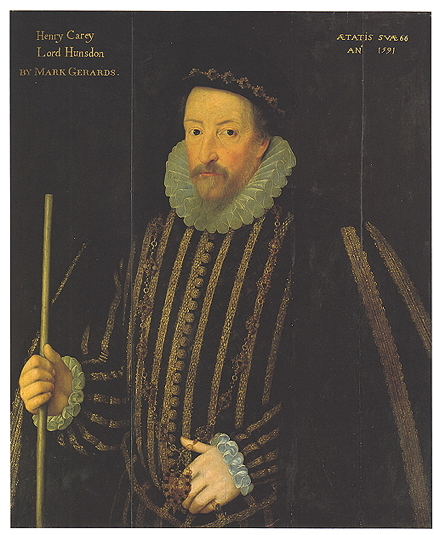
Henry Carey, Lord Hunsdon Part I

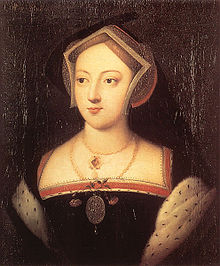
Henry Carey, Lord Hunsdon was born 4 March 1526 to Mary Boleyn and William Carey who married on 4 February 1520.  Mary was the eldest daughter of Thomas Boleyn, 1st Earl of Wiltshire and Lady Elizabeth Howard, eldest daughter of Thomas Howard, 2nd Duke of Norfolk. Mary was the sister to Anne Boleyn, second wife to Henry VIII.

henry carey
 Henry Carey, Lord Hunsdon

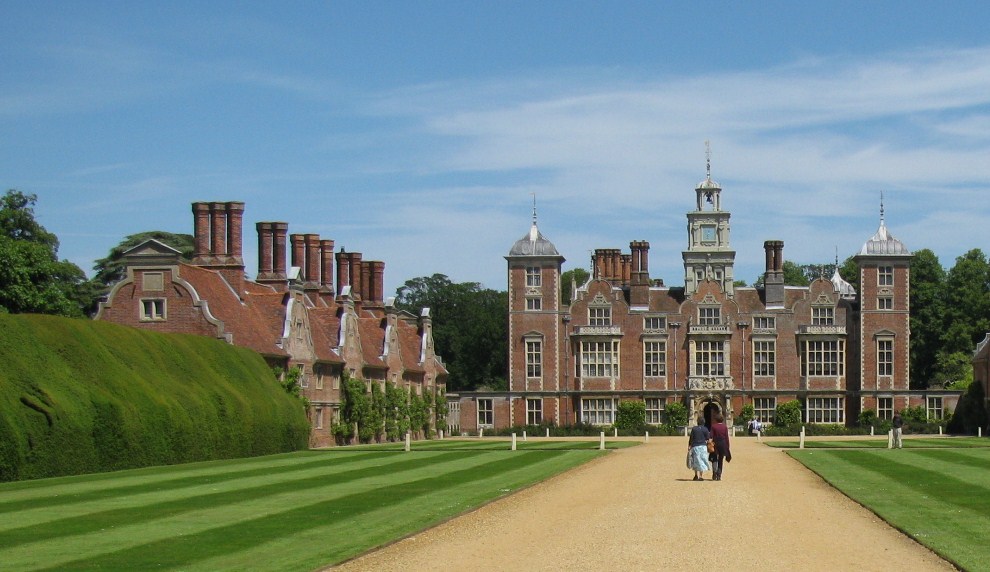
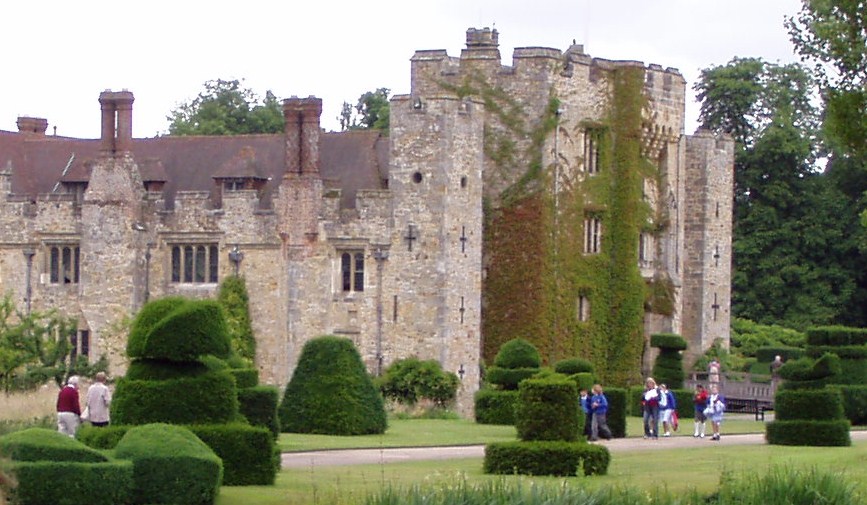
Mary Boleyn, was born most likely at Blickling Hall and reared at Hever Castle; with no evidence of an exact date for her birth most historians place it in the year 1499. Mary, tutored at home along with her siblings George and Anne, received a conventional education until 1514.  Her father arranged for her to become a maid-of-honor to Mary Tudor, sister to Henry VIII, who was soon to become the bride of King Louis XII of France. Mary Tudor was widowed shortly after her wedding and returned home. Mary Boleyn’s reputation through generations has implied affairs with French courtiers and even the new King of France Francis I.  Mary Boleyn became a maid-of-honor to Catherine of Aragon and shortly after wed Sir William Carey.  It was believed that she began an affair with King Henry around this time.  This was not a publicized liaison but the evidence is difficult to shift through.  Was the relationship not well-known at the time or was it suppressed later?  After Henry VIII had discarded Catherine due to the rise in his conscience of marrying the wife of his brother (against scripture Leviticus 20:21), could he have destroyed all evidence of an affair once he became determined to marry Anne?  If he had fathered children by Mary, would he also have repressed those facts? 

213 Welcome to my home
Blickling Hall June 2012

OLYMPUS DIGITAL CAMERA
Hever Castle 2007

Evidence is strong that Henry VIII did have an affair with Mary Boleyn.  Paul Friedmann relays that Dr. Ortiz, the Spanish theologian sent to Rome to assist the cause of Catherine of Aragon, “wrote to the empress, ‘that some time ago he [Henry] sent to ask his holiness for a dispensation to marry her, notwithstanding the affinity between them on account of his having committed adultery with her sister.’ In 1529 Charles V had already heard of the matter. Charles declared that Henry’s conscientious scruples did not seem to be justified, especially ‘if it were true, as his said Majesty had heard (although he himself would not positively affirm it), that the said king had kept company with the sister of her whom he now, it was stated, wanted to marry.’ In 1532, Eustache Chapuis speaks of the former adultery of Henry with Mary Boleyn as a well-known fact of which there can be no doubt. ‘Even if,’ he writes, ‘he could separate from the queen, he could not have her [Anne], for he has had to do with her sister.’ Such, in the main, are the arguments for the opinion that Mary Carey had been the mistress of Henry” (Friedmann 325-327).

Mary_Boleyn   William_Cary
Mary Boleyn Carey                               William Carey

Of course, there is the famous incident of Sir George Throgmorton speaking to the king of the rumor that Henry had improper relations with Anne’s mother and sister, and “Henry replied, ‘Never with the mother;’ and Cromwell, who was present, added, ‘Nor with the sister either.’” (Friedman 326).  Could even Henry VIII have been such a hypocrite to justify marriage to Anne Boleyn after he had discarded Catherine of Aragon for being the wife of his brother? One must remember, Henry desperately wanted to marry Anne.

Another rumor passed down through the centuries is that Henry Carey was the natural son of Henry VIII.  If this were true, would the king have recognized the boy as such?  After all, Henry had acknowledged Henry FitzRoy, the child he had with Elizabeth Blount, and rewarded him accordingly. The difference is the king did not want to marry Elizabeth Blount’s sister.  Would measures have been taken at the time to suppress the truth?  Even if Henry had acknowledged Mary’s child, would he have disposed of all official records two to three years later when he became infatuated with Anne?

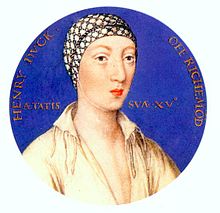
HenryFitzRoy
Henry FitzRoy

Allison Weir is adamant that Henry did not father Mary Boleyn Carey’s child (Weir Lady in the Tower 309-310). This blogger also wonders if Anne would have obligingly taken the wardship of Henry Carey when William Carey died if she thought he could be a threat to her own children as an illegitimate son to the king?  Very few contemporary sources mention this possibility.  John Haile*, vicar of Isleworth, wrote on April 20, 1535, that Morever, Mr. Skydmore dyd show to me yongge Master Care, saying that he was our suffren Lord the Kynge’s son by our suffren Lady the Qwyen’s syster, whom the Qwyen’s grace might not suffer to be yn the Cowrte” (Hoskins).

John_Hale_DSCN5606
John Haile 

Mary’s disgrace came in 1534 when she secretly married a soldier, William Stafford.  As a second son of a modestly wealthy landowner, William’s prospects were not great. Queen Anne was furious and banished her sister from Court.  After her siblings were executed in 1536, her parents died within a short time period.  As sole heir Mary then inherited some family property.  She lived comfortably and quietly until her death in July of 1543. 

thomas boleyn        elboleyn
Thomas Boleyn                          Believed to be Elizabeth Boleyn

When William Carey died of the sweating sickness 23 June 1528, Anne Bolyen was granted Henry’s wardship. He benefited enormously as Anne had him educated by “Nicholas Bourbon, a French humanist and other prominent educators” (Warnicke 148).  This patronage came to an end when Anne was executed in May of 1536; Henry was ten years old. 

Anne Morgan, the daughter of Sir Thomas Morgan and Anne Whitney, was his bride on 21 May 1545.  The couple would eventually have 12 children. In 1547, Henry was elected as a member of Parliament for Buckingham where he served for many years.  During the reign of Edward VI, he received several manors to provide a living for him and his family.  Soon after the accession of Elizabeth Regina, Henry received a knighthood (his wife was appointed as a Lady of the Privy Chamber) and was elevated to the peerage by letters patent, as Baron Hunsdon. Along with the peerage was a grant of the estate of Hunsdon in Hertfordshire and a pension of £4,000 a year “(according to the valuation in that age) in fair desmesnes, parks, and lands lying about it” (Fuller 47). 

anne morgan
Anne Morgan, Lady Hunsdon, portrait is displayed at Hatfield House

*John Haile was one of the first priests to die as a result of the Act of Supremacy (not acknowledging Henry VIII as Head of the Church).  He, along with several others, was hanged, drawn and quartered at Tyburn on 4 May 1535. Haile was beatified by Pope Leo XIII in 1886.

Henry Carey, Lord Hunsdon Part II will follow as the next published blog entry.

The Fourth Step-Mother of Elizabeth, Katherine Parr

The Fourth Step-Mother of Elizabeth, Katherine Parr
As discussed in an earlier blog entry, Catherine Howard, Henry VIII passed a law that required all future queens of England to have chaste pasts or be willing to confess any ‘indiscretions.’  Obviously, this eliminated many candidates.  Who would be free from scandal or brave enough to tell Henry if she was not?

Enter Katherine Parr, the daughter of Thomas and Maud Parr.  Maud, a lady-in-waiting to Queen Catherine of Aragon, was a highly intelligent and well-educated woman.  Queen Catherine placed her in charge of the education of many of the youngsters at Court. Her children, especially Katherine, benefited greatly from the Court tutors and developed a life-long love of learning.  Maud was widowed at the age of 25 and never remarried.  She concentrated her efforts on establishing good matches for her children and protecting her son’s inheritance.  In 1529 when Katherine was 16 or 17, she was married to Edward Borough.  Edward was in his early twenties when he died in 1533.  It is often confused that she married his grandfather, another Edward, perpetuating the myth of her marrying aged widowers. This blogger wonders if the confusion came because she would have resided in a multi-generational household perhaps with the grandfather-in-law as the head.

gains
The Borough family manor, Gainsborough Old Hall.

gbbimages
Gainsborough Old Hall

Maud Parr died the year after Katherine was widowed and it left the young woman basically independent.  Katherine arranged her own next marriage to John Neville, Lord Latimer of Snape Castle in Yorkshire, a man in his early forties.  The exact date is unknown but they married in 1534.  Lord Latimer had two children both of whom became very close to their young stepmother, especially the daughter, Margaret.  From the time of her marriage, Katherine had the responsibilities of the household.  Her responsibilities expanded to include the entire estate when Lord Latimer took an active role, on the side of the rebels, in the Pilgrimage of Grace.  As examples of her abilities, Katherine withheld a siege, protected the occupants of the household and managed, with the help of her brother William, to gain a pardon for Latimer.  King Henry did not hold it against Latimer and both Katherine and her husband were welcomed back to Court.

snape9
Snape Castle

It was while at Court, with Latimer ailing and soon dying, that Henry became aware of the thirty-year-old Lady Latimer.  Described as attractive but not pretty, Katherine always dressed impeccably, had the translucent skin that was so praised in Tudor times, auburn colored hair and a dignified bearing.

parrk
Katherine Parr by an unknown artist.  Displayed at Montacute House.

Thomas Wriothesley, Lord Chancellor, wrote to the Duke of Norfolk that there was “a woman, in my judgement, for certain virtue, wisdom and gentleness, most meet for his Highness.  And sure I am that his Majesty had never a wife more agreeable to his heart than she is.  The Lord grant them long life and much joy together” (Weir 498).  Praise indeed considering he later tried to have her arrested and executed.

Eustace Chapuys, the Spanish Ambassador, reported to Charles V that Katherine “is graceful and of cheerful countenance; and is praised for her virtue” (Hume 248).  He continued that she was not “so beautiful” and that there was “no hope of issue, seeing that she had none with her two former husbands” (Gairdner XVIII 954).  Charming and amiable, she was pleasant to nobles and servants alike.  Sensible and efficient, a good conversationalist, experienced with step-children, and having aided an ailing spouse, Katherine seemed ideal to become the sixth wife of Henry VIII.

parrhorenbout
Miniature of Katherine by Lucas Horenbout, 1544

kp5
Held in the possession of the National Portrait Gallery, this portrait had been mistakenly identified as Lady Jane Grey for many years.  Done in 1545 it is now credited to be Katherine Parr.

Interestingly, she was the only one of Henry’s wives who did not want to become his next bride. Historians believe this for a couple of reasons: she was intelligent enough to see the dangers involved; and she had developed an interest in Thomas Seymour, Lord High Admiral.  Once Henry proposed, Katherine accepted her fate and became determined to make the best of the situation.  Most commentators now believe she saw her chance to promote a more liberal religious agenda and the betterment of her family.  As was Henry’s custom, his bride’s family advanced along with her elevation.  Katherine’s brother, William Parr, was granted the Earldom of Essex in his own right.  Her sister Ann and brother-in-law Sir William Herbert gained positions at Court as did members of her extended family, the Throckmortons and her step-daughter Margaret Neville.

parr by holbien
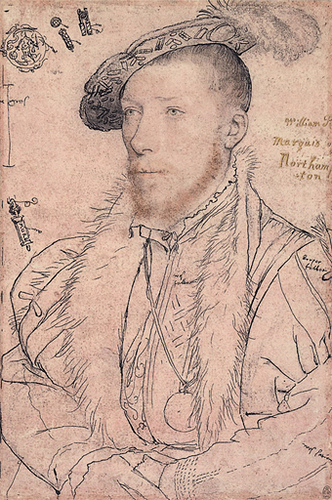
William Parr in a sketch by Hans Holbein.

As Queen, Katherine used her influence to encourage the King to bring to Court his children from their respective households.  She felt they should be there, beyond the wedding celebrations, and see their father more.  Henry gave his approval and Katherine wrote them all to come.  Agnes Strickland assures that Katherine, who knew Princess Mary well, was also “acquainted with Elizabeth before she became queen, and greatly admired her wit and manners” (Strickland Volume 4 14).

A letter from 10-year-old Elizabeth survives in which she wrote, flowing with gratitude, to acknowledge what Katherine had done.

“Madame, The affection that you have testified in wishing that I should be suffered to be with you in the Court, and requesting this of the King my father, with so much earnestness, is a proof of your goodness.  
So great a mark of your tenderness for me obliges me to examine myself a little, to see if I can find anything in me that can merit it, but I can find nothing but a great zeal and devotion to the service of your Majesty.  But as that zeal has not been called into action so as to manifest itself, I see well tha tit is only the greatness of soul in your Majesty which makes you do me this honour, and this redoubles my zeal towards your Majesty.  I can assure you also that my conduct will be such that you shall never have cause to complain of hainv done me the honour of calling me to you; at least, I will make it my constant care that I do nothing but with a design to show always my obedience and respect.  I await with  much iimpatience the orders of the King my father for the accomplishment of the happiness for which I sigh, and I remain with much submission, your Majesty’s very dear Elizabeth” (Queen Elizabeth I 21-22).

There is an interesting interlude in the chronology of Elizabeth’s life between the summers of 1543 and 1544.  Most historians (Linda Porter is an exception) believe Elizabeth offended her father in some way and was banished to Ashridge near the Hertfordshire-Buckinghamshire border—near Berkhamsted where the Queen held the lordship of the manor. Because Katherine kept in contact with Elizabeth and she sent her other step-daughter, Margaret Neville, to act “as liaison between her step-mother and step-sister” it appears as if the youngster had not offended her (James 172-173).  Elizabeth, obviously, had no ill-feelings as she wrote to Katherine that “Inimical Fourtune …has deprived me for a whole year of your most illustrious presence….”  Elizabeth conveyed to Katherine her belief that she was “not only bound to serve but also to revere you with daughterly love …”(Marcus 5).
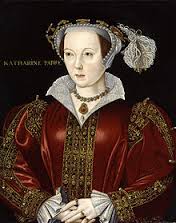
Henry was abroad, Katherine was Regent and Elizabeth was persistent.  By petitioning her step-mother to speak to her father, who was on military campaign, Elizabeth was able to end “this my exile” (Marcus 5). Katherine successfully convinced the King to allow Elizabeth to join her at Hampton Court in late July of 1544 cementing her step-daughter’s affection.  Elizabeth seemed secure in Katherine’s affection although she never took it for granted as she wrote “I know that I have your love and that you have not forgotten me for if your grace had not a good opinion of me you would not have offered friendship to me that way” (James 136).
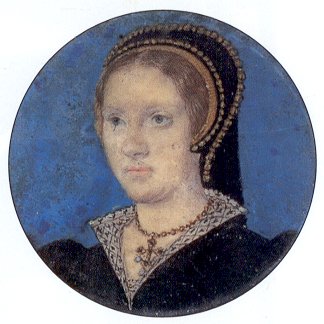
exile letter 001

Fragment of the letter to Katherine from 10-year-old Elizabeth.  Written in Italian.  On line five you can make out the reference to her exile [mio exilio].

The regard Elizabeth had for Katherine was also shown in the New Year’s Day gift that she presented to her in December of 1544.  Elizabeth translated, in italic script, Marguerite of Navarre’s Le Miroir de l’ame pecheresse [The Mirror of a Sinful Soul].  The gift itself was a tribute to her spiritual leanings, her education and her affection.  The dedication was “To our most noble and virtuous Queen Katherine, Elizabeth, her humble daughter, wisheth perpetual felicity and everlasting joy.” In the accompanying letter Elizabeth hoped that Katherine would “rub out, polish, and mend (or else cause to mend) the words (or rather the order of my writing), the which I know in many places to be rude and nothing done as it should be” (Marcus 6-7).  This shows the trust Elizabeth had for Katherine as a loving mentor and the respect she had for Katherine’s intellectual abilities.

bookblue
Elizabeth’s translation of The Mirror of the Sinful Soul with a cover of embroidery she worked herself.  Notice Katherine’s initials in the center.

The next year, Elizabeth translated Katherine’s book, Prayers or Meditations, into French, Italian and Latin for her father (James 137).  One would suspect that Elizabeth would not want to upset Henry nor jeopardize Katherine by presenting to him materials that would be contrary to his religious beliefs.
gift
Gift to Henry VIII from Elizabeth.  A translation of the work, Prayers or Meditations, by Katherine Parr in multiple languages and covered in embroidery by Elizabeth. 

When Henry had gone to France in July 1544, he appointed Katherine his Regent. This certainly was an expression of his respect and affection for her.  Lord Chancellor Wriothesley, Archbishop Cranmer, Lord Hertford, Dr. Thomas Thirlby and William Petre were her advisors.  Not a woman to be gainstayed, in September 1544, Katherine, dealing with her Regency Council, let it be known that exasperation had set in and she was “wearied with their continual clamor” (Gairdner XIX 231).

Thomas Wriothesley, despite his earlier praise for Katherine, grew to distrust her as he was concerned about the liberal religious views she held and strong personality.  Early in 1544 Katherine had written in the Tenth Psalm of her text Psalms or Prayers taken out of the Holy Scripture this thought-provoking sentence “I am so vexed that I am utterly weary; help me against them that lie in wait for me” (Parr 318).  This has been tagged as a response to the Catholic attempts to discredit her, led by Wriothesley and Stephen Gardiner, Bishop of Winchester, because of her evangelical leanings.

1stEarlOfSouthampton
Thomas Wriothesley, 1st Earl of Southampton, Lord Chancellor

The unease of these two men reached a peak in the summer of 1546 and led to their attempt to arrest Katherine.  They convinced Henry that she harbored radical leanings and fueled his irritation of the recent views Katherine had expressed. Wriothesley lined up the arrest warrant, gathered forty yeomen of the guard and descended upon Katherine while she was in the Whitehall gardens with Henry.

Little did Wriothesley know, Katherine had been warned and had hastened to Henry to apologize for seeming to overstep her boundaries.  She assured the King that she had debated him to distract him from the pain in his leg and to take instruction from him on the proper theological discourse, not to lecture him. Katherine supposedly said that she felt it “preposterous for a woman to instruct her lord” (Strickland III 246). Henry was certainly ready to believe her.  Upon the conclusion of Katherine’s assurances, Henry replied, “And is it so, sweetheart?  Then we are perfect friends” (Strickland III 246).

When Wriothesley came to arrest her, Henry gave him a dressing down and sent him off.  Obviously, this was a very close call for Katherine and she never again conveyed any views counter to the Establishment.

One area which Katherine thwarted convention was in her encouragement of Elizabeth’s education.  The resulting life-long influence cannot be undervalued.  For over four years, although they did not live together that entire time, a close bond was formed. This intelligent and capable woman encouraged and loved this exceptional child.  By taking charge of Elizabeth’s education, both book learning and practical application (Elizabeth witnessed Katherine’s Regency), Katherine influenced the reign of her step-daughter.

Elizabeth received an excellent education.  She was educated alongside her brother for many years until it was decided by Katherine to employ a tutor solely for the princess. This would have been an exception rather than the rule in 16th century England although there were many highly educated women of the previous generation:  Anne Boleyn, Mary More and, of course, Katherine Parr.  Katherine’s deep and genuine love of learning makes her so admirable as an interesting, remarkable woman.

Lamentations1
Copy of Katherine’s text, Lamentations of a Sinner, published in 1547 with her signature.
signature

As Maud Parr’s daughter, a woman who had set up a school at Court and bequeathed money in her will for education, Katherine’s taste for learning was formed young and continued throughout her life.  Margaret Neville, her step-daugher, said in the spring of 1545 “I am never able to render to her grace sufficient thanks for the goodly education and tender love and bountiful goodness which I have evermore found in her highness….”  Prince Edward pretty much said the same thing in 1546.  He thanked Katherine for her “tender and loving letters” and for the “encouragement to go forward in such things wherein your grace beareth me on hand that I am already entered” (James 141).  And Elizabeth praised Katherine for her “fervent zeal your Highness hath towards all godly learning” (Wood 178).

The educations of Edward and Elizabeth were certainly guided by Katherine Parr. Many of their tutors were committed Protestants and humanists.  The tutors’ willingness to educate the princess in the exacting disciplines was telling.  With Katherine also in charge of Jane Grey’s education, her patronage and direction helped formulate two of the sharpest minds of the era—both belonging to females.  Of note is a rare difference of opinion between Katherine and her step-daughter.  In early 1548, Elizabeth’s tutor, William Grindal died.  Katherine wanted to replace him with Francis Goldsmith but Elizabeth wanted Roger Ascham, a fellow from St. John’s College in Cambridge who was well-acquainted with Katherine (James 322).  Writing to Edward’s tutor, Sir John Cheke, Ascham expressed his “uneasy at being the cause of disagreement between the queen and her stepdaughter on such an important matter, actually counseled Elizabeth to accept Goldsmith” (Porter 306). It probably did not take much persuasion, as Ascham became the royal tutor.

roger asham                  dowmmnload

Roger Ascham                                            Sir John Cheke

Elizabeth is a product of Katherine Parr.  The future Queen Regina’s education, religious beliefs, and open-mindedness stem from the guidance of her step-mother. Her devotion was reflected in 1582, when Thomas Bentley’s work, The Monument of Matrons, depicted Katherine Parr as one of the virtuous Queens of history (Fraser 405). Elizabeth’s actions of not forgetting the woman who had permitted her to see the possibilities of rule and to establish England as a cultural center, was certainly a tribute.

The relationship of Elizabeth and Katherine cannot be revealed without the discussion of Thomas Seymour.  This blogger does not want to expend too much time on this topic for all its relevance because of its worthiness of an entire entry on its own.  Thomas Seymour, as brother-in-law to King Henry VIII and uncle to the future king, held prominent positions at Court.  He was there during the times that Katherine Parr was and they began a romance before Henry VIII turned his attention to her.  Upon Henry’s death in January of 1547, the sensible Katherine allowed Seymour to talk her into marriage well before the conventional time-frame of mourning was over.  Katherine had married him for love and as a last chance of happiness.

Seymour Thomas
Thomas Seymour, Lord High Admiral

Little did Katherine know that Seymour had had designs on Elizabeth as a possible wife.  He never quite seemed to relinquish the idea and for her own safety, Elizabeth was removed from her step-mother’s household at Chelsea in 1548 to the care of Anthony Denny and his wife at Cheshunt.  Katherine was pregnant and Seymour could not keep in check his, shall it be said, emotional immaturity and grandiose aspirations.

The story leads to Sudeley Castle where Katherine gave birth to a baby girl, Mary, and died days later of puerperal fever.  She is buried in the chapel in the Castle grounds.

sudeley
Sudeley Castle

burial
Katherine Parr was interred in St. Mary’s Chapel on the grounds of Sudeley under this tomb in the 1800s.

When Elizabeth left Chelsea for her own residence of Cheston, Katherine, according to Gregorio Leti, told her “God has given you great qualities.  Cultivate them always, and labour to improve them, for I believe you are destined by Heaven to be Queen of England” (Strickland 26).

References

Erickson, Carolly. The First Elizabeth. New York: Summit Books. 1983. Print.

Fraser, Antonia.  The Wives of Henry VIII.  New York:  Alfred A. Knopf, 1992. Print.

Gairdner, James, ed. Letters and Papers, Foreign and Domestic, of the Reign of Henry VIII. Vol. 19. London: Longman, Green, Longman & Roberts, 1888. Google Books. Web. 4 May 2013..

Haselkorn, Anne M., and Betty Travitsky. The Renaissance Englishwoman in Print: Counterbalancing the Canon. Amherst: University of Massachusetts, 1990. Google Books. Web. 27 May 2013.

Hibbert, Christopher.  The Virgin Queen: Elizabeth I, Genius of the Golden Age.  New York: Addison-Wesley Publishing Company, Inc., 1991.  Print.

Hume, Martin A. Sharp. Chronicle of King Henry the Eighth of England: Being a Contemporary Record of Some of the Principal Events of the Reigns of Henry VIII and Edward VI, Written in Spanish by an Unknown Hand ; Translated, with Notes and Introduction, by Martin A. Sharp Hume. London: George Belland Sons, 1889. Internet Archive. Web. 4 May 2013.

James, Susan. Catherine Parr:  Henry VIII’s Last Love. Stroud, Gloucestershire: Tempus Publishing. 2008. Print.

James, Susan.  Kateryn Parr:  The Making of a Queen. Brookfield, USA: Ashgate, 1999. Print.

Lindsey, Karen.  Divorced, Beheaded, Survived:  A Feminist Reinterpretation of the Wives of Henry VIII.  Reading, Massachusetts:  Addison-WESLEY Publishing Company, 1995. Print.

Loades, David. The Chronicles of the Tudor Queens.  Stroud, Gloucestershire: Sutton Publishing, 2002. Print.

Marcus, Leah S. et al., eds. Elizabeth I: The Collected Works. Chicago: University of Chicago Press, 2002. Print.

McCaffrey  MacCaffrey, Wallace. Elizabeth I. London: E. Arnold. 1993. Print.

Neale, Neale, J. E. Queen Elizabeth I. Garden City, NY: Doubleday, 1957. Print.

Parr, Katherine, and Janel Mueller. Katherine Parr: Complete Works and Correspondence. Chicago, IL [etc.: University of Chicago, 2011. Google Books. Web. 23 May 2013.

Porter, Linda.  Katherine the Queen:  The Remarkable Life of Katherine Parr.  London:  McMillian, 2010. Print.

Pryor, Felix.  Elizabeth I, Her Life in Letters.  Berkeley, California: University of           California Press, 2003.  Print.

Queen Elizabeth I, Frank Mumby, and R. S. Rait. The Girlhood of Queen Elizabeth: A Narrative in Contemporary Letters. Boston: Houghton Mifflin, 1909. Google Books. Web. 9 May 2013.

Ridley Ridley, Jasper. Elizabeth I: The Shrewdness of Virtue.  New York: Fromm International Publishing Corporation, 1989.  Print.

Somerset Somerset, Anne. Elizabeth I.  New York: Alfred A. Knopf, 1991. Print.

Starkey, David.  Six Wives: The Queens of Henry VIII.  London:  Chatto & Windus, 2003.  Print.

Strickland, Agnes, and Elisabeth Strickland. Lives of the Queens of England, from the Norman Conquest. Vol. III. London: Colburn & Co. Publishers, 1851. Google Books. Web. 7 May 2013.

Strickland, Agnes, and Elisabeth Strickland. Lives of the Queens of England, from the Norman Conquest. Vol. IV. London: Longmans, Green, 1857. Google Books. Web. 2 May 2013.

Strickland, Agnes, and Elisabeth Strickland. Lives of the Queens of England, from the Norman Conquest; with Anecdotes of Their Courts, Now First Published from Official Records and Other Authentic Documents, Private as Well as Public. Vol. VI. London: Henry Colburn, 1844. Google Books. Web. 15 Mar. 2013.

Tytler, Sarah.  Tudor Queens and Princesses.  New York:  Barnes and Noble, 1993. Print.

Weir, Alison. The Children of Henry VII.  New York:  Ballantine Books, 1996. Print

Weir, Alison.  The Six Wives of Henry VIII.  New York: Grove Weidenfeld, 1991. Print.

Wood, Mary Anne Everett. Letters of Royal and Illustrious Ladies of Great Britain: From the Commencement of the Twelfth Century to the Close of the Reign of Queen Mary : Edited, Chiefly from the Originals in the State Paper Office, the Tower of London, the British Museum and Other State Archives. Vol. II. London: Henry. Colburn, 1846. Google Books. Web. 12 May 2013.

The Third Step-Mother to Elizabeth, Catherine Howard

The Third Step-Mother to Elizabeth, Catherine Howard

Henry was infatuated with Catherine Howard.  At Oatlands the two were married on July 28 a couple of weeks after Henry’s marriage to Anne of Cleves was dissolved. The King kept it a secret for many days because he wanted to enjoy his bride before Court etiquette interfered.

He showered his young bride with gifts, gowns, jewels, anything she wanted and did any act which would show his affection.  Henry granted Catherine all the lands that had been Queen Jane’s and even had a gold half-crown coin minted to commemorate his marriage to this perfection of womanhood with Henricus VIII, Rutilans rosa sine spina; “Henry VIII, the shining rose without a thorn” (Dye 771).  Henry also granted her political protection by passing through parliament the Queen Consort Act of 1540.  This legislation allowed the Queen to “act as a woman sole, without the consent of the King’s Highness” (Weir 436).  Perhaps Henry felt safe in her devotion as Catherine adopted as her device, Non aultre volontè que le sinne; “No other will than his.”

coinrosaspina2
Gold Crown Coin with Henricus VIII, Rutilans rosa sine spina —the reverse the crown shield of the royal coat of arms.  

Many observers did not think he showed such generosity or affection to his other wives.  The French Ambassador, Charles de Marillac reported in early September that the “King is so amourous of her that he cannot treat her well enough and caresses her more than he did the others”  (Gairdner XVI 5).

The new queen was still a teenager.  Most historians calculate that she was about 15 when 49-year-old Henry married her.  Physically, Charles de Marillac described Catherine as “rather graceful than beautiful, of short stature, etc.” (Gairdner XVI 5).

Catherine howared02        catherine howard3
Miniature by Hans Holbein                 After Hans Holbein

Was Catherine, personality-wise, a “frivolous, empty-headed young girl who cared for little else but dancing and pretty clothes” (Weir 434)?  Was she simply captivating, pleasant and kind-hearted enough to want everyone to be happy?  Perhaps she did let things go to her head and recklessness took center-stage but one could not call her scheming, “lewd, sly, pitiable” (Sitwell 53).  It does appear as if Catherine was charming, sensual and obedient–a great combination for Henry.

Catherine Howard / Elizabeth Seymour
Also attributed to Hans Holbein

Not only was Henry delighted with his new bride, Elizabeth, Catherine’s seven-year-old stepdaughter, was too.  When Catherine was publicly acknowledged by Henry as his queen, “she directed that the princess Elizabeth should be placed opposite to her at table, because she was of her own blood and lineage.”  At all the public engagements which continued to celebrate the marriage, Catherine “gave the lady Elizabeth the place of honour nearest to her own person” because, according to Gregorio Leti, “that she [Elizabeth] was her cousin” (Strickland Lives of the Queens of England, from the Norman Conquest 15-16).  Elizabeth Boleyn, Anne’s mother, was a sister to Edmund Howard, Catherine’s father (and to Thomas Howard, Third Duke of Norfolk), so they were first cousins.  Elizabeth Regina would technically have been Catherine’s first cousin once removed.

thomas howard norfolk
Thomas Howard, Duke of Norfolk

Catherine did not only favor Elizabeth when they were residing in the same palaces, she made a point for the two of them to meet.  Based on account records from the Master of the Barge, it has been shown that on 5 May 1541 Catherine arranged that Elizabeth would be taken from Suffolk Place to Chelsea where she, Catherine joined her on 6 May (Gairdner XVI 391). 

Besides the attention Catherine showed her youngest step-daughter she also gave her presents of jewelry as shown in November of 1541.  Records show that she gave a jewel “to lady Elizabeth, the King’s daughter, being …of little thing worth.”  Regardless of the value, it was a kind gesture as when Catherine had “23 pairs of beads minutely described, with crosses, pillars, and tassels attached. One is marked as given by the Queen to lady Elizabeth, the King’s daughter” (Gairdner XVI 686).

Catherine Howard’s fall came after John Lascelles revealed to Archbishop Cranmer the Queen’s sexual activity during her years at the Dowager Duchess of Norfolk’s estate. The Dowager was Catherine’s step-grandmother.  Like all children of aristocratic families, Catherine and her eleven siblings, were sent to other households at young ages.  Included in the Norfolk household was Lascelles’ sister, Mary Hall, who knew of the goings on in the maid’s dormitory.  Many of the young women ‘entertained’ men after hours and Catherine was one of them.  She was about 13 at the time and had a physical relationship with Francis Dereham–after earlier being involved with her music teacher, Henry Manox.

Cranmer took the information very seriously.  Political, religious and social motivations were all involved here as Catherine was a conservative and Lascelles and Cranmer were Protestants.  Cranmer began a full investigation which led to allegations of Catherine’s being intimate with Thomas Culpeper, a member of the king’s privy chamber, after her marriage to Henry.

Thomas_Cranmer
Archbishop of Canterbury Thomas Cranmer

Under interrogation (read that as some type of torture most likely), Culpeper admitted to being in love with Catherine, that she had rebuffed him at first then grew to love him.  Culpeper “persisted in denying his guilt and said it was the Queen who, through lady Rocheford, solicited him to meet her in private in Lincolnshire, when she herself told him that she was dying for his love” (Gairdner XVI 651-652).  The prisoner said that although they spent time alone and in private, they never committed adultery.  This did not matter.  The Council felt there was enough evidence:  Jane Boleyn, Lady Rochford, Catherine’s Lady-in-Waiting, professed to have helped them arrange their meetings and implied she guessed there was a physical relationship between them (Her cooperation did not save her. Rochford was executed as an accomplice.) and, most importantly, a letter from Catherine found in Culpeper’s belongings.  The letter is reproduced below.

jane parkerboylen
Jane Parker Boleyn, Lady Rochford

Master Coulpeper, I hertely recomend me unto youe praying you to 
sende me worde how that you doo. Yt was showed me that you was
sike, the wyche thynge trobled me very muche tell suche tyme that I
here from you praying you to send me worde how that you do.
For I never longed so muche for [a] thynge as I do to se you and
to speke wyth you, the wyche I trust shal be shortely now, the
wyche dothe comforthe me verie much whan I thynk of ett and
wan I thynke agan that you shall departe from me agayne
ytt makes my harte to dye to thynke what fortune I have
that I cannot be always yn your company. Y[e]t my trust ys
allway in you that you wolbe as you have promysed me
and in that hope I truste upon styll, prayng you than that
you wyll com whan my lade Rochforthe ys here, for then
I shalbe beste at leaysoure to be at your commarendmant.
Thaynkyng you for that you have promysed me to be so
good unto that pore felowe my man, whyche is on of the
grefes that I do felle to departe from hym for than I do
know noone that I dare truste to sende to you and therfor
I pray you take hym to be wyth you that I may sumtym
here from you one thynge. I pray you to gyve me a horse
for my man for I hyd muche a do to gat one and
thefer I pray sende me one by hym and yn so doying I
am as I sade afor, and thus I take my leve of you
trusting to se you s[h]orttele agane and I wode you was
wythe me now that yoo maitte se what pane I take
yn wryte[n]g to you.

Yours as long as
lyffe endures
Katheryn

One thyng I had forgotten and that hys to instruct my man to tare here wyt[h] me still, for he sas wat so mever you bed hym he wel do et and […]

When the King was notified of the accusations by a document left for him in his church pew, his anger knew no bounds.  He supposedly called for a sword to slay her himself as she would never have “such delight in her inconstancy as she would have torture in her death” (Hibbert 23).

Catherine was arrested at Hampton Court and moved shortly afterwards to Syon House.  She was there until February 11, 1542, when she was taken by barge to the Tower of London.  On Sunday the 12th she was told to prepare herself for death.  In a dispatch to his king, Chapuys conveyed that “she asked to have the block brought in to her, that she might know how to place herself; which was done, and she made trial of it.”  On February 1542, Marillac reported, she was beheaded on Tower Green by axe “after the manner of the country. The Queen was so weak that she could hardly speak, but confessed in few words that she had merited a hundred deaths for so offending the King who had so graciously treated her” (Gairdner XVI 44).  Chapuys let Charles V know that Catherine was executed “in the same spot where Anne Boleyn had been executed. Her body was then covered [with a black cloak] and her ladies took it away” (Gairdner XVII 51).

syon remnant gothic
Gothic ornamentation remnant from  Syon

No records survive of Elizabeth’s reactions to the sudden loss of any of her step-mothers.  Elizabeth was too young to be greatly affected by the death of Jane Seymour and her only living step-mother, Anne of Cleves, she still had contact with.  What impact would it have had on Elizabeth?  Could we go as far as Anne Somerset working from the text of Larissa J. Taylor-Smither’s article, “Elizabeth I: A Psychological Profile” to say that the “shock of Catherine Howard’s execution (when Elizabeth was at the impressionable age of eight) would have been more immediate, for even if Elizabeth had not been especially close to her young stepmother, Catherine’s sudden extinction must at the very least have had a powerful effect on her subconscious” (Somerset 96).  With no recorded evidence of Elizabeth’s reaction, nor any evidence of altered personality traits or behavior, this blogger thinks it is best to refrain from any such speculation.  

Henry’s reaction to Catherine’s death was made clear. Shortly after her execution, Chapuys wrote that the King has been in better spirits and during the last three days before Lent there has been much feasting (Gairdner XVII 51).  Henry found himself in an unusual position—that of widower.  Anne Boleyn’s death occurred after he had dissolved their marriage so this was the first time he was widowed.

Chapuys, the Spanish Ambassador, reported to his Imperial colleague, Nicolas Granvelle, that Henry “felt the case of the Queen, his wife, and has certainly shown greater sorrow at her loss than at the faults, loss, or divorce of his preceding wives.”  He cites a parable of the widow who cries most bitterly at the death of her tenth husband because she had always been sure of the next.  Chapuys speculates this is the same with Henry as “it does not seem that he has formed any new plan”(Gairdner XVI 653).

nicolas-granvelle
Nicholas Granvelle

Henry, most diplomats and contemporaries assumed, would soon enough be taken up with his matrimonial status.  Charles de Marillac did not mince words to Francis I when he observed “It is not yet said who will be Queen; but the common voice is that this King will not be long without a wife, for the great desire he has to have further issue” (Gairdner XVI 44).  While Eustace Chapuys explained to Charles V that “Parliament prays him to take another wife, he will not, I think, be in a hurry to marry; besides, few, if any, ladies now at Court would aspire to such an honour, for a law has just been passed that should any King henceforth wish to marry a subject, the lady will be bound, on pain of death, to declare if any charges of misconduct can be brought against her, and all who know or suspect anything of the kind against her are bound to reveal it within 20 days, on pain of confiscation of goods and imprisonment for life” (Gairdner XVII 50).

The King was ensuring that his next bride would not put him in a position of uncertainty which would give cause for him to receive any other letters such as the sympathetic, comforting one from his fellow sovereign, Francis I of France.  Francis proclaimed to Henry, concerning Catherine’s behavior, that he “feels the grief of the King, his brother, as his own. Still his good brother should consider that the lightness of women cannot bind the honor of men and that the shame is confined to those who commit the crime” (Gairdner XVI 649).

francisi
King Francis I of France

Even though his matrimonial record was not smooth, King Henry VIII  was not deterred from acquiring another bride. In a relatively short amount of time, he had provided his children with a new step-mother.

References

Denny, Joanna.  Katherine Howard:  A Tudor Conspiracy.  London: Portrait, 2005. Print.

Dye, John S. Dye’s Coin Encyclopædia: A Complete Illustrated History of the Coins of the World. Philadelphia: Bradley & Co., 1883. Google Books. Web. 12 May 2013.

Erickson, Carolly. The First Elizabeth. New York: Summit Books. 1983. Print.

Fraser, Antonia.  The Wives of Henry VIII.  New York:  Alfred A. Knopf, 1992. Print.

Gairdner, James and R. H. Brodie (editors). “Henry VIII: December 1541, 11-20.” Letters and Papers, Foreign and Domestic, Henry VIII, Volume 16: 1540-1541 (1898): 671-681. British History Online. Web. 12 May 2013.

Gairdner, James and R. H. Brodie (editors). “Henry VIII: January 1542, 1-10.” Letters and Papers, Foreign and Domestic, Henry VIII, Volume 17: 1542 (1900): 1-9. British History Online. Web. 12 May 2013.

Hibbert, Christopher.  The Virgin Queen: Elizabeth I, Genius of the Golden Age.  New York: Addison-Wesley Publishing Company, Inc., 1991.  Print.

Hume, Martin. The Wives of Henry the Eighth and the Parts They Played in History. New York: McClure, Phillips & Co., 1905. Google Books, n.d. Web. 06 May 2013.

Lindsey, Karen.  Divorced, Beheaded, Survived:  A Feminist Reinterpretation of the Wives of Henry VIII.  Reading, Massachusetts:  Addison-WESLEY Publishing Company, 1995. Print.

Neale, J. E. Queen Elizabeth I. Garden City, NY: Doubleday, 1957. Print.

Ridley, Jasper. Elizabeth I: The Shrewdness of Virtue.  New York: Fromm International Publishing Corporation, 1989.  Print.

Somerset, Anne. Elizabeth I.  New York: Alfred A. Knopf, 1991. Print.

Starkey, David.  Six Wives: The Queens of Henry VIII.  London:  Chatto & Windus, 2003.  Print.

Strickland, Agnes. Life of Elizabeth, Queen of England, with Anecdotes of Her Court, from Official Records and Other Authentic Documents, Private as Well as Public. New York: Miller, [18-. Internet Archive. Web. 6 May 2013.

Strickland, Agnes, and Elisabeth Strickland. Lives of the Queens of England, from the Norman Conquest; with Anecdotes of Their Courts, Now First Published from Official Records and Other Authentic Documents, Private as Well as Public. Vol. 6. London: Henry Colburn, 1844. Google Books. Web. 15 Mar. 2013.

Weir, Alison.  The Six Wives of Henry VIII.  New York: Grove Weidenfeld, 1991. Print.