Two’s Company, Three’s a Crowd: Part II

Two’s Company, Three’s a Crowd: Part II

To understand the relationship between Elizabeth Regina and Philip II, a study must be made of the events of their association and the outcomes.  These include two attempts to place Elizabeth on the throne during Mary’s reign; the role Philip played in how Elizabeth was treated in the aftermath of each rebellion; and Mary’s view of her sister’s place in the succession.

Wyatt Rebellion, 1554
Sir Thomas Wyatt was the leader of a rebellion instigated in early 1554 by Mary’s proposed marriage to Philip of Spain.  Once she became queen, Mary repealed the act which declared her parents’ marriage invalid and herself illegitimate.  She was, as queen, a highly eligible match even though she was 37, certainly middle-aged in that era.  She assured Charles V she would be guided by him in her selection of husband, and low and behold his son, Philip, a widower at 26, was the most eligible prince in Catholic Europe.  Mary was determined to marry him.
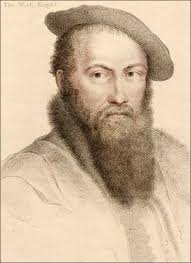
thomas wyatt
Sir Thomas Wyatt

The Wyatt Rebellion caused her to take decisive action.  She went to the Guildhall and gave a speech to the populace assuring them that she married Philip only with the consent of her councilors and that she was firstly married to her kingdom.

Wyatt did enter London; Mary sent her troops after him.  She did not flee and, while she was praying for her country’s safety, Wyatt was captured.  The rebel said he took action being “persuaded, that by the marriage of the Prince of Spain, the second person of this realm, and next heir to the crown, should have been in danger; and I, being a free-born man, should, with my country, have been brought into bondage and servitude of aliens and strangers” (Strype 132).  Rebellion was saving England from the Catholic scourge by ‘the second person of this realm.’  Thus, Elizabeth was implicated although Wyatt never named her during his interrogations or on the scaffold.  Elizabeth was sent to the Tower for two months where she was held prisoner, questioned and intimidated.     
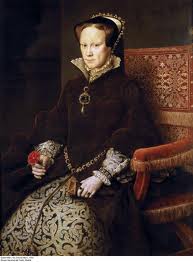
bloody mary     elizabeth 1 by scrouts
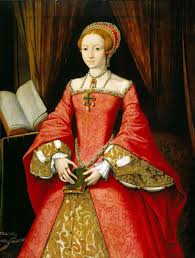
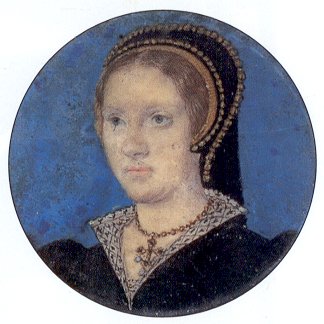
  Mary I                                           Princess Elizabeth 

Simon Renard, Ambassador to Spain, wrote to his sovereign, Charles V, 22 March 1554 that there was disagreement in the Council when “it was proposed to throw the Lady Elizabeth into the Tower, the Council expressed a wish to know exactly the reason, and the upshot was that the heretics combined against the Chancellor, and stuck to it that the law of England would not allow of such a measure because there was not sufficient evidence against her, that her rank must be considered and that she might perfectly well be confined elsewhere than in the Tower.”  Renard relayed that no one would “accept the responsibility of taking custody of her.”  Because of the councilors shying away from taking charge of Elizabeth, they “decided to conduct her to the Tower last Saturday, by river and not through the streets; but it did not happen that day, because when the tide was rising Elizabeth prayed to be allowed to speak to the Queen, saying the order could not have been given with her knowledge, but merely proceeded from the Chancellor’s hatred of her. If she could not speak to the Queen, she begged to be allowed to write to her. This was granted, and while she was writing the tide rose so high that it was no longer possible to pass under London bridge, and they had to wait till the morrow” (Tyler XII March).
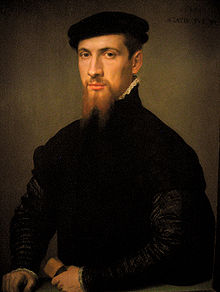
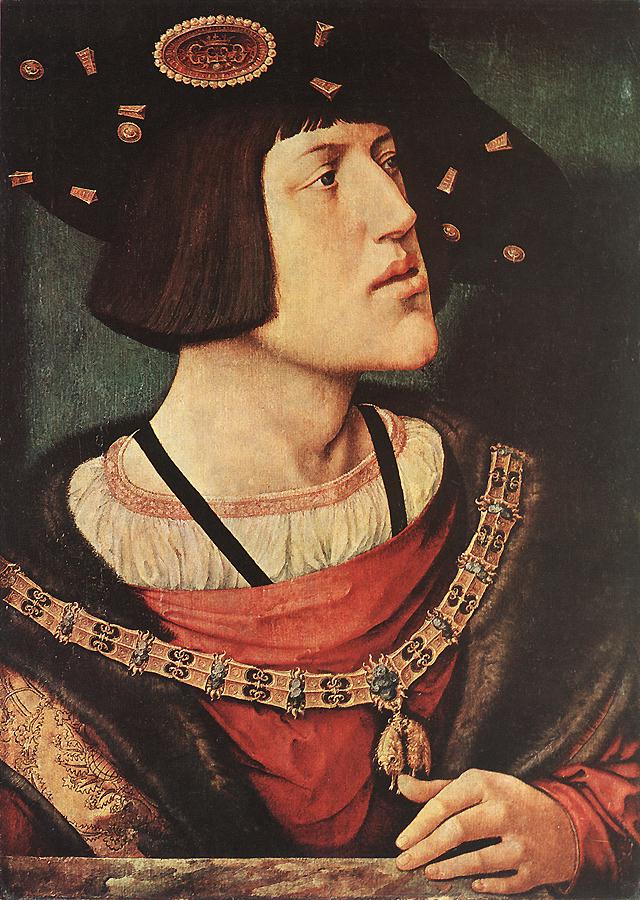
Simon_Renard    charles v
  Simon Renard                                    A Youthful Charles V

Elizabeth had achieved her purposes: she had postponed her imprisonment in the Tower and had written to her sister.  This letter of March 16, 1554, one of Elizabeth’s most famous, was a marvel how she handled her sister and logically argued her innocence while writing under distressing circumstances. 

Elizabeth beseeched Mary to remember her agreement to Elizabeth’s request “That I be not condemned without answer and due proof.” Elizabeth wanted her sister to know that “I am by your Council from you commanded to go unto the Tower, a place more wonted for a false traitor than a true subject.”  Although she bravely declared that she will go and be proved innocent, she pledged to her sister “I protest afore God that I never practiced, counseled, nor consented to anything that might be prejudicial to your person any way or dangerous to the state by any mean.”  Elizabeth appealed for an opportunity to meet with the Queen to tell her in person of her innocence and asked her sister to pardon her boldness, excusing her actions “which innocency procures me to do, together with the hope of your natural kindness.…”  The evidence of a letter written by Wyatt is addressed by logically stating “he might peradventure write me a letter, but on my faith I never received any from him.”  Elizabeth completed the letter by making diagonal lines across the bottom so that nothing could be inserted and signed herself “Your highness’ most faithful subject that hath been from the beginning and will be to my end, Elizabeth”   (Marcus 41-42). 
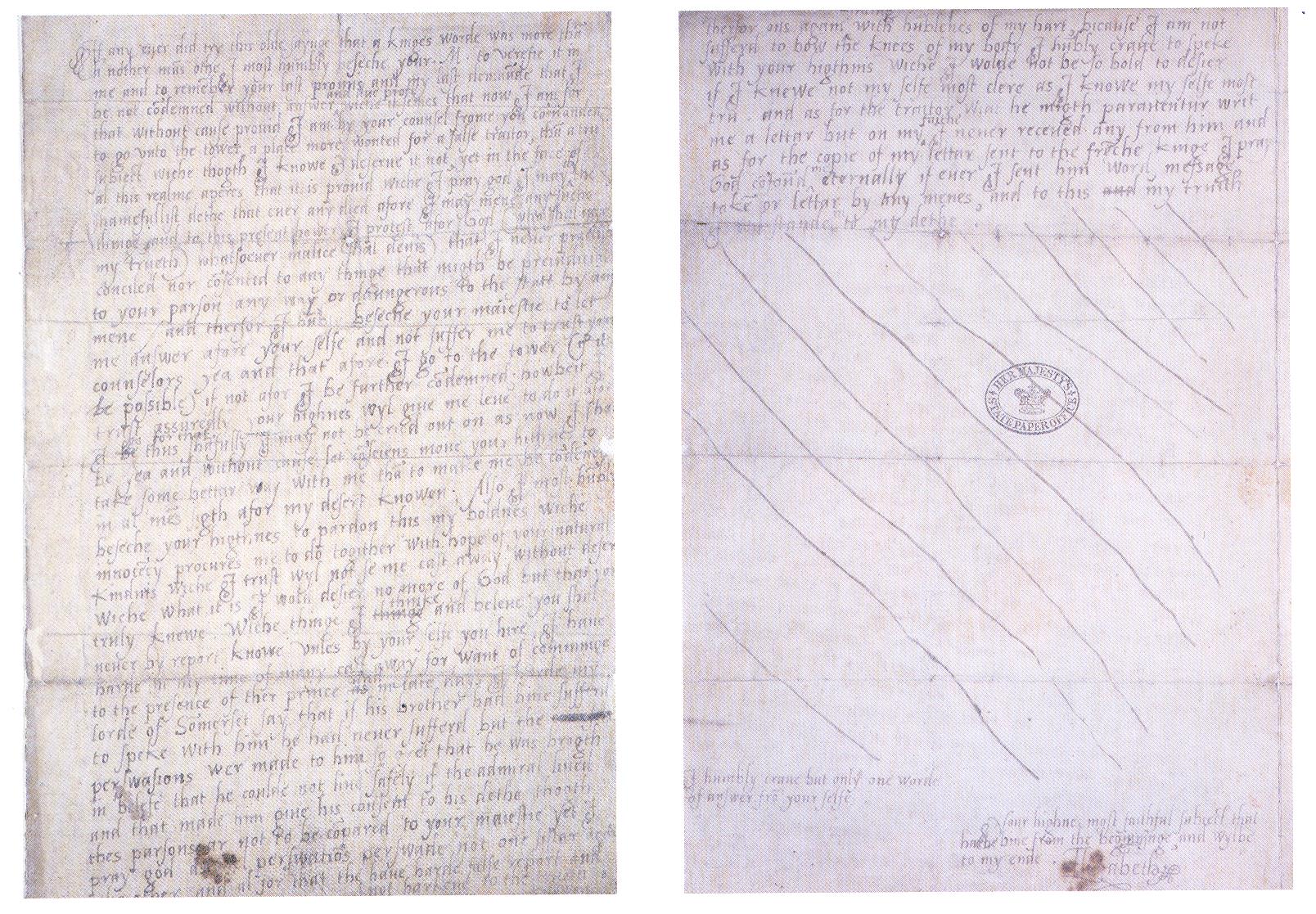
diagonal letters 001
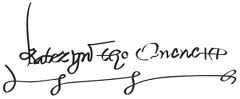
   The letter Elizabeth wrote to Mary in March of 1554

Her collaboration in the rebellion was never proven.  Renard suggests that Gardiner “held documentary evidence of her [Elizabeth’s] active interest in the plot, but that he destroyed this because it also involved young Courtenay” (Queen Elizabeth 110).  Not having direct proof of her sister’s guilt, Mary was reluctant to condemn Elizabeth and so  released her to house arrest.  John Foxe informed “The xix daye of Maye, the Ladye Elizabeth, Sister to the Queene, was brought oute of the Tower, and committed to the kepyng of Syr Henry Benifielde… shewed himself more harde and strayte unto her, then eyther cause was geven of her parte, or reason of his owne parte.”  Foxe showed the surprise not in Bedingfield’s  bad treatment but in the benevolence shown by Elizabeth once she came to the throne.  Praising her for not taking revenge as other monarchs “oftentimes requited lesse offences with losse of life,” Foxe explained that Elizabeth did not deprive Bedingfield of his liberty “save only that he was restrained  for not comming to the court” (Foxe V 1072).

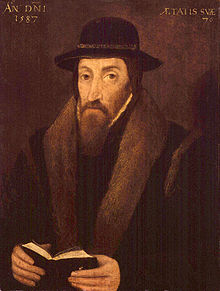
StephenGardiner    John_Foxe
  Stephen Gardiner                                               John Foxe

When she was released from Woodstock, it was to come to Court to witness the birth of Mary’s heir.  Sources differ on when Mary’s pregnancy was officially announced with some historians, such as Jasper Ridley, claiming it was in the spring of 1555 while we have an official document from January.  The Doge Francesco Venier of Venice did send his Ambassador Giovanni Michiel instructions 5 January 1555 to congratulate the King and Queen on the “certainty now obtained of the Queen giving an heir to the realm” (Brown VI January 5).  Further exclamations were extended for this “auspicious and desired event” concluding this was a “great gift conferred on the whole of Christendom” (Brown VI January  6). 
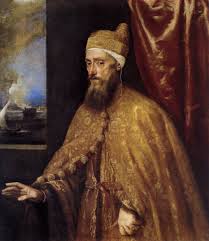
venier doge
Francesco Venier, Doge of Venice

Regardless of when it was officially announced, the impending event did affect Elizabeth.  On 29 April 1555, Michiel reported to the Doge, “that day or on the morrow Elizabeth Tudor was to arrive at Hampton Court from Woodstock.” Then on the 6th of May he informed the Venetian officials that when Elizabeth “appeared she was neither met nor received by anyone, but was placed in the apartment lately inhabited by the Duke of Alva, where she lives in retirement, not having been seen by any one, save once or twice by their Majesties, by private stairs” (Brown VIPreface 16).  

Elizabeth was housed with a “certain Sir Thomas Pope, a rich and grave gentleman, of good name, both for conduct and religion; the Queen having appointed him Miladi’s governor. I am told …they also assigned her a widow gentlewoman, as governess, in lieu of her own who is a prisoner, she herself likewise may be also said to be in ward and custody, though in such decorous and honourable form as becoming” (Brown VI June 514). No ifs, ands or buts about it, Elizabeth was still under house arrest.   Elizabeth’s release is credited to Philip’s influence on Mary.  Philip realized without an heir born of Mary, Elizabeth would be the successor.  To preserve Hapsburg interests, Philip realized Elizabeth had to be married to a Catholic prince: the intended bridegroom was Emmanuel Philibert, Prince of Piedmont and titular Duke of Savoy. 

Philip had plans for Elizabeth.  Antoine de Noailles wrote to the Queen-Dowager of Scotland in September 1555 informing her of Elizabeth’s popularity and the fact that “his Grace, the said Lord King, has shown a friendly disposition for her, and he has written several letters to the Queen, his wife, commending the Princess to her care”  (Queen Elizabeth I 200).

Dudley Conspiracy, Late 1555 -1556

Another rebellion against the reign of Queen Mary began in December 1555.  In a letter to Sir William Petre, Secretary of State, dated January 21, 1556, Nicholas Wotton, Dean of Canterbury and English Ambassador to France, wrote of information he had gleaned from an informant.  There was a “plot against the Queen which he said was devised by some of the best in England, and so many were agreed thereupon that it was impossible but that it must take effect; that the matter had been in hand about a year ago.”  The conspirators’ intentions were not to kill her Majesty “but to deprive her of her estate…” Wotton “did not think it necessary to write thereof to her Majesty lest she might suddenly be troubled with it, and conceive some greater fear of it than were good for her to do.”  Petre was to inform the Queen when “it shall not disquiet her Majesty” (Turnbull 285-286).  Mary was disquieted though and fearful for her life. 

WilliamPetre       Nicholas_Wotton
    Sir William Petre                            Nicholas Wotton, Dean of Canterbury

Called the Dudley Conspiracy for the main instigator, Sir Henry Dudley (a distant relative to John Dudley, the executed Duke of Northumberland and Robert Dudley, the future favorite of Elizabeth), its purpose became clearer as the investigation continued.   Mary and Philip were to be deposed and replaced by Elizabeth with her consort being Edward Courtenay. 

Imprisoned during the time of Henry VIII, Courtenay spent 15 years in confinement.  Released upon Mary’s ascension to the throne, he was created 1st Earl of Devon and sent on several diplomatic missions.  His hopes of marriage to Mary fell flat when she espoused Philip.  Courtenay then turned his attention to Elizabeth obviously seeing marriage as his way to the throne.  After serving more time in the Tower for the Wyatt Rebellion, the Earl of Devon was exiled to Europe until his death in September of 1556.  He found acceptance in Venice where he became the focal point for further conspiracies such as the Dudley Rebellion.
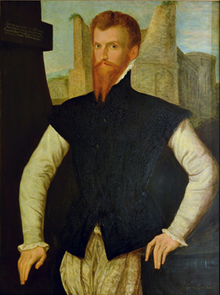
EdwardCourtenayD1556
Edward Courtenay, 1st Earl of Devon

Several prominent supporters of the rebellion were Lord Thomas Howard, Sir Peter Killigrew, Henry Peckham and several members of the Throckmorton clan.  One cannot underestimate the organization of Dudley and his fellow conspirators.  They raised money, attempted to gain powerful allies such as the King of France and landed gentry, approached Courtenay and saturated England with anti-Catholic and anti-Spanish writings. It was subversive writings such as these that were found in the London residence of Kat Ashley, governess to Princess Elizabeth. 

Giovanni Michiel, Ambassador to England for Venice kept the Doge and the Venetian Senate informed of what was occurring.  Michiel reported on 2 June, “The number of persons imprisoned increases daily… Mistress [Katharine] Ashley was taken thither [to the Tower], she being the chief governess of Miladi Elizabeth, the arrest, together with that of three other domestics, having taken place in the country, 18 [Venetian] miles hence, even in the aforesaid Miladi’s own house [Hatfield], and where she at present resides, which has caused great general vexation.  I am told that they have all already confessed to having known about the conspiracy; so not having revealed it, were there nothing else against them, they may probably not quit the Tower alive, this alone subjecting them to capital punishment. This governess was also found in possession of those writings and scandalous books against the religion and against the King and Queen which were scattered about some months ago, and published all over the kingdom” (Brown VIJune 505).

katahsley
Kat Ashley

People close to Elizabeth knew about the plot — that has been well established.  How involved was Elizabeth? The only written link between her and the rebels occurred in February 1556 when Anne, Duke de Montmorency, Constable of France wrote to the French Ambassador, Antoine de Noailles that “above all restrain Madame Elizabeth from stirring at all in the affair of which you have written to me, for that would be to ruin everything” (Queen Elizabeth I 203).  Can this letter be seen as proof of Elizabeth’s willing cooperation with the Dudley plot?  Although it is damaging, it is not conclusive.  This could be a misinterpretation of information gathered by the Constable or wishful thinking. 

Constable of France
Anne, Duke de Montmorency, Constable of France

Noailles and King Henri II were implicated in the Dudley plot.  Because the international diplomatic scene had changed with the Vaucelles truce, Henri did not want to antagonize Charles and Philip so he “advised the conspirators to defer the execution of their plans” which they ignored (Acton 544).  The success of the plot depended on too many people and too many variables (this blog will not relay the details there are many sources available including contemporary diplomatic dispatches in the Calendar of State Papers-Venice Volume VI).  A conspirator, Thomas White, on staff at the Royal Exchequer was to ensure the robbery of funds to finance the conspiracy (Whitelock Mary Tudor 303).  Ambassador Michiel wondered if White came forward “either from hope of reward, or to exculpate himself… revealed the plot to Cardinal Pole” (Brown VI March 5 434).  White was rewarded as shown in the Originalia Roll (the fine roll sent to the Exchequer) for Mary and Philip because “of good and faithful service by our beloved servant, Thomas White, gentleman, in the late conspiracy against us, our crown and dignity attempted not long since by Henry Dudley and his accomplices” (Thoroton Society 52).  A known conspirator rewarded: what of Elizabeth? 
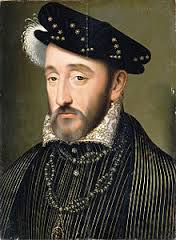
henri ii
King Henri II of France

Convinced that Elizabeth was aware of the plot, Mary sent her trusted courtier, Francesco Piamontese, to Brussels to consult with Philip on how to handle the situation.  Venetian Ambassador Michiel went further to explain that this issue was very sensitive because of Kat Ashley’s involvement “by reason of her grade with the “Signora,” who is held in universal esteem and consideration” (Brown VI June 505).  So not only is a trusted servant of Elizabeth’s in possession of seditious materials, it appears to be universally acknowledged that Elizabeth is very popular. Would it be wise to move against her too aggressively?  A tricky situation for Mary.

In June Michiel wrote to his superiors in Venice, “Finally, at the very hour when persons were departing, her chamberlain and the courier Francesco Piamontese returned” from Brussels to the Queen’s relief.  “As for many months the Queen has passed from one sorrow to another” (Brown VI June 525). 

So what was to become of Elizabeth?  What guidance had Philip given his wife concerning the suspicions of her sister?  What Mary received was pro-Hapsburgian advice. Despite Michiel’s predicitons, none of Elizabeth’s household members were executed nor was she punished. Although there was strong evidence that those around her were involved in treasonous activities (Kat Ashley being in posession of the seditious materials was enough cause for punishment beyond time in the Tower) and questions concerning what Elizabeth knew, any action against her would threaten her succession.  “There is little doubt that it was the King’s influence which prevented Elizabeth herself from being again arrested on this occasion and sent to the Tower with the four other members of her household.  It is difficult otherwise to account for Mary’s leniency” (Queen Elizabeth I 209).

tower of london
Tower of London

Hapsburg interests demanded that Elizabeth be heir to the throne of England over Mary, Queen of Scots.  Mary had the surest position of inheritance after Elizabeth and as the fiancé of the dauphin of France, could unite Scottish, French and English dominions and interests which would threaten the power of Spain. Hapsburg interests prevailed.  “Piamontese returned to London with an unequivocal message from the king: no further inquiries should be made into Elizabeth’s guilt, nor any suggestion made that her servants had been implicated in the plot with her authority” (Whitlock 307).  Philip was more than willing to be lenient with Elizabeth.  By 1556 few people believed that Mary would produce an heir and looked toward Elizabeth to be the next queen.  It probably was wise on the part of the councilors not to antagonize Elizabeth.  She was considered the preferred heir, and her smooth succession could halt potential civil conflict or French interference to place Mary Stuart on the throne—both good enough reasons to leave well-enough alone.

So, astoundingly, Elizabeth remained free.  Protestations of ignorance about her household’s activities were enough.  Mary probably did not believe her but allowed the stories that Elizabeth’s name had been used without authority to be circulated.  This blogger cannot help but feel for the position in which Mary was placed.  Her motto, ‘Truth, Daughter of Time,’ seemed to be jeopardized as she did her husband’s bidding; although, with most of Mary’s submissiveness it was up to a point. 

According to Michiel, in June of 1556 Mary sent two of her gentlemen, Sir Henry Hastings, and Sir H. Francis Englefield, to Elizabeth with a “message of good will…with a ring worth 400 ducats, and also to give her minute account of the cause of their arrest, to aquaint her with what they had hitherto deposed and confesssed, and to persaude her not to take amiss the removal from about her persons of similar folds, who subjected her to the danger of some evil suspicion; assuring her of the Queen’s good will and disposiiton, provided she continue to live becomingly, to Her Majesty’s liking.  Using in short loving and gracious expressions, to show her that she is neither neglected nor hated, but loved and esteemed by Her Majesty.  This message is considered most gracious by the whole kindom, everybody in general wishing her all ease and honour, and very greatly regretting any trouble she may incure; the proceeding having been not only necessary but profitable, to warn her of the licentious life led, especially in matters of religion, by her household” (Queen Elizabeth I 210).

henry hastings
  Henry Hastings 

Ambassador Michiel let on that Elizabeth’s household would be made up of persons the Queen believed to better serve her.  It is assumed Mary thought her sister guilty and urged Elizabeth “to keep so much the more to her duty, and together with her attendants behave the more cautiously” (Queen Elizabeth I 210).

Mary feigned that she believed Elizabeth had been in danger of “being thus clandestinely exposed to the manifest risk of infamy and ruin.” So, the solution was for the Queen to remodel Elizabeth’s household “in another form, and with a different sort of persons to those now in her service, replacing them by such as are entirely dependent on her Majesty; so that as her own proceedings and those of all such persons as enter or quit her abode will be most narrowly scanned” (Brown VIJune 505).

Assigned to Elizabeth’s household was “Sir Thomas Pope, a rich and grave gentleman, of good name, both for conduct and religion; the Queen having appointed him Miladi’s governor, and she having accepted him willingly, although he himself did his utmost to decline such a charge. I am told that besides this person, they also assigned her a widow gentlewoman, as governess, in lieu of her own who is a prisoner, so that at present having none but the Queen’s dependents about her person, she herself likewise may be also said to be in ward and custody, though in such decorous and honourable form as becoming” (Brown VI June 514). 

tpope
  Sir Thomas Pope

Pope was commissioned by Mary’s Council in July of 1556 to keep Elizabeth informed of the activities confessed by the Dudley conspirators “how little these men stick, by falsehood, and untruth, to compass their purpose; not letting, for that intent, to abuse the name of her Grace, or any others” (Queen Elizabeth I 213). 

Elizabeth did write to the Queen in careful phraseology about the information she had received from Pope.  “Of this I assure your majesty, though it be my part above the rest to bewail such things though my name had not been in them, yet it vexeth me too much …as to put me in any part of his [the devil] mischievous instigations.  And like as I have been your faithful subject from the beginning of your reign, so shall no wicked persons cause me to change to the end of my life.  And thus I commit your majesty to God’s tuition, whom I beseech long time to preserve … from Hatfield this present Sunday, the second day of August. Your majesty’s obedient subject and humble sister, Elizabeth” (Marcus 43-44).

For references, please refer to the blog entry “Two’s Company, Three’s a Crowd: Part I.”
Two’s Company, Three’s a Crowd: Part I

Two’s Company, Three’s a Crowd: Part I

Many of Elizabeth Regina’s international affairs were intertwined with those of Philip II.  Most students of history understand his connection as King of Spain and the adversary who lost The Spanish Armada.  Many forget his role as ruler of the Netherlands and Elizabeth’s opposition to his sovereignty there.  Even more do not realize his role as her brother-in-law, Philip was married to Elizabeth’s half-sister Mary for several years.  What was the basis of their relationship?  Did Elizabeth feel any allegiance to Philip for the contribution he made to her relationship with her sister and her position at Court? How did this association influence both countries’ foreign policies?  These questions and several others will be addressed in a series of blogs entitled “Two’s Company, Three’s a Crowd”.

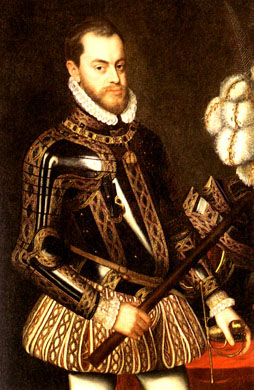
Philip II 

Who was Philip II of Spain?  Born 21 May 1527, his parents were Charles I of Spain (Charles V, Holy Roman Emperor) and Isabella of Portugal.  Given a classical education, he was also given practical instruction.  Philip spent much time as interim ruler of Spain while his father traveling through his domains and much of Philip’s time was spent in the 17 Provinces of the Spanish Netherlands (territories of modern day Belgium, The Netherlands and Luxemburg) where he became nominal ruler from 1549.

Married four times, he was created King of Naples upon his marriage to his second wife, Mary I of England, in order to share equal rank as a ruling sovereign with his new bride.  Philip arrived in Winchester on July 19, 1554, where he met with Mary for the first time prior to their marriage held in the cathedral on 25 July 1554.

philip-ii
  Philip II

As King of Naples and England, Philip’s main concern at all times was for Hapsburg interests.  Leaving England for Flanders in late August of 1555, he attempted to impose the will of the Holy Roman Empire in central Europe.  He returned to his wife 18 March 1557 to request her support in the war against France.  He left again four months later never to return.  Mary did embroil England in a war with France on behalf of his interests and lost Calais January 7, 1558.

Philip’s royal rank was secured when his father abdicated in 1556 and he became ruler in the Spanish Netherlands, Burgundy and Spain. Besides titles in many European territories that had once been part of the Holy Roman Empire, Philip became King of Portugal in 1580 through his mother’s claims.

Referred to accurately as the “secretary-king” or the “king of paper”, Philip ruled “through the written word rather than through personal contact and debate.” As a young king he was a “shy, passive, sedentary man” resolving perfectly to rule his “far-flung dominions with pen and ink alone” (Boyden 66).  Words to describe Philip would be pious, frugal in dress and at table, hard-working, and conscientious.  This blogger believes his dominate trait was loyalty—to the Hapsburg interests.  Politically, this trait overshadowed his religious scruples; religiously, this trait overshadowed his politics. Regardless, from the time of his father’s abdication until his own death at the age of 71 in 1598, Philip ruled absolutely. On one occasion, he wrote “I don’t know if [people] think I’m made of iron or stone. The truth is, they need to see that I am mortal, like everyone else” — but he seldom had qualms about exercising his absolute power (Parker).  Surprisingly, the cautious almost hesitant Philip of his early reign morphed into a more reckless, imprudent ruler in his later years as he struggled with his country’s relations with the Low Countries and England.

bloody mary
  Mary I

England’s military and financial assistance to the Dutch rebels, the seizure of Spanish bullion ships and lack of cooperation with Spain—as perceived by Philip—led to deteriorating relations between the two countries.  Whereas Elizabeth ruled in a time of change, ironically in the face of her motto Semper eadem, he was seen to hold to tradition.  While she did try to keep things familiar, he had to innovate in response to the needs of his vast empire and the shifting international scene.

Despite four marriages and the births of many children, Philip constantly contended with inadequate heirs who were sickly or mentally unstable.  He exclaimed once in frustration, “God, who has given me so many Kingdoms to govern, has not given me a son fit to govern them” (Philip II of Spain).

Mary I

Upon the death of Edward VI and the proclamation of Jane Grey as Queen, there was confusion and anger from the London masses.  Many landowners favored the ‘old religion’ and thus supported Mary when she came to call on the magnates to rally troops for her cause.  She stunned the foreign ambassadors (most likely thinking she couldn’t succeed without foreign troops and intervention) with a following of thousands at Framlingham in Suffolk.

The rationale included in Jane’s proclamation was set to instill fear in the country.  It was a warning that if Mary were to take over the throne and eventually marry “any stranger born out of this realm…to have the laws and customs of his … country …practiced and put in use within this realm, rather than the laws, statues, and customs here… of long time used, …to the peril of conscience and the utter subversion of the common weal of this realm” (Castor 409).

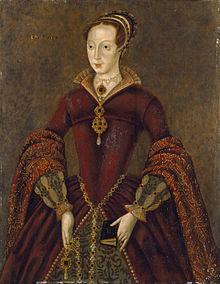
ladyjayne
  The “Streatham” portrait believed to be Lady Jane Grey

Mary’s sex and the traditional role of wife were against her but the people knew her to be the rightful heir.  When she was set to marry Philip of Spain and the people expressed their concern, she gave a rousing speech to ease their fears.  Mary proclaimed, “I am already married to the Common Weal and the faithful members of the same; the spousal ring whereof I have on my finger: which never hitherto was, nor hereafter shall be, left off.  Protesting unto you nothing to be more acceptable to my heart, nor more answerable to my will, than your advancement in wealth and welfare, with the furtherance of God’s glory” (Loades Chronicle of Tudor Queens 36).  This assertion that she was married to her kingdom was a smart political move.

Many people in the country could not fathom that as a woman she did not need a husband to carry out “the offices which do not properly belong to woman’s estate” (Castor 428). Linked to this was the belief that Mary would not hand over the power of England to her husband.  The marriage treaty solved this fear.  Philip would have little to do with the running of the country.  He could assist and that was about it. Mary would do all in her power to appear to include him yet there was no doubt that she, who had been trained as a sovereign Princess of Wales, would be ruler of England.  In the Council Register two days after their marriage it was noted that “At Winchester, 27th July, This daye it was ordered by the boarde that a note of all such matteres of state as should passe from hence should be pute into Latten and Spanyche from henceforth.  It was also ordered that all matteres of estate passynge in the kinge and quenes names should be signed with both their handes” (Nichols Chronicle of Queen Jane 135). So he could read documents in Spanish, he could sign them, but he would be greatly restricted in his formal influence.

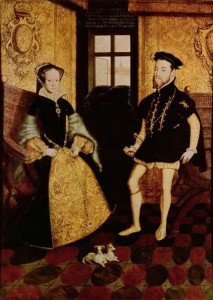
Philip mary
Mary and Philip 

Did Mary need a husband to help rule England.  No.  She needed one for an heir though. She had misread her people.  They opposed the foreign match with Philip.  Yes, he was Catholic, the choice of the advisor she so admired (Charles V), and he was from her mother’s homeland.  These emotional elements were also supported by the more practical and political merits of his being a good choice from a limited selection.  It is well-known that Mary fell head-over-heels in love with Philip.  With a restricted formal influence, his informal influence was close to boundless. Giovanni Michiel, Ambassador to England for Venice reported to the Doge and the Venetian Senate that Queen Mary’s representative, Francesco Piamontese, was sent in June 1556 to Brussels because “it being credible that nothing is done, nor does anything take place, without having the King’s opinion about it, and hearing his will” (Brown VI June 1-15 505).

charles
Charles V

Simon Renard, Ambassador to Spain in England was instructed to feel Mary out about the union.   Charles also inquired about his son’s view.  Dutifully, he responded “I very well see the advantages that might accrue from the successful conclusion of this affair.”  Philip assured his father, “ If you wish to arrange the match for me, you know that I am so obedient a son that I have no will other than yours” (Patterson 42-43).  Mary, showing as much filial loyalty as Philip assured Renard that she wanted to please Charles “in the same way she would wish to please her father” (Patterson 43).  The marriage was inevitable despite Mary’s need to have the Privy Council’s approval.  Charles V was aware of this and worked hard behind the scenes to get members on his side.  The importance of this marriage, uniting England and Hapsburg territories, was discussed in many contemporary writings; all agree that the purpose was for “temporal and spiritual peace and unity among Europeans” (Hunt 152).  Quite a mission.

Simon_Renard
 Simon Renard, Spanish Ambassador to England

John Elder shared many details about the ceremonies which marked the marriage between Mary and Philip in the summer of 1554.  Philip had “landed  at Southampton in Hamshire, within ten mile of the citie of Winchester, on Friday the xx day of July at iii of the clocke at afternone” and was met by “the lords of the counsel and diverse other noble men” (Nichols The Chronicle of Queen Jane 137-138).  Philip rode through Winchester “on a faire white horse, in a riche coate embroidered with gold, his doublet, hosen, and hat suite-like” (Nichols The Chronicle of Queen Jane 139).

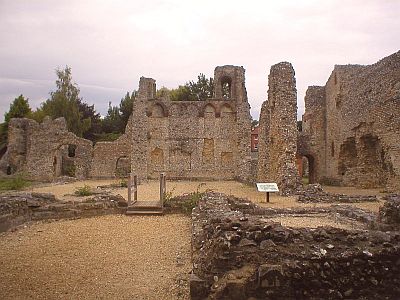
Mary stayed at Wolvesey Palace (the Old Bishop’s Palace) and Philip was housed in the Dean’s house. They met on July 23rd for the first time at Wolvesey Palace and while some reports say Mary spoke French, most sources agree they conversed “in the Spanishe tongue” (Nichols Chronicle of Queen Jane 140).

OLYMPUS DIGITAL CAMERA
Ruins of Wolvesey Palace, where Mary and Philip met for the first time

The wedding, held on 25 July 1554 the feast day of St. James, patron saint of Spain, was very sumptuous with many sources describing decorations of the churches and palaces and the splendor of the clothes and jewelry of the participants.  We know Philip was attired “in brocade, covered with white velvet, rich in gold and pearls, with a very rich brocade collar, a ruby robe, richly decorated with gold and pearls  and diamond buttons” (Hunt 148).  Mary was dressed “in silver cloth with a cloak …a very rich collar and hair decoration…a belt in the richest gold, with jewellery on the breast with a diamond in the center” (Hunt 148).

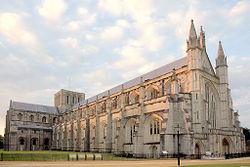
At the Cathedral Philip was met by the Bishop of Winchester, Stephen Gardiner Lord Chancellor and five other bishops all “mitred, coped, and staved” where he knelt, kissed the crucifix, prayed and then entered “upon a skafholde which was made for the solomnizacion of his marriage” (Nichols The Chronicle of Queen Jane 139).  Remarkably, throughout the ceremony Mary was placed on the right and Philip on the left, the opposite of the conventional set-up.  Perhaps to placate her English subjects or her own feelings of triumph, Mary showed herself as the ruling sovereign with Philip as consort.

StephenGardiner
Stephen Gardiner, Lord Chancellor and Bishop of Winchester

Regardless of who was seen as sovereign and consort, the royal titles are impressive.  John Elder, with relish, gives the list in the “stile in Latin” and the “stile in Englishe” which will be recreated below:

"Philip and Marie, by the grace of God king and quene of England, 
Fraunce, Naples, Hierusalem, and Irelande, defenders of the faith, 
princes of Spain and Secy, archdukes of Austria, dukes of Millan,
Burgundy, and Brabant, counties of Haspurge, Flaunders, and Tiro” 
(Nichols Chronicle of Queen Jane 142).

After the ceremony Philip “addressed the Spanish lords who were about him, and told them they must at once forget all the customs of Spain, and live in all respects after the English fashion” (Nichols The Chronicle of Queen Jane 139).  Post wedding celebrations were then held at Wolvesey Palace where there was much “triumphing, bankating, singing, masking, and daunsing, as was never seen in Englande heretofore” (Nichols Chronicle of Queen Jane 136).

WinCathi
Winchester Cathedral

Two days later, in the Council Register it was noted that “At Winchester, 27th July, This daye it was ordered by the boarde that a note of all such matteres of state as should passe from hence should be pute into Latten and Spanyche from henceforth, and the same to be delyvered to such as it should please the kinges highnes to appointe to recave it.  It was also ordered that all matteres of estate passynge in the kinge and quenes names should be signed with both their handes” (Nichols Chronicle of Queen Jane 135).

Elder was beside himself exclaiming the joy after “this moste noble mariage” of seeing dual sovereignty with “the kinges magestie and the queen sitting under the cloth of estate” (Nichols Chronicle of Queen Jane 143).  We know this did not come to pass without problems.  In January of 1554, after hearing the rumors of a possible match between Mary and Philip, a group of gentlemen organized an uprising known as the Wyatt Rebellion.  This will be further discussed in the blog entry, “Two’s Company, Three’s a Crowd: Part II.”
References

Acton, Lord, comp. The Cambridge Modern History Planning by the Late Lord Acton. Ed. A. W. Ward, G. W. Prothero, and Stanley Leathes. The Reformation  Vol. II. New York: Macmillan, 1904. Google Books. Web. 27 July 2013.

Alford, Stephen. The Watchers: A Secret History of the Reign of Elizabeth I. London: Allen Lane, 2012. Google Books. Web. 9 Aug. 2013.

Allan, James Crosby (editor). “Elizabeth: February 1577, 1-15.” Calendar of State Papers Foreign, Elizabeth, Volume 11: 1575-1577 (1880): 501-518. British History Online. Web. 17 July 2013.

Boyden, James M. The Courtier and the King: Ruy Gómez De Silva, Philip II, and the Court of Spain. Berkeley: University of California, 1995. Google Books. Web. 20 July 2013.

Brown, Rawdon (editor). “Venice: January 1556.” Calendar of State Papers Relating to English Affairs in the Archives of Venice, Volume 6: 1555-1558, 1877. British History Online. Web. 21 July 2013.
Brown, Rawdon (editor). “Venice: June 1556, 1-15.” Calendar of State Papers Relating to English Affairs in the Archives of Venice, Volume 6: 1555-1558 (1877): 472-484. British History Online. Web. 26 July 2013.

Brown, Rawdon (editor). “Venice: June 1556, 16-30.” Calendar of State Papers Relating to English Affairs in the Archives of Venice, Volume 6: 1555-1558, 1877. British History Online. Web. 21 July 2013.

Brown, Rawdon (editor). “Venice: March 1556, 16-31.” Calendar of State Papers Relating to English Affairs in the Archives of Venice, Volume 6: 1555-1558 (1877): 377-395. British History Online. Web. 28 July 2013.

Brown, Rawdon (editor). “Venice: May 1557, 11-15.” Calendar of State Papers Relating to English Affairs in the Archives of Venice, Volume 6: 1555-1558 (1877): 1041-1095. British History Online. Web. 08 August 2013.

Brown, Rawdon and G. Cavendish Bentinck (editors). “Venice: February 1559.” Calendar of State Papers Relating to English Affairs in the Archives of Venice, Volume 7: 1558-1580 (1890): 24-41. British History Online. Web. 21 July 2013.

Brown, Rawdon and G. Cavendish Bentinck (editors). “Venice: March 1559.” Calendar of State Papers Relating to English Affairs in the Archives of Venice, Volume 7: 1558-1580 (1890): 41-59. British History Online. Web. 21 July 2013.

Brown, Rawdon (editor). “Venice: June 1556, 1-15.” Calendar of State Papers Relating to English Affairs in the Archives of Venice, Volume 8: 1581-1591, 1877. British History Online. Web. 17 July 2013.

Castor, Helen.  She-Wolves: The Women Who Ruled England Before Elizabeth. London:  Faber and Faber. 2010. Print.

Erickson, Carolly. The First Elizabeth. New York: Summit Books. 1983. Print.

Foxe, John.  The Unabridged Acts and Monuments Online orTAMO.  Book 5. Sheffield: HRI Online Publications, Sheffield, 2011.  Humanities Research Institute. Web. 21 June 2013.

Hume, Martin (editor). “Simancas: December 1558.” Calendar of State Papers, Spain (Simancas), Volume 1: 1558-1567 (1892): 7-21. British History Online. Web. 16 August 2013.

Hume, Martin (editor). “Simancas: January 1559.” Calendar of State Papers, Spain (Simancas), Volume 1: 1558-1567 (1892): 21-26. British History Online. Web. 11 August 2013.

Hume, Martin A. S. (editor). “Simancas: March 1559.” Calendar of State Papers, Spain (Simancas), Volume 1: 1558-1567 (1892): 37-46. British History Online. Web. 18 July 2013.

Hume, Martin (editor). “Simancas: April 1559.” Calendar of State Papers, Spain (Simancas), Volume 1: 1558-1567 (1892): 46-64. British History Online. Web. 11 August 2013.

Hume, Martin (editor). “Simancas: May 1559.” Calendar of State Papers, Spain (Simancas), Volume 1: 1558-1567 (1892): 64-78. British History Online. Web. 13 August 2013.

Hume, Martin (editor). “Simancas: July 1559.” Calendar of State Papers, Spain (Simancas), Volume 1: 1558-1567 (1892): 81-91. British History Online. Web. 14 August 2013.

Hume, Martin (editor). “Simancas: January 1561.” Calendar of State Papers, Spain (Simancas), Volume 1: 1558-1567 (1892): 178-180. British History Online. Web. 16 August 2013.

Hunt, Alice and Anna Whitelock (editors). Tudor Queenship:  The Reigns of Mary and Elizabeth. New York: Palgrave MacMillian, 2010.  Print.

Kamen, Henry. Philip of Spain. New Haven, Connecticut: Yale University Press, 1997. Print.

de Lisle, Leanda.  “King Henry’s Niece” History Today 63.8 (2013): 42-46. Print.

Loades, David. The Chronicles of the Tudor Queens.  Stroud, Gloucestershire: Sutton Publishing, 2002. Print.

Loades, David.  Mary Tudor:  The Tragical History of the First Queen of England.  Kew, Richmond: The National Archives, 2006. Print.

MacCaffrey, Wallace. Elizabeth I. London: E. Arnold. 1993. Print.

Marcus, Leah S. et al., eds. Elizabeth I: The Collected Works. Chicago: University of Chicago Press, 2002. Print.

Neale, J. E. Queen Elizabeth I. Garden City, NY: Doubleday, 1957. Print.

Nichols, John Gough. The Chronicle of Queen Jane, Two Years of Queen Mary, and Especially of the Rebellion of Sir Thomas Wyat.  London: J. B Nichols and Son, 1822. Google Books. Web. 17 June 2013.

Nichols, John. The Progresses and Public Processions of Queen Elizabeth. Among Which Are Interspersed Other Solemnities, Public Expenditures, and Remarkable Events during the Reign of That Illustrious Princess. Collected from Original MSS., Scarce Pamphlets, Corporation Records, Parochial Registers, &c., &c.: Illustrated with Historical Notes. New York: B. Franklin, 1823. Google Books. Web. 19 Jan. 2013.

Norton, Elizabeth.  England’s Queens. Stroud, Gloucestershire: Amberley, 2011. Print.

Parker, Geoffery. “The Grand Strategy of Philip II.” Books. New York Times on the Web, 1999. Web. 22 July 2013. 

Patterson, Benton Rain. With the Heart of a King: Elizabeth I of England, Philip II of Spain, and the Fight for a Nation’s Soul and Crown. New York: St. Martins, 2007. Google Books. Web. 17 July 2013.

Perry, Maria.  The Word of a Prince: A Life of Elizabeth from Contemporary Documents.  Woodbridge, Suffolk: The Boydell Press, 1990.  Print.

“Philip II of Spain.” – Wikiquote. 13 April 2012, n.d. Web. 22 July 2013.
Plowden, Allison.  Marriage with My Kingdom:  The Courtships of Elizabeth I.  New York:  Stein and Day, 1977. Print.

Porter, Linda.  The First Queen of England:  The Myth of “Bloody Mary”.  New York: St. Martin’s Press, 2007. Print.

Pryor, Felix.  Elizabeth I, Her Life in Letters.  Berkeley, California: University of California Press, 2003.  Print.

Queen Elizabeth I, Frank Mumby, and R. S. Rait. The Girlhood of Queen Elizabeth: A Narrative in Contemporary Letters. Boston: Houghton Mifflin, 1909. Google Books. Web. 9 May 2013.

Ravenscroft, Janet. “Philip II: A Pen Portrait.” History Today 60.10 (2010): 25-28. Print.

Ridley, Jasper. Elizabeth I: The Shrewdness of Virtue.  New York: Fromm International Publishing Corporation, 1989.  Print.

Ronald, Susan.  Heretic Queen:  Queen Elizabeth I and the Wars of Religion.  New York:  St. Martin Press, 2012.  Print.

Sitwell, Edith.  The Queens and the Hive.  Harmondsworth: Penguin Books, 1966. Print.

Somerset, Anne. Elizabeth I.  New York: Alfred A. Knopf, 1991. Print.

Starkey, David.  Elizabeth:  The Struggle for the Throne. New York:  HarperCollins Publishers. 2001. Print

Strickland, Agnes, Elisabeth Strickland, and Rosalie Kaufman. The Queens of England, Abridged and Adapted from Strickland’s “Queens of England” Chicago: Werner, 1895. Internet Archive. Web. 4 May 2013.

Strype, John.  Ecclesiastical memorials, Relating Chiefly to Religion, and The Reformation of It, and the Emergencies of the Church of England, Under King Henry VIII, King Edward VI, and Queen Mary I with Large Appendixes, Containing Original Papers, Records, &c. Historical memorials, Ecclesiastical and Civil, of Events Under the Reign of Queen Mary I Wherein Are Brought to Light Various Things Concerning the Management of Affairs, During the Five Years of Her Government.  Vol. III Part I. Oxford: Clarendon Press, 1822.  Google Books. Web. 17 June 2013.

Thoroton Society. Transactions of the Thoroton Society of Nottinghamshire, Volumes 11-13. Ed. John Standish. Vol. XI. Nottingham: Thoroton Society, 1907. Google Books. Web. 28 July 2013.

Turnbull, William B., ed. Calendar of State Papers, Foreign Series, of the Reign of Mary, 1553-1558, Preserved in the State Paper Department of Her Majesty’s Public Record Office. Vol. II. London: Longman, Green, Longman and Roberts, 1861. Google Books. Web. 28 July 2013.

Tyler, Royall (editor). “Spain: March 1554, 21-31.” Calendar of State Papers, Spain, Volume 12: 1554 (1949): 164-180. British History Online. Web. 28 July 2013.

Tyler, Royall (editor). “Spain: June 1555.” Calendar of State Papers, Spain, Volume 13: 1554-1558 (1954): 207-226. British History Online. Web. 30 July 2013. 

Tyler, Royall (editor). “Spain: February 1558.” Calendar of State Papers, Spain, Volume 13: 1554-1558 (1954): 349-365. British History Online. Web. 17 July 2013. http://www.british-history.ac.uk/report.aspx?compid=88625

Tyler, Royall (editor). “Spain: June 1558.” Calendar of State Papers, Spain, Volume 13: 1554-1558 (1954): 394-402. British History Online. Web. 24 July 2013.

Tyler, Royall (editor).  “Spain: July 1558.” Calendar of State Papers, Spain, Volume 13:  1554-1558 (1954): 402-405.  British History Online.  Web. 14 July 2013. 

Tyler, Royall (editor). “Spain: May 1558.” Calendar of State Papers, Spain, Volume 13: 1554-1558 (1954): 378-393. British History Online. Web. 17 July 2013.

Tyler, Royall (editor). “Spain: November 1558.” Calendar of State Papers, Spain, Volume 13: 1554-1558 (1954): 435-442. British History Online. Web. 24 July 2013.

Waller, Maureen. Sovereign Ladies: Sex, Sacrifice, and Power : The Six Reigning Queens of England. New York: St. Martin’s Griffin, 2008. Google Books. Web. 24 July 2013.

Wart, Thomas. The Life of Sir Thomas Pope, Founder of Trinity College Oxford, Chiefly Compiled from the Original Evidences, with an Appendix of Papers, Never Before Printed. 2nd ed. London: Thomas Cadell, n.d. Internet Archive. Web. 30 July 2013.

Weir, Alison.  The Life of Elizabeth I.  New York: Ballatine Books, 1998. Print.

Whitelock, Anna.  Mary Tudor:  Princess, Bastard, Queen. New York:  Random House, 2009. Print.

Friend, Cousin, Brother? Part I

Henry Carey, Lord Hunsdon Part I

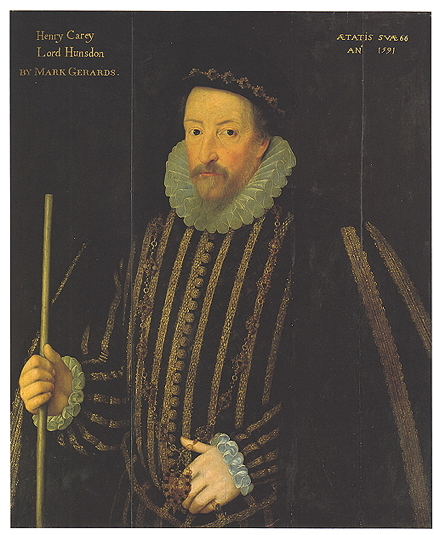
Henry Carey, Lord Hunsdon was born 4 March 1526 to Mary Boleyn and William Carey who married on 4 February 1520.  Mary was the eldest daughter of Thomas Boleyn, 1st Earl of Wiltshire and Lady Elizabeth Howard, eldest daughter of Thomas Howard, 2nd Duke of Norfolk. Mary was the sister to Anne Boleyn, second wife to Henry VIII.

henry carey
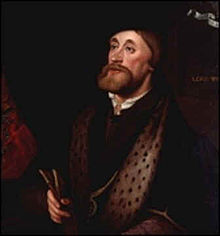
 Henry Carey, Lord Hunsdon

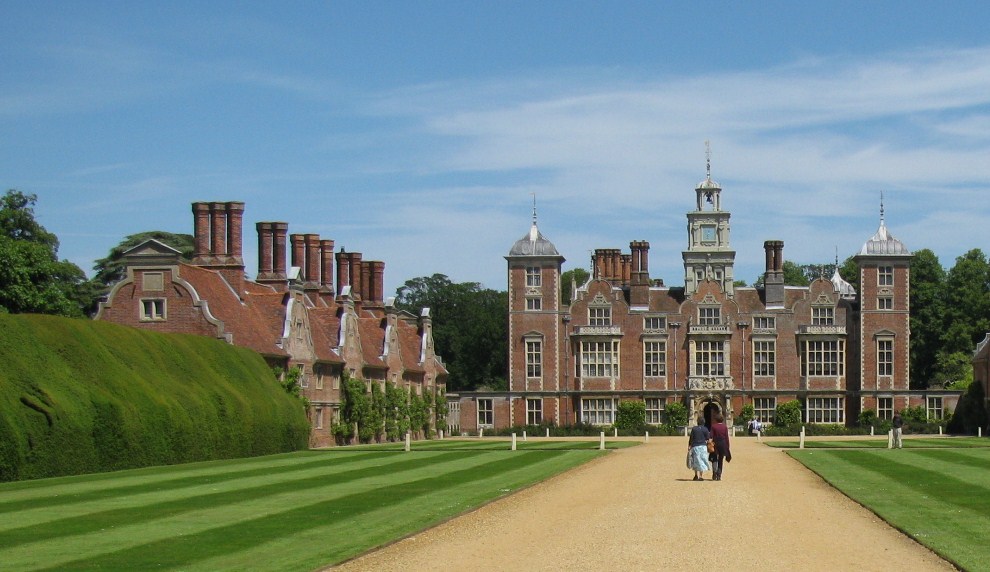
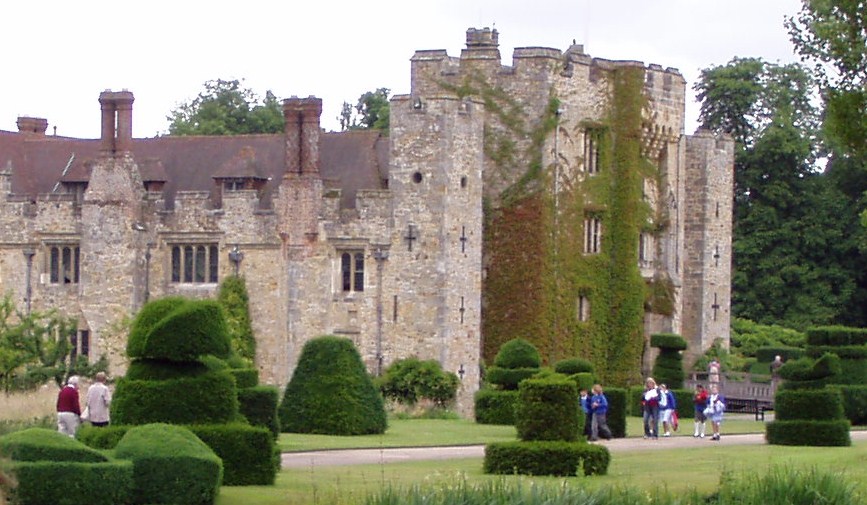
Mary Boleyn, was born most likely at Blickling Hall and reared at Hever Castle; with no evidence of an exact date for her birth most historians place it in the year 1499. Mary, tutored at home along with her siblings George and Anne, received a conventional education until 1514.  Her father arranged for her to become a maid-of-honor to Mary Tudor, sister to Henry VIII, who was soon to become the bride of King Louis XII of France. Mary Tudor was widowed shortly after her wedding and returned home. Mary Boleyn’s reputation through generations has implied affairs with French courtiers and even the new King of France Francis I.  Mary Boleyn became a maid-of-honor to Catherine of Aragon and shortly after wed Sir William Carey.  It was believed that she began an affair with King Henry around this time.  This was not a publicized liaison but the evidence is difficult to shift through.  Was the relationship not well-known at the time or was it suppressed later?  After Henry VIII had discarded Catherine due to the rise in his conscience of marrying the wife of his brother (against scripture Leviticus 20:21), could he have destroyed all evidence of an affair once he became determined to marry Anne?  If he had fathered children by Mary, would he also have repressed those facts? 

213 Welcome to my home
Blickling Hall June 2012

OLYMPUS DIGITAL CAMERA
Hever Castle 2007

Evidence is strong that Henry VIII did have an affair with Mary Boleyn.  Paul Friedmann relays that Dr. Ortiz, the Spanish theologian sent to Rome to assist the cause of Catherine of Aragon, “wrote to the empress, ‘that some time ago he [Henry] sent to ask his holiness for a dispensation to marry her, notwithstanding the affinity between them on account of his having committed adultery with her sister.’ In 1529 Charles V had already heard of the matter. Charles declared that Henry’s conscientious scruples did not seem to be justified, especially ‘if it were true, as his said Majesty had heard (although he himself would not positively affirm it), that the said king had kept company with the sister of her whom he now, it was stated, wanted to marry.’ In 1532, Eustache Chapuis speaks of the former adultery of Henry with Mary Boleyn as a well-known fact of which there can be no doubt. ‘Even if,’ he writes, ‘he could separate from the queen, he could not have her [Anne], for he has had to do with her sister.’ Such, in the main, are the arguments for the opinion that Mary Carey had been the mistress of Henry” (Friedmann 325-327).

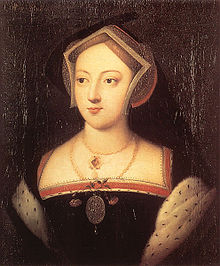
Mary_Boleyn   William_Cary
Mary Boleyn Carey                               William Carey

Of course, there is the famous incident of Sir George Throgmorton speaking to the king of the rumor that Henry had improper relations with Anne’s mother and sister, and “Henry replied, ‘Never with the mother;’ and Cromwell, who was present, added, ‘Nor with the sister either.’” (Friedman 326).  Could even Henry VIII have been such a hypocrite to justify marriage to Anne Boleyn after he had discarded Catherine of Aragon for being the wife of his brother? One must remember, Henry desperately wanted to marry Anne.

Another rumor passed down through the centuries is that Henry Carey was the natural son of Henry VIII.  If this were true, would the king have recognized the boy as such?  After all, Henry had acknowledged Henry FitzRoy, the child he had with Elizabeth Blount, and rewarded him accordingly. The difference is the king did not want to marry Elizabeth Blount’s sister.  Would measures have been taken at the time to suppress the truth?  Even if Henry had acknowledged Mary’s child, would he have disposed of all official records two to three years later when he became infatuated with Anne?

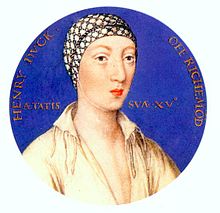
HenryFitzRoy
Henry FitzRoy

Allison Weir is adamant that Henry did not father Mary Boleyn Carey’s child (Weir Lady in the Tower 309-310). This blogger also wonders if Anne would have obligingly taken the wardship of Henry Carey when William Carey died if she thought he could be a threat to her own children as an illegitimate son to the king?  Very few contemporary sources mention this possibility.  John Haile*, vicar of Isleworth, wrote on April 20, 1535, that Morever, Mr. Skydmore dyd show to me yongge Master Care, saying that he was our suffren Lord the Kynge’s son by our suffren Lady the Qwyen’s syster, whom the Qwyen’s grace might not suffer to be yn the Cowrte” (Hoskins).

John_Hale_DSCN5606
John Haile 

Mary’s disgrace came in 1534 when she secretly married a soldier, William Stafford.  As a second son of a modestly wealthy landowner, William’s prospects were not great. Queen Anne was furious and banished her sister from Court.  After her siblings were executed in 1536, her parents died within a short time period.  As sole heir Mary then inherited some family property.  She lived comfortably and quietly until her death in July of 1543. 

thomas boleyn        elboleyn
Thomas Boleyn                          Believed to be Elizabeth Boleyn

When William Carey died of the sweating sickness 23 June 1528, Anne Bolyen was granted Henry’s wardship. He benefited enormously as Anne had him educated by “Nicholas Bourbon, a French humanist and other prominent educators” (Warnicke 148).  This patronage came to an end when Anne was executed in May of 1536; Henry was ten years old. 

Anne Morgan, the daughter of Sir Thomas Morgan and Anne Whitney, was his bride on 21 May 1545.  The couple would eventually have 12 children. In 1547, Henry was elected as a member of Parliament for Buckingham where he served for many years.  During the reign of Edward VI, he received several manors to provide a living for him and his family.  Soon after the accession of Elizabeth Regina, Henry received a knighthood (his wife was appointed as a Lady of the Privy Chamber) and was elevated to the peerage by letters patent, as Baron Hunsdon. Along with the peerage was a grant of the estate of Hunsdon in Hertfordshire and a pension of £4,000 a year “(according to the valuation in that age) in fair desmesnes, parks, and lands lying about it” (Fuller 47). 

anne morgan
Anne Morgan, Lady Hunsdon, portrait is displayed at Hatfield House

*John Haile was one of the first priests to die as a result of the Act of Supremacy (not acknowledging Henry VIII as Head of the Church).  He, along with several others, was hanged, drawn and quartered at Tyburn on 4 May 1535. Haile was beatified by Pope Leo XIII in 1886.

Henry Carey, Lord Hunsdon Part II will follow as the next published blog entry.

Announcing Elizabeth’s Birth

Elizabeth’s Birth Announcement:

In the summer of 1533, as the birth of the child of Henry VIII and Anne Boleyn drew nearer, a courtier, John Russell, wrote in a letter to Lord Lisle, Captain of Calais, that he “never saw the King merrier” (Nichols 443). The royal couple were at Windsor until 21 August when they traveled to Whitehall.  From there on 26 August, they moved to Greenwich where Anne was to take to her chamber. This required a formal ceremony to be performed.  Anne went in procession to the Chapel Royal to hear mass, then to her Great Chamber.  She and her guests dined and then ate ceremoniously from a “goodly spice plate…of spice and comfettes.” The Lord Mayor of London provided “a cuppe of assaie of gold, and after that she had dronke, she gave the Maior the cuppe.” Once the refreshments were partaken of, Anne “under her Canapie, departed to her Chamber” and at the entry of her chamber, she gave her Canopy of State to the barons “accordyng to their clayme” (Hall 805). Anne’s Lord Chamberlain called for all to pray for the safe delivery of her child and then Anne and her women entered her chamber” (Hall 805).    Henry 8      anneboleyn
            King Henry VIII                           Queen Anne Boleyn

Anne’s chambers would have been altered tremendously to create the lying-in chamber to provide enough storage for multiple weeks of supplies and baby items.  Included would have been furniture: beds for the birth, recovery and ceremonies, and the baby cot; plus blankets, pillows and bedding.  An altar for religious services would have been included along with candlesticks, crucifixes and religious images.  Tapestries would have covered the walls, ceiling and all windows except for one.  Alison Weir stated that the tapestries showed St. Ursula and her 11,000 virgins (Weir Six Wives 257).  David Starkey, on the other hand, informed that the tapestries would not have depicted animals or humans as that could trigger fantasies in the mother-to-be and lead to a deformed child (Starkey Elizabeth 2). Regardless of the decoration themes, one can envision the chamber as being a “cross between a chapel and a luxuriously padded cell” (Starkey Elizabeth 2).

greenwich 1533
 Greenwich 1533

William Blount, 4th Baron Mountjoy, Chamberlain to Catherine of Aragon sent to his counterpart in Anne’s household, George Brooke, 9th Baron Cobham, advice on the correct method for the confinement and ensuing ceremonies.  A general procedure had been followed for generations, and it was unlikely that Henry VIII would jeopardize the successful birth of his male heir by altering the steps in any way.  That is why the speculation that Henry kept Anne from her confinement in order to dupe the general population about the date of conception does not make sense.
george brooke
George Brooke, 9th Baron of Cobham and Queen Anne’s Lord Chamberlain

Once a woman entered her lying-in chamber, it was a signal that she did not expect to have her child for about a month. Anne gave birth within two weeks. How and why could there be such a miscalculation? Retha Warnicke speculates that Henry took advantage of Anne’s good health in the summer of 1533 and delayed her entry to her chamber.  He wanted to confuse people over the delivery date to convince them that the child had been conceived during the time of their marriage (Warnicke 164).  Would Henry do that?  Would he risk the health of his male child in such a way?  I do not think so.  Would he encourage people to assume the date of their wedding was earlier than it was?  Probably.

Chronicler Edward Hall insisted that Henry and Anne married on 14 November 1532 on “sainct Erkenwalds daie” and managed it to be “kept so secrete, that very fewe knewe it, til Builyne she was greate with child, at Easter after” (Hall 794).  Other sources state the wedding was on 25 January 1533.  Eric Ives speculates that the earlier date was used much afterwards to protect Elizabeth’s reputation against being born out of wedlock.  If a compromise theory is believed, a commitment ceremony could have been held in November that would “stand up in canon law– espousals de praesenti before witnesses which, if sealed by intercourse, would have been canonically valid …” (Ives 170).  Henry would have then held another ceremony, before a priest, in January once it was obvious Anne was pregnant: or could the mid-wives and physicians have underestimated the delivery date?  We will never know.  What we do know is that on “vii day of September being Sondaie, between thre and foure of the Clocke after noone, the Quene was delivred of a faire lady” (Hall 805).

The fact that the child was a girl was a shock to her parents so sure they were that they would have a son.  Tradition tells us that Henry responded appropriately to Anne by saying that all was well since they were both young “by God’s grace, boys will follow” (Weir, pg. 258).  Immediately following the birth, a Te Deum was sung and “great preparacion was made for the christening” with the Mayor of London, Stephen Peacock, and chief citizens “commaunded to bee at the Christenyng, the Wednesdaie folowyng” in all of their finery went by barge to Greenwich.  “All the walles betwene the Kynges place and the Friers, were hanged with Arras, and all the waie strawcd with grene” the Observant Friars Church was also hung in tapestries.  The font was “of siluer, and stoode in the midles of the Churche, three steppes high, whiche was couered with a line clothe … oner it hong a square Canape of crimosin Satten, fringed with golde” and in an area close by was a brazier with a fire in it to keep the child warm.  When “al these thynges wer ordered, the child was brought to the hall,” followed by members of Court with “the Erie of Essex, bearyng the couered Basins gilte, after hym the Marques of Excester with taper of virgin waxe, next hym the Marques Dorset, bearyng the salt, behynd-hym the lady Mary of Norffolk, bearyng the cesom whiche was very riche of perle & stone, the old Duches of Norffolk bare the childe” (Hall 805).   The child wore, in addition to a christening robe heavy and stiff with gold embroidery…a royal mantle of purple velvet and miniver, with a train so long that it was borne up by a lady and two gentlemen (Tytler 2).

frances
Portrait identified as Frances Brandon Grey, Marchioness of Dorset, Duchess of Suffolk

An enthusiastic Hall continues to describe the scene as the Duke of Norfolk walked to the right of the baby, the Duke of Suffolk to the left and the Countess of Kent bore the train along with other noble ladies.  The baby’s uncle, Lord Rochford and three others carried a canopy over her.  When “the child was come to the churche dore, the bishop of London met it with diverse bishoppes and Abbottes mitred, and began the observances of the Sacrament” (Hall 806).

One godmother was the baby’s cousin, Frances Brandon, Marchioness of Dorset; the other, who carried the child, was her great-grandmother, Agnes, Dowager Duchess of Norfolk, the godfather was Archbishop of Canterbury, Thomas Cranmer.  The Bishop of London John Stokesley, assisted by other clergy performed the ceremony (Tytler 2). The “childe was named Elizabeth: and after that al thyng was done, at the churche dore the child was brought to the Fount, and christened” (Hall 806).

agnes norfolk3
Agnes, Dowager Duchess of Norfolk

We are told that the Garter Chief King of Arms then proclaimed “God of His infinite goodness, send a prosperous life and long, to the high and mighty princess of England Elizabeth” (Strickland 4). Next Elizabeth was confirmed as part of the extended ceremony. Afterwards servants brought in “wafers, comfits and hypocras in such plenty that every man had as much as he would desire” (Somerset 4). “Then they set forwardes, the trumpettes goyng before in thesame ordre, towarde the kynges place, as they did when they came thether warde, … and in this ordre thei brought the princes, to the Quenes chamber (Hall 806).  With Henry VIII in attendance, Queen Anne received her child back while Londoners rejoiced with Court supplied wine and bonfires in the streets but no jousts or fireworks—this was a princess not a prince.  Publically Henry continued to reassure that the princess was not a disappointment.  Privately, as reported by a gleeful Eustace Chapuys, Spanish Ambassador, the birth was a “great regret both of him and the lady, and to the great reproach of the physicians, astrologers, sorcerers, and sorceresses, who affirmed that it would be a male child. But the people are doubly glad that it is a daughter rather than a son, and delight to mock those who put faith in such divinations, and to see them so full of shame” (Gairdner VI 1112).

How could the predictions go so wrong? 

Besides soliciting physicians’ opinions on the sex of the child, astrologers and soothsayers were also consulted.  Only one did not predict a son.  William Glover wrote to Queen Anne of a vision he had in which she gave birth to a “woman child” and he instructed she “should be delivered of your burden at Greenwich” (Gardiner VI 1599).

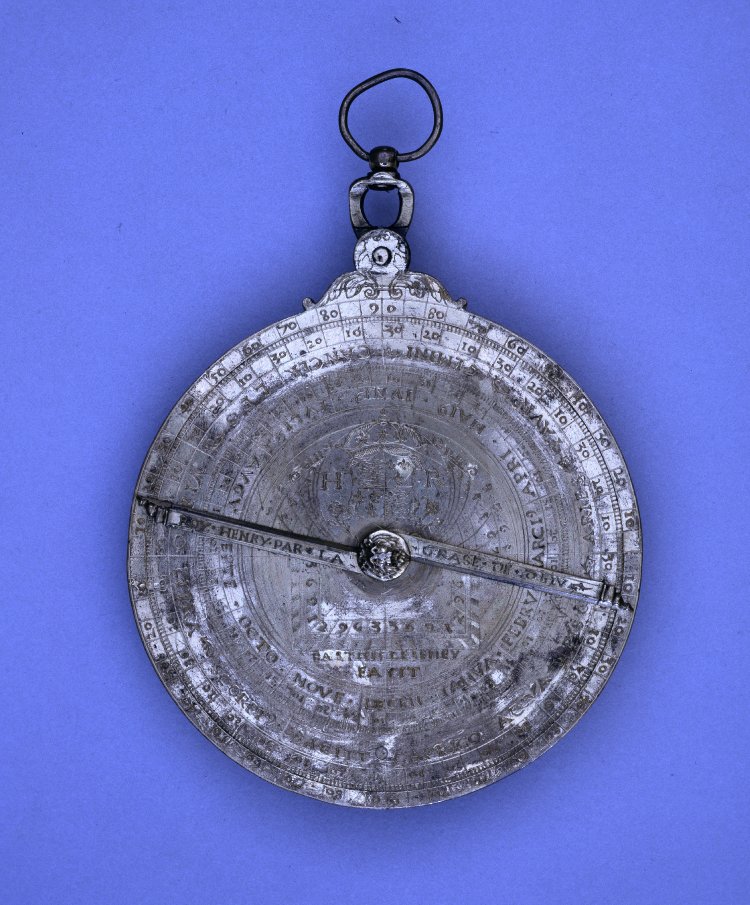
Physicians “studied astronomy, astrology, geometry, mathematics, music and philosophy” in the 16th century.  “The Tudors believed strongly in the divine plan ….  Fate, fortune and goodwill might cure” (Hurren). Included in the studies of sciences, astrology was certainly compatible with religion at this time.  Astrology was considered a way to understand God’s plan.  Henry VIII received predictions that the child Anne was carrying was a boy—there was no reason to doubt that.  God had punished Henry for co-habitating with his brother’s wife, Catherine of Aragon, against the teachings of Leviticus, by not granting living male children to that union.  Surely, he could not have misinterpreted the signs of the divine will to divorce Catherine.  Sons would come from his union with Anne.

AN00247557_001_l  AN00247559_001_hhl
Henry VIII’s astrolabe made for him by Bastien le Seney, royal clockmaker

References to prophecies and predictions were accepted at the time as were the “astrological superstitions of the generation” (Tytler 2). In one of his love letters to Anne, Henry showed a “personal interest in astrology: in attempting to dispel her fears about their forced separation” (Warnicke 165).

“I and my heart put ourselves in your hands. Let not absence lessen your affection; for it causes us more pain than I should ever have thought, reminding us of a point of astronomy that the longer the days are, the further off is the sun, and yet the heat is all the greater. So it is with our love, which keeps its fervour in absence, at least on our side. Prolonged absence would be intolerable, but for my firm hope in your indissoluble affection. As I cannot be with you in person, I send you my picture set in bracelets” (Brewer).

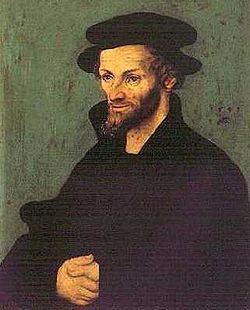
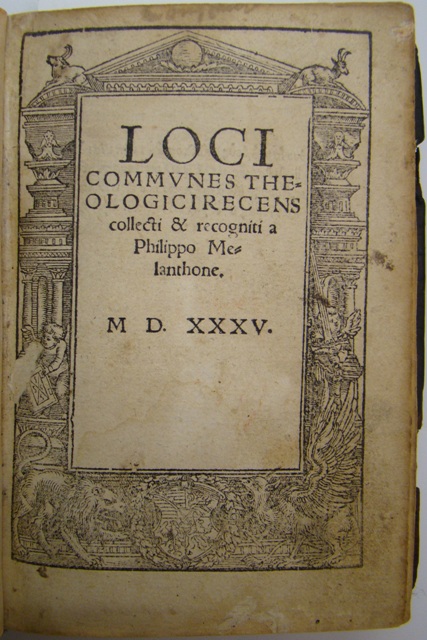
As Lutheran theologian Philipp Melancthon later said in his dedication to the text, Theological Commonplaces, “Henry is ‘the most learned of kings not only in theology, but also in other philosophy, and especially in the study of the movement of the heavens’. Since the king and his contemporaries held ‘a complex view of conception in which both the physical and spiritual’ were intertwined, he may have been persuaded of the validity of the prophecies about the child’s sex because he had personally done all that was necessary for him to earn and to merit a divine blessing in the form of a son” (Warnicke 165).

PhilippMelanchthon
Theologian, Philipp Melancthon
loci15352
Theological Commonplace, 1535 which had the dedication to Henry VIII.

“Anne’s skeptical attitude toward the most superstitious of them must have been well-known” as John Foxe later discussed it (Warnicke 165).  Foxe recounted a story that implied Anne’s “true faith …for when king Henry was with her at Woodstock, and there, being afraid of an old blind prophecy, for which neither he nor other kings before him durst hunt in the said park of Woodstock, nor enter into the town of Oxford, at last, through the Christian and faithful counsel of that queen, he was so armed against all infidelity, that both he hunted in the aforesaid park, and also entered into the town of Oxford, and had no harm”  (Foxe 136). Popular belief maintained that Henry did abide by the use of prophecies.
John_Foxe
John Foxe

Certain the child would be a boy, Henry and Anne had selected the names of Edward and Henry and had asked Francis I, King of France to be godfather.  In a dispatch to Francis, his Ambassador, Jean de Dinteville, The Bailly of Troyes*, explains how he had been asked to “hold at the font the child of which the Queen is pregnant, if it is a boy” (Gairdner VI 1070).

As an aside, de Dinteville (also as known as d’Intevile Polizy) “chevalier Sieur de Polizy, near Bar-sur-Seyne, Bailly of Troyes who was Ambassador in England for King Francis I in the years 1532-1533” was identified in the late 19th century as one of the sitters in the Ambassadors painting by Hans Holbein (Hervey 12).  Without going into extreme detail, the clues in the painting confirmed what Hervey discovered on a fragment of manuscript.  An example would be the seigneurie, an area of manorial influence that de Dinteville held, was Polizy in Burgundy shown on the globe in the painting  (Hervey 8).
jeandinteville
Jean de Dinteville, French Ambassador 
ambassadors
The Ambassadors by Hans Holbein, 1533
Jean de Dinteiville and Georges de Selve

There is no record of whether or not Francis I felt any sympathy for Henry’s disappointment but it was clear he would not be asked as godfather for a princess’s baptism. While de Dinteville showed his “complete allegiance to the Crown of France” (Hervey 41), being ready to fill whatever office would be required even for a princess, his Spanish counterpart, Eustace Chapuys, was interpreting the birth of a daughter to Henry as the divine will that “Misfortune manages well; and God has forgotten him entirely, hardening him in his obstinacy to punish and ruin him” (Gairdner VI 1112).

francisi
King Francis I of France   

After the ceremony de Dinteville exclaimed “the whole occasion was so perfect that nothing was lacking” (Hibbert 14).  Chapuys concluded “the christening has been like her mother’s coronation, very cold and disagreeable both to the Court and to the city, and there has been no thought of having the bonfires and rejoicings usual in such cases. After the child was baptised, a herald in front of the church-door proclaimed her princess of England (Gairdner VI 1125).
chapuys
Eustace Chapuys, Spanish Ambassador

Prior to the christening, Chapuys claimed that the child would “be called Mary, like the Princess; which title, I hear in many quarters, will be taken from the true princess and given to her” (Gairdner 1112).  He had to retract saying “the daughter of the lady has been named Elizabeth, and not Mary” (Gairdner 1125).  Obviously, the child was named for her two grandmothers, Elizabeth of York and Elizabeth Howard.

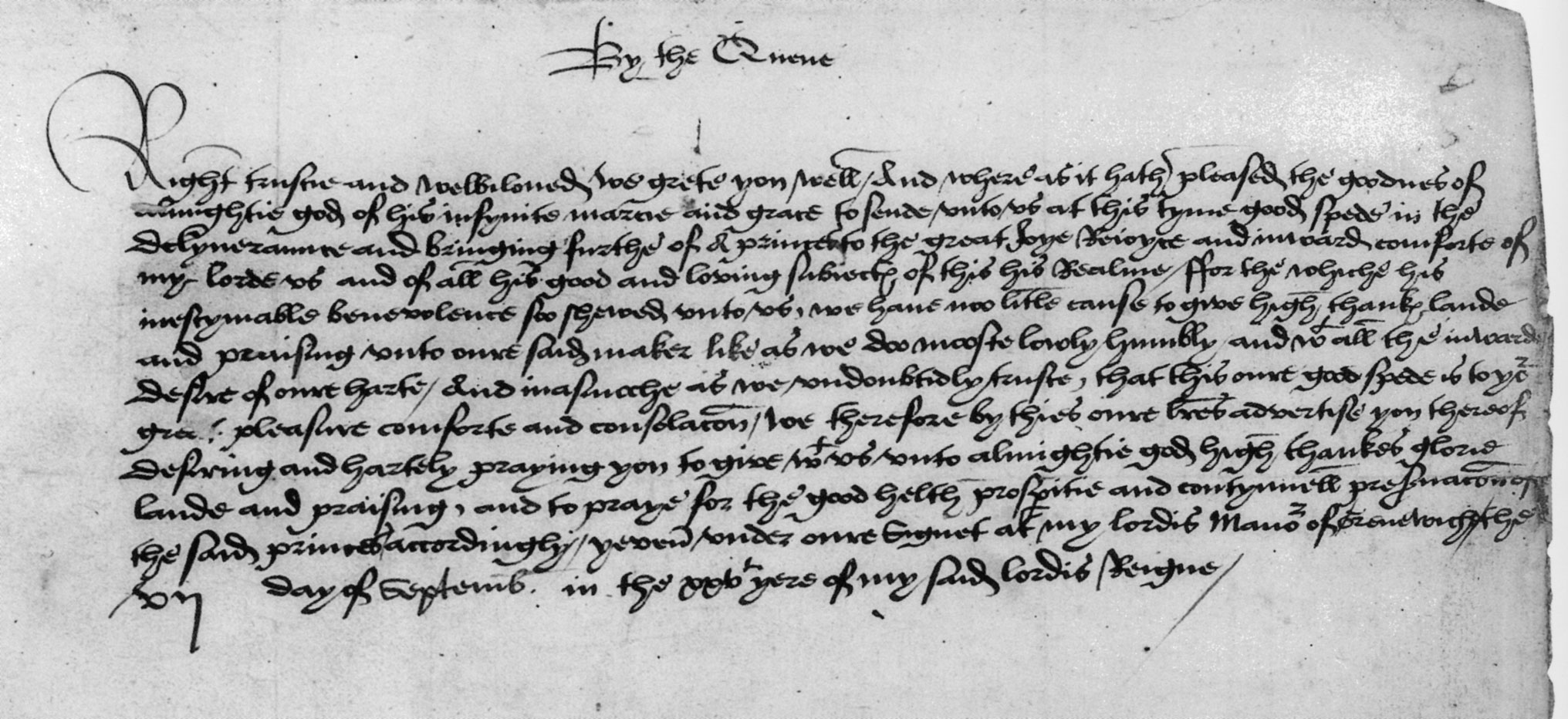
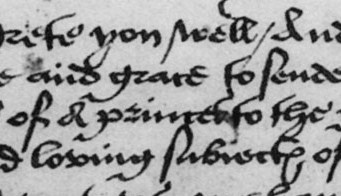
So sure were the parents that the child would be a boy, official announcements, which were to be sent throughout the realm and to the Courts of Europe from the Queen listed the child as a prince.  One such letter is preserved written to Lord Cobham, Anne’s Chancellor informing him of the birth at Greenwich on 7 September during the 25th year of the reign of Henry (Gairdner VI 1089).   An ‘s’ was added to the word prince (see the facsimile below—the first is in the third line, center also shown in an enlargement—and secondly in the final sentence) which would have altered it enough in the 16th century to signify the word princess.
elizabethbirthannouncement
Letter of Lord Cobham– the area with the ‘s’ insertion is enlarged below.  A transcription is also included.
elizabethbirthannouncement

By the Quene
Right trustie and welbiloved, we grete you well. And where as it hath pleased the goodnes of Almightie God, of his infynite marcie and grace, to sende unto us, at this tyme, good spede, in the delyveraunce and bringing furthe of a Princes, to the great joye, rejoyce, and inward comforte of my Lorde, us, and all his good and loving subjectes of this his realme; for the whiche his inestymable benevolence, soo shewed unto us, we have noo litle cause to give high thankes, laude, and praising unto oure said Maker, like as we doo mooste lowly, humbly, and with all the inwarde desire of our harte. And inasmuche as we undoubtidly truste, that this oure good spede is to your great pleasure, comforte, and consolation, We, therefore, by thies our letters, advertise you thereof, desiring and hartely praying you to give, with us, unto Almightie God, high thankes, glorie, laude, and praising; and to praye for the good helth, prosperitie, and contynuall preservation of the said Princes accordingly. Yeven under our Signet, at my Lordis Manour of Grenewiche, the 7 day of September, in the 25th yere of my said Lordis reigne.
To oure right trustie and welbiloved, the Lorde Cobham.

During a lecture at the Newberry Library in Chicago on November 22, 2003, David Starkey stated that the most important document in Elizabeth’s life was the letter announcing her birth.  The Tudor Court needed a male heir.  Society held the  attitude that a woman would not be able to hold public office and have influence.

Anne Boleyn had disappointed Henry and the kingdom.  Everyone was yet to see the significance of the life of this child that began with such an unpleasant shock yet would produce a ruler with “the body of a weak and feeble woman …but the heart and stomach of a king, and a king of England too” (Marcus 326).

*The bailly was a French “Crown officer in whose name justice was administered throughout a certain district” (Hervey 38),

References

Brewer, J.S. (editor).  “Henry VIII: July 1527, 1-10.” Letters and Papers, Foreign and Domestic, Henry VIII, Volume 4: 1524-1530 (1875): 1465-1477. British History Online. Web. 02 June 2013.

Denny, Joanna. Anne Boleyn: A New Life of England’s Tragic Queen. Cambridge, MA: Da Capo, 2006. Google Books. Web. 7 June 2013.

Doran, Susan.  Henry VIII:  Man & Monarch. London:  British Library, 2009. Print.

Eakins, Laura. “Elizabeth Birth Announcement.” TudorHistory. Google+Page, n.d. Web. 2 June 2013.

Elton, G. R. England Under the Tudors. Third ed. London:  Routledge, 1991.

Erickson, Carolly. The First Elizabeth. New York: Summit Books. 1983. Print.

Foxe, John. The Acts and Monuments of John Foxe: A New and Complete Edition. Ed. Stephen Reed Cattley, M. A., Rev. Vol. V. London: R.B. Seeley and W. Burnside, 1837. Google Books. Web. 4 June 2013.

Fraser, Antonia.  The Wives of Henry VIII.  New York:  Alfred A. Knopf, 1992. Print.

Gairdner, James (editor). “Henry VIII: Miscellaneous, 1533.” Letters and Papers, Foreign and Domestic, Henry VIII, Volume 6: 1533 (1882): 449-466; 653-680. British History Online. Web. 02 June 2013.

Hall, Edward, Henry Ellis, and Richard Grafton. Hall’s Chronicle; Containing the History of England, during the Reign of Henry the Fourth, and the Succeeding Monarchs, to the End of the Reign of Henry the Eighth, in Which Are Particularly Described the Manners and Customs of Those Periods. London: Printed for J. Johnson and J. Rivington; T. Payne; WIlkie and Robinson; Longman, Hurst, Rees and Orme; Cadell and Davies; and J. Mawman, 1809. Internet Archive.org. Web. 2 Jan. 2013.

Hervey, Mary F. S., and Hans D. J. Holbein. Holbein’s ‘Ambassadors’, the Picture and the Men. London: G. Bell & Sons, 1900. Google Books. Web. 13 June 2013.

Hibbert, Christopher.  The Virgin Queen: Elizabeth I, Genius of the Golden Age.  New

York: Addison-Wesley Publishing Company, Inc., 1991.  Print.

Hurren, Elizabeth T., Dr., Senior Lecturer History of Medicine Oxford Brookes University.  “Henry VIII’s Medical World.” Henry VIII’s Medical World. Wellness Trust at Oxford Brookes University, n.d. Web. 7 June 2013.

Ives, Eric.  The Life and Death of Anne Boleyn: The Most Happy. Oxford: Blackwell Publishing, 2004. Print.

Lindsey, Karen.  Divorced, Beheaded, Survived:  A Feminist Reinterpretation of the Wives of Henry VIII.  Reading, Massachusetts:  Addison-WESLEY Publishing Company, 1995. Print.

Marcus, Leah S. et al., eds. Elizabeth I: The Collected Works. Chicago: University of Chicago Press, 2002. Print.

Nichols, Francis Morgan. The Hall of Lawford Hall: Records of an Essex House and of Its Proprietors,. London: Printed for the Author, 1880-1890, and Sold by Ellis and Elvey, 1891. Google Books. Web. 4 June 2013.

Ridgway, Claire.  The Fall of Anne Boleyn:  A Countdown.  UK:  MadeGlobal Publishing, 2012. Print.

Somerset, Anne. Elizabeth I.  New York: Alfred A. Knopf, 1991. Print.

Starkey, David.  Elizabeth:  The Struggle for the Throne. New York:  HarperCollins Publishers. 2001. Print

Starkey, David, Dr. “Queen Elizabeth and Her Court.” Elizabeth I: Ruler and Legend. Newberry Library, Chicago. 22 Nov. 2003. Lecture.

Starkey, David.  Six Wives: The Queens of Henry VIII.  London:  Chatto & Windus, 2003.  Print.

Strickland, Agnes. The Life of Queen Elizabeth, London: J.M. Dent &, 1906. Google Books. Web. 3 June 2013.

THECREATIONOFANNEBOLEYN. “Anne and Elizabeth: Consulting the Stars for Elizabeth’s Birth.” Web log post. Semper Eadem. WordPress.com, 28 Aug. 2011. Web. 2 June 2013.

Tytler, Sarah.  Tudor Queens and Princesses.  New York:  Barnes and Noble, 1993. Print.

Warnicke, Retha.  The Rise and Fall of Anne Boleyn: Family Politics at the Court of Henry VIII. Cambridge:  Cambridge University Press, 1989.  Print.

Weir, Alison.  The Lady in the Tower:  The Fall of Anne Boleyn.  London:  Jonathan Cape, 2009.  Print.

Weir, Alison.  The Six Wives of Henry VIII.  New York: Grove Weidenfeld, 1991. Print.

Whitelock, Anna.  Mary Tudor:  Princess, Bastard, Queen. New York:  Random House, 2009. Print.

The Fourth Step-Mother of Elizabeth, Katherine Parr

The Fourth Step-Mother of Elizabeth, Katherine Parr
As discussed in an earlier blog entry, Catherine Howard, Henry VIII passed a law that required all future queens of England to have chaste pasts or be willing to confess any ‘indiscretions.’  Obviously, this eliminated many candidates.  Who would be free from scandal or brave enough to tell Henry if she was not?

Enter Katherine Parr, the daughter of Thomas and Maud Parr.  Maud, a lady-in-waiting to Queen Catherine of Aragon, was a highly intelligent and well-educated woman.  Queen Catherine placed her in charge of the education of many of the youngsters at Court. Her children, especially Katherine, benefited greatly from the Court tutors and developed a life-long love of learning.  Maud was widowed at the age of 25 and never remarried.  She concentrated her efforts on establishing good matches for her children and protecting her son’s inheritance.  In 1529 when Katherine was 16 or 17, she was married to Edward Borough.  Edward was in his early twenties when he died in 1533.  It is often confused that she married his grandfather, another Edward, perpetuating the myth of her marrying aged widowers. This blogger wonders if the confusion came because she would have resided in a multi-generational household perhaps with the grandfather-in-law as the head.

gains
The Borough family manor, Gainsborough Old Hall.

gbbimages
Gainsborough Old Hall

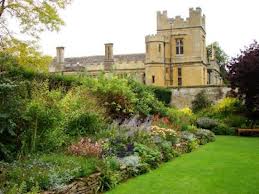
Maud Parr died the year after Katherine was widowed and it left the young woman basically independent.  Katherine arranged her own next marriage to John Neville, Lord Latimer of Snape Castle in Yorkshire, a man in his early forties.  The exact date is unknown but they married in 1534.  Lord Latimer had two children both of whom became very close to their young stepmother, especially the daughter, Margaret.  From the time of her marriage, Katherine had the responsibilities of the household.  Her responsibilities expanded to include the entire estate when Lord Latimer took an active role, on the side of the rebels, in the Pilgrimage of Grace.  As examples of her abilities, Katherine withheld a siege, protected the occupants of the household and managed, with the help of her brother William, to gain a pardon for Latimer.  King Henry did not hold it against Latimer and both Katherine and her husband were welcomed back to Court.

snape9
Snape Castle

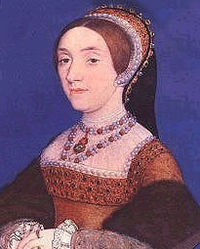
It was while at Court, with Latimer ailing and soon dying, that Henry became aware of the thirty-year-old Lady Latimer.  Described as attractive but not pretty, Katherine always dressed impeccably, had the translucent skin that was so praised in Tudor times, auburn colored hair and a dignified bearing.

parrk
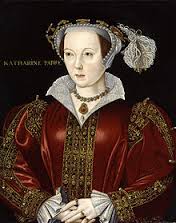
Katherine Parr by an unknown artist.  Displayed at Montacute House.

Thomas Wriothesley, Lord Chancellor, wrote to the Duke of Norfolk that there was “a woman, in my judgement, for certain virtue, wisdom and gentleness, most meet for his Highness.  And sure I am that his Majesty had never a wife more agreeable to his heart than she is.  The Lord grant them long life and much joy together” (Weir 498).  Praise indeed considering he later tried to have her arrested and executed.

Eustace Chapuys, the Spanish Ambassador, reported to Charles V that Katherine “is graceful and of cheerful countenance; and is praised for her virtue” (Hume 248).  He continued that she was not “so beautiful” and that there was “no hope of issue, seeing that she had none with her two former husbands” (Gairdner XVIII 954).  Charming and amiable, she was pleasant to nobles and servants alike.  Sensible and efficient, a good conversationalist, experienced with step-children, and having aided an ailing spouse, Katherine seemed ideal to become the sixth wife of Henry VIII.

parrhorenbout
Miniature of Katherine by Lucas Horenbout, 1544

kp5
Held in the possession of the National Portrait Gallery, this portrait had been mistakenly identified as Lady Jane Grey for many years.  Done in 1545 it is now credited to be Katherine Parr.

Interestingly, she was the only one of Henry’s wives who did not want to become his next bride. Historians believe this for a couple of reasons: she was intelligent enough to see the dangers involved; and she had developed an interest in Thomas Seymour, Lord High Admiral.  Once Henry proposed, Katherine accepted her fate and became determined to make the best of the situation.  Most commentators now believe she saw her chance to promote a more liberal religious agenda and the betterment of her family.  As was Henry’s custom, his bride’s family advanced along with her elevation.  Katherine’s brother, William Parr, was granted the Earldom of Essex in his own right.  Her sister Ann and brother-in-law Sir William Herbert gained positions at Court as did members of her extended family, the Throckmortons and her step-daughter Margaret Neville.

parr by holbien
William Parr in a sketch by Hans Holbein.

As Queen, Katherine used her influence to encourage the King to bring to Court his children from their respective households.  She felt they should be there, beyond the wedding celebrations, and see their father more.  Henry gave his approval and Katherine wrote them all to come.  Agnes Strickland assures that Katherine, who knew Princess Mary well, was also “acquainted with Elizabeth before she became queen, and greatly admired her wit and manners” (Strickland Volume 4 14).

A letter from 10-year-old Elizabeth survives in which she wrote, flowing with gratitude, to acknowledge what Katherine had done.

“Madame, The affection that you have testified in wishing that I should be suffered to be with you in the Court, and requesting this of the King my father, with so much earnestness, is a proof of your goodness.  
So great a mark of your tenderness for me obliges me to examine myself a little, to see if I can find anything in me that can merit it, but I can find nothing but a great zeal and devotion to the service of your Majesty.  But as that zeal has not been called into action so as to manifest itself, I see well tha tit is only the greatness of soul in your Majesty which makes you do me this honour, and this redoubles my zeal towards your Majesty.  I can assure you also that my conduct will be such that you shall never have cause to complain of hainv done me the honour of calling me to you; at least, I will make it my constant care that I do nothing but with a design to show always my obedience and respect.  I await with  much iimpatience the orders of the King my father for the accomplishment of the happiness for which I sigh, and I remain with much submission, your Majesty’s very dear Elizabeth” (Queen Elizabeth I 21-22).

There is an interesting interlude in the chronology of Elizabeth’s life between the summers of 1543 and 1544.  Most historians (Linda Porter is an exception) believe Elizabeth offended her father in some way and was banished to Ashridge near the Hertfordshire-Buckinghamshire border—near Berkhamsted where the Queen held the lordship of the manor. Because Katherine kept in contact with Elizabeth and she sent her other step-daughter, Margaret Neville, to act “as liaison between her step-mother and step-sister” it appears as if the youngster had not offended her (James 172-173).  Elizabeth, obviously, had no ill-feelings as she wrote to Katherine that “Inimical Fourtune …has deprived me for a whole year of your most illustrious presence….”  Elizabeth conveyed to Katherine her belief that she was “not only bound to serve but also to revere you with daughterly love …”(Marcus 5).

Henry was abroad, Katherine was Regent and Elizabeth was persistent.  By petitioning her step-mother to speak to her father, who was on military campaign, Elizabeth was able to end “this my exile” (Marcus 5). Katherine successfully convinced the King to allow Elizabeth to join her at Hampton Court in late July of 1544 cementing her step-daughter’s affection.  Elizabeth seemed secure in Katherine’s affection although she never took it for granted as she wrote “I know that I have your love and that you have not forgotten me for if your grace had not a good opinion of me you would not have offered friendship to me that way” (James 136).

exile letter 001

Fragment of the letter to Katherine from 10-year-old Elizabeth.  Written in Italian.  On line five you can make out the reference to her exile [mio exilio].

The regard Elizabeth had for Katherine was also shown in the New Year’s Day gift that she presented to her in December of 1544.  Elizabeth translated, in italic script, Marguerite of Navarre’s Le Miroir de l’ame pecheresse [The Mirror of a Sinful Soul].  The gift itself was a tribute to her spiritual leanings, her education and her affection.  The dedication was “To our most noble and virtuous Queen Katherine, Elizabeth, her humble daughter, wisheth perpetual felicity and everlasting joy.” In the accompanying letter Elizabeth hoped that Katherine would “rub out, polish, and mend (or else cause to mend) the words (or rather the order of my writing), the which I know in many places to be rude and nothing done as it should be” (Marcus 6-7).  This shows the trust Elizabeth had for Katherine as a loving mentor and the respect she had for Katherine’s intellectual abilities.

bookblue
Elizabeth’s translation of The Mirror of the Sinful Soul with a cover of embroidery she worked herself.  Notice Katherine’s initials in the center.

The next year, Elizabeth translated Katherine’s book, Prayers or Meditations, into French, Italian and Latin for her father (James 137).  One would suspect that Elizabeth would not want to upset Henry nor jeopardize Katherine by presenting to him materials that would be contrary to his religious beliefs.
gift
Gift to Henry VIII from Elizabeth.  A translation of the work, Prayers or Meditations, by Katherine Parr in multiple languages and covered in embroidery by Elizabeth. 

When Henry had gone to France in July 1544, he appointed Katherine his Regent. This certainly was an expression of his respect and affection for her.  Lord Chancellor Wriothesley, Archbishop Cranmer, Lord Hertford, Dr. Thomas Thirlby and William Petre were her advisors.  Not a woman to be gainstayed, in September 1544, Katherine, dealing with her Regency Council, let it be known that exasperation had set in and she was “wearied with their continual clamor” (Gairdner XIX 231).

Thomas Wriothesley, despite his earlier praise for Katherine, grew to distrust her as he was concerned about the liberal religious views she held and strong personality.  Early in 1544 Katherine had written in the Tenth Psalm of her text Psalms or Prayers taken out of the Holy Scripture this thought-provoking sentence “I am so vexed that I am utterly weary; help me against them that lie in wait for me” (Parr 318).  This has been tagged as a response to the Catholic attempts to discredit her, led by Wriothesley and Stephen Gardiner, Bishop of Winchester, because of her evangelical leanings.

1stEarlOfSouthampton
Thomas Wriothesley, 1st Earl of Southampton, Lord Chancellor

The unease of these two men reached a peak in the summer of 1546 and led to their attempt to arrest Katherine.  They convinced Henry that she harbored radical leanings and fueled his irritation of the recent views Katherine had expressed. Wriothesley lined up the arrest warrant, gathered forty yeomen of the guard and descended upon Katherine while she was in the Whitehall gardens with Henry.

Little did Wriothesley know, Katherine had been warned and had hastened to Henry to apologize for seeming to overstep her boundaries.  She assured the King that she had debated him to distract him from the pain in his leg and to take instruction from him on the proper theological discourse, not to lecture him. Katherine supposedly said that she felt it “preposterous for a woman to instruct her lord” (Strickland III 246). Henry was certainly ready to believe her.  Upon the conclusion of Katherine’s assurances, Henry replied, “And is it so, sweetheart?  Then we are perfect friends” (Strickland III 246).

When Wriothesley came to arrest her, Henry gave him a dressing down and sent him off.  Obviously, this was a very close call for Katherine and she never again conveyed any views counter to the Establishment.

One area which Katherine thwarted convention was in her encouragement of Elizabeth’s education.  The resulting life-long influence cannot be undervalued.  For over four years, although they did not live together that entire time, a close bond was formed. This intelligent and capable woman encouraged and loved this exceptional child.  By taking charge of Elizabeth’s education, both book learning and practical application (Elizabeth witnessed Katherine’s Regency), Katherine influenced the reign of her step-daughter.

Elizabeth received an excellent education.  She was educated alongside her brother for many years until it was decided by Katherine to employ a tutor solely for the princess. This would have been an exception rather than the rule in 16th century England although there were many highly educated women of the previous generation:  Anne Boleyn, Mary More and, of course, Katherine Parr.  Katherine’s deep and genuine love of learning makes her so admirable as an interesting, remarkable woman.

Lamentations1
Copy of Katherine’s text, Lamentations of a Sinner, published in 1547 with her signature.
signature

As Maud Parr’s daughter, a woman who had set up a school at Court and bequeathed money in her will for education, Katherine’s taste for learning was formed young and continued throughout her life.  Margaret Neville, her step-daugher, said in the spring of 1545 “I am never able to render to her grace sufficient thanks for the goodly education and tender love and bountiful goodness which I have evermore found in her highness….”  Prince Edward pretty much said the same thing in 1546.  He thanked Katherine for her “tender and loving letters” and for the “encouragement to go forward in such things wherein your grace beareth me on hand that I am already entered” (James 141).  And Elizabeth praised Katherine for her “fervent zeal your Highness hath towards all godly learning” (Wood 178).

The educations of Edward and Elizabeth were certainly guided by Katherine Parr. Many of their tutors were committed Protestants and humanists.  The tutors’ willingness to educate the princess in the exacting disciplines was telling.  With Katherine also in charge of Jane Grey’s education, her patronage and direction helped formulate two of the sharpest minds of the era—both belonging to females.  Of note is a rare difference of opinion between Katherine and her step-daughter.  In early 1548, Elizabeth’s tutor, William Grindal died.  Katherine wanted to replace him with Francis Goldsmith but Elizabeth wanted Roger Ascham, a fellow from St. John’s College in Cambridge who was well-acquainted with Katherine (James 322).  Writing to Edward’s tutor, Sir John Cheke, Ascham expressed his “uneasy at being the cause of disagreement between the queen and her stepdaughter on such an important matter, actually counseled Elizabeth to accept Goldsmith” (Porter 306). It probably did not take much persuasion, as Ascham became the royal tutor.

roger asham                  dowmmnload

Roger Ascham                                            Sir John Cheke

Elizabeth is a product of Katherine Parr.  The future Queen Regina’s education, religious beliefs, and open-mindedness stem from the guidance of her step-mother. Her devotion was reflected in 1582, when Thomas Bentley’s work, The Monument of Matrons, depicted Katherine Parr as one of the virtuous Queens of history (Fraser 405). Elizabeth’s actions of not forgetting the woman who had permitted her to see the possibilities of rule and to establish England as a cultural center, was certainly a tribute.

The relationship of Elizabeth and Katherine cannot be revealed without the discussion of Thomas Seymour.  This blogger does not want to expend too much time on this topic for all its relevance because of its worthiness of an entire entry on its own.  Thomas Seymour, as brother-in-law to King Henry VIII and uncle to the future king, held prominent positions at Court.  He was there during the times that Katherine Parr was and they began a romance before Henry VIII turned his attention to her.  Upon Henry’s death in January of 1547, the sensible Katherine allowed Seymour to talk her into marriage well before the conventional time-frame of mourning was over.  Katherine had married him for love and as a last chance of happiness.

Seymour Thomas
Thomas Seymour, Lord High Admiral

Little did Katherine know that Seymour had had designs on Elizabeth as a possible wife.  He never quite seemed to relinquish the idea and for her own safety, Elizabeth was removed from her step-mother’s household at Chelsea in 1548 to the care of Anthony Denny and his wife at Cheshunt.  Katherine was pregnant and Seymour could not keep in check his, shall it be said, emotional immaturity and grandiose aspirations.

The story leads to Sudeley Castle where Katherine gave birth to a baby girl, Mary, and died days later of puerperal fever.  She is buried in the chapel in the Castle grounds.

sudeley
Sudeley Castle

burial
Katherine Parr was interred in St. Mary’s Chapel on the grounds of Sudeley under this tomb in the 1800s.

When Elizabeth left Chelsea for her own residence of Cheston, Katherine, according to Gregorio Leti, told her “God has given you great qualities.  Cultivate them always, and labour to improve them, for I believe you are destined by Heaven to be Queen of England” (Strickland 26).

References

Erickson, Carolly. The First Elizabeth. New York: Summit Books. 1983. Print.

Fraser, Antonia.  The Wives of Henry VIII.  New York:  Alfred A. Knopf, 1992. Print.

Gairdner, James, ed. Letters and Papers, Foreign and Domestic, of the Reign of Henry VIII. Vol. 19. London: Longman, Green, Longman & Roberts, 1888. Google Books. Web. 4 May 2013..

Haselkorn, Anne M., and Betty Travitsky. The Renaissance Englishwoman in Print: Counterbalancing the Canon. Amherst: University of Massachusetts, 1990. Google Books. Web. 27 May 2013.

Hibbert, Christopher.  The Virgin Queen: Elizabeth I, Genius of the Golden Age.  New York: Addison-Wesley Publishing Company, Inc., 1991.  Print.

Hume, Martin A. Sharp. Chronicle of King Henry the Eighth of England: Being a Contemporary Record of Some of the Principal Events of the Reigns of Henry VIII and Edward VI, Written in Spanish by an Unknown Hand ; Translated, with Notes and Introduction, by Martin A. Sharp Hume. London: George Belland Sons, 1889. Internet Archive. Web. 4 May 2013.

James, Susan. Catherine Parr:  Henry VIII’s Last Love. Stroud, Gloucestershire: Tempus Publishing. 2008. Print.

James, Susan.  Kateryn Parr:  The Making of a Queen. Brookfield, USA: Ashgate, 1999. Print.

Lindsey, Karen.  Divorced, Beheaded, Survived:  A Feminist Reinterpretation of the Wives of Henry VIII.  Reading, Massachusetts:  Addison-WESLEY Publishing Company, 1995. Print.

Loades, David. The Chronicles of the Tudor Queens.  Stroud, Gloucestershire: Sutton Publishing, 2002. Print.

Marcus, Leah S. et al., eds. Elizabeth I: The Collected Works. Chicago: University of Chicago Press, 2002. Print.

McCaffrey  MacCaffrey, Wallace. Elizabeth I. London: E. Arnold. 1993. Print.

Neale, Neale, J. E. Queen Elizabeth I. Garden City, NY: Doubleday, 1957. Print.

Parr, Katherine, and Janel Mueller. Katherine Parr: Complete Works and Correspondence. Chicago, IL [etc.: University of Chicago, 2011. Google Books. Web. 23 May 2013.

Porter, Linda.  Katherine the Queen:  The Remarkable Life of Katherine Parr.  London:  McMillian, 2010. Print.

Pryor, Felix.  Elizabeth I, Her Life in Letters.  Berkeley, California: University of           California Press, 2003.  Print.

Queen Elizabeth I, Frank Mumby, and R. S. Rait. The Girlhood of Queen Elizabeth: A Narrative in Contemporary Letters. Boston: Houghton Mifflin, 1909. Google Books. Web. 9 May 2013.

Ridley Ridley, Jasper. Elizabeth I: The Shrewdness of Virtue.  New York: Fromm International Publishing Corporation, 1989.  Print.

Somerset Somerset, Anne. Elizabeth I.  New York: Alfred A. Knopf, 1991. Print.

Starkey, David.  Six Wives: The Queens of Henry VIII.  London:  Chatto & Windus, 2003.  Print.

Strickland, Agnes, and Elisabeth Strickland. Lives of the Queens of England, from the Norman Conquest. Vol. III. London: Colburn & Co. Publishers, 1851. Google Books. Web. 7 May 2013.

Strickland, Agnes, and Elisabeth Strickland. Lives of the Queens of England, from the Norman Conquest. Vol. IV. London: Longmans, Green, 1857. Google Books. Web. 2 May 2013.

Strickland, Agnes, and Elisabeth Strickland. Lives of the Queens of England, from the Norman Conquest; with Anecdotes of Their Courts, Now First Published from Official Records and Other Authentic Documents, Private as Well as Public. Vol. VI. London: Henry Colburn, 1844. Google Books. Web. 15 Mar. 2013.

Tytler, Sarah.  Tudor Queens and Princesses.  New York:  Barnes and Noble, 1993. Print.

Weir, Alison. The Children of Henry VII.  New York:  Ballantine Books, 1996. Print

Weir, Alison.  The Six Wives of Henry VIII.  New York: Grove Weidenfeld, 1991. Print.

Wood, Mary Anne Everett. Letters of Royal and Illustrious Ladies of Great Britain: From the Commencement of the Twelfth Century to the Close of the Reign of Queen Mary : Edited, Chiefly from the Originals in the State Paper Office, the Tower of London, the British Museum and Other State Archives. Vol. II. London: Henry. Colburn, 1846. Google Books. Web. 12 May 2013.

The Third Step-Mother to Elizabeth, Catherine Howard

The Third Step-Mother to Elizabeth, Catherine Howard

Henry was infatuated with Catherine Howard.  At Oatlands the two were married on July 28 a couple of weeks after Henry’s marriage to Anne of Cleves was dissolved. The King kept it a secret for many days because he wanted to enjoy his bride before Court etiquette interfered.

He showered his young bride with gifts, gowns, jewels, anything she wanted and did any act which would show his affection.  Henry granted Catherine all the lands that had been Queen Jane’s and even had a gold half-crown coin minted to commemorate his marriage to this perfection of womanhood with Henricus VIII, Rutilans rosa sine spina; “Henry VIII, the shining rose without a thorn” (Dye 771).  Henry also granted her political protection by passing through parliament the Queen Consort Act of 1540.  This legislation allowed the Queen to “act as a woman sole, without the consent of the King’s Highness” (Weir 436).  Perhaps Henry felt safe in her devotion as Catherine adopted as her device, Non aultre volontè que le sinne; “No other will than his.”

coinrosaspina2
Gold Crown Coin with Henricus VIII, Rutilans rosa sine spina —the reverse the crown shield of the royal coat of arms.  

Many observers did not think he showed such generosity or affection to his other wives.  The French Ambassador, Charles de Marillac reported in early September that the “King is so amourous of her that he cannot treat her well enough and caresses her more than he did the others”  (Gairdner XVI 5).

The new queen was still a teenager.  Most historians calculate that she was about 15 when 49-year-old Henry married her.  Physically, Charles de Marillac described Catherine as “rather graceful than beautiful, of short stature, etc.” (Gairdner XVI 5).

Catherine howared02        catherine howard3
Miniature by Hans Holbein                 After Hans Holbein

Was Catherine, personality-wise, a “frivolous, empty-headed young girl who cared for little else but dancing and pretty clothes” (Weir 434)?  Was she simply captivating, pleasant and kind-hearted enough to want everyone to be happy?  Perhaps she did let things go to her head and recklessness took center-stage but one could not call her scheming, “lewd, sly, pitiable” (Sitwell 53).  It does appear as if Catherine was charming, sensual and obedient–a great combination for Henry.

Catherine Howard / Elizabeth Seymour
Also attributed to Hans Holbein

Not only was Henry delighted with his new bride, Elizabeth, Catherine’s seven-year-old stepdaughter, was too.  When Catherine was publicly acknowledged by Henry as his queen, “she directed that the princess Elizabeth should be placed opposite to her at table, because she was of her own blood and lineage.”  At all the public engagements which continued to celebrate the marriage, Catherine “gave the lady Elizabeth the place of honour nearest to her own person” because, according to Gregorio Leti, “that she [Elizabeth] was her cousin” (Strickland Lives of the Queens of England, from the Norman Conquest 15-16).  Elizabeth Boleyn, Anne’s mother, was a sister to Edmund Howard, Catherine’s father (and to Thomas Howard, Third Duke of Norfolk), so they were first cousins.  Elizabeth Regina would technically have been Catherine’s first cousin once removed.

thomas howard norfolk
Thomas Howard, Duke of Norfolk

Catherine did not only favor Elizabeth when they were residing in the same palaces, she made a point for the two of them to meet.  Based on account records from the Master of the Barge, it has been shown that on 5 May 1541 Catherine arranged that Elizabeth would be taken from Suffolk Place to Chelsea where she, Catherine joined her on 6 May (Gairdner XVI 391). 

Besides the attention Catherine showed her youngest step-daughter she also gave her presents of jewelry as shown in November of 1541.  Records show that she gave a jewel “to lady Elizabeth, the King’s daughter, being …of little thing worth.”  Regardless of the value, it was a kind gesture as when Catherine had “23 pairs of beads minutely described, with crosses, pillars, and tassels attached. One is marked as given by the Queen to lady Elizabeth, the King’s daughter” (Gairdner XVI 686).

Catherine Howard’s fall came after John Lascelles revealed to Archbishop Cranmer the Queen’s sexual activity during her years at the Dowager Duchess of Norfolk’s estate. The Dowager was Catherine’s step-grandmother.  Like all children of aristocratic families, Catherine and her eleven siblings, were sent to other households at young ages.  Included in the Norfolk household was Lascelles’ sister, Mary Hall, who knew of the goings on in the maid’s dormitory.  Many of the young women ‘entertained’ men after hours and Catherine was one of them.  She was about 13 at the time and had a physical relationship with Francis Dereham–after earlier being involved with her music teacher, Henry Manox.

Cranmer took the information very seriously.  Political, religious and social motivations were all involved here as Catherine was a conservative and Lascelles and Cranmer were Protestants.  Cranmer began a full investigation which led to allegations of Catherine’s being intimate with Thomas Culpeper, a member of the king’s privy chamber, after her marriage to Henry.

Thomas_Cranmer
Archbishop of Canterbury Thomas Cranmer

Under interrogation (read that as some type of torture most likely), Culpeper admitted to being in love with Catherine, that she had rebuffed him at first then grew to love him.  Culpeper “persisted in denying his guilt and said it was the Queen who, through lady Rocheford, solicited him to meet her in private in Lincolnshire, when she herself told him that she was dying for his love” (Gairdner XVI 651-652).  The prisoner said that although they spent time alone and in private, they never committed adultery.  This did not matter.  The Council felt there was enough evidence:  Jane Boleyn, Lady Rochford, Catherine’s Lady-in-Waiting, professed to have helped them arrange their meetings and implied she guessed there was a physical relationship between them (Her cooperation did not save her. Rochford was executed as an accomplice.) and, most importantly, a letter from Catherine found in Culpeper’s belongings.  The letter is reproduced below.

jane parkerboylen
Jane Parker Boleyn, Lady Rochford

Master Coulpeper, I hertely recomend me unto youe praying you to 
sende me worde how that you doo. Yt was showed me that you was
sike, the wyche thynge trobled me very muche tell suche tyme that I
here from you praying you to send me worde how that you do.
For I never longed so muche for [a] thynge as I do to se you and
to speke wyth you, the wyche I trust shal be shortely now, the
wyche dothe comforthe me verie much whan I thynk of ett and
wan I thynke agan that you shall departe from me agayne
ytt makes my harte to dye to thynke what fortune I have
that I cannot be always yn your company. Y[e]t my trust ys
allway in you that you wolbe as you have promysed me
and in that hope I truste upon styll, prayng you than that
you wyll com whan my lade Rochforthe ys here, for then
I shalbe beste at leaysoure to be at your commarendmant.
Thaynkyng you for that you have promysed me to be so
good unto that pore felowe my man, whyche is on of the
grefes that I do felle to departe from hym for than I do
know noone that I dare truste to sende to you and therfor
I pray you take hym to be wyth you that I may sumtym
here from you one thynge. I pray you to gyve me a horse
for my man for I hyd muche a do to gat one and
thefer I pray sende me one by hym and yn so doying I
am as I sade afor, and thus I take my leve of you
trusting to se you s[h]orttele agane and I wode you was
wythe me now that yoo maitte se what pane I take
yn wryte[n]g to you.

Yours as long as
lyffe endures
Katheryn

One thyng I had forgotten and that hys to instruct my man to tare here wyt[h] me still, for he sas wat so mever you bed hym he wel do et and […]

When the King was notified of the accusations by a document left for him in his church pew, his anger knew no bounds.  He supposedly called for a sword to slay her himself as she would never have “such delight in her inconstancy as she would have torture in her death” (Hibbert 23).

Catherine was arrested at Hampton Court and moved shortly afterwards to Syon House.  She was there until February 11, 1542, when she was taken by barge to the Tower of London.  On Sunday the 12th she was told to prepare herself for death.  In a dispatch to his king, Chapuys conveyed that “she asked to have the block brought in to her, that she might know how to place herself; which was done, and she made trial of it.”  On February 1542, Marillac reported, she was beheaded on Tower Green by axe “after the manner of the country. The Queen was so weak that she could hardly speak, but confessed in few words that she had merited a hundred deaths for so offending the King who had so graciously treated her” (Gairdner XVI 44).  Chapuys let Charles V know that Catherine was executed “in the same spot where Anne Boleyn had been executed. Her body was then covered [with a black cloak] and her ladies took it away” (Gairdner XVII 51).

syon remnant gothic
Gothic ornamentation remnant from  Syon

No records survive of Elizabeth’s reactions to the sudden loss of any of her step-mothers.  Elizabeth was too young to be greatly affected by the death of Jane Seymour and her only living step-mother, Anne of Cleves, she still had contact with.  What impact would it have had on Elizabeth?  Could we go as far as Anne Somerset working from the text of Larissa J. Taylor-Smither’s article, “Elizabeth I: A Psychological Profile” to say that the “shock of Catherine Howard’s execution (when Elizabeth was at the impressionable age of eight) would have been more immediate, for even if Elizabeth had not been especially close to her young stepmother, Catherine’s sudden extinction must at the very least have had a powerful effect on her subconscious” (Somerset 96).  With no recorded evidence of Elizabeth’s reaction, nor any evidence of altered personality traits or behavior, this blogger thinks it is best to refrain from any such speculation.  

Henry’s reaction to Catherine’s death was made clear. Shortly after her execution, Chapuys wrote that the King has been in better spirits and during the last three days before Lent there has been much feasting (Gairdner XVII 51).  Henry found himself in an unusual position—that of widower.  Anne Boleyn’s death occurred after he had dissolved their marriage so this was the first time he was widowed.

Chapuys, the Spanish Ambassador, reported to his Imperial colleague, Nicolas Granvelle, that Henry “felt the case of the Queen, his wife, and has certainly shown greater sorrow at her loss than at the faults, loss, or divorce of his preceding wives.”  He cites a parable of the widow who cries most bitterly at the death of her tenth husband because she had always been sure of the next.  Chapuys speculates this is the same with Henry as “it does not seem that he has formed any new plan”(Gairdner XVI 653).

nicolas-granvelle
Nicholas Granvelle

Henry, most diplomats and contemporaries assumed, would soon enough be taken up with his matrimonial status.  Charles de Marillac did not mince words to Francis I when he observed “It is not yet said who will be Queen; but the common voice is that this King will not be long without a wife, for the great desire he has to have further issue” (Gairdner XVI 44).  While Eustace Chapuys explained to Charles V that “Parliament prays him to take another wife, he will not, I think, be in a hurry to marry; besides, few, if any, ladies now at Court would aspire to such an honour, for a law has just been passed that should any King henceforth wish to marry a subject, the lady will be bound, on pain of death, to declare if any charges of misconduct can be brought against her, and all who know or suspect anything of the kind against her are bound to reveal it within 20 days, on pain of confiscation of goods and imprisonment for life” (Gairdner XVII 50).

The King was ensuring that his next bride would not put him in a position of uncertainty which would give cause for him to receive any other letters such as the sympathetic, comforting one from his fellow sovereign, Francis I of France.  Francis proclaimed to Henry, concerning Catherine’s behavior, that he “feels the grief of the King, his brother, as his own. Still his good brother should consider that the lightness of women cannot bind the honor of men and that the shame is confined to those who commit the crime” (Gairdner XVI 649).

francisi
King Francis I of France

Even though his matrimonial record was not smooth, King Henry VIII  was not deterred from acquiring another bride. In a relatively short amount of time, he had provided his children with a new step-mother.

References

Denny, Joanna.  Katherine Howard:  A Tudor Conspiracy.  London: Portrait, 2005. Print.

Dye, John S. Dye’s Coin Encyclopædia: A Complete Illustrated History of the Coins of the World. Philadelphia: Bradley & Co., 1883. Google Books. Web. 12 May 2013.

Erickson, Carolly. The First Elizabeth. New York: Summit Books. 1983. Print.

Fraser, Antonia.  The Wives of Henry VIII.  New York:  Alfred A. Knopf, 1992. Print.

Gairdner, James and R. H. Brodie (editors). “Henry VIII: December 1541, 11-20.” Letters and Papers, Foreign and Domestic, Henry VIII, Volume 16: 1540-1541 (1898): 671-681. British History Online. Web. 12 May 2013.

Gairdner, James and R. H. Brodie (editors). “Henry VIII: January 1542, 1-10.” Letters and Papers, Foreign and Domestic, Henry VIII, Volume 17: 1542 (1900): 1-9. British History Online. Web. 12 May 2013.

Hibbert, Christopher.  The Virgin Queen: Elizabeth I, Genius of the Golden Age.  New York: Addison-Wesley Publishing Company, Inc., 1991.  Print.

Hume, Martin. The Wives of Henry the Eighth and the Parts They Played in History. New York: McClure, Phillips & Co., 1905. Google Books, n.d. Web. 06 May 2013.

Lindsey, Karen.  Divorced, Beheaded, Survived:  A Feminist Reinterpretation of the Wives of Henry VIII.  Reading, Massachusetts:  Addison-WESLEY Publishing Company, 1995. Print.

Neale, J. E. Queen Elizabeth I. Garden City, NY: Doubleday, 1957. Print.

Ridley, Jasper. Elizabeth I: The Shrewdness of Virtue.  New York: Fromm International Publishing Corporation, 1989.  Print.

Somerset, Anne. Elizabeth I.  New York: Alfred A. Knopf, 1991. Print.

Starkey, David.  Six Wives: The Queens of Henry VIII.  London:  Chatto & Windus, 2003.  Print.

Strickland, Agnes. Life of Elizabeth, Queen of England, with Anecdotes of Her Court, from Official Records and Other Authentic Documents, Private as Well as Public. New York: Miller, [18-. Internet Archive. Web. 6 May 2013.

Strickland, Agnes, and Elisabeth Strickland. Lives of the Queens of England, from the Norman Conquest; with Anecdotes of Their Courts, Now First Published from Official Records and Other Authentic Documents, Private as Well as Public. Vol. 6. London: Henry Colburn, 1844. Google Books. Web. 15 Mar. 2013.

Weir, Alison.  The Six Wives of Henry VIII.  New York: Grove Weidenfeld, 1991. Print.

The First Step-Mother to Elizabeth, Jane Seymour

The First Step-Mother to Elizabeth, Jane Seymour

Bound to obey and serve.  That was the motto selected by Jane when she became queen.  Was it true or did she know that would be what Henry VIII would want?

Jane had been a lady-in-waiting to Anne Boleyn and her persona does not come to us very clearly via contemporary sources.  History has given her to be modest, virtuous, obedient, and accepting. She is seen as solid, pleasant, dignified and calm.  She is most often judged neither good nor bad.  Sadly, perhaps her character is viewed so positively because of the fact that she produced the longed-for heir and died before Henry became tired of her.

It is not the place here to go into details about Jane Seymour, her courtship with Henry and her death.  Nor enter the debate of whether she was spotted by Henry or was selected (fascinating discussion but one not necessary to this blog entry)

Physically we have paintings by Hans Holbein, in her lifetime, and several artists’ work, posthumously, plus the verbal description by the Spanish Ambassador, Eustace Chapuys who determined that “She is of no great beauty, so fair that one would call her pale.  The said Seymoure is not a woman of great wit, but she may have good understanding” (Lindsey 119).  Historians have given weight to Chapuys’ account since he was not a champion of Anne Boleyn and would have welcomed her fall.

jane holbien to use                   jane unkown

Famous Hans Holbein portrait       Unknown painter

That lack of wit but understanding does lead to the supposition that Jane could figure out how to deal with Henry.  But how could she not be worried about marring a man who had discarded one wife and killed another?  Her understanding had to extend to realizing the possible risk she was taking.

jane english
Jane attributed to The English School

Agnes Strickland does not perpetuate the image of the meek and docile bride as “we have so little that is favorable to relate of this queen” (Strickland 408).  Although Strickland will give Jane credit for being a discrete, beautiful young woman she does wonder if she was as heartless as her bridegroom.  Jane had to know what was happening in the Tower of London to Anne Boleyn while she was planning her marriage to Henry.  “The giddiness of youth cannot be pleaded as apology for Jane Seymour’s indecency, for she was no child when she permitted herself to be courted by the royal Bluebeard, and must have been entirely conscious of the enormity of her actions” (Strickland 403).  Jane’s actions led to her engagement to Henry the day after Anne’s execution and their marriage 10 days later.

We do know that as a step-mother, Jane treated Mary well and granted her special privileges while Elizabeth “was placed out of sight” (Erickson 31). Her motivation for championing Mary could have been kindness or as some believe social snobbery.

She wanted to have someone of her status at Court.  “Now that it hath pleased Your Grace to make me your wife, there are none but my inferiors to make merry withal, Your Grace excepted—unless it would please you that we might enjoy the company of the Lady Mary at court.  I could make merry with her” (Lindsey 132, Hume The Wives of Henry VIII 303).  Although this does not mesh with Polydore Vergil’s view that Jane was “a woman of the utmost charm both in appearance and character,” it is understood that Mary’s situation improved under Jane (Fraser 235). What of Elizabeth?

Martin Hume reported that, after Queen Jane had brought about the reconciliation between Henry and Mary, she fell to her knees and said, “Your Majesty knows how bad Queen Anne was, and it is not fit that her daughter should be Princess.  So the King ordered it to be proclaimed that in future none should dare to call her Princess, but madam Elizabeth” (Hume 72 -73).  This was only done after Henry implied that all the harm that had come to Mary, the humiliations and banishments had been from Anne Boleyn.  “My daughter, she who did you so much harm, and prevented me from seeing you for so long, has paid the penalty” (Hume 72). Therefore, several days after the wedding, The Lord Chancellor made a speech in Parliament about extolling the King’s virtues but ended “with the information that Anne Boleyn’s daughter was not heir to the throne of England” (Strickland 407).  This story appears to come from a Spanish merchant, Antonio de Guaras writing to King Philip II.  Many speculate that this was just wishful thinking on the part of the loyal Spaniard.

Elizabeth was not completely banished from Court. She was brought to Court along with Mary when Henry, faced with rebellion, felt it necessary to show a united front.   This public relations move was reported by Le Cardinal du Bellay Ambassador to the French Court.  He observed that rather than “soften the temper of the people” the peoples’ opinions were so fixed “they think of nothing but liberty. Madam Marie is now the first after the Queen, and sits at table opposite her, a little lower down, after having first given the napkin for washing to the King and Queen.  Madame Isabeau (Elizabeth) is not at that table, though the King is very affectionate to her.  It is said he loves her much” (Gairdner 346).

When Elizabeth was four, Jane gave birth to Edward.  At his baptism at Hampton Court, Mary was a godmother and Elizabeth held the chrisom cloth although she, in turn, was carried by Edward Seymour.  As known, Jane died shortly after the birth due to puerperal fever.  Mary was chief mourner at Jane’s funeral.  Elizabeth did not take part but that was probably due to her age.

jane h e
Posthumous rendering of Jane with Edward and Henry

References

Elton, G. R. England Under the Tudors. Third ed. London:  Routledge, 1991. Print

Erickson, Carolly. The First Elizabeth. New York: Summit Books. 1983. Print.

Fraser, Antonia.  The Wives of Henry VIII.  New York:  Alfred A. Knopf, 1992. Print.

Gairdner, James, ed. Letters and Papers, Foreign and Domestic, of the Reign of Henry VIII. Vol. 11. London: Longman, Green, Longman & Roberts, 1888. Google Books. Web. 4 May 2013.

Hume, Martin A. Sharp. Chronicle of King Henry the Eighth of England: Being a Contemporary Record of Some of the Principal Events of the Reigns of Henry VIII and Edward VI, Written in Spanish by an Unknown Hand ; Translated, with Notes and Introduction, by Martin A. Sharp Hume. London: George Belland Sons, 1889. Internet Archive. Web. 4 May 2013.

Hume, Martin. The Wives of Henry the Eighth and the Parts They Played in History. New York: McClure, Phillips & Co., 1905. Google Books, n.d. Web. 06 May 2013.

Lindsey, Karen.  Divorced, Beheaded, Survived:  A Feminist Reinterpretation of the Wives of Henry VIII.  Reading, Massachusetts:  Addison-WESLEY Publishing Company, 1995. Print.

Ridley, Jasper. Elizabeth I: The Shrewdness of Virtue.  New York: Fromm International Publishing Corporation, 1989.  Print.

Perry, Maria.  The Word of a Prince: A Life of Elizabeth from Contemporary Documents.  Woodbridge, Suffolk: The Boydell Press, 1990.  Print.

Ridgeway, Claire.  The Fall of Anne Boleyn.  UK:  MadeGlobal Publishing, 2012.  Print.

Somerset, Anne. Elizabeth I.  New York: Alfred A. Knopf, 1991. Print.

Starkey, David.  Six Wives: The Queens of Henry VIII.  London:  Chatto & Windus, 2003.  Print.

Strickland, Agnes, Elisabeth Strickland, and Rosalie Kaufman. The Queens of England, Abridged and Adapted from Strickland’s “Queens of England” Chicago: Werner, 1895. Internet Archive. Web. 4 May 2013.

Warnicke, Retha.  The Rise and Fall of Anne Boleyn.  Cambridge:  Cambridge University Press. 1998.  Print.

Weir, Alison.  The Six Wives of Henry VIII.  New York: Grove Weidenfeld, 1991. Print.

Rest in Peace

It is not the purpose here to debate whether or not a person can be completely prepared for death when it comes.  Each person’s preparation must be unique and based on his or her views and life-choices.  This preparation is most often done in private, but what if the person is a public figure—a sovereign? Now the natural process of death becomes a public experience. The deaths of both Henry VII and Elizabeth Regina were witnessed by a multiple people and recorded as part of the historic chronicle.  Their foibles and quirks exposed and also their immense courage.

h7 death mask   e1 death mask

Death mask of Henry VII                Replica death mask of Elizabeth I

Henry VII’s health was never robust and after he suffered the deaths of his son Arthur and his Queen, Elizabeth of York, in childbirth along with the baby he became more delicate and more frequently experienced bouts of ill-health.  The Spanish ambassador, Pedro de Ayala, declared in a letter to Ferdinand and Isabella that “the king looks old for his years, but young for the sorrowful life he has led” (Bergenroth 178).

Pedro de Ayala

Pedro de Ayala, Spanish Ambassador

In early March of 1509 Henry became unwell at Hanworth, about six miles from Richmond to where he ordered the Court to move.  By early April he was unable to eat and struggled for breath.  Some historians believe he suffered from quinsy, complications to tonsillitis.  Henry “lay amid mounds of pillows, cushions and bolsters” throughout the month of April (Penn 339).

Henry’s deathbed illness is not well-documented by narrative although we know several men who attended based on the scene depicted by Garter Herald Thomas Wroithesly.  There are 14 figures placed around the bed with three doctors identified by occupation by the flasks in their hands including Giovanni Battista Boerio and two clerics, including Thomas Wosley. The other nine had their coats-of-arms painted above their heads; they were Bishop Richard Fox, Lord George Hastings, Richard Weston, Richard Clement, Sir Matthew Baker, John Sharp, William Tyler, Hugh Denys and William Fitzwilliam.

henry 7 death bed

Henry VII on his death bed

henry7_deathbed_standard

Henry’s eyes being closed by Fitzwilliam 

Henry lingered for some days until “having lived two and fifty years, and thereof reigned three and twenty years, and eight months, being in perfect memory, and in a most blessed mind, in a great calm of a consuming sickness passed to a better world, the two and twentieth of April 1509, at his palace of Richmond, which himself had built” (Bacon and Lumby 211).  Most of his Court was residing there and upon his death ministers went to great lengths (those maneuverings could fill another blog entry) to keep his death secret or at least unannounced, as they worked to decide who should control the realm.  Although the transfer of power was not immediate or completely smooth, enough preparations were in place for councilors to solidify their positions and to rally around the 17-year-old Henry VIII, securing the Tudor dynasty. John Fisher, Bishop of Rochester, assured the kingdom that Henry had handed over the throne to his son by  “wisely consyderynge this noble prynce ordred hymselfe therafter, let call for his sone the kynge that now is our governour. He called unto hym and gave hym faderly and godly exhortacion, commyttynge unto him the laborious governaunce of this realme…” (Fisher 285-86).

Henry’s will was published, luckily, in 1775 by Thomas Astle as the original is severely damaged. Only a small section of it remains.  The will is dated for March 31, 1509, three weeks before the King’s death. Scholars are sure that the will was written in real-time as the place, location and the date were written continuously with the main body of the text indicating that they were not placed in separately (Condon 107).

henry VII will 001

Fragment of the Will of Henry VII

will-of-king-henry

 Published in 1775 by Thomas Astle

The document “captures the king’s authentic voice” and the overall tone is one of contrition and remorse”  (Condon 103).  Henry VII greatly repented during his final days. Some observers wondered if he felt remorse at the stringent economic measures that were instituted during his rule. Henry requested that his Executors listen to complaints “And in caas by suche examinacion it can be founde, that the complaint be made of a grounded cause … we wol then that as the caas shall require, he and thei bee restored and recompensed by our said Executours, of such our redy money and juelx as then shall remayne…” (Henry VII 12).  Here was a man conscious of the financial hardships he imposed on many of his subjects.

Perhaps, as his life drew to a close, he realized money was not the answer to all life’s questions or he was fearful of eternal punishment.  Whichever reason, he wanted to ensure that “also if any psone of what degree foevir he bee, shewe by way of complainte to our Executours, any wrong to have been doon to hym, by us, oure commaundement, occasion or meane, or that we helde any goodes or lands which of right ought to apperteigne unto hym; we wol that every such complainte, be spedely, tenderly and effectually herde, and the matier duely and indifferently examyned…” (Henry VII 11).

Besides the King’s preoccupation with righting possible wrongs, the other main provisions of his will were to complete the Lady Chapel, build the Savoy hospital and complete King’s College, Cambridge.  Added were the stipulation for alms to be given between the time of his death and burial…” (Condon 104).  Contemporaries believed that he was “a great almsgiver in secret; which shewed, that his works in public were dedicated rather to God’s glory than his own” (Bacon and Lumby 212).  Furthermore, he gained praise for granting a general pardon for less Earthly rewards “expecting a second coronation in a better kingdom” (Bacon and Lumby 211).  To ensure he covered all his bases, Henry stipulated for a “continual and continued edifice of prayer” for his soul (Condon 104).

chapel alms for h7    chapel prayer 001

Illustrated document (and enlargement) of Henry VII requesting prayers and giving alms for the Lady Chapel of Westminster Abbey

Edward Hall was confident that, because of Henry’s “noble acts and prudent policies”, when he died “he has the sure fruition of the godhead, and the joy that is prepared for such as shall sit on the right hand of our savior, for ever world without end” (Loades 97). Although as previously mentioned, Henry appeared repentant, perhaps he was fearful of final judgment for evidence of his religious devotion in his final days included hearing several Masses a day and taking the sacrament when “he was of that feblenes that he might not receive it again”, saying confession and kissing the crucifix “not the selfe place where the blessed body of our lorde was conteyned, but the lowest parte of the fote of the monstraunt, that all that stode aboute hym scarsly might conteyn them from teres and wepyng” (Fisher 274).

Henry’s concern was reflected in the Reverend John Fisher’s funeral sermon in which he claimed that, while awaiting his death, Henry “was not without drede” in the face of God’s judgment even though he received “sacraments of crystes chyrche whiche with full grete devocyon…” (Fisher 277).

john fisher

Bishop of Rochester, John Fisher                      

After his death 22 April, the ex-king’s body was laid in state at Richmond until 9 May when it was taken by barge as far as London Bridge.  From here the casket was processed, in a carriage drawn by horses draped in black velvet, to St. Paul’s Cathedral on 10 May.  Atop the coffin was a life-sized effigy worked from Henry’s death mask and draped in parliamentary robes with the scepter and orb.  Heraldic banners and flags displaying Henry’s titles and dominions decorated the hearse and route.  Inside St. Paul’s, the coffin was laid at the high altar where a Mass for the dead was sung and a vigil kept throughout the night.  The funeral service was held on 11 May with the sermon given by Bishop Fisher.  Margaret Beaufort, Henry’s mother, was so pleased with the sermon she ordered it to be printed and distributed around the country.

From St. Paul’s the body was again taken in procession, this time to Westminster Abbey for burial to join Queen Elizabeth of York who was already laid to rest there.  Several more Masses were sung with the requiem led by Archbishop of Canterbury William Warham.  Once the services were completed, the body was interred at Henry’s stipulation “in the Chapell where our said graunt Dame laye buried, the which Chapell we have begoune to buylde of newe, in the honour of our blessed Lady” (Henry VII 4).  The ex-king’s household officers broke their staves of office and threw them in the tomb before it was sealed.

williamwarham

William Warham, Archbishop of Canterbury

Posthumous reflections stressed the final days of Henry’s life when he showed remorse for some of his administrative policies.  Bishop Fisher revealed that worldly pleasures brought Henry unease that “al his goodly houses so rychely dekte & appareyled, his walles & galaryes of grete pleasure, his gardyns large … were paynfull to hym” (Fisher 278).  Not to be outdone, Bacon let us know that he was “born at Pembroke castle, and lieth buried at Westminster, in one of the stateliest and daintiest monuments of Europe, both for the chapel, and for the sepulcher.  So that he dwelleth more richly dead, in the monument of his tomb, than he did alive in Richmond, or any of his palaces” (Bacon and Lumby 221).

Richmond 1562

Richmond Palace 1562

Founding the Lady Chapel had been an ambition of Henry VII for some time.  His last will and testament is the central text for the creation of the Lady Chapel of Westminster Abbey (what is now referred to as Henry VII Chapel).  For a detailed explanation of the creation and building of the chapel please refer to the text, Westminster Abbey: The Lady Chapel of Henry VII edited by T. W. T. Tatton-Brown and Richard Mortimer.

henry 7 chapel exterior

Exterior of the Lady Chapel of Westminster Abbey, known as the Henry VII Chapel

From the onset, there was going to be no doubt who was the benefactor of the building of the Chapel; starting at the gates the King’s arms, badges, emblems would be shown and repeated throughout the chapel (Condon 64). Pietro Torrigiano was commissioned in 1512 to create Henry VII’s tomb. Seven years later the chapel was completed.

henry 7 chapel celing

Fan-vaulted ceiling of the Henry VII Chapel

His tomb was in the place of honor as his will decreed “And we wol that our Towmbe bee in the myddes of the same Chapell, before the High Aultier…” (Henry VII 4).  Yet, despite imploring his Executors to “full and entrie perfourmyng and executing of this our present Wille, and every thing conteyned in the same,” the tomb was moved to the side (Henry VII 27).  Henry VIII moved it behind the altar, “reserving the more prominent space for his own tomb…” (Penn 377).

henry 7 chapel tomb     henry 7 tomb

Tomb of Henry VII & Elizabeth of York, placed behind the altar rather than in the middle to allow space for the monument of Henry VIII

As things in life do happen, Henry VII’s son was not buried at Westminster in the carefully planned testimonial to the Tudor dynasty but his granddaughter, Elizabeth Regina, famously was.

Like her grandfather, Elizabeth grew depressed after the deaths of several people close to her: the Earl of Essex’s execution was a severe blow; the deaths of several of her women, Lady Peyton, Lady Skolt, Lady Heyward and in late February 1603 her cousin Katherine, Countess of Nottingham, granddaughter of her aunt Mary Boleyn and one of her closest attendants.

k of nottingham

Katherine Carey Howard, Countess of Nottingham

Her melancholy increased causing attendants (and later historians) to speculate upon the continual causes.  Was it the political losses in Ireland?  Was it the neglect of Courtiers who were lined up to offer services to James VI of Scotland? Was it the physical ailments which curtailed her activities such as riding and hunting? Was it the deaths of many from her council members? Was it the care and worry of the kingdom?  Was it insomnia?

Elizabeth-I-Allegorical

Allegorical painting of Elizabeth I done after 1620 during a revival of interest in her reign

Elizabeth had caught cold in early January which had turned to bronchitis.  On January 21 the Court moved to Richmond. The records we have from this time period are pretty extensive from contemporaries’ writings.  William Camden was given the Queen’s Rolls, Memorials and Records by William Cecil to use in compiling an historical account of the reign of Queen Elizabeth.  He wanted to do her justice, he wanted to obey Cecil and he wanted to tell the truth as he attested on the third page of ‘The Author to the Reader’ note.  A noble ambition and one that is hard to argue against.  We have from him that in the beginning of Elizabeth’s illness the “Almonds in her Throat swelled, and soon abated again; then her Appetite failed by degrees; and withal she gave herself over wholly to Melancholy, and seemed to be much troubled with a peculiar Grief for some Reason or other” (Camden 659).

william camden

William Camden

Her godson, John Harington, tried to cheer her up with verses and light-hearted talk but, according to a letter he sent his wife, Elizabeth told him, “When thou dost feel creeping Time at thy gate, these fooleries will please thee less; I am past my relish for such matters; thou seest my bodily meet doth not suit me well; I have eaten but one ill-tasted cake since yesternight” (Sitwell 453).

johnharington

John Harington  

Her kinsman, Robert Carey, the son of her cousin Lord Hunsdon, also visited her at Richmond and he found her “in one of her withdrawing chambers, sitting low upon her cushions.  After greetings he wished her in health and she said ‘No, Robin, I am not well’; and then discoursed with me of the indisposition; and that her heart had been sad and heavy for ten or twelve days; and in her discourse she fetched not so few as forty or fifty great sighs.  I was grieved at the first to see her in this plight; for in all my lifetime I never knew her to fetch a sigh, but when the Queen of Scots was beheaded” (Carey 116).  Carey continued that “I used the best words I could to persuade her from this melancholy humour but I found by her it was too deep rooted in her heart and hardly to be removed” (Aikin 523).

?????????????????????????????????????????????????

Robert Carey, surrounded by his wife and children

Carey reported that in late-March on a Sunday Elizabeth had expressed her wish to go to chapel in her closet but she could not make it.  Cushions were laid for her on the floor near the closet door and she listened to services from there. “From that day forward she grew worse and worse.  She remained upon her cushions four days and nights at the least.  All about her could not persuade her either to take any sustenance or go to bed….” (Carey 119).  Her coronation ring had to be cut off of her finger as it had grown into the flesh—perhaps hard for her to accept as she had always prided herself in her long, tapered fingers.  The removal of the ring “was taken as a sad Omen, as if it portended that her Marriage with the Kingdome, contracted by the Ring, would now be dissolved” (Camden 659).

Some reported that she was losing her mental faculties but John Nichols assured that  “there was no such matter; only she held an obstinate silence for the most part, because she had a persuasion, that if she once lay down she should never rise; could not be got to go to bed in a whole week” (Nichols 604). She did not speak for several days “sitting sometimes with hir eye fixed upon one object many howres together, yet shee always had hir perfect senses and memory” (Manningham 146).

death-of-queen-elizabeth-1

Final days of Elizabeth 1 by Paul Delaroch, 1828

The Queen would take no medicines, but she would not go to bed to die either.  Maybe we could say it was another example of her trying to see both sides of an issue, trying to compromise, or simply trying to wait-out the events.

The Lord Admiral Charles Howard, Earl of Nottingham, was brought in to persuade her to go to bed. He was successful yet all knew “there was no hope of her recovery, because she refused all remedies” (Aikin 524).  Not long after, she had herself pulled to her feet and stood for 15 hours before returning to her cushions.  Elizabeth was fighting death with her usual tenacity.

charles howard nottingham

Lord Admiral Charles Howard, Earl of Nottingham

The Venetian Ambassador, Giovanni Scaramelli said she had rallied a little 21 March.  Most speculate it was after the abscess in her throat burst allowing for her to feel better for a while.  Around this time there occurred the famous incident involving Robert Cecil.  He approached the Queen and said “Madam, to content the people you must go to bed” and the Queen rebuked him with “Little man, little man, the word must is not to be used to princes” (Perry The Word of a Prince 317).

(c) National Trust, Hardwick Hall; Supplied by The Public Catalogue Foundation

Robert Cecil

Carey provided that “on Wednesday the 23rd of March she grew speechless” (Aikin 524).  John Manningham, a diarist and lawyer, went to Richmond Palace on that date after the rumors of Elizabeth’s health had reached London and even stories that she was already dead.  He was acquainted with Dr. Henry Parry, Bishop of Gloucester and Elizabeth’s favorite chaplain.  Manningham dined in the privy chamber with Dr. Parry and several others learning about the Queen’s illness how “for a fortnight she had been overwhelmed with melancholy, sitting for hours with eyes fixed upon one object, unable to sleep, refusing food and medicine, and …still retained her faculties and memory” (Manningham 14).

henry parry

Henry Parry, Chaplain to Elizabeth Regina

When it appeared as if there would be no recovery, the councilors became anxious to officially secure the succession.  Therefore, when she was asked if James VI of Scotland would be her heir, she made a gesture that was taken as assent.  Many witnesses relayed with drama that she placed her hands above her head in the shape of a crown, others that she merely motioned with her hand agreement.  Regardless of the true action, the movement was taken as her sanction and preparations were made for the ascension of James Stuart. Unlike her grandfather, she left no will.  Her treasury was intact and her possessions available for James to inherit as he would her throne.

During her final days Dr. Parry, her chaplain, administered to her when she “tooke great delight in hearing prayers, would often at the name of Jesus lift up hir hands and eyes to Heaven” (Manningham 146).

The Archbishop of Canterbury, John Whitgift, came at about six in the evening of the 23March to pray with her.  He knelt at Elizabeth’s bedside and prayed until he became sore and tired and when he “blessed her, and meant to rise and leave her” she gave indication that she wanted him to continue.  He did so with “earnest cries to God for her soul’s health, which he uttered with that fervency of spirit, as the Queen to all our sight much rejoiced thereat, and gave testimony to us all of her Christian and comfortable end” (Carey 122).  The Archbishop stayed quite late until everyone but a few of her women and, according to some reports, Dr. Parry departed.

WhitgiftJohn2

John Whitgift, Archbishop of Canterbury 

She died between two and three in the morning of Thursday March 24, 1603. Manningham recorded Dr. Parry’s words when he made the death announcement.  “This morning about three at clocke, hir Majestie departed this lyfe, mildly like a lambe, easily like a ripe apple from the tree”(Manningham 146).  He continued that Dr. Parry reported he “sent his prayers before hir soule” … and concluded that he, Manningham, “doubt not but shee is amongst the royall saints in Heaven in enternall joyes” (Manningham 147).

Upon her death, Elizabeth’s body was tended at Richmond Palace by her ladies, specifically Anne Russell, Countess of Warwick, and Helena Snakenborg, Marchioness of Northampton.  Five days later, at night, it was taken along the river in a black-draped barge to Whitehall.  There it lay in State in a withdrawing chamber attended continuously by lords and ladies of the Court.  Many days later, the body was moved to Westminster Hall to await the King’s orders for the funeral.

anne russell      helena snakenborg

       Anne Russell,                                     Helena Snakenborg
Countess of Warwick                        Marchioness of Northampton

The funeral was held 28 April 1603.  Elizabeth’s body was processed to Westminster Abbey.  Four horses, hung in black velvet, pulled a hearse carrying the coffin which was covered in purple velvet upon which lay the life-sized wax effigy—remade in 1760.  Although spectacularly covered in Parliamentary robes, holding the scepter and orb, no hint of Elizabeth’s carefully controlled image of Gloriana remained in the true-to-life likeness from the death mask. When the effigy was seen by the tens of thousands of people along the procession route, it was responded to as emotionally as if it were the Queen in life.  John Stowe who attended the funeral left this description of “all sorts of people in their streets, houses, windows, leads and gutters, that came to see the obsequy, and when they beheld her statue lying upon the coffin, there was such a general sighing, groaning and weeping as the like hath not been seen or known in the memory of man” (“History”).  Even Scaramelli, the Venetian Ambassador thought the effigy was depicted “so faithfully she semmes alive” (Doran 249).

e1 funeral procession 2

Funeral procession of Elizabeth Regina, first pictorial record of a funeral of an English monarch

The funeral was organized by Robert Cecil with an estimated cost ranging between £11,305 to £25,000 (in 2010 values that would be £30,800,000 to £68,100,000*) a remarkable sum (Doran 248-249).

The impressive procession of nobles (six earls in no less, in mourning dress, supported the canopy of estate under which was the coffin) with councilors, clerics, courtiers, heralds, gentlemen, servants and 276 poor people filed behind.  Over a thousand people took their place with the peeresses of the realm, who were led by the chief mourner the Marchioness of Northampton.  Archbishop Whitgift officiated at the service which saw the interment of Elizabeth under the main altar of the chapel of her grandfather, Henry VII.  Following tradition her officers broke their staves and threw them atop the coffin before the tomb was sealed.

Three years later, Elizabeth’s body was relocated, along with her sister Mary’s to a chapel James I had created on the north aisle. This blogger had contacted Westminster Abbey to confirm via primary source evidence that Elizabeth was first buried in Henry VII’s tomb.  Miss Christine Reynolds, Assistant Keeper of Muniments, verified that there is a document in the Abbey archives, reference W. A. M. 33659 of 1605-06,  that authorized the removal of the Queen’s body from Henry VII’s vault to the present tomb. The effigy of the newer monument was sculptured by Maximilian Colt and painted by John de Critz according to some reports it too was worked from the death mask at a cost of £1485 (£4,040,000 in 2010 values*).

e1 tomba

Tomb of Elizabeth Regina

The Latin inscription on her tomb would have pleased her.  Below is a portion of it translated:
“Mother of her country, a nursing-mother to religion and all liberal sciences, skilled in many languages, adorned with excellent endowments both of body and mind, and excellent for princely virtues beyond her sex” (“History”).

ElizabethTomb

Monument to Elizabeth I in Westminster Abbey

Elizabeth had gained the love and devotion of her people and had ruled with great popularity.  William Camden’s biography was to prove prophetic when he said: “No Oblivion shall ever bury the Glory of her Name: for her happy and renowned Memory still liveth, and shall for ever live in the Minds of men to all Posterity” (Camden 661).

Once the proclamation was made for James I, the crowds were not exuberant as “sorrowe for hir Majesties departure was soe deep in many hearts they could not soe suddenly showe anie great joy” (Manningham 147).

That sorrow manifested itself 10 years later in comments made by Edward Hall.  “Such was the sweetness of her government and such the fear of misery in her loss, that many worthy Christians desired that their eyes be closed before hers” (Aikin 529).

e1 tombd

It was the “new men and new manners brought in by James I served to teach the nation more highly to appreciate all that it had enjoyed under his illustrious predecessor…” and the “despicable weakness of her successor caused her decease to be regretted and deplored” (Aikin 529).

Many people saw the significance of her death date with William Camdon explaining:  “On the 24 of March, being the Eve of the Annunciation of the Blessed Virgin, she (who was born on the Eve of the Nativity of the same Blessed Virgin) was called out of the Prison of her earthly Body to enjoy an everlasting Country in Heaven, peaceably and quietly leaving this Life after that happy manner of Departure… having reigned 44 Years, 4 Months, and in the seventieth Year of her Age; to which no King of England ever attained before” (Camdon 661).

e1 tomb effigy

Stanza 21 and 22 of a poem written by Queen Elizabeth

Regret for my fault
Delivered me from sin,
For it afflicted me so
That this alone was my care—
That I did not have care enough;
Knowing better, that in joy
I had to suffer,
I turned myself to so many tears
That a thousand times my comfort
Renewed my pains.

To increase the grief
Of my follish past,
Contemplating my Creator,
I remember the making
Of me, a sad sinner;
I saw that God redeemed me,
Beign cruel against Him,
And considering well who He was,
I saw how He made Himself me,
So that I would make myself Him.
Queen Elizabeth (Marcus 419)

*Values for pounds were figured using the Measuring Worth website at http://www.measuringworth.com/ppoweruk/

References

Aikin, Lucy. Memoirs of the Court of Elizabeth, Queen of England. London: G. P. Putnam, 1870. Kindle.

Bergenroth, G. A., and, Pascual De. Gayangos. Calendar of Letters, Dispatches and State Papers, Relating to the Negotiations between England and Spain, Preserved in the Archives at Simancas and Elsewhere: Published by the Authority of the Lords Commissioners of Her Majesty’s Treasury under the Direction of the Master of the Rolls. Henry VII 1485 – 1509. ed. Vol. 1. London: Longman, Green, Longman and Roberts, 1862. Google Books. Web. 26 Nov. 2012.

Borman, Tracy. Elizabeth’s Women:  The Hidden Story of the Virgin Queen.  London:  Jonathan Cape.  2009. Print.

Camden, William, and Robert Norton. Annals, Or, The Historie of the Most Renovvned and Victorious Princesse Elizabeth, Late Queen of England.: Containing All the Important and Remarkable Passages of State, Both at Home and Abroad, during Her Long and Prosperous Reigne. 4th ed. London: Printed by Thomas Harper, for Benjamin Fisher, and Are to Be Sold at His Shop in Aldersgate Street, at the Signe of the Talbot., 1688. Google Books. Web. 2 Dec. 2012.

Carey, Robert Sir, Earl of Monmouth. The Memoirs of Sir Robert Carey. Edinburgh: James Ballantyne and Co. and Archibald Constable and Co.. 1808. Google Books. Web. 15 Apr. 2013

Condon, Margaret. Westminster Abbey: The Lady Chapel of Henry VII. Ed. T. W. T. Tatton-Brown and Richard Mortimer. Rochester, NY: Boydell, 2003. Google Books. Web. 14 Apr. 2013. 

Doran, Susan, ed. Elizabeth:  The Exhibition at the National Maritime Museum. London: Chatto & Windus, 2003. Print.

Doran, Susan.  The Tudor Chronicles 1485-1603.  New York:  Metro Books, 2008. Print.

Erickson, Carolly. The First Elizabeth. New York: Summit Books. 1983. Print.

Fisher, John, and John E. B. Mayor. “Sermon Sayd in the Cathderall Chyrche of Saynt Poule within the Cyte of London the Body Being Present of the Moost Famous Prynce Kyng Henry the VIII, 10 May MCCCCCIX. Enprinted by Wynkyn De Worde 1 H. VIII.”The English Works of John Fisher, Bishop of Rochester. London: N. Trübner for the Early English Text Society, 1876. 268-88. Google Books. Web. 1 Dec. 2012.

Frye, Susan.  Elizabeth I:  The Competition for Representation. Oxford:  Oxford Univseity Press. 1993. Print.

Griffiths, Ralph A. and Roger S. Thomas.  The Making of the Tudor Dynasty.  New York: St. Martin’s Press, 1985. Print.

Henry VII. The Will of King Henry VII. London: Printed for the Editor: and Sold by T. Payne; and B. White, 1775. Google Books. Web. 13 Apr. 2013.

Hibbert, Christopher.  The Virgin Queen: Elizabeth I, Genius of the Golden Age.  New York: Addison-Wesley Publishing Company, Inc., 1991.  Print.

“History.” Elizabeth I. The Dean and Chapter of Westminster Abbey, n.d. Web. 14 Apr. 2013.

Jones, Michael K. and Malcolm G. Underwood.  The King’s Mother: Lady Margaret

Beaufort, Countess of Richmond and Derby. New York: Cambridge University Press, 1992. Print.

Levin, Carole.  The Heart and Stomach of a King:  Elizabeth I and the Politics of Sex and Power.  Philadelphia: University of Pennsylvania Press. 1994. Print.

Loades, David, ed. The Tudor Chronicles: The Kings.  New York: Grove Weidenfeld, 1990.  Print.

Manningham, John, and John Bruce. Diary of John Manningham of the Middle Temple and of Bradbourne, Kent, Barrister-at-law, 1602-1603. London: Camden Society, 1868. Open Library, 13 Apr. 2010. Web. 2 Dec. 2012.

MacCaffrey, Wallace. Elizabeth I. London: E. Arnold. 1993. Print.

Neale, J. E. Queen Elizabeth I. Garden City, NY: Doubleday, 1957. Print.

Nichols, John. The Progresses and Public Processions of Queen Elizabeth. Among Which Are Interspersed Other Solemnities, Public Expenditures, and Remarkable Events during the Reign of That Illustrious Princess. Collected from Original MSS., Scarce Pamphlets, Corporation Records, Parochial Registers, &c., &c.: Illustrated with Historical Notes. New York: B. Franklin, 1823. Google Books. Web. 19 Jan. 2013.

Norton, Elizabeth.  Margaret Beaufort: Mother of the Tudor Dynasty.  Stroud: Amberley, 2010. Print.

Penn, Thomas.  Winter King; the Dawn of Tudor England.  New York: Penguin Books, 2012. Print.

Perry, Maria. The Sisters of Henry VIII.  New York: St. Martin’s Press, 1999. Print.

Perry, Maria.  The Word of a Prince: A Life of Elizabeth from Contemporary Documents.  Woodbridge, Suffolk: The Boydell Press, 1990.  Print.

Ridley, Jasper. Elizabeth I: The Shrewdness of Virtue.  New York: Fromm International Publishing Corporation, 1989.  Print.

Sitwell, Edith.  The Queens and the Hive.  Harmondsworth: Penguin Books, 1966. Print.

Somerset, Anne. Elizabeth I.  New York: Alfred A. Knopf, 1991. Print.

Strachey, Lytton.  Elizabeth and Essex: A Tragic History.  New York: Harcourt Brace & Company, 1969. Print.

Starkey, David, ed. Rivals in Power. New York: Grove Weidenfeld, 1990. Print.

Weir, Alison.  The Life of Elizabeth I.  New York: Ballatine Books, 1998. Print.

Words to the Wise

Words to the Wise

What is wisdom?  If we followed Aristotle’s idea of the practicality of wisdom not only would a person choose the best means to the ends or goals they may have, but also the ‘correct’ ends.  Now the discussion takes on another dimension involving ethical choices.  And where do we insert experiences, knowledge, perceptions, logic?  Regardless of the definition of wisdom, is it applied differently depending on the person and their role in life, such as a ruler?  If a head of state is expected to make decisions wisely, how do we judge the wisdom of the decisions?  Is it simply because we agree with her or his choices?

We have much evidence that Henry VII and Elizabeth Regina were wise given the profuse use of the word to describe them both.  With Henry we are assured that this “King, to speak of him in terms equal to his deserving, was one of the best sort of wonders, a wonder for wise men” (Bacon and Lumby 211).  Praise indeed.

henry 7          elizagheer2

Henry VII                                      Elizabeth Regina

Both Polydore Vergil, an Italian priest who arrived in Britain in the year 1502 and was commissioned by King Henry VII to write a history of Britain, and Edward Hall, a Henrican contemporary, commented on Henry’s wisdom, shrewdness, prudence and resoluteness especially in moments of danger.  “Kyng Henry being made wyse and expert with troubles and myschiefes before” in the time of his exile (Hall 435).  Vergil and Hall also observed how the people respected his abilities and “no one dared to get the better of him through deceit or guile” (Vergil 144).

polydore vergil  Edward Hall

Polydore Vergil                                                  Edward Hall

John Fisher, the Bishop of Rochester spoke glowingly of Henry.  Below are the text and the modern script of his oratory about Henry:

Fisher sermon   john fisher


John Fisher

All be it he had as much of them                                             
as was possible in manner for any king to have, his
politic wisdom in governance it was singular, his
wit always quick and ready, his reason pithy and
substantial, his memory fresh and holding, his
experience notable, his counsels fortunate and taken
by wise deliberation, his speech gracious in divers
languages … his dealing in time
of perils and dangers was cold and sober with great
hardiness.

Francis Bacon also reported that Henry’s “wit increased upon the occasion; and so much the more, if the occasion were sharpened by danger.  Again, whether it were the shortness of his foresight, or the strength of his will, or the dazzling of his suspicions…” (Bacon and Lumby 219).

Henry’s suspicions made him guarded in his dealings with others, in his plans and his strategies.  Perhaps it was this guarded behavior that led to the many chroniclers referring to him as shrewd.  He was “undoubtedly shrewd, calculating, and long-headed; he seems never to have been overcome by passion” (Elton 16).

He was so shrewd he could make good use of what little advantages he had and in turn he was not a man of whom people could take advantage.  Henry was very prudent in his selection of advisors.  He “cogregated together the sage councelers of his realme, in which coiisail like a prince of just faith and true of promes… (Hall 423).

Men wanted to serve him but they could not tell what was on Henry’s mind.  As a “wise Prince, it was but keeping of distance, which indeed he did towards all; not admitting any near or full approach, either to his power, or to his secrets: for he was governed by none” (Bacon and Lumby 215).

“Few indeed were the councillors that shared his confidence, but the wise men, competent to form an estimate of his statesmanship, had but one opinion of his consummate wisdom” (Gairdner 209).

Henry could not be called a learned man yet he was a lover of learning and gave his children an excellent education (Gairdner 217).  Famously in 1498-99 Erasmus met with the then future Henry VIII when he was eight in 1498-1499 and still in the royal nursery at Eltham in Kent.  Henry appreciated the humanist movement and ensured his sons were grounded in a classical education. Henry VII supported universities as well as his wife’s and mother’s patronage of colleges.  He purchased books and acquired a library.  “He was rather studious than learned; read most books that were of any worth, in the French tongue, yet he understood the Latin, as appeareth in that cardinal Adrian and Others, who could very well have written French, did use to write to him in Latin” (Bacon and Lumby 218). John Fisher spoke of Henry knowing many languages, the “fruit of his long exile” (Fisher).  Perhaps the best ‘education’ he had was the exposure to various governmental methods while in exile and visiting other Courts in Brittany and France.

eltham exterior                 Eltham_palace_GreatHall

Exterior and Interior of Eltham Palace

Henry brought with him the experiences and knowledge of the cultures of France, Burgundy and Brittany with the secular classical themes. “This trend had already been apparent at Edward IV’s court, but Henry was an important influence in encouraging trends which were to lead to the flowering of Renaissance culture at the Tudor court in the 16th century” (Loades 71). He made “princely use of his wealth, encouraged scholarship and music as well as architecture, and dazzled the eyes of foreign ambassadors with the spendour of his receptions” (Gairdner 9).

Ambassadors were astonished not only with his Court but with the depth of knowledge he displayed of the situations in their own countries and “that they did write ever to their superiors in high terms, considering his wisdom and art of rule:  nay, when they were returned, they did commonly maintain intelligence with him” (Bacon and Lumby 216)

Henry’s prudent policies, circumspect behaviors and political wisdom earned him high praise from contemporaries and historians.  “He was of an high mind and loved his own will and his own way, as one that revered himself and would reign…” with triumph as he excelled at so many things (Bacon 793).  He was successful.  He was prudent.  He was wise. He was emulated by his granddaughter, Elizabeth Regina.

Events in Elizabeth’s childhood taught her not to speak or act unwisely; her very life depended upon deliberate, cautious actions. These early lessons contributed to her wisdom and, along with her characteristics of intelligence, tenacity, compromise, and subtlety, she became well-respected.  Even after centuries, most historians and chroniclers explain “even her errors of taste and judgment as superlative examples of political skill” (Elton 262).

Author Jasper Ridley is one of the few dissenters.  He proposed that the truth was that “Elizabeth was an emotional woman, and often acted on impulse, and not from cunning political calculation” (Ridley 41).  Her successes were not by good policy and planning, “but by luck, by muddling through…” (Ridley 335).

As much as one respects the interpretation of Ridley, overwhelming examples, even if disregarding sycophantic inclinations of contemporaries, show her intelligence and wisdom.

Maximilien de Bethune, Baron de Rosny, ambassador from France, exclaimed “this great Queen merited the whole of that great reputation she had throughout Europe” concerning her grasp for the political situation in Europe (Hibbert 115).  Even as she aged, diplomats were still astounded at her grasp of affairs of state.  Andre de Maisse, the French ambassador, thought her shrewd, calculating, statesmanlike and well-informed.

baron de rosny                             demassie

Baron de Rosny                                Andre de Maisse

Her Clerk of the Council, Robert Beale, believed that she was a “princess of great wisdom, learning and experience” and Sir John Harington wrote how Elizabeth would pass her judgment on matters and knew how to “cunningly commit the good issue to her own honour and understanding…” (Sitwell 87). Harington also observed that he “never did find greater show of understanding and learning than she was blessed with” (Hibbert 114).

johnharington

Sir John Harington

The success of Elizabeth’s education is well-known and documented.  Her preference for Roger Ascham as her tutor showed early on her judgment in men.  He was an excellent choice and provided her not only a thorough education but a life-time love of learning. Even as queen, Elizabeth continued her studies as it was well-known she spent a part of her day reading and at study “by a wise distribution of her time” (Bohun 346).  Ascham had nothing but praise for the quick mind and abilities of his pupil.  Below, reproduced in its entirety is a letter Ascham wrote to his friend, Johannes Sturm, German scholar concerning Elizabeth:

“It is difficult to say, whether the gifts of nature or of fortune are most to be admired in my distinguished mistress.  The praise which Aristotle gives, wholly centres in her; beauty, stature, prudence, and industry.  She has just passed her sixteenth birthday and shows such dignity and gentleness as are wonderful at her age and in her rank.  Her study of true religion and learning is most eager.  Her mind has no womanly weakness, her perseverance is equal to that of a man, and her memory long keeps what it quickly picks up.  She talks French and Italian as well as she does English, and has often talked to me readily and well in Latin, moderately in Greek.  When she writes Greek and Latin, nothing is more beautiful than her handwriting” (Neale 14 – 15).

      aschamengraving2                                           roger asham

Princess Elizabeth and                                     Sketch of Roger Ascham
Roger Ascham

Like her grandfather Henry VII, her skill in many languages allowed her to take a prominent role in the diplomacy of her country as she could meet with ambassadors herself.  Her intellect allowed her to match the professional diplomats in subtlety and the language of diplomacy itself.

Elizabeth’s skills in government did not come from specific training as an apprentice but from her formal, classical and humanist education and her practical, political education of survival during her brother’s and sister’s reigns.

Without going into great detail, the young Elizabeth’s handling of the Thomas Seymour issue shows the intelligence, courage and composure she displayed while detained and questioned by Sir Robert Tyrwhitt.  Tyrwhitt wrote the Lord Protector “I do assure your grace, she hath a very good wit, and nothing is gotten of her, but by great policy” (Erickson 88).

Another early example comes during her sister Mary’s reign.  While under suspicion as part of the Wyatt Rebellion, Elizabeth negotiated with the councilors sent to arrest her to write a letter to Mary. Using her talents and education, Elizabeth not only composed a brilliant note, she also managed to utilize enough time that the tide had altered deflecting her move to the Tower for one more day.  On the letter itself, she made diagonal marks at the end of the second page to ensure no one would tamper with the document.

diagonal letters 001

Letter to Mary with diagonal lines across second page

As a mature and seasoned sovereign, Elizabeth continually dealt with complicated and life-threatening situations.  Would all decisions be exact?  Of course they would not.  Yet, most historians agree with her contemporary John Hayward’s exclamation concerning her character that she was “in purpose, just; of spirit, above credit … as well for depth of judgment…” (Hayward 8).  Maybe her wisdom came from knowing that her success came from serving England and her peoples and from making decisions that rested on the good of the kingdom.  Or maybe it was simply she had a brain in her head and she used it:

There is small disproportion betwixt a fool who
useth not wit because he hath it not and him
that useth it not when it should avail him
Queen Elizabeth

References 

Bacon, Francis.  The Works of Lord Bacon:  Philosophical Works.  Longman and Co. 1858-1859.  Google Books. Web. 11 Apr. 2013.

Bacon, Francis, and J. Rawson Lumby. Bacon’s History of the Reign of King Henry VII,. Cambridge: University, 1902. Internet Archive. Web. 22 Jan. 2013.

Bohun, Edmund. The Character of Queen Elizabeth, Or, A Full and Clear Account of Her Policies and the Methods of Her Government Both in Church and State, Her Virtues and Defects Together with the Characters of Her Principal Ministers of State … London: Printed for Ric. Chiswell at the Rose and Crown in St. Paul’s Church-Yard(IS), 1693. Google Books. Web. 26 Jan. 2013.

Commynes, Philippe de.  The memoirs of Philip de Commines, Lord of Argenton: containing the histories of Louis XI and Charles VIII. Kings of France and of Charles the Bold, Duke of Burgundy. To which is added, The scandalous chronicle, or Secret history of Louis XI  London:  H. G. Bohn, 1855.  Internet Archive. Web. 10 Feb. 2013.

Elton, G. R. England Under the Tudors. Third ed. London:  Routledge, 1991. Print.

Fisher, John, and John E. B. Mayor. The English Works of John Fisher, Bishop of Rochester. London: N. Trübner for the Early English Text Society, 1876. Google Books. Web. 12 Feb. 2013.

Erickson, Carolly. The First Elizabeth. New York: Summit Books. 1983. Print.

Griffiths, Ralph A. and Roger S. Thomas.  The Making of the Tudor Dynasty.  New York: St. Martin’s Press, 1985. Print.

Hall, Edward, Henry Ellis, and Richard Grafton. Hall’s Chronicle; Containing the History of England, during the Reign of Henry the Fourth, and the Succeeding Monarchs, to the End of the Reign of Henry the Eighth, in Which Are Particularly Described the Manners and Customs of Those Periods. London: Printed for J. Johnson and J. Rivington; T. Payne; Wilkie and Robinson; Longman, Hurst, Rees and Orme; Cadell and Davies; and J. Mawman, 1809. Archive.org. Web. 2 Jan. 2013.

Hayward, John, and John Bruce. Annals of the First Four Years of the Reign of Queen Elizabeth. London: Printed for the Camden Society by J.B. Nichols and Son, 1840. Google Books. Web. 19 Jan. 2013.

Hibbert, Christopher.  The Virgin Queen: Elizabeth I, Genius of the Golden Age.  New York: Addison-Wesley Publishing Company, Inc., 1991.  Print.

Jones, Michael K. and Malcolm G. Underwood.  The King’s Mother: Lady Margaret

Beaufort, Countess of Richmond and Derby. New York: Cambridge University Press, 1992. Print.

Loades, David, ed. The Tudor Chronicles: The Kings.  New York: Grove Weidenfeld, 1990.  Print.

Neale, J. E. Queen Elizabeth I. Garden City, NY: Doubleday, 1957. Print.

Norton, Elizabeth.  Margaret Beaufort: Mother of the Tudor Dynasty.  Stroud: Amberley, 2010. Print.

Okerlund, Arlene Naylor.  Elizabeth of York.  New York: Palgrave Macmillan, 2009. Print.

Penn, Thomas.  Winter King; the Dawn of Tudor England.  New York: Penguin Books, 2012. Print.

Pollard, Albert Frederick, ed. The Reign of Henry VII: From Contemporary Sources.[S.l.]: Longmans Green and, Co. 1913. Google Books. Web. 1 Apr. 2013. 

Ridley, Jasper. Elizabeth I: The Shrewdness of Virtue.  New York: Fromm International Publishing Corporation, 1989.  Print.

Ross, Josephine.  The Tudors, England’s Golden Age.  London: Artus, 1994.  Print. 

Sitwell, Edith.  The Queens and the Hive.  Harmondsworth: Penguin Books, 1966. Print.

Somerset, Anne. Elizabeth I.  New York: Alfred A. Knopf, 1991. Print.

Vergil, Polydore, The Anglica Historia of Polydore Vergil, A.D. 1485-1537 (translated by Denys Hay), London: Office of the Royal Historical Society, Camden Series, 1950. Web. 29 Mar. 2013.

Weir, Alison.  The Life of Elizabeth I.  New York: Ballatine Books, 1998. Print.

Heir Unapparent

Heir Unapparent
Looked at with a cursory glance, the roads to succession for the heirs to Henry VII and Elizabeth I was without challenge and smooth.  Looked at with greater scrutiny, those roads to succession were troubled with opposition and rough.  Although many other royal houses had issues, the House of Tudor developed unique situations.

The Oxford Dictionary lists the earliest use of the identification of the House of Tudor as the “Tudor Dynasty” to 1779 with it becoming much more prevalent around 1906. According to C. S. L. Davis, the name “Tudor” was not widely used in the sixteenth century. Davis continued to explain that the contemporary publications did not use the surname until 1584, speculating that the monarchs wanted to distance themselves as descendents from non-royal, actually lowly-born, origins.

Until the Yorkist view of legitimacy based on primogeniture, the law of succession was not clear.  The dynastic struggles of the War of the Roses had continued the beliefs that the ruling king was such by divine right (having won the victory to place him there) and was cemented through the oaths of allegiance.  Obviously, legitimacy was not in Henry VII’s favor but it is a doctrine which he embraced once he became king  (Elton 18-19).  Henry had the succession registered in Parliament.  His purpose was to get his dynasty clearly declared.  He had parliament issue forth “that the inheritance of the crown of England, with every right and possession belonging to it, should remain and abide with our now sovereign lord king Henry and his heirs” (Elton 19-20).

Upon his death, Henry VII’s throne did not move automatically to his son.  Power brokers concealed his death for two days while they consolidated their positions.  Henry VIII was proclaimed, but not given full sovereignty under the guise of his being shy of 18 years of age.  Despite this, it cannot be denied that it was a smooth transition with no elaborate power plays.  Henry VII may have thought this impossible at various stages of his reign.

Edward Hall claimed in the title of his history, “The Union of the two Noble and Illustrious Families,” that the children born to Henry VII and Elizabeth of York brought this about.  There were claimants to the throne that had to be dealt with in various degrees of severity.  The remaining daughters of Edward IV were married to supporters. John de la Pole, Earl of Lincoln, was a nephew of Edward IV and had been nominated as successor by Richard III.  His oath of allegiance to Henry VII mitigated his claim.  Edward Plantagenet, Earl of Warwick, was handled less gently by being thrown in jail to dilute his dynastic claims.  Henry realized “There had to be an end to dynastic war before any dynasty could set about rebuilding the kingdom” (Elton 10).

john pole heraldry                                        edward warwick heraldry
Heraldry of John de la Pole,                Heraldry of Edward Plantagenet,
Earl of Lincoln                                            Earl of Warwick

Also early in his reign Henry VII faced dangers to his less-than-stable throne in with not one but two pretenders as Duke of York.  The first, Lambert Simnel, was quickly dealt with while the second, Perkin Warbeck, gained substantial support.  William Stanley, brother to his own step-father, deserted the Tudor cause to support Warbeck as did the Dowager Duchess of Burgundy, Margaret of York.  Her support proved so threatening that Henry was compelled to exclaim, “That stupid brazen woman hates my own family with such bitterness … she remains bent on destroying myself and my children” (Hutchinson 17).

lambertsimnel                 Perkin warbeck

   Lambert Simnel                                       Perkin Warbeck

Once the rebellions were stopped, Henry declared his second son Henry as Duke of York in order to claim the title and cement the succession of Lancaster and York. Preserving the Tudor succession continued to be in the forefront of Henry’s mind.  Henry wanted to leave no inheritance pretenders to endanger his son’s position on the throne of England” (Ross 36).  At the end of his reign he could know that the “threats of the dynasty had faded away; he could pass on a safe inheritance to his son” (Morrill 314).   Although the throne was passed to the second son rather than the eldest (due to the early death of Prince Arthur) Henry VIII was the first sovereign in many years to inherit rather than win it by conquest. The crown that Henry VIII inherited was as strong as the one that James VI succeeded to from Elizabeth Regina.

Astoundingly it could be argued that the greatest issues of Elizabeth Regina’s reign, from Parliament’s perspective, were her marriage and the succession.  Once Elizabeth passed the childbearing age, the question of her marriage took care of itself; and, obviously, affected the matter of the succession.

William Cecil tried to convince her that if she did not have children she would be in danger as people of “devilish means might be tempted to desire her end” as they tried to gain the throne and “she would have perpetual torment in life” (Froude 127).

Elizabeth’s perception was that settling the succession would not necessarily bring safety and stability.  “I know that my people have no other cause for regret than that they know me to be but mortal, and therefore they have no certainty of a successor born of me to reign over them”  (Sitwell 269).  Debate would begin immediately, those slighted would be angry and it could still create a struggle for power upon her death. So, with her skill in statecraft, Elizabeth maintained her silence understanding the wisdom of this better than her advisors or her people.

Although in 1559 at her first Parliament Elizabeth assured the members that “the realm shall not remain destitute of an heir” she had no intention of clarifying who that person would be (Perry 100).  She learned during her sister Mary’s reign that a monarch’s heir presumptive automatically becomes the center of dissent.  “I have good experience of myself in my sister’s time, how desirous men were that I should be in place, and earnest to set me up.  And if I would have consented, I know what enterprises would have been attempted to bring it to pass” (Marcus 66).  Every person who had declared for her would have expected rewards when she became queen.  They surely would have been disappointed in what had been meted out and would look around for someone else to put in place who would better reward them.  “No prince’s revenues be so great that they are able to satisfy the insatiable cupidity of men” (Marcus 66).

Throughout her reign, various contenders took their turn leading the short list of possible heirs.  Early on Katherine Grey held the prime spot.  It was well-known that Elizabeth did not care for Katherine and when Katherine married in secret to Somerset’s heir, Elizabeth had no compunction about tossing her in the Tower.  Katherine gave birth to two sons while confined who, despite their lineage, were never true contenders for the throne.  Included in the list early in her reign would be Henry, Lord Hastings and Mary, Queen of Scots, who styled herself as Queen of England much to Elizabeth’s dismay, and never could be discredited as a true heir.  Mary’s role will be discussed later.

Katherine Grey      henry hastings

  Lady Katherine Grey                 Henry, Lord Hastings, Earl of Huntingdon

As Elizabeth grew older the attention focused on the following claimants: Lady Arbella Stuart; Isabella, the Infanta of Spain; Robert Devereux, Earl of Essex; and, James VI of Scotland. She never could escape the political pressures to name an heir although she assured Sir William Maitland, Lord Lethington, a Scottish politician that “When I am dead, they shall succeed that have most right” (Neale 110).

Arbella Stuart                 isabella infanta of spain
 Lady Arbella Stuart                Isabella Clara Eugenia, Infanta of Spain

earl of essex

Robert Devereux, Earl of Essex

King James VI of Scotland
 King James VI of Scotland

Small pox, that feared scourge of the 16th century became even more so when Elizabeth contracted it.  She survived with minimal effects, but the fear instilled in her ministers of the possibility of her dying without an heir did not fade as quickly as her symptoms.  During the 1563 Parliament petitions from both the House and the Lords were presented to her begging her to marry and to name an heir.

The House of Commons saw “the unspeakable miseries of civil wars, the perilous intermeddlings of foreign princes with seditious, ambitious and factious subjects at home, the waste of noble houses, the slaughter of people, subversion of towns … unsurety of all men’s possessions, lives and estates:  if the sovereign were to die without a known heir, and pointed out that “from the Conquest to this present day the realm was never left as now it is without a certain heir, living and known” (Plowden  Marriage with my Kingdom 130).

Elizabeth certainly gave a refined response on January 28, 1563. This short speech gave no concrete answer regarding the succession although she assured her listeners that she understood the gravity of the situation while letting them know that it was her concern for “I know that this matter toucheth me much nearer than it doth you all” (Marcus 71).  She told them that it needed consideration, that she would let them know later and ‘so I assure you all that, though after my death you may have many stepdames, yet shall you never have a more natural mother than I mean to be unto you all” (Marcus 72).

The Lords sent an equally bloodcurdling petition about what would happen when Elizabeth died as they all knew that “upon the death of a prince, the law dieth” (Plowden Marriage with my Kingdom 131).  Elizabeth’s response to the Lords was read out by Nicholas Bacon, Lord Keeper on April 10, 1563.  As with the Commons she recognized that the succession was a grave matter and she would give it close attention.  It was another brilliant example of an “answer, answerless” (Seaward).

1563

1563

Draft of Elizabeth Regina’s Speech Given to Parliament in April 1563

Elizabeth was not pleased when in 1566 members of Parliament brought up her marriage and the succession again.  She told them they could not discuss it and they replied that they had a right to do so.  Once more they received an adamant ‘no’ and a comment that “it is monstrous that the feet should direct the head” (Marcus 98).

Wrapped up very eloquently and fancily, Elizabeth replied to both the Commons and the Lords and, although the style of each response differed, the message was clear: when it was convenient for her to determine a successor she would and not before.

Elizabeth assured the members that she would marry when it was convenient and they were not to be concerned about that.  She explained: “I will never break the word of a prince spoken in public place for my honor sake” (Marcus 95).  As for the succession in no uncertain terms she reminded them that it was her decision and hers alone.  Parliament had no business even discussing it and if the issue was debated it would be useless as “some would speak for their master, some for their mistress and every man for his friend…” (Marcus 97). One can imagine how incensed Elizabeth was as she had spoken that the Parliamentarians did not understand nor concern themselves with the peril she placed herself in by naming an heir.  She believed “nothing was said for my safety, but only for themselves” (Marcus 96).

Next she derisively questioned if the named heirs would be able to go above their own personal interests for the good of the country.  Would they “be of such uprightness and so divine as in them shall be divinity itself.  …they would have such piety in them that they would not seek where they are the second to be the first, and where the third to be the second, and so forth” (Marcus 96). She made it clear that “at this present, it is not convenient, nor never shall be without some peril unto you and certain danger unto me” to name a successor so she would not (Marcus 97).

These admonishments did not silence the members and she had to threaten any Parliamentarian who brought up the issue of the succession with examination by the Privy Council and possible punishment which in turn led Paul Wentworth, on behalf of the House, to assert the right of freedom of speech.

This power struggle did not end there.  Guzman de Silva, the Spanish ambassador whom she liked, learned about Parliament’s attempt to blackmail Elizabeth into naming a successor by placing in the preamble of the subsidy bill the necessity of the Queen to name her heir.  Elizabeth caught this request while reading the draft of the subsidy bill and let it be known via annotations to the document, that she would not have her word questioned by being put into law form.  “Shall my princely consent be turned to strengthen my words that be not themselves substantives?  Say no more at this time; but if these fellows were well answered, and paid with lawful coin, there would be fewer counterfeits among them”  (Mueller 40).

guzman de silva
Guzman de Silva, Spanish Ambassador

In her speech to dissolve Parliament on January 2, 1567, she let the members have it again about the inappropriateness of bringing up the succession question as it was a concern only for her.  She did not cloak her pique with Parliament.  She had replied that “not one of them that ever was a second person, as I have been, and have tasted of the practices against my sister… I stood in danger of my life, my sister was incensed against me. …and I was sought in divers ways.  And so shall never be my successor” (Marcus 96).

1566

1566

Draft of Elizabeth Regina’s Speech Given to Parliament on January 2, 1567

Mary, Queen of Scots plays a dominate role in the succession question under Elizabeth.  At first it was as a thorn in the side of the English Queen because Mary, even when she was the Dauphine of France, styled herself “as heiress-presumptive to the English throne” (Fraser 118). Elizabeth was trying to establish herself as sovereign and Anglicanism as the Church and did not relish such threats to her country’s stability.   Later, Mary conspired to overthrow Elizabeth and take over the crown of England—leading to her execution.

mary as dauphine
Mary, Queen of Scots as Dauphine of France

In between times, where does Mary fit?  Many believed Mary was Elizabeth’s true choice as heir.  It was reported by Sir William Maitland that Elizabeth compared the contenders to her throne alongside Mary.  “You know them all, alas; what power or force has any of them, poor souls? It is true that some of them has made declaration to the world that they are more worthy of it than either she or I…” (Dunn 189).  Yes, indeed.  Elizabeth felt the succession question greatly, was concerned about the pool of contenders, and feared naming any one of them.

william maitland
William Maitland, Lord Lethington

Maitland was certainly given every reason to believe that his Queen could obtain the throne of England as Elizabeth felt Mary had a legitimate right to it (even if she was angry at Mary for her self-declaration as heir and her use of Elizabeth’s arms in her heraldry) but she did couch her consideration in a warning. “For so long as I live there shall be no other queen in England but I, and failing thereof she cannot allege that ever I did anything which may hurt the right she may pretend” (Marcus 62).

Mary’s rights seemed to be overshadowed by all the reasons why she should not be heir:  She was Catholic; Henry VIII’s will had excluded that branch of the family; and Scottish relations could deteriorate if the independent minded Scots felt threatened.

Yet, the greatest deterrent to actually naming Mary would be that as long as she thought she was in the running, she had to toe the line.  Once declared, it would be harder for Elizabeth to control her.  Elizabeth was convinced “it is hard to bind princes by any security where hope is offered of a kingdom” (Marcus 67). The risks of naming a successor were too great. Once Elizabeth gave the succession to someone, it was theirs.  They had a right to keep it and it could not be taken back.  One must see why the granting of it must be weighed so carefully.

The execution of Mary, Queen of Scots does not make this a moot point as the logical successor became Mary’s son, the Protestant James VI. For many years, Elizabeth maintained a correspondence with James which are available and well-worth checking out –one source, Letters of Queen Elizabeth and King James VI of Scotland: Some of Them Printed from Originals… edited by John Bruce.   Historians have interpreted these letters to be in the line of a mentor and mentee.  Obviously, her intentions were for him to succeed although she never would declare that because “to have done otherwise would have been to invite all rivals and enemies to set about forestalling his succession, thus jeopardizing both his rights and her domestic peace” (Neale 403).

Elizabeth astuteness understood the reality as she asserted “I know the inconsistency of the people of England, how they ever mislike the present government and has their eyes fixed upon that person that is next to succeed; and naturally men be so disposed:  ‘Plures adorant solem orientem quam occidentem’ [More do adore the rising than the setting sun]” (Dunn 187 or Marcus 66).

References

Auchter, Dorothy. Dictionary of Literary and Dramatic Censorship in Tudor and Stuart England. Westport, CT: Greenwood, 2001. Google Books. Web. 19 Mar. 2013.

Allen, William. Robert Parsons.  A conference about the next succession to the crown of England: divided into two parts. The first containeth the discourse of a civil lawyer; how, and in what manner propinquity of bloud is to be preferred. The second containeth the speech of a temporal lawyer, about the particular titles of all such as do, or may pretend (within England or without) to the next succession. Whereunto is also added, a new and perfect arbor and genealogy of the descents of all the kings and princes of England, from the Conquest unto this day; whereby each mans pretence is made more plain. London:  R. Doleman, 1594.  Google Books. Web. 19 Mar. 2013.

Bacon, Francis, and J. Rawson Lumby. Bacon’s History of the Reign of King Henry VII,. Cambridge: University, 1902. Internet Archive. Web. 22 Jan. 2013.

Davis, C. S. L. “Tudor:  What’s in a Name?” History Abstract 97.325 (2012): 24-44. Trove. Web.

Elizabeth I, James VI, and John Bruce. Letters of Queen Elizabeth and King James VI of Scotland: Some of Them Printed from Originals in the Possession of the Rev. Edward Ryder, and Others from a Manuscript. Which Formerly Belonged to Sir Peter Thompson, Kt. Vol. 46. [London]: Printed for the Camden Society, 1849. Google Books. Web. 22 Mar. 2013.

Elton, G. R. England Under the Tudors. Third ed. London:  Routledge, 1991 Print
Fraser, Antonio. Mary Queen of Scots.  New York: Delacorte Press, 1969. Print.
Froude, James Anthony. History of England from the Fall of Wolsey to the Defeat of the Spanish Armada. London: Longman, Green, 1908. Google Books. Web. 10 Mar. 2013.

Hall, Edward, Henry Ellis, and Richard Grafton. Hall’s Chronicle; Containing the History of England, during the Reign of Henry the Fourth, and the Succeeding Monarchs, to the End of the Reign of Henry the Eighth, in Which Are Particularly Described the Manners and Customs of Those Periods. London: Printed for J. Johnson and J. Rivington; T. Payne; Wilkie and Robinson; Longman, Hurst, Rees and Orme; Cadell and Davies; and J. Mawman, 1809. Archive.org. Web. 2 Jan. 2013.
[Original Title–The union of the two noble and illustre famelies of Lancaster & Yorke…]

Hibbert, Christopher.  The Virgin Queen: Elizabeth I, Genius of the Golden Age.  New York: Addison-Wesley Publishing Company, Inc., 1991.  Print.

Hutchinson, Robert. Young Henry: The Rise of Henry VIII. London: Weidenfeld &
Nicholson, 2011. Google Books. Web. 02 Dec. 2012.

Griffiths, Ralph A. and Roger S. Thomas.  The Making of the Tudor Dynasty.  New
York: St. Martin’s Press, 1985. Print.

Gristwood, Sarah.  Arbella: England’s Lost Queen.  London:  Bantam Press, 2003.  Print.

Jones, Michael K. and Malcolm G. Underwood.  The King’s Mother: Lady Margaret
Beaufort, Countess of Richmond and Derby. New York: Cambridge University Press, 1992. Print.

MacCaffrey, Wallace. Elizabeth I. London: E. Arnold. 1993. Print.

Marcus, Leah S. et al., eds. Elizabeth I: The Collected Works. Chicago: University of Chicago Press, 2002. Print.

Morrill, John, ed.  The Oxford Illustrated History of Tudor & Stuart Britain.  Oxford:  Oxford University Press, 1996.  Print.

Mueller, Janel, ed.  Elizabeth I:  Autograph Compositions and Foreign Language Originals. Chicago:  The University of Chicago Press, 2003 Print.

Neale, J. E. Queen Elizabeth I. Garden City, NY: Doubleday, 1957. Print.

Norrington, Ruth.  In the Shadow of the Throne:  The Lady Arbella Stuart.  London:  Peter Owen Publishers, 2002. Print.

Norton, Elizabeth.  Margaret Beaufort: Mother of the Tudor Dynasty.  Stroud: Amberley, 2010. Print.

Oxford English Dictionary, Second edition. Oxford: Clarendon Press. 1991. Print

Penn, Thomas.  Winter King; the Dawn of Tudor England.  New York: Penguin Books, 2012. Print.

Perry, Maria.  The Word of a Prince: A Life of Elizabeth from Contemporary Documents.  Woodbridge, Suffolk: The Boydell Press, 1990.  Print.

Plowden, Allison.  Marriage with My Kingdom:  The Courtships of Elizabeth I.  New York:  Stein and Day, 1977. Print.

Plowden, Allison.  Two Queens in One Isle:  The Deadly Relationship Between Elizabeth I and Mary, Queen of Scots.  Stroud, Gloucestershire: Sutton Publishing, 1999. Print

Ridley, Jasper. Elizabeth I: The Shrewdness of Virtue.  New York: Fromm International Publishing Corporation, 1989.  Print.

Roberts, Peter R. “History Today.” History Today Jan. 1986: n. page. History Today. History Today. Web. 12 Dec. 2012.

Seaward, Paul. “History of Parliament Online.” On This Day, 24 November 1586: Parliament’s Intervention against Mary, Queen of Scots. The History of Parliament Trust 1964-2013, n.d. Web. 23 Mar. 2013.

Sitwell, Edith.  The Queens and the HiveHarmondsworth: Penguin Books, 1966. Print.

Somerset, Anne. Elizabeth I.  New York: Alfred A. Knopf, 1991. Print.