Path to St. Peter ad Vincula-Part VI-A

Path to St. Peter ad Vincula-Part VI-A

Anne Boleyn had reigned over Henry VIII and his Court as Queen for a relatively short time span considering the many years that built up to her coronation. What was even shorter was her fall. In less than half of a year she not only lost her position, she lost her head. Many factors have been attributed to the reason.
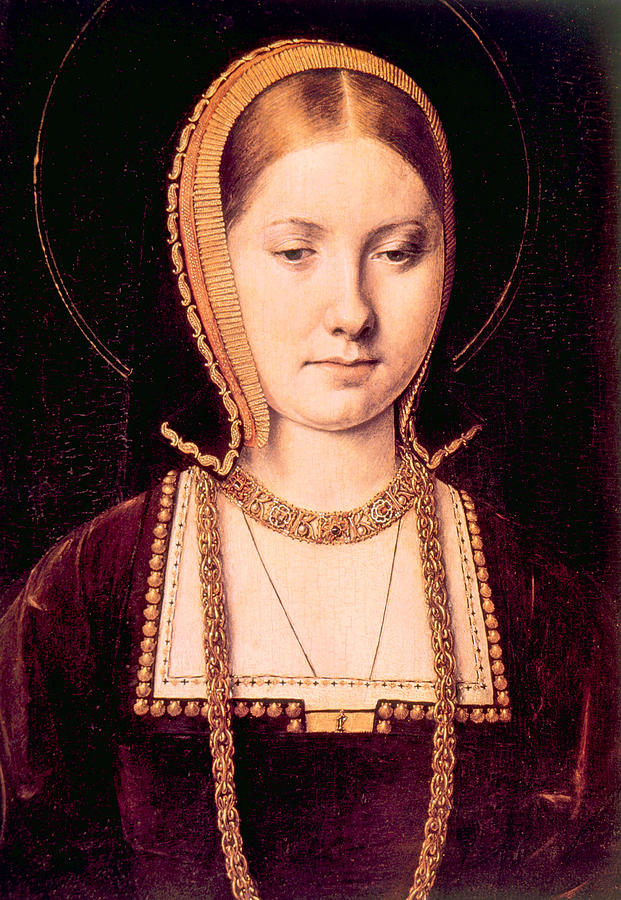
anneboleyn
Anne Boleyn

The international scene had altered. Charles V at the Imperial Court showed an       interest in treating with England thus weakening the traditional French alliance         —an alliance favored by Anne.

Henry blamed Anne for the failed embassy he had sent to Germany –at her             urging. It had cost him a great deal of money, was inconclusive and only                 managed to cause the German princes to doubt his faith (Stevenson 1329 to         1332).

The death of Queen Katherine of Aragon led Henry to consider that marriage to someone where there was no question of legitimacy would settle doubts and perhaps result in the birth of a male child. The King was apprehensive that, if he left no heir, upon his death civil wars would break out and the crown would be transferred again to the family of the White Rose (Stevenson 1303).

Anne had miscarried a son, which weakened her position. Chapuys filled in Charles V on April 29, 1536, on the fact that George Boleyn was disappointed because he had not achieved a Court favor as “the Concubine has not had sufficient influence to get it for her brother” (Gairdner X 752).

Henry was suspicious of Anne’s behavior. Alexander Alesius summarized Anne’s sins: she had danced with others and kissed her brother (like all women of England). The story of Anne dropping her handkerchief out of her window during the jousts at Greenwich so one of her suspected lovers could claim it is most likely false. Anne’s flirtatiousness is without quesiton and Henry came to “look on them as artifices to cover some other criminal affection. Her cheerfulness was not always governed with decency and discretion” (Burnet 109-110).

Henry was attracted to Jane Seymour. In April Ambassador Chapuys explained that advisors “continually counsel Mrs. Semel and other conspirators pour luy faire une venue,” and encouragement was given to the opposite party because “the King was already as sick and tired of the concubine as could be” (Gairdner X 752). As seen with Anne at the time of his marriage to Katherine, so ardent was Henry once he began to form an attachment, there was no let up. Also observed during both of these courtships, the King was “still inclined to pay his court to ladies” (de Gayangos V 43).

Various factions at Court (including the Catholics) were jostling for position. Steven Gunn wrote that the fall of Anne Boleyn “on one side stand the champions of a strong king, for whom the rhythms of politics and government were determined by Henry’s informed choice of ministers and policies. On the other stand the advocates of faction, for whom the king’s choice of policies and executants was determined by the victory of one pressure-group” (Davies 59).
Previously all factions were concerned over the influence Anne had on Henry. Now with the noticeable coldness in Henry’s relationship with her, the divisive groups at Court considered their options. Anne’s opponents, the “enemies of the Gospel, whose intention it was, along with her, to bury true religion in England” would perpetuate negative claims against Anne, who was famed for her pursuit of more evangelical doctrines (Stevenson 1303-15). Many believed the “difficulties abroad…the severity of the new laws and the rigour with which they were enforced, were held to be due altogether to Anne’s ascendency; and it was expected that with her downfall there would be a total change of policy, which would place England once more in a secure and prosperous condition” (Friedmann 256).

Anne was quickly losing support, even among Protestants. The Lancelot poem, written in London on 2 June 1536, expressed that Anne “had her way in all things; she could treat her friends according to her pleasure….” But she could not “secure to her lasting friendships, and the King daily cooled in his affection. Nevertheless she did not leave off her evil conversation, which at length brought her to shame” (Gairdner X 1036). “Having thus so many, so great factions at home and abroad set loose by the distorned favour of the king, and so few to show themselves for her… she and her friends therefore were suddenly sent to the Tower” (Cavendish II 209).

Oyer & Terminer
A divorce was out of the question, as it would imply that Henry’s conscience was aroused only upon convenience. He ended his marriage to Katherine of Aragon citing his breech with the teachings of Leviticus; now if he invoked the issue of consanguinity (based on his previous relationship with Anne’s sister) it would appear as if he entered the holy bonds of marriage carelessly. In addition, a divorced Anne would still be Marchioness of Pembroke— wealthy, influential and evangelical. Anne had to be disposed of in such a way that no one would be able, let alone willing, to defend her nor would she be able to defend herself.

Charles V learned that Henry, as Chapuys had “been for some days informed by good authority, was determined to abandon her; for there were witnesses testifying that a marriage passed nine years before had been made and fully consummated between her and the earl of Northumberland” (Gairdner X 782). The Ambassador’s informants told him that while Katherine of Aragon was alive, Henry “could not separate from the Concubine without tacitly confirming, not only the first marriage, but also, what he most fears, the authority of the Pope” (Gairdner X 782).
Katherine-of-aragon
Katherine of Aragon

“Thus Cromwell, as he afterwards told Chapuis, resolved to plot for the ruin of Anne” (Friedman 242). He said “it was he who had discovered and followed up the affair of the Concubine, in which he had taken a great deal of trouble… he had set himself to arrange the plot”(Gairdner X 1069). Cromwell was “resolved to destroy her” (Burnet 110). He wanted to get rid of Anne quickly and she needed to “be found guilty of such heinous offences that she would have no opportunity of avenging her wrongs” and the public’s focus on the crimes would take attention away “from the intrigue at the bottom of the scheme” (Friedmann 241-242). “Calamity was to be brought upon her, too, in a way that would satisfy the hatred with which she was regarded by the nation” (Friemann 242).

At Cromwell’s urging, while at Greenwich, Henry summoned a ‘commission of oyer and terminer’ April 24, 1536, to investigate treasonous offences committed by persons close to him, including Anne. Probably Henry was “only told by Cromwell that he was menaced by grave dangers, and that it would be necessary to appoint commissioners to hold special sessions at which offenders against him might be tried.” The commission consisted of “the Lord Chancellor Audeley, the Dukes of Norfolk and Suffolk, the Earl of Oxford, lord high chamberlain, the Earl of Westmoreland, the Earl of Wilshire, lord privy seal, the Earl of Sussex, Lord Sandys, chamberlain of the household, Sir Thomas Cromwell, chief secretary, Sir William Fitzwilliam, treasurer, Sir William Paulet, comptroller of the household, and the nine judges.” These men were “empowered to make inquiry as to every kind of treason, by whomsoever committed, and to hold a special session to try the offenders” (Friedmann II 243). Unusually, no specific crime was mentioned when the commission of oyer and terminer was formed.

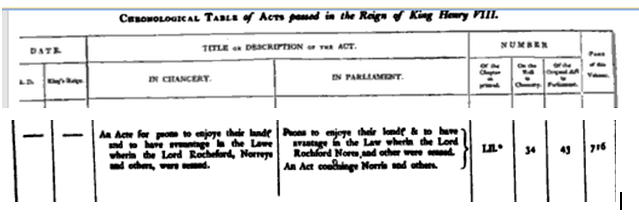
Statutes of the Realmoyer

An Acte for persons to enjoye their lands and to have avauntage in the Lawe wherin the Lord Rocheford, Norreys and others, were seased.

Persons to enjoye their lands & to have avantage in the Law wherin the Lord Rochford Nores and other were seased. An Act _______conserninge Norris and others.

For references, please refer to the blog entry, Path to St. Peter ad Vincula-Part I

Path to St. Peter ad Vincula: Part V–B

Path to St. Peter ad Vincula:  Part V–B

In Henry’s mind, the person thwarting him was Anne. Although she had successfully delivered a daughter and had at least two miscarriages—one in 1534 and one in 1536 that attest to her ability to conceive, Anne’s future and her strength lay in providing Henry with a male heir.  Yet, suddenly, Anne who was used to accompanying Henry wherever he went, remained at Greenwich “while he spent with his courtiers a merry shrove-tide in London” (Friedmann 203).  Henry’s actions were a surprise to many:  that he could leave Anne at this time “when formerly he could not leave her for an hour” (Gairdner X 351).  A man who could not bear leaving his wife for even short increments, was amidst reports that said he was considering leaving her for another woman.  Although earlier in the year of 1536 Chapuys confessed the idea that Henry would replace Anne was “very difficult …to believe”, he would “watch to see if there are any indications of its probability” (Gairdner X 199).
Anne Boleyn Hever
Queen Anne Boleyn

In Transactions of the Royal Historical Society: Volume 5, Steve Gunn succinctly discussed in the introduction to a chapter, “The Structures of Politics in Early Tudor England” the recent historiography of the state of Henry and Anne’s marriage, her miscarriage and her fall.  Astoundingly, a great deal has been written, conjectured and surmised based on the scant surviving records and the conclusions have altered through the years. Here is what Gunn has to say:

Three scholars have recently set out and defended against one another divergent explanations of her fall.  Professor Ives and Professor Warnicke can agree that Dr. Bernard is wrong: Anne cannot possibly have been destroyed by a masterful and jealous king who may reasonably have believed her guilty of multiple adultery as charged.  Dr. Bernard and Professor Ives can agree that Professor Warnicke is wrong:  Anne’s fall cannot be attributed to her miscarriage of a deformed foetus, awakening the king’s fears of witchcraft and its sixteenth-century stablemates, sodomy and incest.  Professor Warnicke and Dr. Bernard can agree that Professor Ives is wrong:  Anne cannot have been ousted by a factional plot at court, coordinated by Thomas Cromwell and cynically using fabricated charges of adultery to hustle the king into destroying the queen and her partisans at a single blow” (Davies 59).

For discussions on the theory of Anne’s trial and court factions, see the blog entries Path to St. Peter ad Vincula:  Part IV and Part VI.  As for the miscarriage, this blogger does not agree with the theory that Anne’s last pregnancy ended in anything other than a miscarriage. If there had been a deformity in the fetus, contemporary sources would have mentioned it and Anne’s enemies would have latched on to it as evidence of her wickedness.  Perhaps the idea of a deformity stems from the phrase by Nicholas Sander “a shapeless mass of flesh” (Sander 132) as contemporary sources claim otherwise.
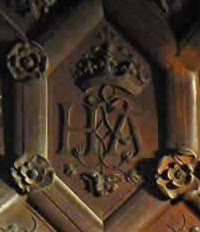
KingsCollegeChapelHA
Surviving example of Henry’s devotion to Anne, their intertwined initials at King’s College Chapel, Cambridge. 

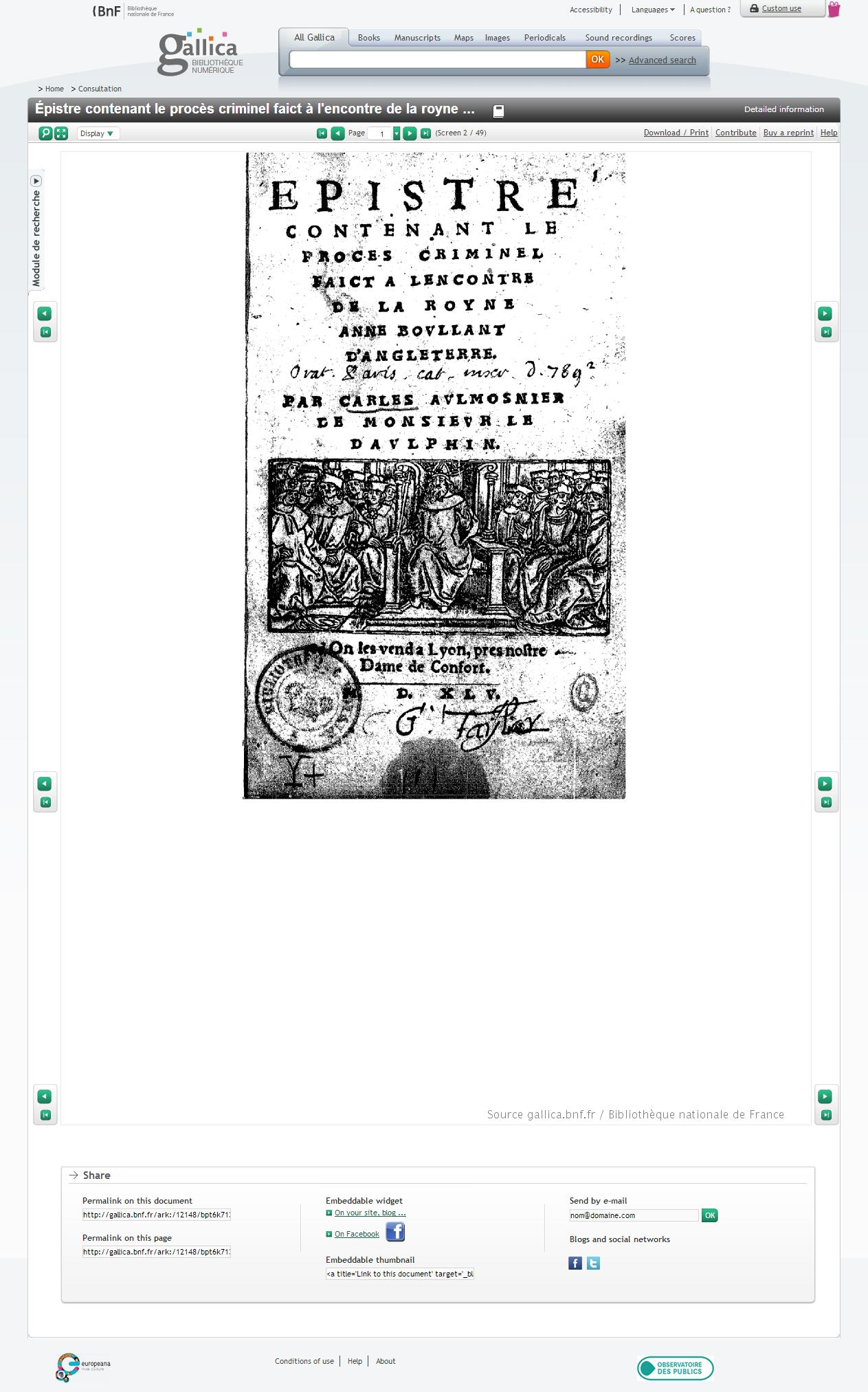
A poem, Epistre Contenant le Procès Criminel Faict a l’Encontre de la Royne Anne Boullant d’Angleterre (A Letter Containing the Criminal Charges Laid Against Queen Anne Boleyn of England), was summarized in dispatch papers 2 June 1536.  Referred to as a “poem descriptive of the life of Anne Boleyn, composed at London”, it was written by Lancelot de Carle (also spelled Carles) while serving as secretary to the French Ambassador in England, Antoine de Castelnau (Gairdner X 1036).

Published in Lyon in 1545 for Dauphin Charles, the poem had been in circulation prior to that.  In fact, it was mentioned in a correspondence by Henry VIII to his Ambassador to France, Stephen Gardiner, 12 June 1537, after de Carle returned to his native country.  Gardiner was told that Henry, “on having first knowledge of the book and the malice of it” which was “written in form of a tragedy,” was grieved “as sundry copies and impressions of it have got abroad.” Henry urged “that all copies be taken in and suppressed” (Gairdner XII ii 78).

Certainly this could be a different work, as a year interval from the time it was mentioned in dispatches to the time Henry made attempts to restrict its circulation appears a bit long.  Yet, it is feasible that the king was not made aware of it until after Carle completed his diplomatic mission.  With the author being identified as Carle—writing during the time he was “attendant upon the French ambassador” it seems to indicate it was the same poem (Gairdner XII ii 78).

Lancelot Anne Boullantmmmm
Title page of the poem by Lancelot de Carle

The poem was brought to this blogger’s attention as a footnote in G. W. Bernard’s biography, Anne Boleyn: Fatal Attractions, under “Chapter 8:  Anne’s Miscarriage.”  Although one cannot be too trusting of the poem’s historical accuracy, a portion of it –the part summarized in dispatch papers as “Anne met with divers ominous occurrences … the King had a fall from horseback which it was thought would prove fatal, and caused her to give premature birth to a dead son” will be where we direct our attention (Gairdner X 1036). In the poem, lines 324-326 refer to the ‘beautiful boy’ that was born before term.  A translation follows:

Her flat belly brought forth its fruit
and gave birth to a beautiful boy before term
whose stillbirth gave birth to many tears
Lancelot Poem

The stressful conditions that Anne was under not only to provide a son but to literally survive due to the factions at Court had her “worn out by constant exertion and anxiety” and were enough to jeopardize any pregnancy (Friedmann II 138).  Add in the equation the simple fact that the successful birthrate in the 16th century was not high plus the possible medical conditions of Anne and Henry (the Rh factor for her and diabetes for him) and the loss of an infant does not seem implausible.  Whatever the cause of the tragedy, the outcome was felt on the familial level, on the national level and on the international level.

For References please refer to the blog entry Path to St. Peter ad Vincula- Part I

Path to St. Peter ad Vincula: Part V–A

Path to St. Peter ad Vincula:  Part V–A

Anne’s path to St. Peter ad Vincula involved political and religious reasons both on domestic and international levels.  This blog entry will deal with an issue that involved political and religious issues that were of a purely personal nature–her inability to provide Henry with a male heir.

Parliamentary members were obliged in 1533 to swear that the marriage between Henry VIII and Catherine of Aragon was invalid, the marriage of Henry and Anne Boleyn valid and “that Elizabeth was born in lawful wedlock, and heir to the crown” (Sander 110).  Henry was optimistic (and as equally adamant) that this would be a temporary solution.  He would have a legitimate male heir and that would be the responsibility of Anne Boleyn. 

 catherine aragon
Katherine of Aragon

Producing the son Henry required would not prove easy.  Considering the stress she was under, Anne surprisingly conceived soon after Elizabeth’s birth.  In a letter written from his Ambassador, Eustace Chapuys, Charles V heard as early as January 28, 1534,  that “Anne Boleyn is now pregnant and in condition to have more children” (Gairdner VII 114).  A month later on 26 February Chapuys reiterated that, while Henry was ironing out the succession between his daughters, he considered that “there was no other princess except his daughter Elizabeth, until he had a son which he thought would happen soon” (Gairdner VII  232).  George Tayllour [Taylor] wrote to Lady Lisle from Greenwich on 27 April 1534, that the “King and Queen are merry and in good health.  The Queen hath a goodly belly, praying our Lord to send us a prince” (Gairdner VII 556). 

Intriguingly, very little fanfare was made of Anne’s pregnancy in 1534. There are scant formal,diplomatic mentions of it—although on 7 July official instructions to George Boleyn, Lord Rochford, concerning the arrangements of a meeting between Anne and Marguerite, Queen of Navarre (while Henry would have been in France meeting King Francis) had to be “deferred, as the time would be very inconvenient to her….”  Anne would not be able to accompany Henry to France her “reasons are, that being so far gone with child, she could not cross the sea with the King, and she would be deprived of his Highness’s presence when it was most necessary” (Gairdner VII 958).  Later that month Chapuys still believed Anne to be pregnant as he mentioned again that meetings between Henry and Francis would have to be postponed because “those here say the reason is that the lady de Boulans (Anne Boleyn) wishes to be present, which is impossible on account of her condition” (Gairdner VII 1013). Were these references all to the same pregnancy?  January to July would encompass close to a full-term pregnancy yet no mention was made of a child being born and dying afterwards nor of any miscarriage.  Regardless, at least a single pregnancy had to have ended which was kept secret. 
marguerite navarre
Marguerite, Queen of Navarre

What emerges is another comment made by Chapuys in September of 1534 that the King did “doubt whether his lady was enceinte or not” (Gairdner VII 1193). Interesting phraseology as Anne was not in a precarious position at this time.  Certainly, she was vulnerable but there were neither hints of her being replaced nor plots to discard her—until nearly a year and a half later.

On January 7, 1536, Katherine of Aragon died at Kimbolton Castle.  Upon the death of Katherine, “Queen Anne did not carry this so decently as became a happy rival” (Burnet 106).  Anne gave the messenger who brought the news of Katherine’s death to her at Greenwich a substantial reward.  Famously, Henry and Anne put on a show of exuberance dressing in yellow instead of mourning for Katherine’s death and parading Elizabeth triumphantly.  Although as Charles V was apprised by his ambassador in late January, “notwithstanding the joy shown by the concubine at the news of the good Queen’s death… she had frequently wept, fearing that they might do with her as with the good Queen” (Gairdner X 199). 

Anne could see that the international situation was now altered and the domestic scene was less idyllic.  Without Katherine to prompt familial ties in Charles V, he could now concentrate on his Italian campaigns and as seen in a previous blog entry Path to St. Peter ad Vincula-Part IV,  the ties of France and England had lessened. At home, Henry had set his sights on Jane Seymour and it would not have taken much for Anne to wonder if she too would be replaced in the king’s affections. What Anne had in her favor was her latest pregnancy.  Unlike the pregnancy of 1534, there is no prior mention of the one in 1536.  Anne would have been aware that the successful delivery of a male heir would certainly secure her position.  Unfortunately, that was not to be.

While participating in a joust, Henry’s horse took a fall in the tiltyard on January 24, 1536, and the king lost consciousness for several hours.  The entire Court feared for his life and, even though Henry made an astounding recovery, more proved at stake than his recuperation.  Shortly thereafter, on 29 January the day of Katherine’s funeral, “Queene Anne was brought a bedd and delivered of a man chield, as it was said, afore  her tyme, for she said that she had reckoned herself at that tyme but fifteen weekes gonne with chield; it was said she tooke a fright, for the King ranne that tyme at the ring and had a fall from his horse, but he had no hurt; and she tooke such a fright withal that it caused her to fall in travaile, and so was delivered afore her full tyme” (Wriothesley 33).  The “excitement of the last few days had told upon her health, which constant anxiety had been steadily undermining” (Friedmann 199). 

King Henry VIII armor
Armour made for King Henry VIII

Ambassador Chapuys wrote the details as known to him in a dispatch to Charles V on 10 February 1536.  Some discrepancy occurred in the interpretations of the cause but readers should not be alarmed at the term abortion, as it is the 16th century translation of the word miscarriage.

“On the day of the interment [the burial of Katherine of Aragon] the Concubine had an abortion which seemed to be a male child which she had not borne 3½ months, at which the King has shown great distress. The said concubine wished to lay the blame on the duke of Norfolk, whom she hates, saying he frightened her by bringing the news of the fall the King had six days before. But it is well known that is not the cause, for it was told her in a way that she should not be alarmed or attach much importance to it. Some think it was owing to her own incapacity to bear children, others to a fear that the King would treat her like the late Queen, especially considering the treatment shown to a lady of the Court, named Mistress Semel, to whom, as many say, he has lately made great presents.” Henry’s attention to Jane Seymour (Mistress Semel) led many people to “fear the King might take another wife” (Gairdner X 282).

Chapuys continued that Henry VIII divulged to “his most trusted servants …Lord and Lady Exeter” (Friedmann 202-203) that “in great confidence, and as it were in confession, that he had made this marriage, seduced by witchcraft, and for this reason he considered it null; and that this was evident because God did not permit them to have any male issue, and that he believed that he might take another wife, which he gave to understand that he had some wish to do” (Gairdner X 199).   

A couple of weeks later Ambassador Chapuys wrote about Anne’s reasoning for the loss of the child to Charles V.  “The said Concubine attributed the misfortune to two causes: first, the King’s fall; and, secondly, that the love she bore him was far greater than that of the late Queen, so that her heart broke when she saw that he loved others” (Gairdner X 351). A later report, much disputed, claimed that Anne could not keep from scolding Henry and exclaimed “See, how well I must be since the day I caught that abandoned woman Jane sitting on your knees” (Sander 132).
charles v older
Charles V, Holy Roman Emperor

Many at Court, especially the conservative faction considered that with “Queen Catharine being dead, the King might marry another, and be set right again with the Pope and the Emperor: and the issue by any other marriage would never be questioned; whereas, while Queen Anne lived, the ground of the controversy still remained, and her issue would be illegitimated, her marriage being null from the beginning, as they thought” (Burnet 109). Chapuys also believed the “King knew very well that his marriage to Anne could never be held as valid, for many reasons, …from another marriage, more legitimate than his last, the King might possibly have male issue” (de Gayangos V 43).

Continuing the theme of the legitimacy of Henry’s marriage to Anne, Chapuys wrote to Nicholas Granvelle (also known as Grenvelle), Chancellor to Charles V on 25 February 1536: “I am credibly informed that the Concubine, after her abortion, consoled her maids who wept, telling them it was for the best, because she would be the sooner with child again, and that the son she bore would not be doubtful like this one, which had been conceived during the life of the Queen; thereby acknowledging a doubt about the bastardy of her daughter” (Gairdner X 352). 

Would Anne have expressed herself in such a way as to question Elizabeth’s legitimacy?  It is hard to believe. 

One thing is sure, Anne believed she would have another child.  These sentiments were in direct contrast to those Chapuys wrote on 10 February 1536, to Chancellor Granvelle  “there are innumerable persons who consider that the concubine is unable to conceive, and say that the daughter said to be hers and the abortion the other day are supposititious” (Gairdner X 283). Rumors concerning the extremes of Anne’s behavior flew then and were maintained in the 1980s.  While traveling in England my husband and I were regaled with the story that Elizabeth was a changeling.  The story unfolded that the infant daughter that Anne gave birth to had died and fearing Henry’s wrath Anne found a substitute child of comparable age and coloring.  Unfortunately, the infant was a boy—and thus the reason Elizabeth never married.

The absurdity of the above story stands its own test, let alone the cruel irony that Anne desperately wanted a male child.  As Henry’s “new amours” continued toward Jane

“to the intense rage of the concubine” (Gairdner X 495).  ‘Les nouvelles amours de ce roy avec la demoyselle dont ait cydevant escript vont tousiours en avant a la grosse raige de la concubyne’ (Friedmann 202).  Chapuys wrote a fuller description of Jane to Granvelle’s son, Antoine Perronet, that he had no news “except to tell you something of the quality of the King’s new lady, which the Emperor and Granvelle would perhaps like to hear. She is sister of one Edward Semel, of middle stature and no great beauty, so fair that one would call her rather pale than otherwise” (Gairdner X 901).
Antonie Perrenot
Antoine Perronet, son of Chancellor Nicholas Granvelle

Apparently, Henry overlooked that Jane was not “a woman of great wit” and that “she inclines to be proud and haughty” (Gairdner X 901).  He seemed delighted that her temperament was “between the gravity of Queen Catharine, and the pleasantness of Queen Anne” (Burnet 109).  As for Jane’s virtue, it was opinioned by Perrenot that “although Henry necessarily affected to believe in her virtue, she was no better than the other young women of a coarse and dissolute court” (Friedmann 201). Ambassador Chapuys gave the opinion that Henry would make it a condition of the marriage that Jane be a virgin so “when he has a mind to divorce her he will find enough of witnesses” (Gairdner X 901).  Despite the contemporary beliefs of Jane’s uprightness, the King “was as well pleased with a decent appearance of virtue as with virtue itself” (Friedmann 201 – 202). 

Jane’s influence, therefore, increased, and the “whole party of Anne became seriously alarmed” (Friedmann 201 – 202). A gloating Sander reported that Anne faced a serious rival, “for the king began to grow weary of Anne” (Sander 132).  “The poor Queen used all possible arts to reinflame a dying affection; but the King was changed” (Burnet 109).

Not only was Henry growing weary of Anne, his “old conscience began to work again” (Pollard 343).  Contemporaries mentioned that Anne’s “miscarriage was thought to have made an ill impression on the King’s mind, who from thence concluded that this marriage was displeasing to God” (Wriorthesley 33).

Henry’s marked coldness to Anne was remarked upon by many contemporary sources; what varied was the degree of his ill-favor.  Chapuys learned “from several persons of Court” that Henry had “not spoken ten times to the Concubine, and that when she miscarried he scarcely said anything to her, except that he saw clearly that God did not wish to give him male children” (Gairdner X 351).  Henry went to her bedside “bewailing and complaining unto her the loss of his boy,”(Cavendish 208-209) and “gruffly told her that he now saw that God would not give him a son; then, rising to leave, he said harshly that when she recovered he would speak to her” (Friedmann 199).  From the time of the miscarriage “henceforth the harm still more increased, and he was then heard to say to her:  he would have no more boys by her” (Cavendish 209).

It is obvious to see that reports shifted from Henry declaring that God denied him male children to the conviction that he would have no sons by Anne.  These could be the result of translations committed after the fact, as history showed what eventually were Henry’s actions even if, at the end of January 1536, he was not set on the course of repudiating Anne.  Nicholas Sander claims Anne had an inkling as Henry greeted her after her miscarriage “by saying, ‘Be of good cheer, sweetheart, you will have no reason to complain of me again’and went away sorrowing” (Sander 132). The altered demeanor of the king towards Anne was generally remarked upon, and “held to bode no good to her” (Friedmann 203) and “was a great discompfort to all in this realm” (Wriothesley 33).
Anne Boleyn B necklace
Queen Anne Boleyn

The king was frustrated at Anne’s miscarriage and was maddened at her reprimands over his association with Jane Seymour.  That Anne was indiscrete and flirtatious with members of Court could be believed but her biggest mistake was not understanding the strength of Henry’s passion for Jane Seymour.  Years earlier it had been commented about Henry that “rather than miss or want any part of his will or appetite he would put the loss of one half of his kingdom in danger, and that he had often knelled before him the space of an hour or two to persuade him from his will and appetite, but could never bring to pass to dissuade him therefrom” (Cavendish 45).  Henry was used to getting his own way and not encountering much resistance.  Yet, thwarted he was in the incidence with the greatest meaning to him, the birth of a son.  

For References please refer to the blog entry Path to St. Peter ad Vincula–Part I

Path to St. Peter ad Vincula-Part IV

Path to St. Peter ad Vincula-Part IV

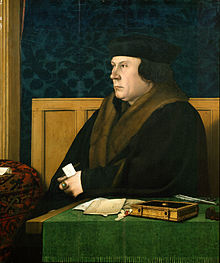
Thomas Cromwell and Thomas Cranmer were more pliable to Anne’s ideas and cause than Cardinal Wolsey.  Cromwell as Chief Minister pushed through Parliament several reform measures including the creation of the King as Head of the Church of England. Cranmer, appointed Archbishop of Canterbury after the death of William Warham, declared the end to Henry and Katherine’s marriage. The age of Wolsey was over.

thomas cromwell
Thomas Cromwell

Anne Boleyn owed a great deal to Thomas Cromwell. He put into effect his plan to frighten the clergy into submission and sever the English Church from Rome– but it was quite a time before it could be implemented. His plan he felt sure “could not of course fail to please Anne, to whom it held out a sure way of obtaining what she desired” (Friedmann 135-136).  At the Convocation of Canterbury in January 1531, under threat the clergy acknowledged Henry as “singular protector, supreme lord and even, so far as the law of Christ allows, supreme head of the English Church and clergy” (Haigh 108).  Added to the brilliance of the plan was the fact that the members of the Privy Council who “generally opposed the measures brought forward by Anne’s friends, willingly assented to a scheme which would weaken the influence of the bishops” (Friedmann 135-136).

Despite the capitulation of the Clergy, all was not smooth sailing for Henry and Anne.  By May 22, 1531, Eustace Chapuys, the Spanish Ambassador, reported to Charles V that “the clergy of York and Durham sent to the King a strong protestation against the supremacy which he pretends to have over them.  The King is greatly displeased, still more because one of his couriers coming from Rome has brought him news that his Ambassadors there are afraid that the Pope will definitively quash the process” (Gairdner 251).  This was “a serious defeat for Anne’s party.”  Legislation to force the clergy and Parliament to submit had to be abandoned as priests protested “against any encroachments on the liberty of the Church or any act derogatory to the authority of the Holy See” (Friedmann 142).  Resistance did not last and in 1534 Henry passed the Acts of Supremacy and of Succession.  Legally he was Head of the Church of England and his marriage to Katherine of Aragon was annulled and that of Anne legitimized along with any children from their union. All seemed to be going well;  Anne was Queen and the Protestant reform movement was gaining momentum.  What happened?

Anne encountered forces stronger than her influence on Henry.  She disagreed with the King over the dissolution of the monasteries, she clashed with Thomas Cromwell over international politics and Anne underestimated Henry’s frustration at not having a male heir, his attraction for Jane Seymour and the Court’s ability to use those domestic issues against her and the evangelical faction.

Henry VIII committed to improving the religious houses in England.  He sent agents out to track adherence to monastic orders’ rules and to account for the wealth of each. He ordered the Commission for the Valuation of Ecclesiastical Benefices stressing his right as Supreme Head of the Church, “Henricus Octavus, Dei gratia Agnlie et Francie Rex, Fidei Defensor, Dominus Hibernie et in terra Supremum Capud Anglicane Ecclesie, Reverendo in Christo patri J[ohanni] Episcopo Exoniensi ac dilectis et fidelbus suis Salutem” (Hall A Formula Book of English Official Historical Documents 63).

Henry VIII
Henry VIII –attributed to the circle of Holbein 1535-1541

Commissioners appointed by King Henry were to “examyn, serche and enquire, by all the ways and meanes that they can by their dyscrections, of and for the true and just hole and entire yerely values of all the manours, londes, tenements, hereditamentes, rentes, tythes, offerings, emoluments and all other profittes, as well spitrituall as temporall, apperteyninge or belonging to any Archebusshopriche, Busshoprich, Abbacye, Monasterie, Priorie, Archdeaconry, Deanry, Hospitall, College, Howse Collegyate … or any other benefice or promocion sprituall within the lymyttes of their Commyssion” (Hall A Formula Book of English Official Historical Documents 62).  Henry also wanted to know “in what manner the revenewes and profitts” were used (Leach ii).

Once the Valor Ecclesiasticus had been presented to Parliament on February 5, 1536, creating the dismay that Henry and Cromwell hoped it would, the Legislature quickly formulated and implemented new policy by mid-March. It certainly was easy to see what Henry’s main purpose was.  He needed money, a lot of it, having gone through the vast fortune his father had left him.  Confiscating the property of religious houses would provide that wealth.

The Act of the Dissolution of the Lesser Monasteries of 1536 (also known as The Suppression of Religious Houses Act), deemed the lesser monastic houses sinful and wasteful.  All the occupants were ordered to transfer to larger monasteries where they would be reformed to live more religiously.  It was proclaimed that Parliament finally revolved “that it is and shall be much more to the pleasure of Almighty God, and for the honour of this his realm, that the possessions of such religious houses, now being spent, spoiled, and wasted for increase maintenance of sin, should be used and converted to better uses.”  Parliament authorized “that his majesty shall have and enjoy to him and to his heirs for ever, all and singular such monasteries, priories, and other religious houses” the land, rent, chapels and all their property “with all their rights, profits, jurisdictions, and commodities, unto the King’s majesty, and to his heirs and assigns for ever, to do and use therewith his and their own wills, to the pleasure of Almighty God, and to honour and profit this realm….”  Not daring to leave anything behind, the Act of Suppression gave the rights for the “…King’s highness shall have and enjoy to his own proper use, all the ornaments, jewels, goods, chattels and debts, which appertained to any of the chief governors of the said monasteries” (“Act for the Dissolution of the Lesser Monasteries”).

Eustace Chapuys, Spanish Ambassador to Charles V wrote “The King and Council are busy setting officers for the provision and exaction of the revenues of the churches which are to be suppressed; which, it is said, will be in number above 300, and are expected to bring in a revenue of 120,000 ducats. The silver plate, chalices, and reliquaries, the church ornaments, bells, lead from the roofs, cattle, and furniture belonging to them, which will come to the King, will be of inestimable amount. All these lords are intent on having farms of the goods of the said churches, and already the dukes of Norfolk and Suffolk are largely provided with them. I am told that although Cromwell promoted in the first instance the demolition of the said churches, that nevertheless, seeing the dangers that might arise from it, he was anxious to prevent them, for which reason the King had been somewhat angry with him” (Gairdner X 601).

chapuys
Eustace Chapuys, Spanish Ambassador to England

The busy Ambassador wrote that same day, March 18, 1536, to his fellow Hapsburg statesman, Cardinal Antoine Perrenot de Granvelle (sometimes referred to as Granville or Grenville): “You will see by the letters I write to his Majesty, the gentle device of this King to extract money on pretext of charity by means of the offerings. If it succeeds, as no doubt it will, he will gain an immense sum of money, for he will impose a tax according to his will which everyone will have to offer, and not engage to do so for once but for all the other innumerable inventions that this King daily puts forward in order to get money, at which the people is terribly grieved and almost desperate, but no man dare complain ” (Gairdner X 495).  Contemporaries discussed Cranmer’s sermon which assured the people that the king would now gain so much treasure “that from that time he should have no need, nor put the people to … any charge for his or the realm’s affairs” (Heal 145).

The monasteries did need some reform. It was not unique to England and it was not so much against the religion as to the laxity that befell many religious houses.  Henry’s and Cromwell’s greed were not the sole motivators.  Local landed gentry also eagerly eyed the wealth of the lands of their neighbors.  Already indebted to each other, the monasteries and noble estates had been intertwined for years. Abbots had long been “giving up part of their revenues, in the form of pensions …to courtiers, in the hope of being allowed to retain the remainder” (Pollard 340).  But Henry had hit upon an enormous source of wealth in his position as Supreme Head of the Church of England. And perhaps, not beyond the one time infusion as Chapuys further opinioned that “the King will greatly increase his revenue” (Gairdner X 494).

Statute 575
 Transcription of the above Statute

“An Acte whereby all Relygeous Houses of Monks, Chanons, and Nonnes whiche may not dyspend Manors Lands  Tenants & Heredytaments above the clere yerly Value of ij C E are geven to the Kings Highness his heirs and Successours for ever.  The Byll for the suppressing of dy__ Places of Relygion” (“The Statutes of the Realm”)

Oddly enough Henry was not made astronomically wealthy–he needed to cover debts and he distributed much of the wealth to his nobles. Thus, the view must be that the dissolution’s intention was not to make Henry wealthy but to bribe the gentry to support Henry’s policies. Chapuys reported to Charles V that “the King will distribute among the gentlemen of the kingdom the greater part of the ecclesiastical revenues to gain their goodwill” (Gairdner VII 1141).  “The dissolution of the monasteries harmonised well with the secular principles of the predominant classes” (Pollard 342).

Whom it did not harmonize well with was Queen Anne Bolyen.

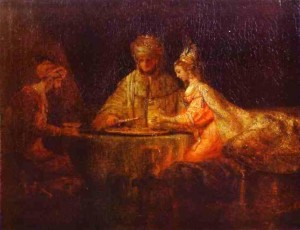
On Passion Sunday, April 2, 1536, John Skip, chaplain to Anne Boleyn, preached a sermon to the entire Court with his target “scarcely disguised” as Thomas Cromwell (Heal 142).  Taking his theme from Biblical text, he asked, Quis ex vobis arguet me de peccato? Which of you convinceth me of sin? (Newcombe).  The message of this incendiary sermon was to encourage Henry’s advisors to cease their greed and do what was right for the people, especially the poor. Skip altered the Esther Biblical story to stress “to courtiers and counselors alike to change the advice they were giving the king and to reject the lure of personal gain” (Ives 309).

Assuerus_Haman_a
Ahasuerus and Haman at the Feast of Esther by Rembrandt

Eric Ives in the text, The Life and Death of Anne Boleyn, supported by other historians, has analyzed Skip’s symbolism-laden sermon and has pointed out the correlation between this sermon and Anne’s disagreement with Cromwell over how the proceeds from the dissolution of the lesser monasteries should be used. Cranmer even ran afoul of Henry later by not consenting “that the king should have all the revenues of the monasteries which were suppressed, to his own sole use” (Dodd 21).  Many understood that Henry could have the lands to do with as he wished but that the wealth should be “bestowed on hospitals, schools, and other pious and charitable foundations” (Dodd 21).  It appeared to be common knowledge that Anne too wanted the money to be “devoted to furthering the cause of reform rather than filling the king’s coffers” (Newcombe).

It must be clarified that Anne was not against the monasteries being suppressed.  She disagreed with the King and Cromwell on how the funds should be distributed. She wanted to follow her inclinations by having the revenues assist the poor and help scholars, causes she was known to patronize.

George Wyatt praised Anne for making shirts and smocks for the poor, and remarking that her charity “passed through the whole land” and she gave “fifteen hundred pounds* at the least, yearly, to be bestowed on the poor” with another fourteen or fifteen thousand pounds** being given in alms and to support scholars (Cavendish II 207).
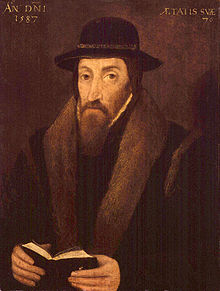
John Foxe commended Anne for “how bountiful she was to the poor, passing not only the common example of other queens, but also the revenues almost of her estate; insomuch that the alms which she gave in three quarters of a year, in distribution, …to the behalf of poor artificers and occupiers” (Foxe 232-234).
John_Foxe
John Foxe

The Scottish cleric, Alexander Alesius, referred to Anne Boleyn as ‘your most holy mother’ when writing to Elizabeth.  He clearly believed that Elizabeth’s “very pious mother” formed many enemies at Court for “her desire to promote the pure doctrine of the Gospel and her kindness to the poor” (Stevenson 1303-15).

Anne more than likely could not imagine that her preferences would be gainsaid. Her influence over Henry was well-known.  Even in the Privy-Council her impact could be felt.  Jean du Bellay, Bishop of Bayonne, the French Ambassador relayed a story that council member, Thomas Boleyn, “allowed everything to be said, and then came and suggested the complete opposite, defending his position without budging, as though he wanted to show me that he was not pleased that anyone should have failed to pay court to the lady [Anne], and also to make me accept that what he had said before is true, that is, that all the rest have no influence except what it pleases the lady to allow them, and that is gospel truth.  And because of this he wanted with words and deeds to beat down their opinions before my eyes” (Ives 126).

Yet, Anne was going to see more and more of her influence slip away. Not only was she not seeing eye-to-eye with Cromwell over the use of the monies gained from the dissolution of the monasteries, international politics also added a level of tension and discord.  Charles V now needed an alliance with England against France.

A long-time ally of Anne’s, Francis, King of France, was being replaced in Henry’s diplomatic play book with Charles V.  What emerged was the famously orchestrated meeting between Chapuys and Anne. On April 18, 1536, George Boleyn greeted the Ambassador who was invited by Henry via message to meet Anne and kiss her hand as she made her way to chapel.  Chapuys excused himself from that honor, as this was a bit much even though he knew that Henry’s move from favoring the French to the Imperial side was vital. Chapuys was in a difficult position as he was personally loyal to the late Queen Katherine and Princess Mary—more so than to the woman he referred to as “the concubine.”

The play unfolded as Anne acknowledged the Ambassador at chapel and he had to bow in return.  She asked after him specifically and made some anti-French remarks.  Henry swung the other way as he wanted his feigned pro-French stance to force the Imperial hand.  It was Cromwell’s turn to be in a bind.  If the Imperial acceptance of her was what negotiations hinged on, he needed to do something.  Cromwell cultivated his relationship with Chapuys.  Knowing that the Ambassador greatly disliked the Queen and would probably believe the words, Cromwell told the Ambassador that Anne “would like to see his [Cromwell’s] head cut off” and Chapuys could not forget this “for the love I bore him; and I could not but wish him a more gracious mistress, and one more grateful for the inestimable services he had done the King, and that he must beware of enraging her” and warned that Cromwell deserved better treatment “than did the Cardinal.” This illusion to Wolsey accompanied Chapuys’ veiled warning that he hoped that Cromwell’s greater “dexterity and prudence” would stand him well in his dealings with Anne (Gairdner X 601).
anneboleyn
Anne Boleyn 

It appeared as if Cromwell was working closely with Chapuys to further the relations between their two countries.  Chapuys wrote in April of 1536 to the Emperor that Cromwell had assured him that he was “very desirous of the preservation and increase of friendship of his master’s with Your Majesty, and is daily doing good offices in that respect—not only pointing out those measures which he considers most fit under the circumstances, but advising also of his own accord, and working for the accomplishment of our mutual wishes” (de Gayangos V 43).  At their meeting, Cromwell “replied five or six times, with great fervour, that it was a good beginning for the matter of the preservation of the amity of which we had so often talked, to which the King was more inclined than ever, and likewise those of his Council … and Cromwell assured me, on his life and honor, that the King had never treated anything in France, Germany, or elsewhere, to the prejudice of the friendship he has with your Majesty” (Gairdner X 601).

Domestically, Cromwell managed to upset both pro-French and pro-Imperial factions in England.  Internationally, events took a more favorable turn.  Charles V continued his overtures of friendship, the Pope became more inclined to treat with England, and Francis I became sidelined—all international events which weakened Anne’s position and nudged Cromwell to act.

Oddly enough, Cromwell’s station, his continued political position and his economic gains were because of Anne’s support.  Her influence over Henry could have swung the king’s favor to another councilor. Perhaps it was this precariousness or the rise of the more evangelical faction led by such young men as George Boleyn and Henry Norris or his own interest in intrigue or, most likely, a combination of reasons which led Cromwell to move against Anne.

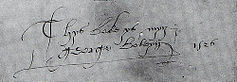
George_Boleyn_signature
George Boleyn’s signature

Cromwell assessed the situation and determined that it would be better if he “took the side of the conservative churchmen against those who had been hitherto considered Anne’s principal supporters” (Friedmann II 226). Cromwell knew that having “identified himself so closely with the measures against the Roman Church, he could not but fear that, if its authority were re-established, he would fare very badly at its hands”  (Friedmann II 55-56).

By March of 1536, Cromwell tried a more moderate approach with success as, surprisingly, those in opposition to Anne, by March of 1536, included fellow Protestants.  The more radical groups believed reform was not moving fast enough and the more moderate thought enough changes had been made.  Cromwell felt his position strengthened and the Secretary most likely saw the way Henry was treating Anne and his interest in Jane Seymour. Chapuys gleefully reported that “the Concubine and Cromwell were on bad terms, and that some new marriage for the King was spoken of” (Gairdner X 601).

In early 1536 Henry was certainly paying attention to Jane Seymour.  Chapuys remarked to his king that the “new amours of this King with the young lady…still go on, to the intense rage of the concubine” (Gairdner X 495).  It was suspected that the King “believed that he might take another wife, which he gave to understand that he had some wish to do” (Gairdner X 199).

jane holbien to use
Jane Seymour by Holbein 

At first it appeared to Chapuys that Henry was going to negotiate with France to obtain a French Princess and “was now thinking of a fresh marriage, that would, no doubt, be the way of preserving him (Cromwell) from many inconveniences, and likewise the best thing for the King to do” (de Gayangos V 43).  Chapuys certainly hoped that a new marriage for Henry would bring “peace, honour, and prosperity to England” and would provide Cromwell “another royal mistress, not out of hatred of Anne Boleyn, for she had never done me any harm, but for his own sake” (de Gayangos V 43).  Regardless of the rumors of a French alliance, Chapuys was assured by Cromwell shortly after he had written about his speculation of a French marriage, “that the King had already fixed on a wife, to wit Jane Semel” (Gairdner X 1069).  Anne Boleyn had less than a month to live.

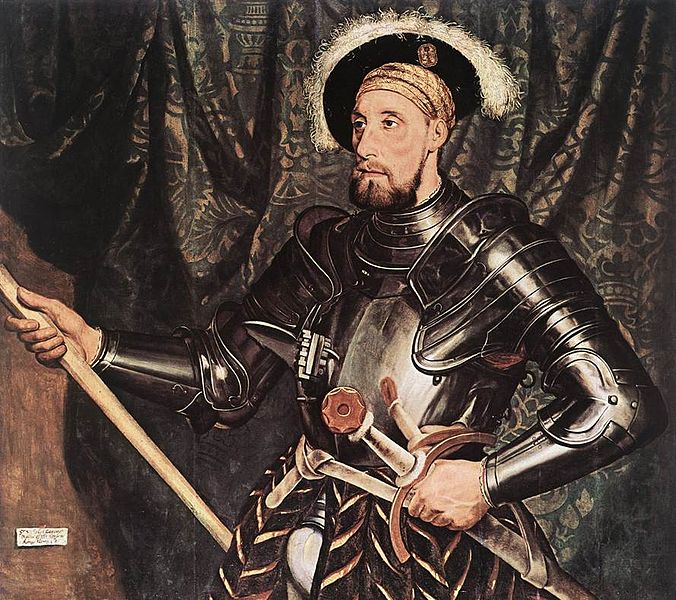
Cromwell knowing many men of the Privy Chamber such as Nicholas Carew “never accepted the new Queen with any more grace than was needed to avoid their own ruin,” headed the move against Anne (MacCulloch 154). The Spanish Ambassador “monitored these events with increasing excitement, and probably acted as a go-between for the union of Cromwell’s plans and those of the conservatives” (MacCulloch 154). 

n carew
Nicholas Carew

Taking the religious issue to the domestic sphere, the conservatives and Cromwell exploited the King’s interest in Jane Seymour.  Chapuys wrote to the Imperial Court on 1 April 1536, that “certainly it appears to me that if it succeeds, it will be a great thing … to remedy the heresies here, of which the Concubine is the cause and principal nurse, and also to pluck the King from such an abominable and more than incestuous marriage” (Gairdner X 601).  By the middle of April when John Skip gave his sermon on Passion Sunday, it became obvious that rumors of intrigues “were beginning to fly around the Court” (MacCulloch 154). Skip showed great nerve by attacking Henry VIII and Jane Seymour using the analogy of King Solomon who blemished his own reputation by his “sensual and carnal aptitude in taking many wives and concubines” (MacCulloch 154).

Jane protected her own reputation evidenced by the famous story that Chapuys relayed.  Supposedly “some days ago, the King being here in London, and, the young Miss Seymour, to whom he is paying court at Greenwich, he sent her a purse full of sovereigns, together with a letter, and that the young damsel, after respectfully kissing the letter, returned it to the messenger without opening it, and then falling on her knees, begged the royal messenger to entreat the King in her name to consider that she was a well-born damsel, the daughter of good and honourable parents without blame or reproach of any kind; there was no treasure in this world that she valued as much as her honour, and on no account would she lose it, even if she were to die a thousand deaths. That if the King wished to make her a present of money, she requested him to reserve it for such a time as God would be pleased to send her some advantageous marriage” (de Gayangos V 43). 

Evidently, this episode, well-orchestrated by Jane and her advisors, had the following reaction by Henry.  The “King’s love and desire towards the said lady was wonderfully increased, and that he had said she had behaved most virtuously, and to show her that he only loved her honorably, he did not intend henceforth to speak with her except in presence of some of her kin; for which reason the King has caused Cromwell to remove from a chamber to which the King can go by certain galleries without being perceived, and has lodged there the eldest brother of the said lady [Edward Seymour] with his wife, in order to bring thither the same young lady, who has been well taught for the most part by those intimate with the King, who hate the concubine, that she must by no means comply with the King’s wishes except by way of marriage; in which she is quite firm” (Gairdner X 601).

Seymour Edward
Edward Seymour

Intentions of a third marriage were already firmly believed by many at Court as early as January 1536.  A gleeful Chapuys imagined that Henry knew “how much his subjects abominate the marriage contracted with the concubine, and that not one considers it legitimate” (de Gayangos V 43).  Henry stated “in great confidence, and as it were in confession, that he had made this marriage, seduced by witchcraft, and for this reason he considered it null; and that this was evident because God did not permit them to have any male issue, and that he believed that he might take another wife, which he gave to understand that he had some wish to do” (Gairdner X 199).

Henry was very taken with Jane Seymour but realized he could not have a repeat scenario of a living divorced wife.  How actively involved was Henry in eliminating Anne and many of the leading evangelicals?  That is a difficult question to answer although Cromwell, according to Chapuys, took full credit as the person “who had discovered and followed up the affair of the Concubine, in which he had taken a great deal of trouble, and that, … he had set himself to arrange the plot (a fantasier et conspirer led affaire)” to protect the king (Gairdner 1069).  To protect and to please the king?

Surprisingly, Cromwell himself will be put to death by Henry.  Frustrated over the machinations that forced him to marry Anne of Cleeves, Henry was persuaded by Cromwell’s enemies to charge him with treason.  Years later, the Scottish cleric, Alexander Alesius wrote to Elizabeth Regina that Cromwell “was punished by the just judgment of God, because he had loved the King more than God; and that out of deference to his Sovereign he had caused many innocent persons to be put to death, not sparing your most holy mother, nor had he obeyed her directions in promoting the doctrine of the Gospel” (Stevenson I 51).  

Cromwell’s contemporary, Nicholas Shaxton, appointed Bishop of Salisbury at Anne’s urging–one of the clerics “who favoured the purer doctrine of the Gospel, and to whom she [Anne] had intrusted the care of it” (Stevenson I 15), wrote to Cromwell on May 23rd shortly after her death, “I beseech you, Sir, in vis[ceribus] Jesu Christi, that ye will now be no less diligent [in setting] forth the honour of God and his Holy Word, than [when] the late Queen was alive, and often incit[ed you thereto]” (Gairdner X 942). Interesting that a known evangelical saw the need to prod Cromwell to maintain the strides made in the name of reform.  It appears to this blogger that the reformers realized that Henry was too much a conservative at heart to continue the cause of evangelical dogma without the advocacy of Anne.  Cromwell was likely to be swayed in the direction of his king. 
Salisburycathedra
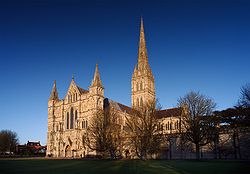
Salisbury Cathedral 

Anne, identified as a “zealous defender of Christ’s gospel” would use her influence so that “her acts… will declare to the world’s end” her theological ideals (Foxe V 232-234).  At the time of her death, it was inconceivable that Anne’s most lasting influence on the Protestant faith would be in the form of her three-year old daughter, Elizabeth. 

Upon her acquisition of the throne, Alesius urged her to “guard herself from the snares of the devil, who were the cause of her mother’s death in consequence of her love for the doctrine of the Gospel while it was in its infancy, and afterwards persecuted those persons whom she appointed to watch over the Church” (Stevenson I 1303).

For References, please refer to the blog entry, Path to St. Peter ad Vincula-Part I

The Path to St. Peter ad Vincula: Part III

The Path to St. Peter ad Vincula –Part III

Anne’s possession of banned texts came to the attention of Thomas Wolsey, Lord Chancellor of England, Archbishop of York and Cardinal in the Catholic Church.  Wolsey as a conservative was against reformists from the start and loyal to the cause of Katherine of Aragon.

The relationship between Thomas Wolsey and Anne Boleyn will always be in the forefront of a discussion of the ‘King’s Great Matter’—dissolving his marriage to Katherine of Aragon.  Wolsey was not moving as quickly and assuredly towards obtaining the divorce as Anne, and Henry for that matter, would have liked.  “Anne Boleyn and her friends were not friends of the Cardinal, and the Cardinal had none; the duke of Norfolk, her uncle, hated him, and others were then about the court ready to strike him if they had but the opportunity…” (Sander lxxxi).

Anne remained cordial up until late 1528 but by October 1529 her hostility combined with the pro-Katherine faction at Court forced Henry to deprive Wolsey of his government offices (Wolsey retained the position of Archbishop of York).  Henry made no further move and when Wolsey was taken ill he sent him good wishes.wolseyseal
Cardinal Wolsey surrendering the Great Seal (1529) from Cavendish’s Life of Wolsey Roll 214.5.  The Bodleian Library, Oxford. http://www.luminarium.org/encyclopedia/wolseyseal.jpg

Spanish Ambassador Eustace Chapuys represented the international take on the events in a letter to his Emperor in February of 1530.  “The Cardinal has been ill, and some say feigned illness, in the hope that the King might visit him. He has not done so, but sent him instead a promise of pardon, on the news of which the Cardinal recovered. He will receive his patent today, retain the archbishopric of York, and a pension of 3,000 angels on the see of Winchester, for which he is to resign all other benefices. Besides 10,000 angels the King has given him tapestry and plate for five rooms. All the rest the King retains. His house in town has been taken by the King, who gives another in place to the see of York. Russell told me that in consequence of some words he had spoken to the King in favor of the Cardinal the lady had been very angry, and refused to speak with him. Norfolk told him of her displeasure, and that she was irritated against himself, because he had not done as much against him as he might” (Brewer IV 6199).

part B
A transcription of the letter Chapuys sent to Charles V explaining Henry’s maneuvering over Wolsey.  

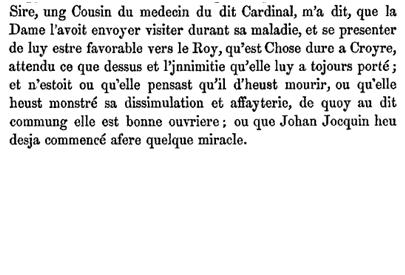
Not to be outdone in the realm of subterfuge, Anne, according to Chapuys, tried to hoodwink Wolsey.  “A cousin of the Cardinal’s physician told me that the lady had sent to visit him during his sickness, and represented herself as favoring him with the King. This is difficult to be believed, considering the hatred she has always borne him. She must have thought he was dying, or shown her dissimulation and love of intrigue, of which she is an accomplished mistress” (Brewer IV 6199).

partc
A transcription of the letter Chapuys sent to Charles V explaining Anne’s treatment of Wolsey.  

Chapuys’ information was not too far off the mark as seen in a letter Anne wrote to Wolsey in late 1529 or early 1530.  She appeared very accommodating as she in her “most humblyst wyse… do thanke your grace for your kind letter, and for yourer rych and goodly present, the whyche I shall never be able to deserve wyth owt your gret helpe” (Cavendish II 254).  She went on to assure the Cardinal that for all the days of her life there was no one “next to the kyngs grace to love and serve your grace, of the whyche I besyche you never to dowte that ever I shalle vary frome this thought as long as only brethe is in my body” (Cavendish II 254).

henry anne wolsey
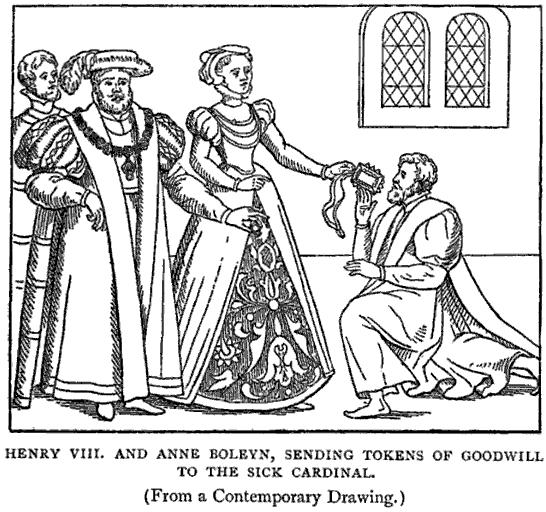
Henry VIII and Anne Boleyn, sending tokens of goodwill to the sick Cardinal Wolsey from a contemporary drawing.  http://www.luminarium.org/encyclopedia/wolseybio.htm

After discussing her thankfulness that Wolsey recovered from his latest sickness “Not doughthyng bot that God has preservyd you…for grete caswsys knwnen allonly to his high wysdome,” Anne approached what must be the main purpose of the letter.  She comments on the arrival in England of the Papal legate letting Wolsey know that “as for the commyng of the legate I desyer that moche; and if it be Goddis pleasor I pray him to send this matter shortly to a goode ende” (Cavendish II 254 – 255).

Anne stressed her good will toward Wolsey and sent him wishes for a “longe lyfe with continewance in honor” signing off with the statement that she had “written wyth the hande of her that is most bound to be Your humble and obedient servant” (Cavendish II 255).  Even the most dedicated champion of Anne Boleyn has to agree to Chapuys’ assessment that she had ‘shown her dissimulation and love of intrigue.’

Yet, this type of deception was typical of Henry. After making a move against his enemy, he then attempted a reconciliation.  Wolsey was pardoned on February 12, 1530, with the following proclamation:  General pardon for Thos. cardinal of York, bishop of Winchester, and perpetual commendatory of the exempt monastery of St. Alban’s, alias late bishop of Bath and Wells, alias late bishop of Durham, alias late chancellor of England and legate de latere of the Apostolic See, alias sometime bishop of Lincoln (Brewer IV 6213).

Wolsey credited the hand of Thomas Cromwell, Chief Minister, and thanked him for his handling of the pardon with the “Kyng in allottyng and appoynttyng of my p[ardon] … yf he lyste. No man can do me more goode and yo[u] … your sylf referre that hys oppynyon was that I shuld [have no] lesse then 4,000l. yeerly to lyve with, wych myn … degre consyderyd ys with the lest, I cowde nat forbere [putting him] in remembrance hereof, remyttyng the betteryng ther[eof to your wisdom] and good handelyng” (Brewer IV 6204). Wolsey assured Cromwell that “Myn only comfort, at the reverens of God leve me not nowe, for yf ye do I shal nat longe lyve in thys wrechyd world. Ye woll nat beleve how I am alteryd, for that I have herd nothing from yow of your procedyngs and expeditions in my maters” (Brewer IV 6203).

Cromwell, the man who would shortly conduct the inventory of goods Wolsey must forfeit to the King, received another letter from Wolsey in which the Cardinal stated that his “comfort & relief I wold have your good sad, syscret advyse & counsell” knowing that Cromwell was working on “sertyng thyngs requyryng expedicion…on my behalf to be solycytyd” (Cavendish II 255-256).  Wolsey wrote to Secretary Stephen Gardiner about the assistance he expected from “my trustyng frend, Thomas Cromwel” (Cavendish II 264). This was trust misplaced, as the pragmatic Cromwell knew where his loyalties lay–with Henry VIII and Anne Boleyn.

Moving quickly, Cromwell acquired the chattel goods of the former Lord Chancellor.  Issuing a decree that Wolsey “having been convicted of various offences against the Crown and the statute of provisors 16 Ric. II., whereby all his property was forfeited. Also grant of all sums of money and goods” (Brewer IV 6214).  Below is the very thorough patent for the recall of Wolsey’s property.

“The money, goods, and chattels given by the King’s grace to the lord Cardinal, whereof mention is made in the King’s letters patent hereunto annexed. First, in ready money, 3,000l. Item, in plate, 9,565¾ oz., at 3s. 8d. the oz., amounteth to 1,753l. 3s. 7½d. Item, divers apparel of household, as hangings, bedding, napry, and other things, as appeareth by the inventory of the same, amounting in value by estimation 800l. Item, in horses and geldings, 80, with their apparel, valued by estimation 150l. Item, in mules for the saddle, four, with [their] apparel, valued by estimation 60l. Item, in mules for carriage, six, with their apparel, valued by estimation 40l. Item, in lynges, 1,000, valued by estimation 50l. Item, in cod and haberdynes, 800, valued by estimation 40l. Item, in salt, 8 way, valued by estimation 10l. Item, in implements of the kitchen, as pots, pans, spits, pewter vessel, and other things necessary for the same, valued by estimation 80l. Item, 52 oxen, valued by estimation 80l. Item, in muttons, 70, valued by estimation 12l. Item, the apparel for his body, valued by estimation 300l.—Sum total, 6,374l. 3s. 7½d.” (Brewer IV 6214).

Again, Spanish Ambassador Eustace Chapuys reported the turn of events to his King.  “One object … was to reinstate the Cardinal in the King’s favor, and, but for the lady, this would be easy, for it is thought the King has no ill-will to the Cardinal. His only wish is for the Cardinal’s goods; and he is not very far wrong, for the Cardinal has spent very large sums of money, and said all he accumulated was for the King; and to take administration of it before the time was not much offence; considering also that the Cardinal, since he began to suspect his fall, and since his destruction, has always said that the King could not do him any greater good than help himself to all that he had. As a proof of the King’s having no ill-will, I am told the King did not wish the Cardinal’s case to be determined by Parliament, as, if it had been decided against him, the King could not have pardoned him” (Brewer IV 6199).
Part a
A transcription of the letter Chapuys sent to Charles V explaining how Anne influenced Henry’s dealings with Wolsey.  

Characteristically of Henry VIII’s Court, the pardon, the apparent reconciliation and Wolsey’s action of handing over his goods and even his residences of Hampton Court and York Place (which became known as the Palace of Whitehall) were not enough to save him.  Previously Henry had trusted Wolsey completely as observed by the Venetian Ambassador Lodovico Falier “he was made Bishop and Cardinal, with papal power. Having achieved so high a position, the King and kingdom were in his sole hands, and he disposed of everything in his own fashion as King and Pope. Very great respect was therefore shown him by all the Powers, whose affairs were always negotiated with his right reverend lordship” (Brown IV 694).  Regardless of his previous powers to regulate the affairs of England, Wolsey was arrested in November 1530 for treason on the grounds that he was communicating with the Pope and the French against the policies of Henry VIII.

On his journey from Yorkshire to face the charges against him, Wolsey had “waxed so sicke” (Cavendish I 311)  when he reached as far as Leicester Abbey he proclaimed, “Father Abbot, I am come heither to leave my bones among you” (Cavendish I 313).

wolsey3
Cardinal Thomas Wolsey, Archbishop of York

Wolsey did die while at the Abbey and the words he spoke on his deathbed showed the regret for the life he had led and the loyalties he had kept, “if I had served God as diligently as I have done the king, he would not have given me over in my grey hairs” (Cavendish I 320).

For references, please refer to the blog entry, Path to St. Peter ad Vincula-Part I

Path to St. Peter ad Vincula–Part II

Path to St. Peter ad Vincular—Part II

Anne Bolyen’s path to her final resting place in St. Peter ad Vincular began the minute King Henry VIII turned his full attention on her.  The personal element of their courtship is not the subject of this blog entry, rather the political and religious maneuverings that culminated in their marriage.

Once Anne came onto the scene, Henry’s previous scruples of being married to his brother’s widow, which was unclean as taught by scripture, became magnified.  It was unacceptable to be married to Katherine of Aragon any longer.  Henry had negotiated with the French King, Francis I, in order to gain support in his bid for a divorce. He also had contact with his nephew-by-marriage, Charles V, to no avail.  Added to these attempts to treat, Henry gathered the opinions of university scholars and theologians throughout Europe in order to bend the Pope to claim in his favor.  Nothing happened as the Pope, in this delicate position, procrastinated.  In frustration Henry wrote to Clement VII on December 6, 1530, from Hampton Court of his displeasure.  Henry believed that “his demands, however just and reasonable, are put aside” and that “sometimes he cannot believe the Pope to have done what he knows he has done.”  Clement refused to allow the divorce case to be heard in England against the support of the French King and his councilors and “also the whole nobility and leading men in England” (Brewer IV 6759).  An exasperated Henry exclaimed that the Pope had shown “by his acts before all the world that he is wholly devoted to the Emperor’s will.” Even more interesting is the fact that Henry, having read William Tyndale’s text (more on that below), laid it out to Clement that if he desires “his own rights to be respected, let him not interfere with those of Henry” and “let him not suppose that either the King or his nobles will allow the fixed laws of his kingdom to be set aside.”  Henry would not let “the laws of England suffer the contrary, and … he will not brook denial” (Brewer IV 6759).

clement2
Pope Clement VII Portrait by Sebastiano del Piombo, 1526

Clement VII responded to Henry’s letter on January 7, 1531, and told Henry “there are many things in your letters in which we miss your usual wisdom, and even your modesty” and denied the “taunt that we are governed by the Emperor” Charles V.  Clement claimed that it was “clear from the complaints against him made by the Emperor” that he had not submitted to Charles’ demands (Gairdner V 31).

number ccxxxviii
Pope Clement VII response to Henry VIII letter

Clement addressed the charge that the case could not be heard in England.  He admitted “that this is so, because it is the peculiar privilege of the Holy See to refer to himself all causes which in any province cannot be effectively determined” and the “Apostolic See allowed her [Katherine] allegation to be considered sufficient, that England was a suspected place, as the King was her opponent” (Gairdner V 31).  Contrary to what Henry had been reading in Tyndale, the Pope emphasized that the kingdom’s laws would not be violated “provided they can be preserved without scandal to the Catholic Church, which is to be preferred to all law.” Perhaps suspecting the loss of Henry to the cause of the Catholic Church Clement beseeched him to remember “his title of Defender of the Faith, and peaceably arrange this cause, or acquiesce in the judgment of the Holy See” (Gairdner V 31).

number cclxv
Anonymous writer’s defense of the Pope

Henry remained as patient as he could for two more years awaiting the Pope’s decision, but with Anne pregnant he took action and married her in January 1533.  In a proclamation Henry declared that he was “married and espoused according to the laws of God and holy Church to the lady Anne, his lawful wife, who as appertaineth to the estate is by the said assent anointed and crowned Queen of this realm” (Pocock 497).  Henry further created a Proclamation in June 1533 to warn his subjects “to avoid the danger and penalty of the Statue of Provision and Premunire” which laid out his divorce from Katherine of Aragon and the fact that he “hath lawfully married and taken to wife, after the laws of the Church, the right high and ecellent princess Lady Anne now Queen of England, and she solemnly crowned and anointed as pertaineith, to the laud, praise, and honour of Almighty God, the surety of the king’s succession and posterity, and to the great joy, comfort, and contantation of all the subjects of this realm” (Pocock 502).  Despite the universal happiness of the realm that Henry proclaimed occurred upon the announcement of his marriage, he had to explain to his people that his divorce from Katherine was final and anyone in doubt would “incur and run in the pains and penalties comprised in the statutes” (Pocock 502).

Within England, the pro-Catholic and the pro-Imperial factions rejoiced when Pope Clement annulled the marriage of Henry and Anne on July 11, 1533, by proclaiming, “Sententia deffinitiva Clementis Popæ septimi pro matrimonio Henrici Octavi Angliæ  Regis cum Catharinâ et contra secundas ejusdem nuptias cum Annâ Bolenâ.  Data Romæ anno Domini 1533.  Pontificatûs Clementis decimo” (Pocock 677).  Of course, Henry ignored the command.  Anne was the one to suffer from the ill will of those in England loyal to the old faith.

Samuel Singer, as editor of the George Cavendish work on Thomas Wolsey, commented that since the “marriage of Henry with Anne Bullen led to the separation of the kingdom from the See of Rome, her memory has consequently always been vituperated in all possible ways by every true son of the Catholic Church…” Protestant writers have not “been wanting in zeal to defend the queen from all the unjust aspersions upon her character, and have considered her as a martyr to the cause of the reformed church” (Cavendish II 44).  However, what was Anne’s true role?  Was she a staunch supporter of the reformed church?  Was she using the Reformation as a means to an end for her acquisition of the queenship? Most pieces of ‘evidence’ could be interpreted to support either proposition.

anne boylen
An engraving of Anne Boleyn in the cover George Cavendish’s book, said to be after the original portrait by Holbein.

A story collaborated by John Foxe and George Wyatt (added in George Cavendish’s work on Wolsey) related how Anne Boleyn shared with Henry a copy of the banned book The Obedience of a Christian Man written in 1528 by William Tyndale.  Advocating, among other things, that a king of a country should be the head of the Church not the Pope, Tyndale’s claims were radical and dangerous to say the least.  Although the idea of the divine right of kings did not take a firm foothold during the Tudor era, Henry embraced the idea that a pope had no earthly authority and that the king “is the minister of God,” and kings “are God’s ministers serving for the same purpose….” Henry welcomed Tyndale’s claim that “God therefore hath given laws unto all nations, and in all lands hath put kings, governors, and rulers in his own stead, to rule the world through them” (Tyndale 25).

Therefore while the Catholics blamed Anne for revealing the book to Henry in order to obtain the divorce from Katherine through strengthening his resolve to break from Rome and create a Church under his leadership, the Protestants praised her because “the help of this virtuous Lady, by the means aforesaid, had his eyes opened to the truth, to advance God’s religion and glory, to abhor the Pope’s doctrine” (Strype 172).

Anne had promoted Protestant ideas and had in her possession several banned books beyond Tyndale’s which she shared with Henry.  It appears as if the King enjoyed Simon Fish’s Supplication of the Beggars (Warnicke 111-112) and accepted some of the doctrines of the Protestants.  Henry was a conservative and did not alter many of the Church doctrines.  Anne was the more liberal.  The Scottish clergyman and historian, Alexander Alesius, wrote Elizabeth Regina “true religion in England had its commencement and its end with your mother” (Denny 132).  Influenced by Anne, many ecclesiastical appointments were of evangelical “scholars who favoured the purer doctrine of the gospel” (Denny 212).  Men such as Thomas Cranmer, Hugh Latimer, and Nicholas Shaxton were the most prominent.  Members of her own household were also more liberal including her chaplain, Matthew Parker, future Archbishop of Canterbury, to whom she entrusted the spiritual life of her toddler daughter, Elizabeth, to him in the event of anything happening to her.

download
William Tyndale

Another Protestant doctrine from Tyndale that Anne embraced was the theory that the Bible should be translated into the vernacular.  Showing her reluctance to push conservatives too far by disobeying a strictly forbidden work, Anne never owned an English language Bible—she had one in French.

For References, please refer to the blog entry, Path to St. Peter ad Vincula-Part I

The Path to St. Peter ad Vincula: Part I

The Path to St. Peter ad Vincula:  Part I

Nicholas Sander was an English Catholic who in 1586 wrote The Rise and Growth of the Anglican Schism, (De Origine ac Progressu Schismatis Anglicani.)  For the purpose of this blog the materials relayed from his book will concentrate on Sander’s discussion of Anne Boleyn.  That he was not a supporter of Anne is an understatement. That he saw it as his duty to publish any-and-all anecdotes that reached him is also an understatement.  In an introduction to a later publication of Sander’s book (1877), editor, David Lewis wrote that Sander was not a “slave to his resentments and passions” and did no true harm to Anne’s reputation as many had already done as much (Sander XXVI).

“The French Ambassador did not spare her, and the king’s own sister, the duchess of Suffolk, is said to have uttered ‘opprobrious language’ against her.”  Lewis went on to report that “the Venetian Calendar of State Papers, edited by Mr. Rawdon Brown, is a contemporary account of Anne, not more flattering than that of Dr. Sander” (Sander XXV).

Mario Savorgnano, Venetian Ambassador to England, had many of his dispatches to the Doge and Senate compiled by historian Marnio Sanuto in Diaries.   Sanuto’s work covers the time-period of January 1496 to September 1533 in 58 volumes. Rawdon Brown used materials from these volumes in 1871 in his translations of the Calendar of State Papers Relating to English Affairs in the Archives of Venice.  Savorgnano, while praising King Henry VIII on August 25, 1531, lessened the commendation by declaring that one “thing detracts greatly from his merits, as there is now living with him a young woman of noble birth, though many say of bad character, whose will is law to him” (Brown August 1531 682)

.Marin Sanudo
Page from the book, Diaries, by Marnio Sanuto.

Simon Grynaeus, a religious reformer from Basel, who, through Erasmus, had an introduction to Sir Thomas More, spent several months in England in late 1531.  Although he accepted the task to help Henry collect the opinions of the continental reformers on the divorce between Henry VIII and Katherine of Aragon, Grynaeus spoke of Anne “as a woman entitled to no respect” (Sander XXV).

simon gryn booksimon gryn book2
Pages from the book by Simon Grynaeus.

Lodovico Falier, Venetian co-Ambassador to the Court of Henry VIII  from January 1528 until August 1531 wrote a summary report on 10 November 1531 which was presented to the Venetian rulers declaring that Queen Katherine of Aragon was “beloved by the islanders more than any Queen that ever reigned” (Brown November 1531 694).  Sander relayed a contemporary’s assessment of Anne. “Madam Anne is not one of the handsomest women in the world: she is of middling stature, swarthy complexion, long neck, wide mouth, bosom not much raised, and in fact has nothing but the English king’s great appetite and her eyes, which are black and beautiful. That is an account of Anne Boleyn in October 1532, when she was living ‘like a queen at Calais,’ accompanied by the king” (Sander XXV-XXVI).
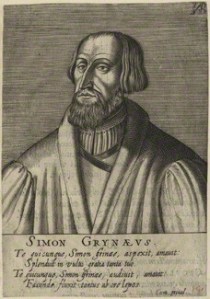
NPG D24782; Simon Grynaeus after Unknown artist
Engraving by an unknown artist of Simon Grynaeus.

The following is a story attributed by Sander only to the ‘French Ambassador in Venice’ who received this about the same time as Falier was giving his report. It is also relayed in Sanuto’s Diaries for the date 24 November, 1531 as reported by Brown in the Calendar of State Papers—Venice. “It is said that more than seven weeks ago a mob of from seven to eight thousand women of London went out of the town to seize Boleyn’s daughter, the sweetheart of the king of England, who was supping at a villa –in una casa di piacere—on a river; the king not being with her; and having received notice of this she escaped by crossing the river in a boat.  The women had intended to kill her, and amongst the mob were many men disguised as women; nor has any great demonstration been made about this, because it was a thing done by women” (Sander xxvii; Brown November 1531 701).

Even more tantalizing than the above story is the one concerning the birth of Anne Boleyn.  Lewis goes on quite a tirade concerning the work of William Rastall (Rastell), Life of Sir Thomas More.  It appeared to be used as an argument for the validity of Dr. Burnet’s (Gilbert Burnet was a 17th century Scottish theologian, respected historian, and Bishop of Salisbury) story of the birth of Anne Boleyn—more on that in a little bit.  Sander’s lengthy discourse caused me to spend way too much time investigating. As near as I can piece together, William Rastell did not write a book about his uncle Sir Thomas More (William’s mother was Sir Thomas’ sister) but printed the text of More’s own work, A dyaloge of Syr Thomas More knyghte: one of the counsayll of oure soverayne lorde the kyng & chauncellour of hys duchy of Lancaster…. William later edited it into More’s English Works.  John Rastell a printer and William’s father, and his subcontractor, Peter Treveris, had completed an initial printing in June 1529 (Devereux 153-155). Therefore, when Lewis pronounced, “Dr. Burnet was a bolder man” than Nicholas Sander and that Brunet “denies also that Rastell ever wrote a Life of Sir Thomas More” as to why his story “deserves to be read” I had to investigate (Sander xxvii).

rastell
Printer’s Mark of John Rastell

“Were true,” writes Burnet, “very much might be drawn from it, both to disparage king Henry, who pretended conscience to annul his marriage for the nearness of affinity, and yet would after that marry his own daughter.  It leaves also a foul and lasting stain both on the memory of Anne Boleyn, and of her incomparable daughter, queen Elizabeth.  It also derogates so much from the first reformers, who had some kind of dependence on queen Anne Boleyn, that it seems to be of great importance, for directing the reader in the judgment he is to make of persons and things, to lay open the falsehood of this account.  It were sufficient for blasting it, that there is no proof pretended to be brought for any part of it, but a book of one Rastall, a judge, that was never seen by any other person than that writer.  The title of the book is ‘The Life of Sir Thomas More.’  There is great reason to think that Rastall never writ any such book; for it is most common for the lives of great authors to be prefixed to their works.  Now this Rastall published all More’s works in queen Mary’s reign, to which if he had written his life, it is likely he would have prefixed it.  No evidence, therefore, being given for his relation, either from record or letters, or the testimony of any person who was privy to the matter, the whole is to be looked on as a black forgery, devised on purpose to defame queen Elizabeth” (Sander xxviii).

images
Sir Thomas More

The implication that Henry VIII had sired a daughter, Anne, by Elizabeth Howard Boleyn was the outgrowth of the steady rumor that Henry had intimate relations with Elizabeth. Henry addressed the gossip to Sir George Throgmorton saying, “Never with the mother” (Friedman 326).  This blog will relay the story via the work of Nicholas Sander relayed through Dr. Burnet and Nicholas Pocock.

Pocock, who wrote Records of the Reformation: The Divorce 1527-1533, was no fan of Sander’s work.  In later years he edited a volume and wrote extensively of Sander’s mistakes.  In a lengthy chapter titled, “An Appendix Concerning Some of the Errors and Falsehoods in Sanders’ Book of the English Schism,” Pocock referred to his predecessor as “so great a master, impudence, and falsehood are matter of fact” (Burnet and Pocock 615).

Henry VIII was determined to marry Anne Boleyn and he was concerned over Cannon Law which could prohibit the marriage due to consanguinity.  It was accepted that Henry had committed “intrigue with Mary Boleyn, the elder sister of Anne” (Pocock xxxviii).  Nicholas Sander would not hold to Henry VIII’s argument that he must divorce Catherine of Aragon due to consanguinity yet would marry Anne Boleyn “having at the same time knowledge that this very impediment subsisted against the marriage with Anne Boleyn” (Sander 95). According to Sander, Henry had confessed in “a letter to Pope Clement VII that he had committed adultery with Mary Boleyn, the sister of Anne” (Sander 98).  This would make Henry related to Anne by the first degree of consanguinity.  Sander chided Henry for his lack of respect to the doctrines of the Church and for “his hypocrisy …and the falsehood of his heart” (Sander 98).  This being reference to Henry divorcing Katherine Aragon as the wife of his brother and for his relations to Mary Boleyn and Elizabeth Boleyn.

“Whether there was any connexion of a similar kind between Henry and the mother of Anne Boleyn may perhaps still be somewhat doubtful.  The king, on one occasion, denied that there had been any such intercourse, thereby tacitly admitting the other charge” (Pocock xxxviii).
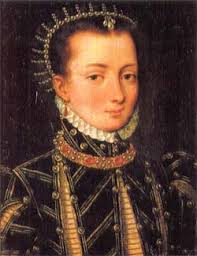
ehboley

Portrait believed to be of Elizabeth Howard Boleyn

Whatever the truth concerning the matter of Lady Boleyn and Henry VIII, Pocock believed that Sander overreached himself in his eagerness to defame Elizabeth Regina.  He does later find more charity with Sander and states that Sander truly believed the information he had been given (Pocock xli).    Below is the document dated March 1533, in which a priest named Thomas Jackson was charged with having stated that the King had committed adultery with Anne and Elizabeth Boleyn. It was reported by Sander and later reproduced by Pocock, titled, “Number CCCXXIX.”

Certain Articles deposed against Sir Thomas Jakson,
Chantree priest of Chepax, for certain words spoken by
him maliciously against our sovereign lord and king and
the queen’s grace by John Kepar and Bryan Banke of the
said town, which things also they have confessed before
Mr. William Fairfax, Esquire, Sheriff of the county of York.
First, The said Chantry Priest said that the king’s grace had
lived before this his marriage lawfully made with the queen’s
grace, not after the laws of God, but in adultery with her
grace and so doth now still continue, putting away from him
his lawful wife.
 
Item, He said maliciously that the king’s grace should first
kepe the mother and after the daughter, and now he hath
married her whom he kept afore and her mother also, upon
which words we presented the said preiset unto the sheriff
aforesaid, upon which presentment the said preist was
attached with all his goods, and the said John Kepar
and Brian Banke were by the said sheriff made to bind
themselves ot come hither and present the same to the
king’s grace counsel; which they have now done, most
meekly desiring to be at your pleasure demitted, for
they be poor men, and to lye long here should be to them
great hindrance.
 
Which thing to be true the said John Kepar and Brian Banke
will stand by at all times and have bounden themselves
before the sheriff by their hands and seals.
 
Endorsed—
Certain Articles deposed against Sir Thomas Jakson priest
(Pocock 468).
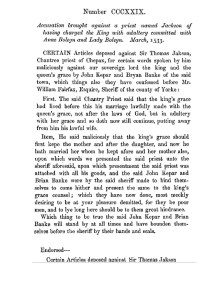
jakson proof of ab
Document Number CCCXXIX

“That the report of such intercourse spread during the first year of the marriage is plain from the document Number CCCXXIX, and the story must be allowed whatever weight is due to an assertion of a charge in itself improbably, and for the invention f which no adequate reason can be assigned.  Hitherto it has been supposed that Nicholas Sanders was the inventor of the libel; but this document shews that the report existed at least half a century before Sanders’ book, ‘De Schismate,’ was published.  It was, of course easy to magnify the particulars of such a story till it grew to the dimensions of Anne being the king’s own daughter” (Pocock xxxix).  Sander declared that “Henry had sinned with the mother of Anne Boleyn. And there was therefore, that relationship between them which subsists between parent and child.  It is never lawful for a father to marry his own daughter” (Sander 99).

Pocock told how Sander had acquired the tale from a book about the life of Sir Thomas More by Rastell and had never checked the facts.  “That Anne could be the king’s daughter by lady Boleyn is easily shewn to be impossible from considerations of time and circumstance” (Pocock xxxix).  Although Pocock never relays to us the proof of this, he does give Sander some slack due to the wording of the dispensation that Cranmer had petitioned from the Pope to allow Henry to marry Anne.  Cranmer had to cover every possible point and we are cautioned not to place too much stress “on Cranmer’s assertion, that the affinity supposed to be contracted by illicit intercourse of a man with his wife’s sister, daughter, or mother.”  Specifics would not even be that necessary as Cannon Law “being express upon this subject: Secundum canones etiam per coitum fornicarium et incestuosum contrahitur affinitas.”  Pocock assures us that the details of Cranmer’s request are “veiled in the decent obscurity of a dead language” (Pocock xxxix-xl).

Thomas_Cranmer
Thomas Cranmer

This blogger is upset with herself for spending too much time and energy on these rumors but they do illustrate the lengths people went to defame Anne Boleyn.  Now we come to the crux of Sander’s argument.

Henry was deemed as shameless and Sander was astounded by the “hypocrisy and the rashness and lewdness of one man” but marveled the more at the fact that “multitudes of men should endure patiently, not their own lewdness, but that of another—not only endure it patiently, but respect it, praise and honour it so far as to build upon it their belief, their hope and salvation” (Sander 99-100).

Anne Boleyn B necklace
Anne Boleyn
He exclaimed that “Now, all English Protestants, honour the incestuous marriage of Henry and Anne Boleyn as the well-spring of their gospel, the mother of their Church, and the source of their belief” (Sander 100).  The religious issue was never far behind the personal and the political.  Pope Clement VII had officially declared that Henry had by “de facto married one Anne, contrary to Our commandments, and in contempt of Our prohibitions contained in Our letter in forma Brevis, thereby temerariously disturbing the due course of law; the marriage contracted by the aforesaid Henry and Anne all manifest and notorious deeds to be what they are and were, null and unjust and contrary to law” (Lilly 350).  For further measure, Clement declared “by the same sentence that the children, born or to be born of that marriage, are and always have been bastards” (Lilly 351).
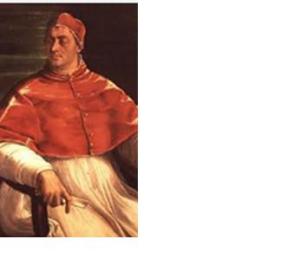
clement2
Pope Clement VII

As mentioned, politics wrapped itself in the religious and personal lives of the Tudor Era and the Pope saw fit to “deal gently and mercifully with the said Henry.” He gave Henry over a year to comply with the orders to repudiate Anne and reinstate Catherine or face excommunication.  The Pope could not afford to alienate Henry and was hoping for a reprieve to allow matters to resolve themselves and thus not offend Charles, Holy Roman Emperor, nephew of Catherine of Aragon.  That fascinating angle to this topic will not be addressed here. Thus, Catholic Sander was convinced that “this marriage opened a door to every heresy and to every sin” which eventually brought her downfall (Sander 101).

References:     

“Act for the Dissolution of the Lesser Monasteries.” Act for the Dissolution of the Lesser Monasteries. The Tudor Place, n.d. Web. 24 Nov. 2013.

“Alesius, Alexander (DNB00).” Wikisource, the Free Online Library, Dictionary of National Biography. (1904). 21 Feb. 2011. Web. 30 Aug. 2013.

“Anne Boleyn’s Book of Hours.” Anne Boleyn’s Book of Hours. British Library, 26 Mar. 2009. Web. 28 Mar. 2014.

Bell, Doyne Courtenay. Notices of the Historic Persons Buried in the Chapel of St. Peter Ad Vincula, in the Tower of London. With an Account of the Discovery of the Supposed Remains of Queen Anne Boleyn. London: J. Murray, 1877. Google Books. Web. 14 Sept. 2013.

Bernard, G. W. Anne Boleyn:  Fatal Attractions. New Haven:  Yale University Press, 2010.  Google Books. Web. 28 Dec. 2013.

Bernard,G.W. “The Fall of Anne Boleyn.” Power and Politics in Tudor England. Burlington: Ashgate, 2000. Google Books. Web. 5 May 2014.

Bordo, Susan.  The Creation of Anne Boleyn:  A New Look at England’s Most Notorious Queen.  New York:  Houghton, Mifflin Harcourt Publishing, 2013.  Google Books. Web. 27 Mar. 2014

Brewer, J. S. (editor). “Henry VIII: November 1517.” Letters and Papers, Foreign and Domestic, Henry VIII, Volume 2: 1515-1518 (1864): 1183-1198. British History Online. Web. 29 June 2013.

Brewer, J. S. (editor). “Henry VIII: December 1528, 2-10.” Letters and Papers, Foreign and Domestic, Henry VIII, Volume 4: 1524-1530 (1875): 2170-2181. British History Online. Web. 10 Nov. 2013.

Brewer, J.S. (editor). “Henry VIII: February 1530, 1-15.” Letters and Papers, Foreign and Domestic, Henry VIII, Volume 4: 1524-1530 (1875): 2773-2790. British History Online. Web. 12 Nov. 2013

Brewer, J. S. (editor). “Henry VIII: December 1530, 1-14.” Letters and Papers, Foreign and Domestic, Henry VIII, Volume 4: 1524-1530 (1875): 3052-3058. British History Online. Web. 02 Nov. 2013. 

Brown, Rawdon (editor). “Volume I 1202-1509.” Calendar of State Papers Relating to English Affairs in the Archives of Venice, (1864): CXXIII. British History Online. Web. 28 Sept. 2013.

Brown, Rawdon (editor). “Venice: August 1531.” Calendar of State Papers Relating to English Affairs in the Archives of Venice, Volume 4: 1527-1533 (1871): 284-289. British History Online. Web. 28 Sept. 2013.

Brown, Rawdon (editor). “Venice: April 1532.” Calendar of State Papers Relating to English Affairs in the Archives of Venice, Volume 4: 1527-1533 (1871): 331-334.  British History Online. Web. 22 Mar. 2014.

Brown, Rawdon (editor). “Venice: November 1531.” Calendar of State Papers Relating to English Affairs in the Archives of Venice, Volume 4: 1527-1533 (1871): 291-307. British History Online. Web. 28 Sept. 2013. 

Burke, James (editor). Lingard’s History of England Abridged: With a Continuation, from 1688 to 1854.  Baltimore: John Murphy & Co., 1875.  Internet Archive. Web. 27 Mar. 2014.

Burnet, Bishop Gilbert.  An Abridgement of Bishop Burnet’s History of the Reformation of the Church of England. New Edition. Vol. I.  London:  F. C. & J. Rivington, 1819.  Google Books. Web. 22 Dec. 2013

Burnet, Gilbert. The History of the Reformation of the Church of England. Vol. I Part I. London:  W. Baynes and Son, 1825.  Google Books.  Web. 3 July 2013.

Burnet, Gilbert, and Nicholas Pocock. The History of the Reformation of the Church of England. Vol. V. Oxford: MacMillian and Company, 1865. Google Books. Web. 27 Sept. 2013. 

Burnet, Bishop Gilbert.  An Abridgement of Bishop Burnet’s History of the Reformation of the Church of England. New Edition. Vol. I.  London:  F. C. & J. Rivington, 1819.  Google Books. Web. 22 Dec. 2013

Butler, Clement Moore. An Ecclesiastical History from the Thriteenth to the Nineteenth Century.  Philadelphia: Claxton, Remsen, and Haffelfinger, 1872.  Google Books.  Web. 8 Feb. 2014.

Cassell Itd. Cassell’s Library of English Literature, Selected, Edited and Arranged by Henry Morley:  The Religious Life of England, Part I. London:  Cassell, Petter, and Galpin, 1876. Google Books. Web. 31 May 2014.

Cavendish, George. The Life of Cardinal Wolsey; and Metrical Visions from the Original Autograph Manuscript. Ed. Samuel Weller Singer. Vol. I. Chiswick: Harding, Triphook, and Lepard, 1825. Google Books. Web. 16 Nov. 2013.

Cavendish, George. The Life of Cardinal Wolsey; and Metrical Visions from the Original Autograph Manuscript. Ed. Samuel Weller Singer. Vol. II. Chiswick: Harding, Triphook, and Lepard, 1825. Google Books. Web. 2 Nov. 2013.

Chapman, Hester W. The Challenge of Anne Boleyn. New York: Coward, McCann & Geoghegan, 1974. Google Books. Web. 3 May 2014.

“Condemnation of Anne Boleyn.” The Museum of Foreign Literature, Vol. XVI: January to June 1830: 289. Philadelphia: E. Littell & Brother, 1830. Google Books. Web. 4 Oct. 2013.

Constantyne, George. “Transcript of an Original Manuscript: Containing a Memorial from George Constantyne to Thomas Lord Cromwell.  Communicated by Thomas Amyot, Esq. F. R.S., Treasurer, in a Letter Addressed to Henry Ellis, Esq. F.R.S., Secretary”. Archaeologia: Or Miscellaneous Tracts Related to Antiquity. Vol XXIII.  London: Society of Antiquaries of London, 1831. Google Books. Web. 7 Feb. 2014.

Davies, Ress (editor). The Royal Historical Society Transactions. Sixth Series Vol. 5.    Cambridge:  Press Syndicate of the University of Cambridge, 1995. Google Books. Web. 4 Sept. 2013.

Denny, Joanna.  Anne Boleyn:  An New Life of England’s Tragic Queen. Philadelphia, PA:  Da Capo Press, 2006. Google Books. Web. 1 Sept. 2013.

Devereux, E. J. “Bibliography of John Rastell.” Quebec:  McGill-Queen’s University Press, 1999.  British History Online. Web.  27 Sept. 2013.

Dodd, A. (Editor). The Life of the Most Reverend Dr. Cranmer, Some Time Lord Archbishop of Canterbury, Primate of all England, and Metropolitan; One of His Majesty’s Most Honourable Privy-Council in the Reign of Henry VIII.  Chairman of the Committee for Compiling the English Liturgy, and Martyr, in the Reign of Queen MaryLondon:  Cook, James and Kingman 1751.  Google Books. Web. 1 Dec. 2013.

Dodds, Madeleine Hope, and Ruth Dodds. The Pligrimage of Grace 1536-1537 and The Exeter Conspiracy 1538. Vol II. Cambridge: University Press, 1915. Internet Archive. Web. 22 Mar. 2014.

Ellis, Henry. Original Letters, Illustrative of English History: Including Numerous Royal Letters from Autographs in the British Museum, and One or Two Other CollectionsVol. II.  London: Harding, Triphook, and Lepard, 1824. Google Books. Web. 3 Jan. 2014.

Elton, G. R. England Under the Tudors. London: Routledge, 1955. Print.

Elton, G. R. Policy and Police:  the Enforcement of the Reformation in the Age of Thomas Cromwell.  Cambridge: Cambridge University Press, 1972. Google Books. Web. 22 Mar. 2014.

Foxe, John (1516-1587) The Acts and Monuments of John Foxe; With a Life of the Martyrologist, and Vindication of the Work, ed George Townsend, 8 volumes, reprinted by AMS Press, New York, 1965. Reformation.org. Web 2. Nov. 2013.

Foxe, John. “Oration to Saint Anne Boleyn from John Foxe, Martyrologist.” The Acts and Monuments of John Foxe: With a Life of the Martyrologist, and Vindication of the Work, ed. George Townsend, Vol. 1-8. New York: AMS Press, 1965.  Reformation.org. Web. 2 Nov. 2013.

Fraser, Antonia.  The Wives of Henry VIII.  New York:  Alfred A. Knopf, 1992. Print.

Freeman, Thomas. “Research, Rumour and Propaganda: Anne Boleyn in Foxe’s ‘Book of Martyrs.’” The Historical Journal 38.4 (1995): 797-819. JSTOR. Web. 1 June 2014.

Friedmann, Paul.  Anne Boleyn: A Chapter of English History, 1527-1536. Vol I. London: Macmillian and Co., 1884. Internet Archive. Web. 21 June 2013.

Friedmann, Paul.  Anne Boleyn: A Chapter in English History, 1527-1536. Vol. II. London:  Macmillian and Company, 1884. Google Books. Web. 19 Oct. 2013.

Froude, James A. The Divorce of Catherine of Aragon:  The Story as Told by the Imperial Ambassadors Resident at the Court of Henry VIII.   New York:  Scriber and Sons, 1891.  Google Books  Web. 15 Mar. 2014.

Gairdner, James (editor). “Henry VIII: January 1531, 1-15.” Letters and Papers, Foreign and Domestic, Henry VIII, Volume 5: 1531-1532 (1880): 10-22. British History Online. Web. 02 Nov. 2013.

Gairdner, James (editor). “Henry VIII: May 1531, 16-31.” Letters and Papers, Foreign and Domestic, Henry VIII, Volume 5: 1531-1532 (1880): 111-130. British History Online. Web. 20 Oct. 2013.

Gairdner, James (editor). “Henry VIII: April 1533, 11-20.” Letters and Papers, Foreign and Domestic, Henry VIII, Vol. 6: 1533 (1882): 151-170. British History Online. Web. 17 Mar. 2014.

Gairdner, James. (editor). “Henry VIII: April 1534, 16-20.” Letters and Papers, Foreign and Domestic, Henry VIII, Volume 7: 1534 (1883): 199-210. British History Online. Web. 29 June 2013.

Gairdner, James (editor). “Henry VIII: April 1534, 26-30.” Letters and Papers, Foreign and Domestic, Henry VIII, Volume 7: 1534 (1883): 217-236. British History Online. Web. 27 Dec. 2013.

Gairdner, James (editor). “Henry VIII: June 1534, 11-15.” Letters and Papers, Foreign and Domestic, Henry VIII, Volume 7: 1534 (1883): 311-317. British History Online. Web. 22 March 2014.

Gairdner, James (editor). “Henry VIII: September 1534, 6-10.” Letters and Papers, Foreign and Domestic, Henry VIII, Volume 7: 1534 (1883): 445-450. British History Online. Web. 20 Oct. 2013.

Gairdner, James (editor). “Henry VIII: February 1535, 11-20.” Letters and Papers, Foreign and Domestic, Henry VIII, Volume 8: January-July 1535 (1885): 75-98. British History Online. Web. 29 June 2013.

Gairdner, James (editor). “Henry VIII: August 1535, 11-20.” Letters and Papers, Foreign and Domestic, Henry VIII, Volume 9: August-December 1535 (1886): 19-40. British History Online. Web. 22 Mar. 2014.

Gairdner, James (editor). “Henry VIII: October 1535, 6-10.” Letters and Papers, Foreign and Domestic, Henry VIII, Volume 9: August-December 1535 (1886): 181-195. British History Online. Web. 29 June 2013.

Gairdner, James (editor). “Henry VIII: February 1536, 11-20.” Letters and Papers, Foreign and Domestic, Henry VIII, Volume 10: January-June 1536 (1887): 108-126. British History Online. Web. 20 Oct. 2013.

Gairdner, James (editor). “Henry VIII: April 1536, 1-10.” Letters and Papers, Foreign and Domestic, Henry VIII, Volume 10: January-June 1536 (1887): 240-259. British History Online. Web. 17 Nov. 2013.

Gairdner, James (editor). “Henry VIII: May 1536, 21-25.” Letters and Papers, Foreign and Domestic, Henry VIII, Volume 10: January-June 1536 (1887): 391-401. British History Online. Web. 16 Nov. 2013.

Gardiner, James (editor). “Henry VIII: June 1536, 1-5.” Letters and Papers, Foreign and Domestic, Henry VIII, Volume 10: January-June 1536 (1887): 424-440. British History Online. Web. 22 Sept. 2013.

Gairdner, James (editor). “Henry VIII: June 1536, 6-10.” Letters and Papers, Foreign and Domestic, Henry VIII, Volume 10: January-June 1536 (1887): 440-470. British History Online. Web. 17 Nov. 2013.

Gairdner, James (editor). “Henry VIII: August 1536, 16-20.” Letters and Papers, Foreign and Domestic, Henry VIII, Volume 11: July-December 1536 (1888): 130-138. British History Online. Web. 28 June 2013.

Gairdner, James (editor). “Henry VIII: June 1537, 11-20.” Letters and Papers, Foreign and Domestic, Henry VIII, Volume 12 Part 2: June-December 1537 (1891): 25-42. British History Online. Web. 29 Dec. 2013.

Gairdner, James (editor). “Henry VIII: October 1537, 11-15.” Letters and Papers, Foreign and Domestic, Henry VIII, Volume 12 Part 2: June-December 1537 (1891): 309-324. British History Online. Web. 22 Mar. 2014.

Gairdner, James and R. H. Brodie (editors). “Letters and Papers: October 1539, 26-31.” Letters and Papers, Foreign and Domestic, Henry VIII, Volume 14 Part 2: August-December 1539 (1895): 137-160. British History Online. Web. 22 June 2014.

Gayangos, Pascual de (editor). “Spain: October 1533, 1-20.” Calendar of State Papers, Spain, Volume 4 Part 2: 1531-1533 (1882): 816-830. British History Online. Web. 17 Mar. 2014.

de Gayangos, Pascual (editor). “Spain: April 1536, 1-20.” Calendar of State Papers, Spain, Volume 5 Part 2: 1536-1538 (1888): 79-85. British History Online. Web. 24 Nov. 2013.

Grosvenor, Bendor. “Anne Boleyn Regains Her Head.” Art History News. Art History News, 15 Dec. 2011. Web. 3 May 2014.

Gunn, Steven. “The Structures of Politics in Early Tudor England.” Ed. Ress Davies. Royal Historical Society Transactions: Sixth Series. Vol. V. Cambridge: Cambridge UP, 1996. 59-90. Google Books. Web. 1 Dec. 2013.

Haigh, Christopher. English Reformations: Religion, Politics, and Society Under the Tudors. Oxford: Clarendon, 2012. Google Books. Web. 13 Nov. 2013.

Hall, Edward, Henry Ellis, and Richard Grafton. Hall’s Chronicle; Containing the History of England, during the Reign of Henry the Fourth, and the Succeeding Monarchs, to the End of the Reign of Henry the Eighth, in Which Are Particularly Described the Manners and Customs of Those Periods. London: Printed for J. Johnson and J. Rivington; T. Payne; WIlkie and Robinson; Longman, Hurst, Rees and Orme; Cadell and Davies; and J. Mawman, 1809. Internet Archive. Web. 2 Jan. 2013. 

Hall, Hubert (editor). A Formula Book of English Official Historical Documents: Part II Ministerial and Judicial Records.  Cambridge:  University Press 1909. Google Books. Web. 29 Nov. 2013.

Harpsfield, Nicholas, Reverend.  A Treatise of Marryage Occasioned by the pretended Divorce of King Henry the Eigth from Q. Catherine of Arragon devided Into three Bookes.  “The third book of Doctor N. Harpsfield’s Treatise of Marriage.” Ed. Charles Eyston. Trans. William Eyston.  Canterbury: Topliffe, 1707. Google Books. Web. 22 Mar. 2014.

Heal, Felicity. Reformation in Britain and Ireland. Oxford: UP 2003.  Google Books. Web. 1 Dec. 2013.

Herbert, Edward, 1st Baron Herbert of Cherbury.  The Life and Reigne of King Henry the Eighth.  London: T. Martyn, S. Mearne and H. Herringmann 1649.  Google Books. Web. 1 Mar. 2014.

Herbert, Henry William. Memoirs of Henry the Eighth of England: With the Fortunes, Fates, and Characters of His Six Wives.  New York: Miller, Orton & Mulligan, 1856. Google Books. Web. 16 Mar. 2014.

Hibbert, Christopher.  The Virgin Queen: Elizabeth I, Genius of the Golden Age.  New York: Addison-Wesley Publishing Company, Inc., 1991.  Print.

Holinshed, Raphael, John Hooker, Francis Thynne, Abraham Fleming, John Stow, and Sir Henry Ellis.  Holinshed’s Chronicles of England, Scotland and Ireland. Vol. III. London: J. Johnson Publishers, 1808. Google Books. Web. 31 May 2014.

Howell, T. B. and Thomas Jones. A Complete Collection of State Trials and Proceedings for High Treason and Other Crimes and Misdemeanors from the Earliest Period to the Year 1783, With Notes and Other Illustrations including, in Addition to the Whole of the Matter Contained int eh Folio Edition of Hargrave, Upwards of Two Hundred Cases Never Before Collected: to Which Subjoined A Table of Parallel Reference. London:  Longman, Hurst, Rees, Orme, and Brown, 1816. Google Books. Web. 3 Jan. 2104.

Hume, David.  The History of England from the Invasion of Julius Caesar to the Abdication of James the Second, 1688. Vol. III.  Boston: Phillips, Sampson and Company, 1858.  Google Books. Web. 21 Nov. 2013.

Hume, Martin A. Sharp. Chronicle of King Henry the Eighth of England: Being a Contemporary Record of Some of the Principal Events of the Reigns of Henry VIII and Edward VI, Written in Spanish by an Unknown Hand ; Translated, with Notes and Introduction, by Martin A. Sharp Hume. London: George Bell and Sons, 1889. Internet Archive. Web. 4 May 2013.

Hume, Martin A. Sharp. Chronicle of King Henry the Eighth of England: Being a Contemporary Record of Some of the Principal Events of the Reigns of Henry VIII and Edward VI, Written in Spanish by an Unknown Hand ; Translated, with Notes and Introduction, by Martin A. Sharp Hume. “How Anne Was Beheaded, and What Took Place Five Days After the Execution of the Duke and the Others.” London: George Bell and Sons, 1889. Internet Archive. Web. 27 Dec. 2013.

Ives, Eric.  The Life and Death of Anne Boleyn: The Most Happy. Oxford: Blackwell Publishing, 2004. Print.

Leach, Arthur Francis.  English Schools at the Reformation. Westminster:  Archibald Constable & Co. 1896.  Google Books. Web. 29 Nov. 2013.

Lilly, William Samuel. Renaissance Types. Ed. Jessopp, Dr. London: T. Fisher Unwin, 1901. Google Books. Web. 5 Oct. 2013.

Lindsey, Karen.  Divorced, Beheaded, Survived:  A Feminist Reinterpretation of the Wives of Henry VIII.  Reading, Massachusetts:  Addison-WESLEY Publishing Company, 1995. Print.

Lipscomb, Suzannah.  1536:  The Year That Changed Henry VIII.  Oxford: Lion Hudson PLC, 2009. Google Books. Web. 22 Mar. 2014.

MacCulloch, Diarmaid.  Thomas Cranmer:  A Life.  New Haven: Yale University Press, 1998.  Google Books. Web. 24 Nov. 2013.

Mackintosh, James. The History of England:  The Cabinet Cyclopaedia Conducted by Reverend Dionysius Lardner. Vol. II. London: Longman, Rees, Orme, Brown & Green, 1831. Google Books. Web. 22 Feb. 2014.

Morris, Sarah and Natalie Grueninger. In the Footsteps of Anne Boleyn. Stroud, Gloucestershire: Amberley, 2013. Print.

Neale, J. E. Queen Elizabeth I. Garden City, NY: Doubleday, 1957 Print.

Newcombe, D. G. ‘Skip, John (d. 1552)’, Oxford Dictionary of National Biography, Oxford University Press, 2004; online ed., Jan. 2008. Web. 1 Dec. 2013.

Nott, George Fred. (editor). The Works of Henry Howard, Earl of Surrey and of Sir Thomas Wyatt, the Elder. Vol II.  London:  Longman, Hurst, Rees, Orme, and Brown, 1816. Google Books. Web. 27 Mar. 2014.

“Passionate Love Letter from Henry VIII to Anne Boleyn on Public Display.” The Daily Telegraph [London] 14 Feb. 2009, Culture sec. Web. 24 Mar. 2014.

Pocock, Nicholas.  The Records of the Reformation:  The Divorce 1527-1533 Mostly Now for the First Time Printed from MSS. In the British Museum, the Public Record Office, the Venetian Archives, and Other Libraries. London:  MacMillian and Company, 1870.  Internet Archive. Web. 6 Oct. 2013.

Pollard, Albert Frederick.  Henry VIII.  London:  Longmans, Green and Company, 1919.  Google Books.  Web. 20 Oct. 2013.

“The Queen Elizabeth Virginal.” V&A Images Collection. Victoria and Albert Museum, n.d. Web. 03 July 2013.

Riehl, Anna. The Face of Queenship:  Early Modern Representations of Elizabeth I.  Basingstoke, Hampshire: Palgrave Macmillian, 2010. Google Books. Web. 3 May 2014.

Ridgway, Claire.  The Fall of Anne Boleyn:  A Countdown.  UK:  MadeGlobal Publishing, 2012. Print.

Sander, Nicholas, and Edward Rishton. Rise and Growth of the Anglican Schism. Trans. David Lewis. London: Burns & Oates, 1877. Google Books. Web. 28 June 2013.

Smeeton, George.  The Life and Death of Anne Bullen, Queen Consort of England.  London: St. Martin’s Church, 1820.  Google Books. Web. 17 Oct. 2013.

Somerset, Anne. Elizabeth I.  New York: Alfred A. Knopf, 1991. Print.

Starkey, David.  Six Wives: The Queens of Henry VIII.  London:  Chatto & Windus, 2003.  Print.

“The Statutes of the Realm”. Vol. 3. London: The House of Commons, 1817. Google Books. Web. 17 Nov. 2013.

Stevenson, Joseph (editor). “Elizabeth: September 1559, 1-5.” Calendar of State Papers Foreign, Elizabeth, Volume 1: 1558-1559 (1863): 524-542. British History Online. Web. 16 Nov. 2013.

Strype, John.  Ecclesiastical memorials, Relating Chiefly to Religion, and The Reformation of It, and the Emergencies of the Church of England, Under King Henry VIII, King Edward VI, and Queen Mary I with Large Appendixes, Containing Original Papers, Records, &c. Historical memorials, Ecclesiastical and Civil, of Events Under the Reign of Queen Mary I Wherein Are Brought to Light Various Things Concerning the Management of Affairs, During the Five Years of Her Government.  Vol. III Part I. Oxford: Clarendon Press, 1822.  Google Books. Web. 17 June 2013.

Thoyras, M. Rapin de. The History of England. Vol. 6.  Trans. N. Tindal. London: James and John Knapton, 1759. Google Books. Web. 17 Feb. 2014.

Tyndale, William.  The Obedience of a Christian Man. New York:  Digireads.com Publishing. Google Books. Web. 3 Nov. 2013.

Schauer, Margery and Frederick Schauer. “Law as the Engine of State: The Trial of Anne Boleyn.”  William and Mary Law Review. Vol. 22 Issue 1. Williamsburg, VA: William & Mary Law School Scholarship Repository, 1980. Web. 1 Mar. 2014.

Stevenson, Joseph Rev.  Calendar of State Papers Foreign Series of the Reign of Elizabeth 1558-1559, Preserved in the State Department of Her Majesty’s Public Records Office. Vol. 3. London:  Longman, Green, Longman, Roberts & Green, 1863. Google Books. Web. 12 Mar. 2013.

Sylvanus, Urban, Gentleman’s Magazine and Historical Chronicle. Vol. CI Part I. London: J. B. Nichols, January to June, 1831. Google Books. Web. 19 Aug. 2013.

Walker, Greg. “Rethinking The Fall Of Anne Boleyn.” Historical Journal 45.1 (2002): 1. MasterFILE Premier EBSCOhost. Web. 2 Sept. 2013.

Warnicke, Retha.  The Rise and Fall of Anne Boleyn: Family Politics at the Court of Henry VIII. Cambridge:  Cambridge University Press, 1989.  Print.

Weir, Alison. The Children of Henry VIII.  New York:  Ballantine Books, 1996. Print

Weir, Alison.  Henry VIII:  The King and His Court.  New York:  Ballatine Books, 2001. Google Books. Web. 30 June 2013. 

Weir, Alison.  The Lady in the Tower:  The Fall of Anne Boleyn.  London:  Jonathan Cape, 2009.  Print.

Weir, Alison.  The Six Wives of Henry VIII.  New York: Grove Weidenfeld, 1991. Print.

Wilson, Derek.  A Brief History of the English Reformation Religion, Politics and Fear: How England was Transformed by the Tudors. London:  Constable & Robinson, Ltd., 2012.  Google Books. Web. 22 Mar. 2014.

Wriothesley, Charles.  A Chronicle of England During the Reigns of the Tudors, From A.D. 1485-1559.  Ed. William Hamilton. Vol. I. Westminster: Camden Society, 1875. Google Books. Web. 22 Dec. 2013.

Zahl, Paul.  Five Women of the English Reformation.  Grand Rapids, MI: William B. Berdmans Publishing Company, 2001.  Google Books. Web. 15 Mar. 2014.

Visiting St. Peter ad Vincula

On Friday, August 22, 2003, it was arranged for this blogger to meet the PR Manager of HM Tower of London (am withholding the name due to privacy) for access to the Chapel of St. Peter ad Vincula from 9:00 until 9:45.  My excitement grew as, at the Pass Office, the PR Manager welcomed me.  While she gathered the keys to the church she explained that the restricted entry was a policy resulting in the sacredness of the site. Since my visit, the availability to view the church has increased—tourists can now enter during the final hour before closing.

OLYMPUS DIGITAL CAMERA
Exterior of the Chapel of St. Peter ad Vincula in the Tower of London.

Described by John Noorthouck in his book, A New History of London published in 1773, St. Peter ad Vincula in the Tower “was founded by Edward III and dedicated to St. Peter in chains. This is a plain Gothic building void of all ornament: 66 feet in length, 54 in breadth, and 24 feet high from the floor to the roof. The walls, which have Gothic windows, are strengthened at the corners…. The tower is plain, and is crowned with a turret” (Noorthhouck 768).  This rather clinical description did not reveal the picturesque chapel this blogger encountered.

OLYMPUS DIGITAL CAMERA
Another view of the chapel.

As we walked through the Tower precincts, the PR Manager made clear that the Chapel is first and foremost a parish church and the residents of the Tower have used it as such for centuries.  As if to underline this fact, the parson’s cat roamed around while we were there. 

By the 19th century with the Tower no longer a residence of the sovereign, the chapel became “regarded too much in the light of a mere ordinary parish church” (Bell 15).  The hominess of the church is evident into the 21st century.  Plain wooden pews top slab flooring.  An exposed stonewall shelters the altar under which are the plaques (laid during the renovation completed in 1877) of those buried in the Chapel. Most of the bodies were placed in the crypt.

OLYMPUS DIGITAL CAMERA    OLYMPUS DIGITAL CAMERA

Doyne Courtenay Bell wrote, in 1877, of the Victorian Era restoration of the St. Peter ad Vincula.  Bell had been granted access to the facilities and records by the Resident Governor of the Tower, Colonel Milman.  Bell acknowledged that the records kept by Lord De Ros when he was Deputy Lieutenant of the Tower and his zeal in the restoration made it much easier for him (Bell) to write his book. 

In 1862, entrances were altered so that the “insignificant porch on the south side, by which the building had been entered since the time of Queen Elizabeth, was removed, and the original old doorway at the west end, which had been bricked up and concealed by plaster” was reopened (Bell 10).

From this blogger’s point of view the most noteworthy alteration to the physical building was that the “lath and plaster covering was at the same time removed from the ceiling, and the old chesnut beams of Henry VIII’s roof were disclosed to view” (Bell 10).  The ceiling was architecturally interesting and to know it was from the Tudor Era specifically added to its importance. 
OLYMPUS DIGITAL CAMERA
The ‘chesnut’ beams.

Bell supported the information this blogger received during the time of her 2003 visit that after the initial changes done in 1862 further restoration was needed by 1876 because the flooring had become too uneven and dangerous.  In that year Constable of the Tower of London, Sir Charles Yorke, submitted a plan to have the Chapel “architecturally restored to its original condition, and also suitably arranged as a place of worship for the use of the residents and garrison of the Tower” (Bell 10). 

As the restoration began, Bell reported, the “necessity for relaying the pavement, which had sunk and become uneven in many parts, became very evident; it was at once seen that nothing could be done until a level and safe foundation was prepared, upon which the new pavement could be placed…” (Bell 15).  Once the paving stones had been removed it was found “that the resting places of those who had been buried within the walls of the chapel during the troublous times of the sixteenth and seventeenth centuries, had been repeatedly and it was feared almost universally desecrated” (Bell 15).  People familiar with the history of St. Peter ad Vincula know that in “this church lie the ashes of many noble and royal personages, executed either in the Tower, or on the hill, and deposited here in obscurity” (Noorthouck 768). 
OLYMPUS DIGITAL CAMERA
A list of some prominent personages buried near the altar.

It is beyond the scope of this blog to discuss all of the notable people inscribed on their memorial tablets in the chancel. There was still questionable evidence as to who was buried in the chancel at the altar and the placement of each person.  At the time of the Duke of Monmouth’s burial, in 1685, a diagram of the suggested burial places of notable persons interred was created based on information compiled from several sources. 

St Peter Vincula graves

John Stowe first reported the use of a contemporary anonymous diary that John Gough Nichols later compiled with other sources in his Chronicle.  Stowe described what happened after the executions of the Duke of Northumberland and two associates, “Theyr corpes, with the hedes, wer buryed in the chapell in the Tower ; the duke at the highe alter, and the other too at the nether ende of the churche” (Nichols 24).   This placement was confirmed by Baker in his work.  He stated that after the execution of the Duke of Northumberland “his body with the head was buried in the Tower, by the body of Edward late Duke of Somerset, (mortal enemies while they lived, but now lying together as good friends) so as there lieth before the high Altar in St. Peters Church, two Dukes between two Queens, namely, the Duke of Somerset, and the Duke of Northumberland, between Queen Anne, and, Queen Katharine, all four beheaded” (Baker 315). 

OLYMPUS DIGITAL CAMERA
The Duke of Somerset, Edward Seymour
OLYMPUS DIGITAL CAMERA
Queen Anne Boleyn
OLYMPUS DIGITAL CAMERA
The Duke of Northumberland, John Dudley
OLYMPUS DIGITAL CAMERA
Queen Katherine Howard

Restorations are recorded to have occurred between the winter of 1876 and the spring of 1877 with the renovated chapel opened for service in June of 1877.  At an initial  meeting held to discuss the method of refurbishment attended by many worthies of the Tower administration, including Colonel Milman, it was decided to leave the more notable interments of the two queens and three dukes undisturbed near the altar.  Typical of many a remodel, the agreed upon plan could not be carried out.  The flooring was too unstable and after an examination by the Surveyor of the Office of Works, it was “decided that the pavement must be removed, but that as little disturbance of the ground as possible should take place” (Bell 17). 

Bell gives us a brief run-down on the changes that were made.  He reports that the old plaster and whitewash were removed from the walls and columns; a “piscina and hagioscope on the east wall of the aisle were discovered.” A wooden structure “which served as a vestry, was pulled down” and a new one was built “outside the eastern end of the aisle” (Bell 17).  Sadly, none of my photographs show any of these religious architectural elements.  

OLYMPUS DIGITAL CAMERA
A more encapsulating photo of the Chapel St. Peter ad Vincula.

Despite acknowledging that many of the remains had been disturbed in centuries passed, Bell firmly believed that the female bones discovered during the reconstruction of the floor were of Anne Boleyn.  He wrote, “not much doubt existed in the minds of those present that these were the remains of Anne Boleyn, who is recorded to have been buried in front of the altar by the side of her brother George Rochford, and these being the first burials in the chancel, the graves were in all probability dug to the right or dexter side of the altar, the so-called place of honour” (Bell 21).  A description of Anne’s removal from the site of her execution, written 2 June 1536 by a Londoner, relayed that Anne’s ladies “fearing to let their mistress be touched by unworthy hands, forced themselves to do so. Half dead themselves, they carried the body, wrapped in a white covering, to the place of burial within the Tower. Her brother was buried beside her” (Gardiner 1036). 
OLYMPUS DIGITAL CAMERA
Not the grave marker of George, Viscount of Rochford but his wife, Lady Jane, who is buried near Queen Katherine Howard.  

During the restoration of the winter of 1876-1877, hundreds of bones and partial skeletons were discovered. This ‘mere ordinary parish church’ witnessed many interments be they of notable, historical figures or parishioners.  During my visit the PR Manager described the church as similar to a catacomb.  The side chapel, actually a crypt, held many burial sites including the tomb of Sir Thomas More. With very few written, official documents precise locations of burials is impossible.  It is similar to the locations of where people were kept in the Tower.  Mostly the information comes from personal letters and historians piecing together where people must have stayed based on who they talk about, what they say they saw, or if lucky their mentioning that they were in such and such a tower. There is even some dispute as to where Elizabeth was housed when a prisoner–was she in the Bell Tower or in the royal apartments. 

bell tower
Bell Tower, part of the Tower of London

There was no inquiry on my part if there was any evidence that Elizabeth would have visited St. Peter ad Vincula when she was held prisoner I the Tower during her half-sister Mary’s reign. This blogger has already concluded that Elizabeth was too politically savvy and perhaps too anxious not to anger or upset her sister to do such a thing.  Even as Queen she would not have ventured to her mother’s gravesite.  To do so would have re-circulated old scandals and upset those subjects of more conservative leanings.  She spent very little time in the royal apartments in the Tower of London. Upon her entry into London after her accession in 1558, she had to take formal and symbolic possession of the Tower.  She entered on 28 November and stayed at least six days.  Elizabeth returned 12 January 1559 to spend two nights prior to her coronation.  It appears as if having fulfilled the requisite stay in the Tower Elizabeth never felt obliged to return.  She had understood the poignancy of the place when, upon her formal entry that late November day, she remarked “Some have fallen from being Princes in this land to be prisoners in this place; I am raised from being prisoner in this place to be Prince in this land” (Marshall). 

References

Baker, Richard, George Sawbridge, Benjamin Tooke, Thomas Clarges, Edward Phillips, and Edward Phillips. A Chronicle of the Kings of England, from the Time of the Romans Government, Unto the Death of King James the First.: Containing All Passages of State and Church, with All Other Observations Proper for a Chronicle. Faithfully Collected out of Authors Ancient and Modern; and Digested into a Method. By Sir Richard Baker, Knight. Whereunto Is Added, the Reign of King Charles the First, and King Charles the Second. In Which Are Many Material Affairs of State, Never before Published; and Likewise the Most Remarkable Occurrences Relating to King Charles the Second’s Most Wonderful Restauration, by the Prudent Conduct of George Late Duke of Albemarle, Captain General of All His Majesties Armies. As They Were Extracted out of His Excellencies Own Papers, and the Journals and Memorials of Those Imploy’d in the Most Important and Secret Transactions of That Time. London: Printed for Ben. Tooke ; A. and J. Churchill, at the Black-Swan in Pater-Noster Row; and G. Sawbridge, at the Three Flower-de Luces in Little-Britain, 1696. Google Books. Web. 15 Sept. 2013.

Bell, Doyne Courtenay. Notices of the Historic Persons Buried in the Chapel of St. Peter Ad Vincula, in the Tower of London. With an Account of the Discovery of the Supposed Remains of Queen Anne Boleyn. London: J. Murray, 1877. Google Books. Web. 14 Sept. 2013. 

Denny, Joanna.  Anne Boleyn:  An New Life of England’s Tragic Queen. Philadelphia, PA:  Da Capo Press, 2006. Google Books. Web. 1 Sept. 2013

Gardiner, James (editor). “Henry VIII: June 1536, 1-5.” Letters and Papers, Foreign and Domestic, Henry VIII, Volume 10: January-June 1536 (1887): 424-440. British History Online. Web. 22 September 2013.

Hall, Edward, Henry Ellis, and Richard Grafton. Hall’s Chronicle; Containing the History of England, during the Reign of Henry the Fourth, and the Succeeding Monarchs, to the End of the Reign of Henry the Eighth, in Which Are Particularly Described the Manners and Customs of Those Periods. London: Printed for J. Johnson and J. Rivington; T. Payne; WIlkie and Robinson; Longman, Hurst, Rees and Orme; Cadell and Davies; and J. Mawman, 1809. Archive.org. Web. 2 Jan. 2013. 

Hibbert, Christopher.  The Virgin Queen: Elizabeth I, Genius of the Golden Age.  New York: Addison-Wesley Publishing Company, Inc., 1991.  Print.

Hume, Martin A. Sharp. Chronicle of King Henry the Eighth of England: Being a Contemporary Record of Some of the Principal Events of the Reigns of Henry VIII and Edward VI, Written in Spanish by an Unknown Hand ; Translated, with Notes and Introduction, by Martin A. Sharp Hume. London: George Belland Sons, 1889. Internet Archive. Web. 4 May 2013.

Ives, Eric.  The Life and Death of Anne Boleyn: The Most Happy. Oxford: Blackwell Publishing, 2004. Print.
Marshall, Henrietta Elizabeth. “Elizabeth-How the Imprisoned Princess Became a Queen,”  An Island Story:  A History of England for Boys and Girls. New York:  Frederick A. Stokes Company, Publishers, 1920. Web. 22 Sept. 2013.  

Nichols, John Gough. The Chronicle of Queen Jane, Two Years of Queen Mary, and Especially of the Rebellion of Sir Thomas Wyat.  London: J. B Nichols and Son, 1822. Google Books. Web. 17 June 2013.

Noorthouck, John. “Book 5, Ch. 2: The suburbs of the City.” A New History of London: Including Westminster and Southwark (1773): 747-768. British History Online. Web. 15 September 2013.

“The Queen Elizabeth Virginal.” V&A Images Collection. Victoria and Albert Museum, n.d. Web. 03 July 2013.

Ridgway, Claire.  The Fall of Anne Boleyn:  A Countdown.  UK:  MadeGlobal Publishing, 2012. Print.

Somerset, Anne. Elizabeth I.  New York: Alfred A. Knopf, 1991. Print.

Stevenson, Joseph (editor). “Elizabeth: September 1559, 1-5.” Calendar of State Papers Foreign, Elizabeth, Volume 1: 1558-1559 (1863): 524-542. British History Online. Web. 01 September 2013.

Walker, Greg. “Rethinking The Fall Of Anne Boleyn.” Historical Journal 45.1 (2002): 1. MasterFILE Premier EBSCOhost. Web. 2 Sept. 2013.

Warnicke, Retha.  The Rise and Fall of Anne Boleyn: Family Politics at the Court of Henry VIII. Cambridge:  Cambridge University Press, 1989.  Print.

Weir, Alison. The Children of Henry VIII.  New York:  Ballantine Books, 1996. Print

Weir, Alison.  Henry VIII:  The King and His Court.  New York:  Ballatine Books, 2001. Google Books. Web. 30 June 2013.

Weir, Alison.  The Lady in the Tower:  The Fall of Anne Boleyn.  London:  Jonathan Cape, 2009.  Print.

Elizabeth Regina: Her Mother’s Memory

Elizabeth:  Her Mother’s Memory

Elizabeth at the age of two years and eight months upon the death of her mother, probably never had concrete recollections of her mother Anne Boleyn.  There is no evidence that Anne Boleyn was mentioned by any of Elizabeth’s household members during her childhood.  It is pure speculation as to which adults told the youngster about her mother and when she would have possibly learned about Anne’s execution and the scandalous reasons for it.  There are plenty of assumptions that Henry had placed a moratorium on the subject of Anne Boleyn which would not be implausible, but what is conjecture is based on the fact that Elizabeth was confined to her estate because Henry could not bear the sight of her and wanted no remembrance of her or her mother.  We know Sir John Shelton assured Cromwell on Wednesday 16 August 1536 from Hunsdon that he would ensure “the King’s pleasure that my lady Elizabeth shall keep her chamber and not come abroad, and that I shall provide for her as I did for my lady Mary when she kept her chamber” (Gairdner XI 312).  We know Elizabeth remained secluded at Hunsdon; we just do not know why—it could have been Henry trying to protect her from court gossip.

thomas cromwell
Thomas Cromwell

Lady Bryan, in August 1536, had already questioned Cromwell on the status of her charge.  “Now, as my lady Elizabeth is put for that degree she was in, and what degree she is at now, I know not but by hearsay, I know not how to order her or myself, or her women or grooms” (Gairdner XI 203).  Obviously, there was some confusion in her household.  Even Elizabeth was confused; when a gentleman of her household, often identified as either Sir John Shelton or Sir Thomas Bryan, referred to her by the demoted title of Lady Elizabeth, she responded “how haps it, Governor, yesterday my Lady Princess, and today but my Lady Elizabeth?” (Hibbert 20).  An astute child such as this would have understood the danger of asking questions about her mother or even mentioning her.

There are only two recorded times when Elizabeth mentioned her mother in public.  One was when she was 20 and hinted to the Spanish ambassador that she was disliked by Mary because of the distress her mother had caused. The second was when she informed the Venetian ambassador that her mother would never have cohabitated with the king without the ties of matrimony (Weir The Children of Henry VIII 7).  Is this anemic display evidence that she did not have any feelings for her mother or that she did not want to be associated with Anne?  Probably not.  It would not have been politically wise for Elizabeth to be linked too often and too closely with Anne Boleyn so one can understand the lack of mention by an aware and intelligent child.  This did not mean complete elimination of connections and when she was more secure as queen, several examples are in evidence of her identification with her mother although the earliest example comes when she was about ten.

elizabeth 1 by scrouts
Princess Elizabeth 

This early example was when she wore the ‘A’ necklace in the painting,The Family of Henry VIII.”  Supposedly this was “one of Anne Boleyn’s initial pendants” that was inherited from Elizabeth’s mother (Weir Lady in the Tower 306).

Jewelry was one way that Elizabeth showed her relationship with her mother.
Anne Boleyn was said to have three pendants of initials; an “A”, a “B”, and an “AB”. The “B” necklace is the most famous and is in portraits displayed at the National Portrait Gallery and Hever Castle more readily validated as representative of Anne. The “AB” is perhaps in a less famous painting; one not completely authenticated as Anne, and is referred to as the Nidd Hall portrait.

Anne Boleyn B necklace
Anne Boleyn, National Portrait Gallery

Anne Boleyn Hever
Anne Boleyn, ‘Hever Castle Portrait’ a copy of the lost original painted in 1534
AnneBoleynAB
Anne Boleyn, ‘Nidd Hall Portrait’ with the pendent of ‘AB’ hanging upon her gown
It is claimed that Elizabeth was wearing the “A” necklace in “The Family of Henry VIII” painting that hung in Hampton Court. (Weir Henry VIII: The King and His Court 187).  This blogger must disagree with some reports that she was wearing the necklace in defiance of her father.  He had full control of all of his public imagery.  I cannot imagine the artist risking his life, quite literally, by painting in the “A” if it was not sanctioned by Henry.   It is hard to imagine that Elizabeth would so blatantly wear this piece of jewelry without Henry’s permission.  This blogger could start an unsupported theory that this could be the cause of Elizabeth’s exile from 1543 to 1544 (see blog entry “The Fourth Step-Mother of Elizabeth, Katherine Parr” at https://elizregina.com/2013/06/04/the-fourth-step-mother-of-elizabeth-katherine-parr/).  This is clearly on a weak foundation considering the painting, according to Roy Strong, was completed between 1543 -1547. If Henry became incensed enough to banish his daughter for wearing an inherited item of jewelry from her disgraced mother, surely he would have ordered it painted out of the completed picture.  Perhaps allowing Elizabeth to display this necklace was a kind gesture on the king’s part or it was a tactic wanting everyone to associate the girl with her mother and her illegitimacy, in contrast to the legitimate heir next to him.
H8 Family
The Family of Henry VIII
BLow up M and E try this one
An enlargement obtained by Flickr of the princesses 

Apart from the wearing of one of Anne Boleyn’s necklaces, another piece of jewelry associated with Elizabeth and her mother is the Chequers ring.  Dated to around 1575 the Chequers Ring, thus named as it is now in the possession of that estate, clearly has a diamond encrusted ‘E’ and ‘R’ on the face. The locket opens to reveal a portrait of Elizabeth and an unidentified woman, usually and logically identified as Anne Boleyn; although, speculation ranges from it being a younger Elizabeth to Katherine Parr.  The history of the ring is too sketchy for this blogger to comfortably say that Elizabeth commissioned it as opposed to a courtier.  It is also difficult to agree with Weir, and many other writers who claim the ring “was only removed from her finger at her death, when it was taken to her successor, James VI of Scotland, as proof of her demise” (Weir Lady in the Tower 306). There is no definitive proof that Elizabeth constantly wore the ring or that it was the particular jewel taken to Scotland by Robert Carey.

Chequers ring to use
Chequers ring–this blogger was fortunate to see this locket ring at “Elizabeth:  The Exhibition at the National Maritime Museum” in Greenwich on August 8, 2003.

Another way Elizabeth linked to her mother was the use of her mother’s heraldic badge the crowned falcon upon a tree stump, surrounded by Tudor roses.  Although this was not implemented consistently as Elizabeth’s badge, there are several places it is displayed and on several items such as her virginal. The spinet “bears the royal coat of arms and the falcon holding a scepter, the private emblem of her mother, Anne Boleyn” (“The Queen Elizabeth Virginal”).  It is also speculated that Elizabeth adopted one of Anne’s mottoes, Semper eadem.  This is discussed on the blog “Said it, Believed it, Lived it” at https://elizregina.com/2013/06/25/said-it-believed-it-lived-it/.

virginals w falcon
Virginal of Elizabeth I, the Boleyn badge is on the left.

Elizabeth continued her links with her mother by promoting members of Anne’s household staff, Matthew Parker as Archbishop of Canterbury and relatives; notably the Careys, Knollyse, Sackvilles and even Howards until their alliance to Catholicism made it politically impossible.  Anne was also commemorated in a biography by William Latymer and in an unfinished treatise by George Wyatt (Weir, The Lady in the Tower 307-308).

A way in which Elizabeth kept her mother’s influence alive was in her understanding of the benefits and necessity of display. “Between Anne and Elizabeth there was an uncanny similarity of attitude towards the projection of monarchy, and of themselves as chosen by God to rule” (Ives 218).  It is estimated Anne spent £40* a month mostly on clothes for herself and Elizabeth (Ives 217).  Had Anne lived, her wardrobe would have “rivalled the 2000 costumes which tradition assigns to that most fashion-conscious of monarchs, her daughter Elizabeth” (Ives 253).  Catholic chronicler, Nicholas Sander, no friend of Anne’s, conceded that she “was always well dressed, and every day made some change in the fashion of her garments” (Sander 25).

Anne has been criticized for having such an active interest in her daughter’s wardrobe; one wonders if this was an area in which she could direct her wishes and so she did.  Taking an inordinate amount of care in the purchase of materials and the ordering of garments for her child was perhaps the method of bestowing attention that was socially and politically acceptable for Anne.

We have a dispatch that Sir William Loke, mercer and merchant adventurer who supplied the king with clothes of gold, silver and other luxurious fabrics and performed diplomatic missions on his buying trips abroad, wrote personally to the king in February 1534:  “The sale of cloths by your subjects has been good, but money is scarce.  I trust I have done my best to provide such things as the Queen gave me commission for” (Gairdner VIII 197). Loke kept extensive account records (published in the text, An Account of Materials Furnished for Use of Queen Anne Boleyn and the Princess Elizabeth, by William Loke ‘the King’s Mercer’ Between the 20th January 1535 [27th year of Henry VIII], and the 27th April 1536.  Communicated by J. B. Heath) which reveal clothing being sent to the princess.  It was  obvious that the “king’s heir, who was not yet three years old, was quite properly to be dressed in fashionable and expensive clothing”  (Warnicke 170).

armada
An example of elaborate clothing worn by Elizabeth in the ‘Armada Portrait’.

In Anne’s account books of May 19, 1536, are entries for payment for “boat-hire form Greenwich to London and back to take measure of caps for my lady Princess, and again to fetch the Princess’s purple satin cap to mend it.”  Anne, apparently, was especially fussy about her daughter’s caps: this particular one required at least three journeys to Greenwich to get it right” (Ives 253). Included in the accounts was “an ell of ‘tuke’ and crimson fringe for the Princess’s cradle head.”  Added to this finery was “a fringe of Venice gold and silver for the little bed.” Included were more assorted caps, white, crimson, purple and a “cap of taffeta covered with a caul of damask gold for the Princess” (Gairdner X 913).

Queen Anne Boleyn never had a full say in her child’s upbringing. That was the business of the king and his council. Famously, when it came to decide if Elizabeth should be weaned, her governess wrote to Thomas Cromwell for permission (Warnicke 170).  We do know from William Latymer, chaplain to Anne Boleyn who wrote Chronickille of Anne Bulleyne during the reign of Elizabeth, reported that Anne “had wanted her child, as her elder half-sister had been, trained in classical languages” (Warnicke 171).  When Anne realized that she was in serious danger of losing her life she gave unto Matthew Parker, her devoted chaplain and later Archbishop of Canterbury during the reign of Elizabeth, the care of her child.  This move can be seen as her wish for Elizabeth to have not only a classical education but also a more evangelical religious upbringing.

Matthew_Parker
Matthew Parker, Archbishop of Canterbury during the reign of Elizabeth 

Besides directing Elizabeth’s wardrobe and directing her education, how else did Anne bestow attention on her daughter?  This is impossible to know. Following standards of the day, Elizabeth was removed from her parents’ household when she was three months old.  She was sent to her own residence, Hatfield, with a wet-nurse and her governess, Margaret Bourchier, Lady Bryan.  “Here and at Hunsdon in Hertfordshire the princess spent much of her childhood although, like her parents, she traveled from house to house, staying in such places as Richmond, Eltham, Langley,and the More” (Warnicke 170).  Contemporary records indicate that Anne did visit regularly as we see from a letter written by Sir William Kyngston, courtier and Constable of the Tower of London, to Lord Lisle, Arthur Plantagenet on 18 April 1534.  “To day the King and Queen were at Eltham, and saw my lady Princess, as goodly a child as hath been seen and her grace is much in the King’s favour as goodly child should be, God save her”  (Gairdner VII 509).

The visits were not always private, as we would assume between a mother and her child as Eustace Chapuys mentions in a dispatch to Charles V on 24 October 1534. “On Thursday, the day before yesterday, being at Richmond with the little lass (garce) the Lady came to see her said daughter, accompanied by the dukes of Norfolk and Suffolk and others, including some of the ladies, which was a novelty” (Gairdner VII 1297).  Besides these visits, Anne was in contact with Lady Bryan through letters concerning the care of Elizabeth (Ives 256).  A response to a request from Elizabeth’s household officers to the Council was sent in a packet with “letters to them, and one from the Queen to lady Brian” (Gairdner IX 568).

Richmond 1562
Richmond Palace, 1562

Speculation is futile regarding the feelings both mother and daughter felt for each other; no written records exist.  Anne, following the social dictates and court etiquette of the day, rarely saw her daughter.  Not only was Elizabeth reared by people other than her parents, she was physically removed from them, as was her siblings so some people placing emphasis on the fact she was taken to Hatfield at the age of three months was proof her mother was as disappointed as her father in her birth.  Henry’s treasured heir, Edward, was also reared in a separate household.  Evaluation of those persons surrounding the infant Elizabeth does lend itself to assume a strong influence of Anne.  Many had Boleyn connections: Lady Margaret Bryan was not only Princess Mary’s former governess but related to Anne as they shared a maternal grandmother; Lady Shelton, also from Princess Mary’s household and given charge of the combined establishment of Mary and Elizabeth was Anne’s Aunt; and Kat Ashley nee Champernowne was married to Anne’s cousin. After Anne Boleyn’s execution, Henry did not alter the positions of these people closest to Elizabeth.  He too must have trusted them and was not worried about how Anne would be portrayed to their daughter by ‘Boleyn’ servants.  Elizabeth would later comment that “we are more bound to them that bringeth us up well than to our parents… our bringers-up are a cause to make us live well in [the world]” (Marcus 34).

*£40 from 1535 would be £19,000.00 using the retail price index or£266,000.00 using average earnings based on calcualtions from the “Measuring Worth” website.

References:

Brewer, J. S. (editor). “Henry VIII: November 1517.” Letters and Papers, Foreign and Domestic, Henry VIII, Volume 2: 1515-1518 (1864): 1183-1198. British History Online. Web. 29 June 2013.

Burnet, Gilbert. The History of the Reformation of the Church of England. Vol.I Part I. London:  W. Baynes and Son, 1825.  Google Books.  Web.  3 July 2013.

Gairdner, James. (editor). “Henry VIII: April 1534, 16-20.” Letters and Papers, Foreign and Domestic, Henry VIII, Volume 7: 1534 (1883): 199-210. British History Online. Web. 29 June 2013. 

Gairdner, James (editor). “Henry VIII: February 1535, 11-20.” Letters and Papers, Foreign and Domestic, Henry VIII, Volume 8: January-July 1535 (1885): 75-98. British History Online. Web. 29 June 2013.

Gairdner, James (editor). “Henry VIII: October 1535, 6-10.” Letters and Papers, Foreign and Domestic, Henry VIII, Volume 9: August-December 1535 (1886): 181-195. British History Online. Web. 29 June 2013.

Gairdner, James (editor). “Henry VIII: February 1536, 1-5.” Letters and Papers, Foreign and Domestic, Henry VIII, Volume 10: January-June 1536 (1887): 82-98. British History Online. Web. 01 July 2013.

Gairdner, James (editor). “Henry VIII: August 1536, 16-20.” Letters and Papers, Foreign and Domestic, Henry VIII, Volume 11: July-December 1536 (1888): 130-138. British History Online. Web. 28 June 2013.

Hibbert, Christopher.  The Virgin Queen: Elizabeth I, Genius of the Golden Age.  New York: Addison-Wesley Publishing Company, Inc., 1991.  Print.

Ives, Eric.  The Life and Death of Anne Boleyn: The Most Happy. Oxford: Blackwell Publishing, 2004. Print.

Marcus, Leah S. et al., eds. Elizabeth I: The Collected Works. Chicago: University of Chicago Press, 2002. Print.

“The Queen Elizabeth Virginal.” V&A Images Collection. Victoria and Albert Museum, n.d. Web. 03 July 2013.

Ridgway, Claire.  The Fall of Anne Boleyn:  A Countdown.  UK:  MadeGlobal Publishing, 2012. Print.

Sander, Nicholas, and Edward Rishton. Rise and Growth of the Anglican Schism. Trans. David Lewis. London: Burns & Oates, 1877. Google Books. Web. 28 June 2013.

Somerset, Anne. Elizabeth I.  New York: Alfred A. Knopf, 1991. Print.

Warnicke, Retha.  The Rise and Fall of Anne Boleyn: Family Politics at the Court of Henry VIII. Cambridge:  Cambridge University Press, 1989.  Print.

Weir, Alison. The Children of Henry VIII.  New York:  Ballantine Books, 1996. Print

Weir, Alison.  Henry VIII:  The King and His Court.  New York:  Ballatine Books, 2001. Google Books. Web. 30 June 2013.

Weir, Alison.  The Lady in the Tower:  The Fall of Anne Boleyn.  London:  Jonathan Cape, 2009.  Print.

Lady Bryan: An Iron Hand in a Velvet Glove

Lady Bryan:  An Iron Hand in a Velvet Glove

Margaret, Lady Bryan, governess to the royal children of King Henry VIII, was born about 1468 in Benningborough, Yorkshire, England.  Her parents were Sir Humphrey Bourchier–who was killed fighting for Edward VI at the battle of Barnet (Wagner 180) and Elizabeth Tilney–related through the Plantagent line to Edward III.  Elizabeth Tilney remarried upon the death of Sir Humphrey to Thomas Howard, 2nd Duke of Norfolk.  She went on to have more children, notably the 3rd Duke who played a very prominent role in Tudor politics and Elizabeth Boleyn, mother to Queen Anne, thus making Margaret Bourchier a half-sister to Anne Boleyn’s mother.

Elizabeth_tylney
Detail of a stained glass window at Holy Trinity Church, Long Melford, Suffolk depicting Elizabeth Tilney

The pre-contract that had been arranged with John Sands in November of 1478, did not impede her marriage to Sir Thomas Bryan in 1487.  It is known the couple had four children of which, most sources agree, two reached adulthood, Sir Francis Bryan and Elizabeth.

Francis Bryan did not care for Anne Boleyn and would take a role in her downfall.  He was referred to as the ‘Vicar of Hell’ by both King Henry and Thomas Cromwell for his lack of principles.  He had a “reputation for liking rich clothing and for gambling.  He was a popular courtier, skilled hunter and ouster, and lost an eye in a joust in 1526” (Ridgway xv).  Sir Francis was a very close friend to King Henry VIII and held positions on the Privy Council until eventually he became Lord Chief Justice of Ireland where he died in 1550.

Elizabeth Bryan married Sir Nicholas Carew.  The King did not forget his obligation to his loyal servants’ daughter. Accounts record a dowry, “Receipt 7 Nov. 6 Hen. VIII., from Sir John Daunce, by Dame Margaret Bryan, wife of Sir Thomas Bryan, on behalf of Mistress Elizabeth Bryan, their daughter, of 550/. Given ‘to her marriage, which by God’s grace shall be espoused and wedded to Nicholas Carewe, son and heir apparent to Sir Richard Carewe, knight, before the feast of the Purification of Our Blessed Lady the Virgin” (Brewer I 3419). Nicholas Carew was in high favor with the king and on May 3, 1516, a further wedding gift was recorded : “For NICH. CARUE. squire of the Body, son and heir of Sir Ric, and for ELIZ his wife, daughter of Tho. Bryan, vice-chamberlain to Queen Katherine. Writ to the Barons of the Exchequer, to make over lands …to the annual value of 40 mks., in part payment of 50 mrks. as a marriage portion” (Brewer II 1850).

n carew
Sir Nicholas Carew by Hans Holbein, 1533

Sir Nicholas Carew, Master of the Horse, was very close to the king.  He had “at first been one of Anne’s partisans – they were cousins–but by 1532 she had alienated and angered him not only by her overbearing ways and her abuse of her position, but also by her unjust treatment of his friend, Charles Brandon, Duke of Suffolk, and his brother-in-law, Sir Henry Guildford” (Weir Lady in the Tower 33).  Carew was executed in 1539 for treasonous actions.  Because his assets and property were confiscated, he left his widow and children destitute. Obviously, her mother intervened and wrote from Hunsdon an imploring letter to Thomas Cromwell in 1539:  “My lord, I most humbly thank your good lordship for the great goodness you shew upon my poor daughter Carew, which bindeth me to owe you my true heart and faithful service while I live.  She sendeth me word that it is the king’s pleasure she shall have lands in Sussex, which is to the value of six score pounds, and somewhat above, which I heartily thank his grace and your lordship for” (Wood 112).  It appears that the land did not have a house so Lady Bryan was requesting more suitable property for the widow and “her heirs males” upon which receipt it would “comfort two troubled hearts; for, my lord, unfeignedly you have, and shall have our true prayers and hearty service during our lives.”  Lady Bryan wanted to assure Cromwell that she knew that putting her trust in him and the King was the best she could do for her daughter who is “so kind a child to me as she hath been, I cannot for pity do no less” (Wood 113-114).

ladycarew2_medium (1)
Tomb of Elizabeth Bryan Carew

Margaret Bryan had been a lady-in-waiting to Catherine of Aragon from the time she married Henry VIII in 1509; she also attended Catherine at her coronation and was later listed as a chamber woman (Brewer I 82).  Sir Thomas was a vice chamberlain to the Queen Catherine’s household until his death sometime before 1517. Perhaps her widowhood is the reason for the king’s taking measures to assist this loyal servant.  A ledger entry for November 19, 1517, was not very comforting to a servant named Elizabeth Denton, but it certainly was for Margaret Bryan. “Marg. Brian, lady mistress to the King’s daughter, the Princess states: Annuity of 40 marks for services to the Princess, during the life of Eliz. Denton, widow, who has the fee of lady mistress to the Princess, and on whose death Brian is to have her office and fee” (Brewer II 3802).

Well-placed, Lady Margaret became governess to Princess Mary and was rewarded by Henry with her own title when she was made Baroness Bryan suo jure.  It is known that she stayed with Mary for almost six years and prior to being relieved of her duties was given a pension.  On July 7, 1519, “Margaret Bryan, widow of Sir Thomas Bryan, and now wife of David Soche, annuity of 50/, for services to the King and queen Katharine, and one tun of Gascon wine; yearly, out of the wine received for the King’s use” (Brewer III 361). Still known as Lady Bryan, Margaret had married her final husband David Zouche sometime before July 1519.

margaret_bourchier
Lady Bryan, Margaret Bourchier

David Zouche is all but lost to history.  Some believe he died in 1526, others in 1536 shortly after Anne Boleyn was executed. Certainly, someone important to her died in the summer of 1536 as revealed in the beginning sentence of a letter Margaret wrote to Cromwell: “I beseech you to be good lord to me now in the greatest need that ever [was], for it hath pleased God to take from me hem (them) that was my most com[fort] in this world, to my great heaviness, Jesu have mercy on his soul, a[nd] I am succourless and as a redeless creature but for my great trust in the King and your good lordship” (Gairdner XI  203).

Lady Margaret’s exact role is not clear after she left Princess Mary.  Some speculate that she looked after Henry Fitzroy, the king’s illegitimate son.  She was granted a gift of plate in 1532 even though the Royal household may not have directly employed her at that time (Gairdner V 1711). When she was called upon to care for Elizabeth, Lady Bryan was over the age of 60.  Margaret took charge of Elizabeth at her birth and went on to setup her household at Hatfield three months later. On 2 December 1533, “The king’s highness hath appointed that the lady princess Elizabeth (almost three months old) shall be taken from hence towards Hatfield to remain with such household as the king’s highness has established for the same” (Strickland VI 6).  At Hatfield and Hunsdon is where the princess “spent much of her childhood although, like her parents, she traveled from house to house, staying in such places as Richmond, Eltham, Langley,and the More” (Warnicke 170).

Hatfield_House_Old_Palace
 Hatfield

Much of what we know from the childhoods of Elizabeth and Edward come from the correspondence from Lady Bryan to Thomas Cromwell concerning the households of the children.  In a much quoted letter to Thomas Cromwell soon after Anne’s execution, Lady Bryan lays forth the difficulties of the child’s household with her change of status, her lack of clothing and her method of eating, all to be discussed further.

Held in such esteem by King Henry VIII when his treasured male heir was born in October of 1537, Lady Bryan was installed as his governess and Kat Ashley nee Champernowne took charge as Elizabeth’s. As conscientious with the Prince as she was with Elizabeth, Lady Bryan wrote to Cromwell appraising him of her charge.  A letter survives from 11 March 1539 in which young Edward is praised and touted; “Pleaseth your lordship to understand that, blessed be Jesu, my lord prince’s grace is in good health and merry, as would to God the king’s grace and your lordship had seen him yesternight; for his grace was marvelous pleasantly disposed.  The minstrels played, and his grace danced and played so wantonly that he could not stand still, and was as full of pretty toys as ever I saw a child in my life; as Master Chamberlain and my lady his wife can shew your lordship when they speak with you, whom I assure your lordship giveth as good and diligent attendance as is possible” (Wood 112).

It is unclear if Margaret relinquished her duties prior to Edward’s becoming king.  She was not forgotten as there is a mention of an annuity to her in January 1545. A ledger entry reads for “Lady Margaret Bryane, the King’s servant.  Annuity of 20/ from the Annunciation of Our Lady last.  Greenwich, 16 Jan. 36 Hen. VIII” (Gairdner XX 125).  Once Edward succeeded to the throne, Lady Bryan maintained her title, but lived away from court at her estates in Essex, “where she enjoyed a generous annuity of £70 per year” (Wagner 180).

edward 6
Prince Edward by Hans Holbein, 1538

We do know Lady Bryan died in Leyton, a village in Essex; the year is a bit more elusive.  Various sources list her possible years of death as 1551, 1552, and 1554. One source confidently declared that Margaret “died in 1552, shortly before the proving of her will on 21 June” (Wagner 180).

When Anne Boleyn gave birth to Elizabeth in 1533, Margaret transferred her duties to become the governess of the newest royal baby.  Margaret held this post until Edward was born in 1537 when she moved to his household and Katherine Ashley took over duties with Princess Elizabeth.  Anne did not have much say in her child’s upbringing—that was for Henry and his council. When Lady Bryan thought Elizabeth should be weaned, she contacted Lord Cromwell and then he submitted the request to the Privy Council.

A response from Sir William Paulet, onetime Comptroller of the Royal Household and  Lord Chamberlain to Henry VIII,  to Thomas Cromwell on 9 October 1535 addressed the issue of Elizabeth’s weaning.  “The King having considered the letter to Cromwell from lady Brian and other of the Princess’s officers, has determined that she shall be weaned with all diligence” (Gairdner IX 568). Agnes Strickland gives us some sardonic imagery when she tells us that in order for Elizabeth to be weaned “the preliminaries for this important business were arranged between the officers of her household and the cabinet ministers of her august sire, with as much solemnity as if the fate of empires had been involved in the matter” (Strickland Life of Elizabeth 6).

NPG 65,William Paulet, 1st Marquess of Winchester,by Unknown artist
Sir William Paulet

Having the charge of the royal children meant teaching them etiquette and proper manners—and displaying the children in the majesty expected. “Lady Bryan, who had brought Mary up until she was six, had been accustomed to treat her as the heiress to the throne for seventeen years. She must have been profoundly embarrassed when the girl was sent to share Elizabeth’s household with orders to ride behind the baby’s litter on progress and to cede the seat of honour even when the infant was still in the care of a wet-nurse” (Perry 19).  But as a stickler to her duty, it can be assumed she ensured the King’s wishes were fulfilled.

Chapuys, no friend of Elizabeth, shared with Charles V a meeting that took place on the Tuesday following Easter of 1534 between the French Ambassadors, La Pommeraye and Catillion and Elizabeth.  This visit was orchestrated to present Elizabeth as a fitting bride for a French prince and full-credit for its success went to Lady Bryan.  The Ambassadors “went to visit the King’s bastard daughter, who was brought out to them splendidly accoutred and dressed, and in princely state, with all the ceremonial her governess could think of”  (Gayangos V 40).

That Lady Bryan took this portion of her duties seriously was again shown in her letter to Cromwell.  It is speculated this letter was written in response to Lord Chancellor Thomas Audeley’s proposed visit to baby Prince Edward in 1537.  Lady Bryan wrote:

“My lord,
After my most bounden duty I humbly recommend me unto your good lordship; and shall accomplish it to the best of my power…. The best coat my lord prince’s grace hath is tinsel, and that he shall have on at that time; he hath never a good jewel to set on  his cap; howbeit I shall order all things for my lord’s honour the best I can, so as I trust the king’s grace shall be contented withal” (Wood 68-69).

Her affection seemed sincere for her royal charges and her pride in them too. She could not help but brag on Prince Edward, informing Cromwell, “I thank Jesu my lord prince’s grace is in good health and merry, and his grace hath four teeth; three full out, and the fourth appeareth” (Wood 69).

thomasaudley2
 Lord Chancellor, Thomas Audeley

“Much of the future greatness of Elizabeth may reasonably be attributed to the judicious training of her sensible and conscientious governess, combined with the salutary adversity, which deprived her of the pernicious pomp and luxury that had surrounded her cradle while she was treated as heiress of England” (Strickland VI 12).  Elizabeth was brought up calmly in the way that Lady Bryan thought best, shielded from the gossip and temptations of the adult world.  Lady Bryan no doubt shielded Princess Elizabeth as much as she could from the gossip surrounding her mother and the inevitable slander that began shortly after Anne’s death concerning the paternity of her daughter (Weir, The Lady in the Tower 316-317).

The king’s order for Elizabeth to remain in seclusion could have been his attempt to protect her as much as the theory that it was his unwillingness to face the child.  To read further on this topic visit the blog entry “Elizabeth:  Her Mother’s Memory” @elizregina.com.  This blogger believes that Agnes Strickland judged the Tudor Era with the mores of her own time period when she exclaimed that when “Elizabeth was branded with the stigma of illegitimacy; she was for a time exposed to the sort of neglect and contempt which is too often the lot of children to whom that reproach applies” (Strickland VI 9).  Henry VIII did not neglect his recognized illegitimate son, Henry FitzRoy, and perhaps he did not purposefully neglect Elizabeth in the summer of 1536.  He was embarking on a new life with his third wife, Jane Seymour, and was traveling the country.  We have seen how the final word of the organization of the children’s households rested with Henry.  His thoughts were on her to some degree so it could not be his indifference that led to the ‘crisis’ of her wardrobe and her household but perhaps more of benign neglect—administrative oversight.  That her position was diminished was obvious. “On 25 June 1536, an order reconstituted the households of Mary and Elizabeth.  It was certainly no coincidence, in that age when the number of servants in a household was a great status symbol, that Mary was given fourty-two servants, and Elizabeth thirty-two” (Ridley 26).  Below reprinted in chart form is the information from the 10th volume of Letters and Papers of Henry VIII concerning the structural changes made to the two households.

Personages appointed to attend on the lady Mary:—
Gentlewomen. Anne Morgan, Mrs. Finche, Frances Jerningham, Elizabeth Sydney.
Chamberers: Systile (Cecil ?) Barnes, Lucretia the Tumbler.
Gentlemen Ushers and Waiters: Richard Wilbraham, Robt. Chichester, Sir Ric. Baldwin, Walter Bridges, Thos. Burrows.
Wardrobe of Robes: Thos. Palmer, Nic. Newes.
Footman: Chas. Morley.
Laundress: Deachryche (Beatrice) Ap Rice.
Woodbearer: John Layton.
Keeper of Greyhounds: Christopher Bradley.
The Stable: Thos. Jene, yeoman; Ric. Hogg, Nic. Twydall, and Thos. Crabtree, grooms.
The names of persons attending upon lady Mary and lady Elizabeth:— i. On lady Mary:—
Gentlewomen: Susan Clarencyus, Frances Elmer, Mary Baynton Frances Baynan. “Chamberes:” Knyght, Syssele. Physician: Dr. Mychell. Gentlemen: Ant. Cotton, Wm. Chechester, Ric. Wylbram, Randale Dod, Sym Borton. Chaplain: Bauldewen. Yeoman: Geo. Mounge, David à Pryce, Chr. Wryght, John Conwey, Gray. Grooms of the Chamber: Thos. Borow, Walter Brydges, Thos. Palmer, Nic. Newes. Footman: Chas. Morley. Stable: Thos. Gent, yeoman; Thos. Bell, John Smith, and John Hyges, grooms. Laundress: Beatrice a Pryce. Woodbearer: William. Total, 42.
On lady Elizabeth:—
Ladies and gentlewomen: Lady Troy, Mrs. Chambrum, lady Garet, Eliz. Candysche, Mary Norice. “Chamberes:” Alys Huntercum, Jane Bradbelt. Gentlemen: Thos. Torrell, Robt. Porter, Ric. Sandes.Chaplain: Sir Rauffe. Grooms of the Chamber: Ric. Foster, Wm. Russell. Yeomen: David Morgan, Gabryell Tenant. Laundress: Agnes Hylton. Woodbearer: Christopher. Total, 32.
Personages appointed to attend on the lady Elizabethe, the Kinges doughter.”
Gentlewomen: Kateryne Chambernowne, Elizabethe Garret, Mary Hyll, Blanche ap Harrye.
Chamberers: Alice Huntercombe, Jane Bradbelt.
Gentlemen Ushers and Gentlemen Waiters: Rychard Sandes, Robert Power.
Chaplain: Sr Raffe Taylour.
Gromes of the Chambre: Willm. Man, John Acton.
Wardrobe of Robes: John Goughe, yeoman.
Lawndresse: Anne Hilton.
Woodberer: John Wyllycke
(Gairdner X 1187)

Lady Bryan’s letter to Thomas Cromwell in the summer of 1536, which was referred to earlier and has been recreated in full below, can be seen as a way to restore the prestige of and attention on Elizabeth’s household which was at Hunsdon. Cromwell’s response has not survived but Mistress Bryan’s concerns must have been addressed as there appears to be no further pleas on her part.  Her initial issue involved the altered status Elizabeth held.  Lady Bryan was searching for guidance when she wrote, “Now, as my lady Elizabeth is put from that degree she was in, and what degree she is at now I know not but by hearsay, I know not how to order her or myself, or her women or grooms” (Gairdner XI  203).

hunsdon
Hunsdon

Next up was the issue of Elizabeth’s wardrobe. It was up to “the lady mistress to make certain Elizabeth looked and acted like a king’s daughter, and proper clothes were essential to the role” (Erickson 37).  Margaret was beside herself as she begged Cromwell “to be good lord to her and hers, and that she may have raiment, for she has neither gown nor kirtle nor petticoat, nor linen foresmocks, nor kerchiefs, rails (night dresses), bodystychets (corsets), handkerchiefs, sleeves, mufflers, nor begins (night-caps).  All thys her Graces must take I have dreven off as long as I can, that, be my trothe, I cannot drive it no lenger. Besseeching you, my lord, that ye will see that her grace may have that which is needful for her, as my trust is that ye will do” (Gairdner XI  203).

The condition of Elizabeth’s wardrobe “reflected the general penury of the household” (Erickson 38).  Money must have been tight as the final concern that Lady Bryan has mixes the role of the steward, John Shelton, with the need for economy.  Shelton, who was responsible for keeping up the supplies of food, drink and other items necessary for the household, wrote to Cromwell shortly after Lady Bryan did to complain that he was “running short of money and ‘could not continue’ without more.”  This may not have been easy to acquire as the king’s Secretary Brian Tuke “had made it clear only a week earlier that he hoped Mr. Shelton would not be appealing for additional funds, as he had little or nothing to give him” (Erickson 38).
tuke
Sir Brian Tuke by Hans Holbein, 1527

Lady Bryan’s tactic was to explain the poor judgment on Shelton’s part– who, she lets us know, “saith he is master of this house. ‘What fashion that shal be I cannot tel, for I have not seen it afore.’” (Gairdner XI  203)–and offer a solution.  Apparently, Shelton “would have my lady Elizabeth to dine and sup every day at the board of estate.”  Margaret explains that this is not good for a child and “she will see divers meats, fruits, and wine, that it will be hard for me to refrain her from. ‘Ye know, my lord, there is no place of correction there; and she is too young to correct greatly.’ I beg she may have a good mess of meat to her own lodging, with a good dish or two” which would be enough to feed 11 of her personal attendants which in turn would be more economical as less people would have to be fed in the great hall (Gairdner XI  203).

One theory for Mr. Shelton,  a relative of Anne Boleyn, actions could be that he “wished to keep regal state as long as possible round the descendant of the Boleyns” and with “perhaps an eye to ingratiate himself with the infant, by indulging her by the gratification of her palate with mischievous dainties” (Strickland VI 11).  Or, as this blogger wonders, could it be a way for him and his associates to be served elaborate meals at the King’s expense.
elizabeth 1 by scrouts
Princess Elizabeth

This letter, which gives us a peek into the politics of the household, ends with Margaret expressing sympathy for Elizabeth’s teething.  The governess realizes that witnessing the pain the child is in, “makes me give her her own way more than I would” yet excuses herself by assuring Cromwell that “she is as toward a child and as gentle of conditions as ever I knew any in my life….” Determined in her duties, Lady Bryan wanted to ensure that when the time came for Elizabeth to be “set abroad, I trust so to endeavour me that she shall so do as shall be to the King’s honour and hers…”(Gairdner XI  203).

Letter from Lady Margaret Bryan to Thomas Cromwell, June 1536
I beseech you to be good lord to me now in the greatest need that ever [was], for it hath pleased God to take from me hem (them) that was my most com[fort] in this world, to my great heaviness, Jesu have mercy on his soul, a[nd] I am succourless and as a redeless creature but for my great trust in the King and your good lordship. When your lordship was last here you bade me not mistrust the King or you, which gave me great comfort, and encourages me now to show you my poor mind. When my lady Mary was born the King appointed me lady Mistress, and made me a baroness; ‘And so I have been a governess to the children his Grace have had since.’

Now, as my lady Elizabeth is put from that degree she was in, and what degree she is at now I know not but by hearsay, I know not how to order her or myself, or her women or grooms. I beg you to be good lord to her and hers, and that she may have raiment, for she has neither gown nor kirtle nor petticoat, nor linen foresmocks, nor kerchiefs, rails (night dresses), bodystychets (corsets), handkerchiefs, sleeves, mufflers, nor begins (night-caps).  All thys her Graces must take I have dreven off as long as I can, that, be my trothe, I cannot drive it no lenger. Besseeching you, my lord, that ye will see that her grace may have that which is needful for her, as my trust is that ye will do.  Beseeching ye, mine own good lord, that I may know from you, by writing, how I shall order myself, and what is the king’s grace’s pleasure and yours; and that I shall do in everything?  And whatsomever it shall please the king’s grace or your lordship to command me at all time, I shall fulfil it to the best of my power.

Mr. Shelton saith he is master of this house. ‘What fashion that shal be I cannot tel, for I have not seen it afore.’ I trust to your lordship, who, as every man reports, loveth honour, to see this house honourably ordered,’ howsom ever it hath been aforetime.’ If the head of [the same] know what honor meaneth it will be the better ordered; if not, it will be hard to bring it to pass.

Mr. Shelton would have my lady Elizabeth to dine and sup every day at the board of estate. It is not meet for a child of her age to keep such rule. If she do, I dare not take it upon me to keep her Grace in health; for she will see divers meats, fruits, and wine, that it will be hard for me to refrain her from. ‘Ye know, my lord, there is no place of correction there; and she is too young to correct greatly.’  I know well and she be there, I shall neither bring her up t the king’s grace’s honour, nor hers, nor to her health, nor to my poor honesty.

I beg she may have a good mess of meat to her own lodging, with a good dish or two meet for her to eat of; and the reversion of the mess shall satisfy her women, a gentleman usher, and a groom; ‘which been eleven persons on her side.’ This will also be more economical.

God knoweth my lady hath great pain with her teeth, which come very slowly. This makes me give her her own way more than I would. ‘I trust to God and her teeth were well graft to have her Grace after another fashion than she is yet; so, as I trust, the King’s Grace shall have great comfort in her Grace. For she is as toward a child and as gentle of conditions as ever I knew any in my life, Jesu preserve her Grace. As for a day or two at a hey time or whansomever it shall please the King’s Grace to have her set abroad, I trust so to endeavour me that she shall so do as shall be to the King’s honour and hers; and then after to take her ease again. I think Mr. Shelton will not be content with this. He may not know it is my desire, but that it is the King’s pleasure and yours it should be so.’ From Hunsdon with the evil hand of your daily bede woman.
Apologies for her boldness in writing thus” (Gairdner XI  203).

References

Brewer, J. S. (editor). “Henry VIII: November 1514, 2-10.” Letters and Papers, Foreign and Domestic, Henry VIII, Volume 1: 1509-1514 (1920): 1431-1444. British History Online. Web. 06 July 2013.

Brewer, J. S. (editor). “Henry VIII: November 1517.” Letters and Papers, Foreign and Domestic, Henry VIII, Volume 2: 1515-1518 (1864): 1183-1198. British History Online. Web. 29 June 2013.

Brewer, J. S. (editor). “Henry VIII: July 1519, 1-15.” Letters and Papers, Foreign and Domestic, Henry VIII, Volume 3: 1519-1523 (1867): 121-136. British History Online. Web. 30 June 2013.

Erickson, Carolly. The First Elizabeth. New York: Summit Books. 1983. Print.

Gairdner, James. (editor). “Henry VIII: April 1534, 16-20.” Letters and Papers, Foreign and Domestic, Henry VIII, Volume 7: 1534 (1883): 199-210. British History Online. Web. 29 June 2013.

Gairdner, James (editor). “Henry VIII: February 1535, 11-20.” Letters and Papers, Foreign and Domestic, Henry VIII, Volume 8: January-July 1535 (1885): 75-98. British History Online. Web. 29 June 2013.

Gairdner, James (editor). “Henry VIII: October 1535, 6-10.” Letters and Papers, Foreign and Domestic, Henry VIII, Volume 9: August-December 1535 (1886): 181-195. British History Online. Web. 29 June 2013.

Gairdner, James (editor). “Henry VIII: Miscellaneous, 1536.” Letters and Papers, Foreign and Domestic, Henry VIII, Volume 10: January-June 1536 (1887): 531-537. British History Online. Web. 06 July 2013.

Gairdner, James (editor). “Henry VIII: August 1536, 16-20.” Letters and Papers, Foreign and Domestic, Henry VIII, Volume 11: July-December 1536 (1888): 130-138. British History Online. Web. 28 June 2013.

Gairdner, James (editor). “Henry VIII: June 1538, 26-30.” Letters and Papers, Foreign and Domestic, Henry VIII, Volume 13 Part 1: January-July 1538 (1892): 464-491. British History Online. Web. 06 July 2013. <

Gairdner, James and R. H. Brodie (editors). “Appendix.” Letters and Papers, Foreign and Domestic, Henry VIII, Volume 14 Part 2: August-December 1539 (1895): 359-372. British History Online. Web. 06 July 2013.

Gairdner, James and R. H. Brodie (editors). “Henry VIII: January 1545, 26-31.” Letters and Papers, Foreign and Domestic, Henry VIII, Volume 20 Part 1: January-July 1545 (1905): 38-59. British History Online. Web. 30 June 2013.

Gayangos, de Pascual (editor). “Spain: April 1534, 11-20.” Calendar of State Papers, Spain, Volume 5 Part 1: 1534-1535 (1886): 110-124. British History Online. Web. 07 July 2013.

Gristwood, Sarah.  Elizabeth & Leicester:  Power, Passion, Politics. New York:  Viking, 2007. Print.

Hibbert, Christopher.  The Virgin Queen: Elizabeth I, Genius of the Golden Age.  New York: Addison-Wesley Publishing Company, Inc., 1991.  Print.

Ives, Eric.  The Life and Death of Anne Boleyn: The Most Happy. Oxford: Blackwell Publishing, 2004. Print.

Neale, J. E. Queen Elizabeth I. Garden City, NY: Doubleday, 1957. Print.

Perry, Maria.  The Word of a Prince: A Life of Elizabeth from Contemporary Documents.  Woodbridge, Suffolk: The Boydell Press, 1990.  Print.

Ridgway, Claire.  The Fall of Anne Boleyn:  A Countdown.  UK:  MadeGlobal Publishing, 2012. Print.

Ridley, Jasper. Elizabeth I: The Shrewdness of Virtue.  New York: Fromm International Publishing Corporation, 1989.  Print.

Sander, Nicholas, and Edward Rishton. Rise and Growth of the Anglican Schism. Trans. David Lewis. London: Burns & Oates, 1877. Google Books. Web. 28 June 2013.

Somerset, Anne. Elizabeth I.  New York: Alfred A. Knopf, 1991. Print.

Starkey, David.  Elizabeth:  The Struggle for the Throne. New York:  HarperCollins Publishers. 2001. Print

Strickland, Agnes. The Life of Queen Elizabeth. London: J.M. Dent &, 1906. Google Books. Web. 3 June 2013.

Strickland, Agnes, Elisabeth Strickland, and Rosalie Kaufman. The Queens of England, Vol VI.  Chicago: Werner, 1895. Internet Archive. Web. 4 May 2013.

Wagner, John and Susan Walters Schmid. Encyclopedia of Tudor England. Santa Barbara, California: ABC-CLIO, 2012. Google Books. Web 29 June 2013.

Warnicke, Retha.  The Rise and Fall of Anne Boleyn: Family Politics at the Court of Henry VIII. Cambridge:  Cambridge University Press, 1989.  Print.

Weir, Alison. The Children of Henry VIII.  New York:  Ballantine Books, 1996. Print

Weir, Alison.  Henry VIII:  The King and His Court.  New York:  Ballatine Books, 2001. Google Books. Web. 30 June 2013.

Weir, Alison.  The Lady in the Tower:  The Fall of Anne Boleyn.  London:  Jonathan Cape, 2009.  Print.

Wood, Mary Anne Everett. Letters of Royal and Illustrious Ladies of Great Britain: From the Commencement of the Twelfth Century to the Close of the Reign of Queen Mary : Edited, Chiefly from the Originals in the State Paper Office, the Tower of London, the British Museum and Other State Archives. Vol. III. London: Henry. Colburn, 1846. Google Books. Web. 5 July 2013.

POST THIS ONE AFTER THE ELIZATH AND HER MOTHER SINCE NEED TO GET THE BLOG ADDRESS TO ADD IN HERE